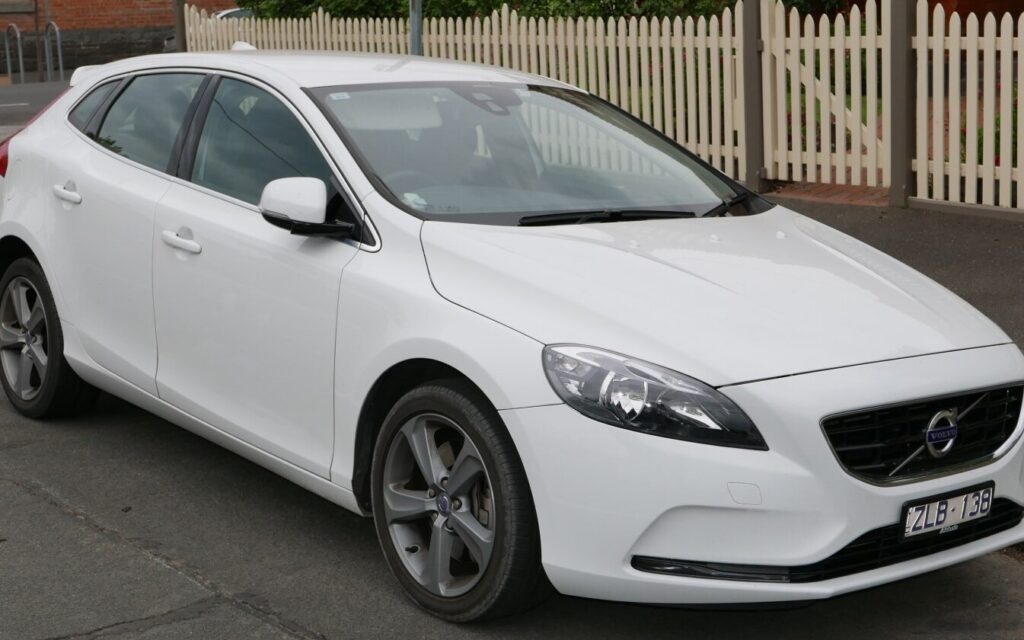
The Volvo V40 (facelift 2016) 2.0 D4 (190 Hp) Restricted Start/Stop: A Premium European Compact
The Volvo V40 (facelift 2016) 2.0 D4 (190 Hp) Restricted Start/Stop represents a significant iteration of Volvo’s premium compact hatchback, a model primarily targeted at the discerning European market. Introduced as part of a mid-cycle refresh for the V40 generation, which initially debuted in 2012, the 2016 facelift brought a host of updates designed to keep it competitive in the fiercely contested premium C-segment. This particular variant, powered by Volvo’s advanced 2.0-liter D4 diesel engine, stood out for its compelling blend of robust performance, exceptional fuel efficiency, and Volvo’s hallmark safety innovations. Produced from 2016 to 2018, this front-wheel-drive hatchback embodied Volvo’s contemporary design language and engineering prowess, offering a sophisticated alternative to its German rivals.
While the V40 was not officially sold in the United States, its presence in Europe underscored Volvo’s global strategy to offer a diverse range of vehicles tailored to regional preferences. In markets where diesel powertrains were highly valued for their economy and torque delivery, the D4 engine in the V40 was a particularly strong performer. The facelifted model integrated subtle yet impactful design changes, alongside technological enhancements, ensuring the V40 remained a compelling choice for buyers seeking a premium, safe, and efficient compact vehicle.
Engine and Performance: The Volvo V40 (facelift 2016) D4’s Powertrain Prowess
At the heart of the Volvo V40 (facelift 2016) 2.0 D4 (190 Hp) Restricted Start/Stop lies Volvo’s Drive-E family 2.0-liter (1969 cm3) inline four-cylinder diesel engine, designated D4204T14. This engine is a testament to modern diesel engineering, featuring a sophisticated twin-turbocharger setup and a common-rail fuel injection system. These technologies work in concert to deliver an impressive 190 horsepower at 4250 rpm, providing a strong and responsive driving experience. More remarkably, the engine generates a substantial 295.02 lb.-ft. of torque, available across a broad rev range from 1750 to 2500 rpm. This ample torque ensures excellent in-gear flexibility and confident acceleration.
Power is channeled to the front wheels through a precise 6-speed manual transmission, offering an engaging driving experience for those who prefer greater control. The performance figures are certainly respectable for a premium compact hatchback: the V40 D4 can accelerate from 0 to 60 mph in a swift 7.0 seconds, with a top speed reaching 142.92 mph. What truly sets this powertrain apart, however, is its remarkable efficiency. The inclusion of a “Restricted Start/Stop System” contributes significantly to its frugal fuel consumption, allowing the engine to automatically shut off when the vehicle is stationary and restart seamlessly when the driver intends to move. This system, combined with other efficiency-enhancing technologies, results in a combined fuel economy rating of 63.6 US mpg (3.7 l/100 km). With CO2 emissions of just 96 g/km, the V40 D4 met the stringent Euro 6 emission standard, making it an environmentally conscious choice in its segment. The engine also features a particulate filter to further reduce emissions, underscoring Volvo’s commitment to clean diesel technology.
Design and Features: Scandinavian Sophistication and Safety
The Volvo V40 (facelift 2016) retained its sleek and athletic hatchback silhouette, a design that blended Scandinavian elegance with a sporty demeanor. The 2016 facelift introduced several key visual updates, most notably the integration of Volvo’s signature “Thor’s Hammer” LED daytime running lights (DRLs) into the headlights, a design cue first seen on the larger XC90. This instantly recognizable feature gave the V40 a more modern and cohesive look, aligning it with the refreshed Volvo lineup. Other exterior enhancements included a revised grille featuring the updated Volvo Iron Mark and new wheel designs, subtly refining its premium appeal.
Inside, the V40 offered a cabin that exemplified Volvo’s commitment to ergonomic design, high-quality materials, and exceptional comfort. The five-door, five-seat configuration provided practical versatility for daily use. While compact, the interior was thoughtfully laid out, with intuitive controls and supportive seating. The trunk space offered a practical 11.83 cubic feet with the rear seats up, expanding to a generous 52.97 cubic feet when folded, making it suitable for a variety of cargo needs. Volvo’s reputation for safety was paramount, and the V40 was no exception. Standard assisting systems included ABS (Anti-lock Braking System), and while not explicitly detailed in the provided data, Volvo vehicles of this era typically featured a comprehensive suite of active and passive safety technologies, such as multiple airbags, stability control, and City Safety – an autonomous emergency braking system designed to prevent or mitigate low-speed collisions.
The driving dynamics were characterized by a well-balanced chassis. The front suspension utilized an independent McPherson strut design with coil springs and an anti-roll bar, while the rear featured an independent coil spring setup. This configuration provided a comfortable ride quality coupled with agile handling. The electric power steering offered precise control, and the braking system, comprising ventilated discs at the front and disc brakes at the rear, ensured confident stopping power. With a drag coefficient of 0.32, the V40 was aerodynamically efficient, further contributing to its impressive fuel economy and reduced wind noise.
Technical Specifications: Volvo V40 (facelift 2016) 2.0 D4 (190 Hp) Restricted Start/Stop
| Category | Specification |
|---|---|
| Brand | Volvo |
| Model | V40 |
| Generation | V40 (facelift 2016) |
| Type (Engine) | 2.0 D4 (190 Hp) Restricted Start/Stop |
| Start of Production | 2016 year |
| End of Production | 2018 year |
| Powertrain Architecture | Internal Combustion Engine |
| Body Type | Hatchback |
| Seats | 5 |
| Doors | 5 |
| Performance Specifications | |
| Fuel Consumption (Urban) | 4.1 l/100 km (57.4 US mpg) |
| Fuel Consumption (Extra Urban) | 3.5 l/100 km (67.2 US mpg) |
| Fuel Consumption (Combined) | 3.7 l/100 km (63.6 US mpg) |
| CO2 Emissions | 96 g/km |
| Fuel Type | Diesel |
| Acceleration 0-60 mph | 7.0 seconds |
| Maximum Speed | 230 km/h (142.92 mph) |
| Emission Standard | Euro 6 |
| Engine Specifications | |
| Power | 190 Hp @ 4250 rpm |
| Power per Liter | 96.5 Hp/l |
| Torque | 400 Nm (295.02 lb.-ft.) @ 1750-2500 rpm |
| Engine Layout | Front, Transverse |
| Engine Model/Code | D4204T14 |
| Engine Displacement | 1969 cm3 (120.16 cu. in.) |
| Number of Cylinders | 4 |
| Engine Configuration | Inline |
| Cylinder Bore | 82 mm (3.23 in.) |
| Piston Stroke | 93.2 mm (3.67 in.) |
| Compression Ratio | 15.8:1 |
| Number of Valves per Cylinder | 4 |
| Fuel Injection System | Diesel Commonrail |
| Engine Aspiration | Twin-Turbo, Intercooler |
| Engine Oil Capacity | 5.2 l (5.49 US qt) |
| Engine Oil Specification | Not specified |
| Coolant Capacity | 8 l (8.45 US qt) |
| Engine Systems | |
| Engine Systems | Start & Stop System, Particulate filter |
| Space, Volume, and Weights | |
| Trunk (Boot) Space – Minimum | 335 l (11.83 cu. ft.) |
| Trunk (Boot) Space – Maximum | 1500 l (52.97 cu. ft.) |
| Fuel Tank Capacity | 40 l (10.57 US gal) |
| Max. Roof Load | 75 kg (165.35 lbs.) |
| Permitted Trailer Load with Brakes (12%) | 1500 kg (3306.93 lbs.) |
| Dimensions | |
| Length | 4369 mm (172.01 in.) |
| Width | 1783 mm (70.2 in.) |
| Width Including Mirrors | 2041 mm (80.35 in.) |
| Height | 1439 mm (56.65 in.) |
| Wheelbase | 2647 mm (104.21 in.) |
| Front Track | 1559 mm (61.38 in.) |
| Rear (Back) Track | 1546 mm (60.87 in.) |
| Ride Height (Ground Clearance) | 133-144 mm (5.24 – 5.67 in.) |
| Drag Coefficient (Cd) | 0.32 |
| Minimum Turning Circle (Turning Diameter) | 10.8 m (35.43 ft.) |
| Drivetrain, Brakes, and Suspension Specs | |
| Drivetrain Architecture | The Internal combustion engine (ICE) drives the front wheels of the vehicle. |
| Drive Wheel | Front Wheel Drive |
| Number of Gears and Type of Gearbox | 6 gears, manual transmission |
| Front Suspension | Independent, type McPherson with coil spring and anti-roll bar |
| Rear Suspension | Independent coil spring |
| Front Brakes | Ventilated discs |
| Rear Brakes | Disc |
| Assisting Systems | ABS (Anti-lock braking system) |
| Steering Type | Steering rack and pinion |
| Power Steering | Electric Steering |
Legacy and Market Impact: The Volvo V40 (facelift 2016) in the European Landscape
The Volvo V40 (facelift 2016) 2.0 D4 (190 Hp) Restricted Start/Stop carved out a distinct niche for itself in the highly competitive European premium compact segment. In markets like Germany, the UK, and Scandinavia, it faced formidable rivals such as the Audi A3, BMW 1 Series, and Mercedes-Benz A-Class. Despite the strong competition, the V40 distinguished itself through its unique blend of Scandinavian design, an unwavering focus on safety, and a reputation for understated elegance and robustness.
Its primary market impact stemmed from its ability to offer a compelling alternative to the German luxury brands. The D4 diesel engine, in particular, was a significant draw. At a time when diesel powertrains still held considerable market share in Europe due to their superior fuel economy and strong torque characteristics, the V40 D4 offered class-leading efficiency and performance. Its low CO2 emissions and excellent fuel economy made it an attractive option for both private buyers and fleet operators seeking to minimize running costs and environmental impact. The “Restricted Start/Stop” functionality further solidified its eco-friendly credentials, aligning with growing consumer and regulatory demands for more sustainable vehicles.
The V40 also played a crucial role in bridging Volvo’s product lineup between its larger, more traditional models and its future electrification strategy. While it was not a hybrid or electric vehicle, its highly efficient diesel engine demonstrated Volvo’s capability in optimizing internal combustion technology. The facelifted V40, with its “Thor’s Hammer” DRLs, visually connected it to the newer generation of Volvo vehicles, enhancing brand consistency and appeal. Although the V40 concluded its production run in 2019 without a direct successor in the traditional hatchback form, its legacy endures as a testament to Volvo’s ability to produce a stylish, safe, and highly efficient premium compact car that resonated strongly with European consumers. It remains a respected choice in the used car market, valued for its durability, safety features, and refined driving experience.