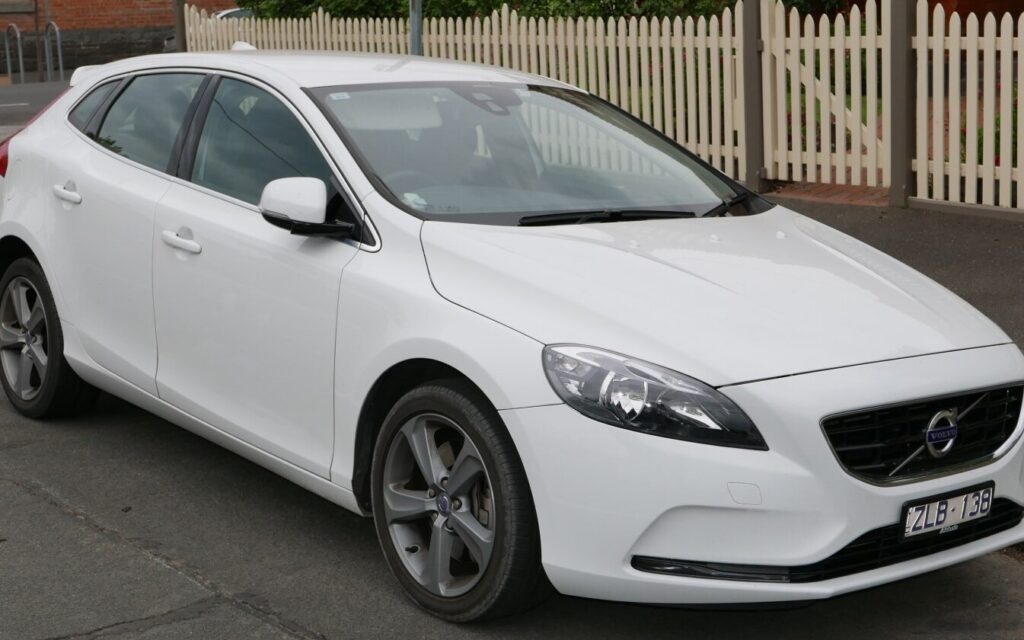
The Volvo V40 (facelift 2016): A Premium European Compact Hatchback
The Volvo V40, specifically the model featuring the 2016 facelift and equipped with the 2.0 T2 (122 Hp) Restricted engine, represents a significant offering from the Swedish automaker in the highly competitive European premium compact hatchback segment. Introduced in 2012, the V40 was Volvo’s answer to established rivals, combining sophisticated Scandinavian design with a focus on safety and practicality. The 2016 facelift brought a series of aesthetic and technological updates, keeping the model fresh and competitive until its production concluded in 2018. This particular variant, the 2.0 T2, was positioned as an accessible entry point into the V40 lineup, offering a balanced blend of efficiency and adequate performance for daily driving, primarily targeting markets where its specific power output might have been optimized for taxation or insurance categories.
While the Volvo V40 was a prominent player in Europe and other global markets, it was never officially sold in the United States or Canada. Its role was to challenge premium hatchbacks like the Audi A3 Sportback, BMW 1 Series, and Mercedes-Benz A-Class on their home turf, offering a distinct alternative characterized by its unique design philosophy and Volvo’s renowned safety reputation. The 2.0 T2 variant, with its efficient four-cylinder gasoline engine and front-wheel-drive architecture, underscored Volvo’s commitment to modern powertrain technology and a refined driving experience, even in its more modest power configurations.
Engine and Performance of the Volvo V40 (facelift 2016) 2.0 T2
Under the hood of the
Volvo V40 (facelift 2016) 2.0 T2 (122 Hp) Restricted
lies a modern 2.0-liter (1969 cm3 or 120.16 cu. in.) inline four-cylinder gasoline engine, designated B4204T38. This engine is part of Volvo’s Drive-E powertrain family, known for its modular design and efficiency-enhancing technologies. Despite its “Restricted” designation, which typically implies a detuned version of a more powerful engine for specific market needs or entry-level positioning, it still benefits from advanced features such as direct fuel injection and a turbocharger with an intercooler. This combination ensures a responsive power delivery and improved fuel efficiency.
The engine produces 122 horsepower at 5000 rpm, delivering a power output of 62 horsepower per liter. More impressively, it generates a robust 162.26 lb.-ft. (220 Nm) of torque available across a broad rev range, from a low 1100 rpm up to 3500 rpm. This wide torque band contributes significantly to the car’s drivability, making it feel more eager in everyday traffic and reducing the need for frequent downshifts. Power is transmitted to the front wheels via a six-speed manual transmission, offering engaging control for the driver.
In terms of performance, the V40 2.0 T2 accelerates from 0 to 60 mph in a respectable 9.3 seconds (0-100 km/h in 9.8 seconds), and its top speed is electronically limited to 118.06 mph (190 km/h). These figures position it as a competent performer for its segment, suitable for both city commutes and longer highway journeys. Fuel economy is a strong suit, with a combined rating of 43.6 US mpg (5.4 l/100 km), and CO2 emissions of 125 g/km, adhering to the Euro 6 emission standard. This efficiency, coupled with a 10.57 US gallon (40 liter) fuel tank, provides a decent cruising range.
Design and Features of the Volvo V40 (facelift 2016)
The Volvo V40 (facelift 2016) maintains its sleek and dynamic hatchback profile, which was praised for its contemporary Scandinavian aesthetic upon its initial release. The 2016 facelift introduced key visual updates, most notably the “Thor’s Hammer” LED daytime running lights, a design cue first seen on the larger XC90 SUV, which gave the V40 a more distinctive and modern front fascia. Other subtle changes included new grille designs, updated alloy wheel options, and fresh exterior colors, further enhancing its premium appeal.
Measuring 172.01 inches (4369 mm) in length, 70.2 inches (1783 mm) in width (80.35 inches or 2041 mm including mirrors), and 56.65 inches (1439 mm) in height, the V40 offers compact dimensions ideal for urban environments, yet its 104.21-inch (2647 mm) wheelbase ensures a stable ride and a reasonably spacious cabin for five occupants. The five-door hatchback body style provides excellent practicality, with a minimum trunk space of 11.44 cu. ft. (324 liters) that expands to a generous 52.97 cu. ft. (1500 liters) with the rear seats folded down. This flexibility makes it a versatile companion for various lifestyles.
Inside, the V40 continued Volvo’s tradition of minimalist and ergonomic design, featuring high-quality materials and a driver-centric cockpit. While specific interior features for this particular trim are not detailed, the V40 range typically offered a comprehensive suite of comfort and convenience features, including advanced infotainment systems, automatic climate control, and premium audio options. Volvo’s unwavering commitment to safety is a defining characteristic of the V40. Though specific safety systems are not listed in the raw data, the V40 was built upon a platform designed for high crash protection and was available with a wide array of active safety technologies such as City Safety (autonomous emergency braking), pedestrian detection, and various driver assistance systems, setting high benchmarks for the segment.
The chassis features an independent McPherson strut front suspension with coil springs and an anti-roll bar, complemented by an independent coil spring rear suspension. This setup provides a comfortable yet engaging ride. Ventilated disc brakes at the front and disc brakes at the rear, coupled with ABS (Anti-lock Braking System), ensure strong stopping power. The electric power steering system offers precise control and contributes to the vehicle’s maneuverability, with a minimum turning circle of 35.43 ft. (10.8 m).
Technical Specifications
| Category | Specification | US Equivalent |
|---|---|---|
General Information |
||
| Brand | Volvo | |
| Model | V40 | |
| Generation | V40 (facelift 2016) | |
| Type (Engine) | 2.0 T2 (122 Hp) Restricted | |
| Start of production | 2016 year | |
| End of production | 2018 year | |
| Powertrain Architecture | Internal Combustion engine | |
| Body type | Hatchback | |
| Seats | 5 | |
| Doors | 5 | |
Performance Specs |
||
| Fuel consumption (economy) – combined | 5.4 l/100 km | 43.6 US mpg |
| CO2 emissions | 125 g/km | |
| Fuel Type | Petrol (Gasoline) | Gasoline |
| Acceleration 0 – 100 km/h | 9.8 sec | |
| Acceleration 0 – 62 mph | 9.8 sec | |
| Acceleration 0 – 60 mph (Calculated) | 9.3 sec | |
| Maximum speed | 190 km/h | 118.06 mph |
| Emission standard | Euro 6 | |
Engine Specs |
||
| Power | 122 Hp @ 5000 rpm. | 122 Hp @ 5000 rpm. |
| Power per liter | 62 Hp/l | |
| Torque | 220 Nm @ 1100-3500 rpm. | 162.26 lb.-ft. @ 1100-3500 rpm. |
| Engine layout | Front, Transverse | |
| Engine Model/Code | B4204T38 | |
| Engine displacement | 1969 cm3 | 2.0 Liters (120.16 cu. in.) |
| Number of cylinders | 4 | |
| Engine configuration | Inline | |
| Cylinder Bore | 82 mm | 3.23 in. |
| Piston Stroke | 93.2 mm | 3.67 in. |
| Compression ratio | 11.3:1 | |
| Number of valves per cylinder | 4 | |
| Fuel injection system | Direct injection | |
| Engine aspiration | Turbocharger, Intercooler | |
| Engine oil capacity | 5.6 l | 5.92 US qt |
| Coolant | 7.5 l | 7.93 US qt |
Space, Volume and Weights |
||
| Trunk (boot) space – minimum | 324 l | 11.44 cu. ft. |
| Trunk (boot) space – maximum | 1500 l | 52.97 cu. ft. |
| Fuel tank capacity | 40 l | 10.57 US gal |
| Max. roof load | 75 kg | 165.35 lbs. |
| Permitted trailer load with brakes (12%) | 1500 kg | 3306.93 lbs. |
Dimensions |
||
| Length | 4369 mm | 172.01 in. |
| Width | 1783 mm | 70.2 in. |
| Width including mirrors | 2041 mm | 80.35 in. |
| Height | 1439 mm | 56.65 in. |
| Wheelbase | 2647 mm | 104.21 in. |
| Front track | 1559 mm | 61.38 in. |
| Rear (Back) track | 1546 mm | 60.87 in. |
| Ride height (ground clearance) | 133-144 mm | 5.24 – 5.67 in. |
| Drag coefficient (Cd) | 0.32 | |
| Minimum turning circle (turning diameter) | 10.8 m | 35.43 ft. |
Drivetrain, Brakes and Suspension Specs |
||
| Drivetrain Architecture | The Internal combustion engine (ICE) drives the front wheels of the vehicle. | |
| Drive wheel | Front wheel drive | |
| Number of gears and type of gearbox | 6 gears, manual transmission | |
| Front suspension | Independent, type McPherson with coil spring and anti-roll bar | |
| Rear suspension | Independent coil spring | |
| Front brakes | Ventilated discs | |
| Rear brakes | Disc | |
| Assisting systems | ABS (Anti-lock braking system) | |
| Steering type | Steering rack and pinion | |
| Power steering | Electric Steering | |
Legacy and Market Impact of the Volvo V40
The Volvo V40, particularly after its 2016 facelift, held a distinct position in the competitive European premium compact segment. While it lacked the outright sporting pretensions of some German rivals, it carved out its niche by emphasizing sophisticated design, exceptional safety, and a more understated, mature driving experience. Its primary competitors included the Audi A3 Sportback, BMW 1 Series, Mercedes-Benz A-Class, and to a lesser extent, the Alfa Romeo Giulietta and Lexus CT 200h.
The V40’s impact was significant for Volvo. It represented a successful foray into a highly competitive segment dominated by German marques, demonstrating that Volvo could offer a compelling premium compact car without compromising its core values. The 2016 facelift, with its distinctive “Thor’s Hammer” headlights, helped to align the V40 visually with Volvo’s newer, larger models like the XC90 and S90, creating a cohesive brand identity and elevating its perceived premium status. This visual update was crucial for maintaining its appeal in a rapidly evolving market.
The 2.0 T2 (122 Hp) Restricted variant, while not the most powerful in the V40 lineup, played an important role in making the V40 accessible to a broader range of buyers. Its focus on fuel efficiency and lower emissions, combined with adequate performance, made it an attractive option for those seeking premium features and Volvo’s renowned safety without the higher running costs or insurance premiums associated with more potent engines. This strategic positioning allowed Volvo to capture a segment of the market looking for a refined, safe, and economically sensible premium hatchback.
Ultimately, the V40’s production ceased in 2018, making way for Volvo’s continued shift towards SUVs and electrified powertrains, particularly with the introduction of the XC40. However, its legacy endures as a beautifully designed, safe, and practical premium compact that successfully challenged established players and showcased Volvo’s ability to innovate within diverse market segments. It remains a testament to Volvo’s engineering prowess and design philosophy, offering a compelling alternative for those who valued substance and style over aggressive performance.