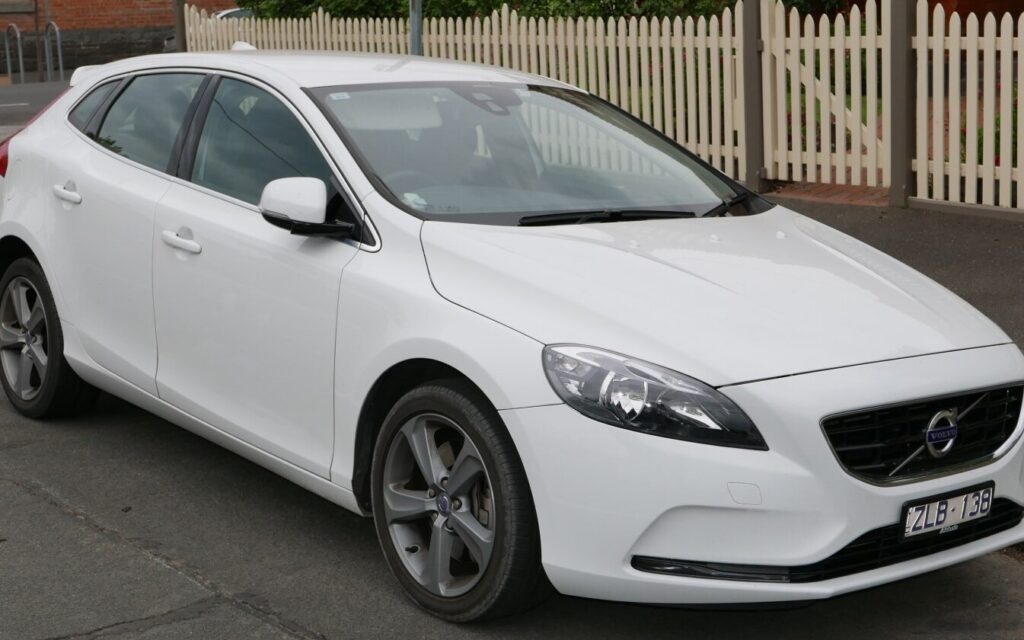
The Volvo V40 (facelift 2016) 2.0 T3: A Premium European Compact Hatchback
The Volvo V40, in its facelifted 2016 iteration, represented Volvo’s strong entry into the competitive European premium compact hatchback segment. Positioned as a stylish and safe alternative to established German rivals, the Volvo V40 (facelift 2016) 2.0 T3 specifically offered a compelling blend of performance, efficiency, and Volvo’s renowned commitment to safety and Scandinavian design. While this model was not officially marketed in the United States, it played a crucial role in Volvo’s global strategy, particularly across Europe and other international markets, showcasing the brand’s evolving design language and powertrain technology during the mid-2010s. The V40, which debuted in 2012, received a significant refresh for the 2016 model year, bringing updated aesthetics, improved connectivity options, and refined powertrains to keep it competitive.
The 2016 facelift introduced several key visual enhancements, most notably the “Thor’s Hammer” LED daytime running lights, which became a signature design element across Volvo’s newer models like the XC90 and S90. These lights gave the V40 a more modern and distinctive face, aligning it with the brand’s contemporary design direction. Beyond aesthetics, the facelift also brought new wheel designs, exterior color options, and an updated interior with new upholstery choices and trim accents. Under the hood, the V40 continued to offer a range of efficient gasoline and diesel engines, with the 2.0 T3 gasoline variant being a popular choice for its balance of power and fuel economy.
Engine and Performance: The Volvo V40 (facelift 2016) 2.0 T3 Powertrain
At the heart of the Volvo V40 (facelift 2016) 2.0 T3 lies a sophisticated 2.0-liter inline four-cylinder gasoline engine, designated with the internal code B4204T37. This powerplant, part of Volvo’s Drive-E family, was engineered for both performance and efficiency, a hallmark of modern engine design. Featuring direct fuel injection and a turbocharger with an intercooler, the engine produced a robust 152 horsepower at 5000 rpm. This power output, combined with a healthy torque figure, ensured responsive acceleration and capable highway cruising.
The engine’s torque delivery was particularly impressive, generating 184.39 lb.-ft. (250 Nm) across a broad range from 1300 to 4000 rpm. This wide torque band meant that the V40 2.0 T3 felt energetic and flexible in various driving conditions, whether navigating city streets or accelerating onto a freeway. Mated to a precise 6-speed manual transmission, the front-wheel-drive V40 could accelerate from 0 to 60 mph in a swift 7.9 seconds (0-100 km/h in 8.3 seconds) and reach a top speed of 130.49 mph (210 km/h). These figures placed it firmly in contention with its premium compact rivals, offering a sporty yet refined driving experience.
Despite its performance capabilities, the 2.0 T3 engine also demonstrated commendable fuel efficiency. It achieved a combined fuel economy of 42.8 US mpg (5.5 l/100 km), which was competitive for its class, especially given the power on tap. With CO2 emissions rated at 127 g/km, it met the stringent Euro 6 emission standard, reflecting Volvo’s commitment to environmental responsibility. The engine’s design, including its 11.3:1 compression ratio, four valves per cylinder, and advanced fuel injection, contributed to its overall efficiency and reduced emissions.
Design and Features: Scandinavian Elegance and Modern Technology
The Volvo V40 (facelift 2016) retained its distinctive five-door hatchback body type, a practical and popular choice in the European market. Its dimensions were compact enough for urban maneuverability yet offered sufficient interior space for five occupants. The vehicle measured 172.01 inches (4369 mm) in length, 70.2 inches (1783 mm) in width (80.35 inches or 2041 mm including mirrors), and 56.65 inches (1439 mm) in height. The wheelbase of 104.21 inches (2647 mm) contributed to a stable ride and a surprisingly roomy cabin for its class.
The facelift brought subtle but impactful design changes. The aforementioned “Thor’s Hammer” LED daytime running lights integrated into the headlights immediately updated the V40’s front fascia. The refreshed grille, featuring the updated Volvo Iron Mark logo, further enhanced its contemporary appeal. Inside, the V40 offered a typically Scandinavian minimalist aesthetic, characterized by high-quality materials, ergonomic controls, and a focus on comfort. New interior trim options and upholstery designs were introduced, allowing for greater personalization.
Volvo’s reputation for safety was a core aspect of the V40. While specific safety features are not detailed in the provided data, the V40 generation was known for pioneering technologies like pedestrian airbag technology and City Safety, an autonomous emergency braking system designed to prevent low-speed collisions. The car also featured standard safety equipment such as ABS (Anti-lock Braking System), multiple airbags, and a robust body structure. Comfort and convenience features included an electric power steering system with rack and pinion, an independent McPherson strut front suspension, and an independent coil spring rear suspension, all contributing to a composed and comfortable ride.
Practicality was another strong suit for the V40. It offered a minimum trunk space of 11.44 cubic feet (324 liters), which could be expanded to a generous 52.97 cubic feet (1500 liters) with the rear seats folded down, making it suitable for varying cargo needs. The fuel tank capacity of 16.38 US gallons (62 liters) provided a decent cruising range, complementing its efficient powertrain.
Technical Specifications: Volvo V40 (facelift 2016) 2.0 T3 (152 Hp)
| Category | Specification |
|---|---|
| Brand | Volvo |
| Model | V40 |
| Generation | V40 (facelift 2016) |
| Engine Type | 2.0 T3 (152 Hp) |
| Production Start | 2016 year |
| Production End | 2018 year |
| Powertrain Architecture | Internal Combustion Engine |
| Body Type | Hatchback |
| Seats | 5 |
| Doors | 5 |
| Performance Specs | |
| Fuel Consumption (Combined) | 42.8 US mpg (5.5 l/100 km) |
| CO2 Emissions | 127 g/km |
| Fuel Type | Gasoline |
| Acceleration 0-60 mph | 7.9 sec |
| Acceleration 0-100 km/h | 8.3 sec |
| Maximum Speed | 130.49 mph (210 km/h) |
| Emission Standard | Euro 6 |
| Weight-to-Power Ratio | 9.7 kg/Hp, 103.3 Hp/tonne |
| Weight-to-Torque Ratio | 5.9 kg/Nm, 170 Nm/tonne |
| Engine Specs | |
| Power | 152 Hp @ 5000 rpm |
| Power per Liter | 77.2 Hp/l |
| Torque | 184.39 lb.-ft. (250 Nm) @ 1300-4000 rpm |
| Engine Layout | Front, Transverse |
| Engine Model/Code | B4204T37 |
| Engine Displacement | 120.16 cu. in. (1969 cm3) |
| Number of Cylinders | 4 |
| Engine Configuration | Inline |
| Cylinder Bore | 3.23 in. (82 mm) |
| Piston Stroke | 3.67 in. (93.2 mm) |
| Compression Ratio | 11.3:1 |
| Valves per Cylinder | 4 |
| Fuel Injection System | Direct injection |
| Engine Aspiration | Turbocharger, Intercooler |
| Engine Oil Capacity | 6.23 US qt (5.9 l) |
| Coolant Capacity | 7.93 US qt (7.5 l) |
| Space, Volume and Weights | |
| Curb Weight | 3243 lbs. (1471 kg) |
| Maximum Permissible Weight | 4332.08 lbs. (1965 kg) |
| Max Load | 1089.08 lbs. (494 kg) |
| Trunk Space (Minimum) | 11.44 cu. ft. (324 l) |
| Trunk Space (Maximum) | 52.97 cu. ft. (1500 l) |
| Fuel Tank Capacity | 16.38 US gal (62 l) |
| Max. Roof Load | 165.35 lbs. (75 kg) |
| Permitted Trailer Load with Brakes (12%) | 3306.93 lbs. (1500 kg) |
| Dimensions | |
| Length | 172.01 in. (4369 mm) |
| Width | 70.2 in. (1783 mm) |
| Width (incl. mirrors) | 80.35 in. (2041 mm) |
| Height | 56.65 in. (1439 mm) |
| Wheelbase | 104.21 in. (2647 mm) |
| Front Track | 61.38 in. (1559 mm) |
| Rear Track | 60.87 in. (1546 mm) |
| Ride Height (Ground Clearance) | 5.24 – 5.67 in. (133-144 mm) |
| Drag Coefficient (Cd) | 0.32 |
| Minimum Turning Circle | 35.43 ft. (10.8 m) |
| Drivetrain, Brakes and Suspension Specs | |
| Drivetrain Architecture | Front-wheel drive, Internal Combustion Engine |
| Drive Wheel | Front wheel drive |
| Gearbox | 6 gears, manual transmission |
| Front Suspension | Independent, McPherson with coil spring and anti-roll bar |
| Rear Suspension | Independent coil spring |
| Front Brakes | Ventilated discs |
| Rear Brakes | Disc |
| Assisting Systems | ABS (Anti-lock braking system) |
| Steering Type | Steering rack and pinion |
| Power Steering | Electric Steering |
Legacy and Market Impact
The Volvo V40, particularly after its 2016 facelift, cemented its position as a strong contender in Europe’s premium compact hatchback segment. It competed directly with formidable German rivals such as the Audi A3 Sportback, BMW 1 Series, and Mercedes-Benz A-Class. While perhaps not achieving the sheer sales volumes of its German counterparts, the V40 carved out a significant niche for itself by offering a distinct Scandinavian alternative. Its appeal lay in its understated elegance, robust build quality, and, crucially, Volvo’s industry-leading safety innovations.
The V40’s reputation was built on its solid driving dynamics, comfortable interior, and sophisticated safety features, many of which were either standard or available as advanced options. It was often lauded for its refined ride and handling, striking a good balance between comfort and engagement. For consumers prioritizing safety, unique design, and a less overtly sporty but still capable driving experience, the V40 was an attractive proposition. The 2.0 T3 engine, in particular, was praised for its smooth power delivery and respectable fuel economy, making it a popular choice for both urban commuting and longer journeys.
Historically, the V40 represented a critical model for Volvo as it transitioned its product lineup under Geely ownership. It showcased the brand’s ability to compete in a highly competitive segment while retaining its core values of safety, quality, and design. The facelifted model, with its “Thor’s Hammer” headlights, was instrumental in introducing Volvo’s new design language to a broader audience, paving the way for the success of subsequent larger models like the XC60 and XC40. Though production of the V40 concluded in 2018, it left a lasting legacy as a well-regarded premium compact car that contributed significantly to Volvo’s modern identity and market resurgence.