
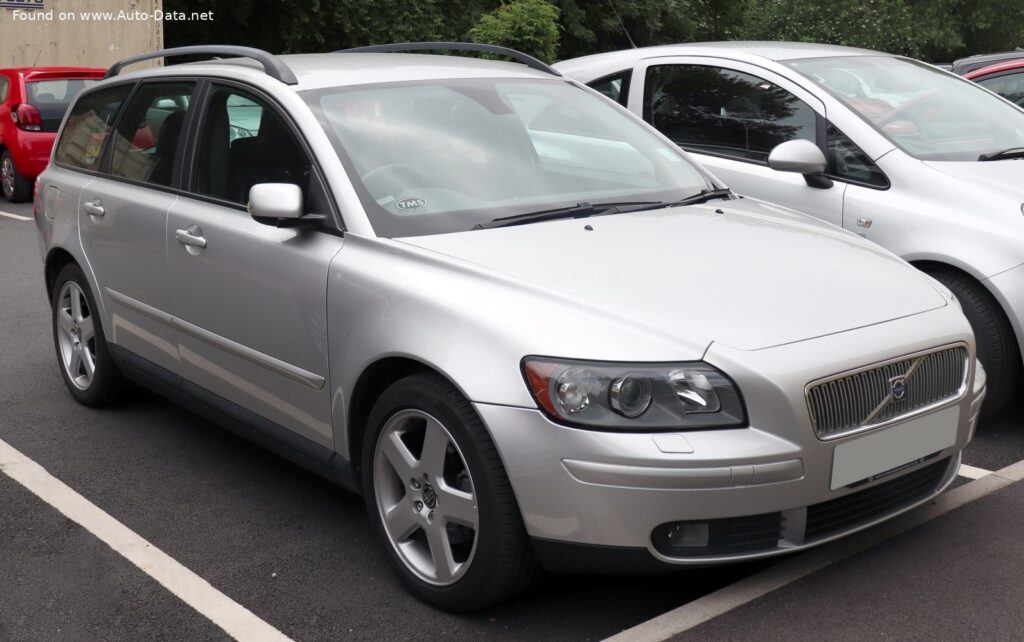
Introduction to the Volvo V50 2.4 i 20V (170 Hp) Automatic
The Volvo V50, introduced in 2004, marked a pivotal moment for the Swedish automaker as it aimed to expand its presence in the premium compact segment. Positioned as a versatile and stylish station wagon (or “estate” in European markets), the V50 succeeded the popular V40, bringing with it a more contemporary design, enhanced driving dynamics, and a strong emphasis on safety – a hallmark of the Volvo brand. The V50 was built on Volvo’s P1 platform, shared with the second-generation S40 sedan, as well as the Ford C1 platform (used by the Ford Focus and Mazda 3), allowing for a more engaging driving experience than its predecessor.
The specific variant under consideration, the Volvo V50 2.4 i 20V (170 Hp) Automatic, represents a well-balanced offering within the V50 lineup from its production run between 2004 and 2007. This particular model combines Volvo’s renowned five-cylinder engine with a smooth automatic transmission, catering to buyers who sought a blend of refined performance, practicality, and the distinctive Scandinavian approach to luxury and safety. While primarily a European market vehicle, the V50 was indeed sold in North America, where it carved out a niche for those desiring a compact, premium wagon alternative to sedans and SUVs.
Engine & Performance of the Volvo V50 2.4 i 20V (170 Hp) Automatic
At the heart of the Volvo V50 2.4 i 20V (170 Hp) Automatic lies Volvo’s venerable 2.4-liter (2435 cm3 or 148.59 cu. in.) naturally aspirated inline five-cylinder engine. Codenamed B5244S4, this powerplant is a testament to Volvo’s engineering philosophy, offering a distinctive growl and a characteristically smooth power delivery. The engine features a Double Overhead Camshaft (DOHC) valvetrain with 4 valves per cylinder, totaling 20 valves, optimizing both intake and exhaust efficiency. Fuel is delivered via a multi-port manifold injection system, ensuring precise fuel metering and combustion.
This engine generates a robust 170 horsepower at 5900 rpm, providing ample power for daily driving and highway cruising. Torque output is equally impressive, peaking at 169.64 lb.-ft. (230 Nm) at 4500 rpm, offering strong mid-range acceleration. The inline five-cylinder configuration, with its inherent balance and unique firing order, contributes to the engine’s refinement and aural appeal, setting it apart from more common four-cylinder alternatives in the segment. With a compression ratio of 10.3:1, the engine is designed for optimal efficiency and performance using gasoline fuel.
Power is channeled to the front wheels through a 5-speed automatic transmission. This gearbox is tuned to deliver smooth shifts, prioritizing comfort and ease of driving, which aligns with the V50’s family-friendly wagon ethos. Performance figures for the Volvo V50 2.4 i 20V (170 Hp) Automatic are respectable for its class: it can accelerate from 0 to 60 mph in an estimated 8.6 seconds, and its top speed is electronically limited to 133.59 mph (215 km/h). Fuel economy, while not segment-leading by modern standards, was competitive for its time, with a combined rating of approximately 25.6 US mpg (9.2 liters per 100 km), and CO2 emissions rated at 220 g/km.
Design & Features of the Volvo V50
The Volvo V50’s design represents a significant step forward for the brand, embodying a modern yet understated aesthetic that balances practicality with premium appeal. As a 5-door station wagon, the V50 maintains Volvo’s long-standing tradition of producing highly functional and safe family vehicles, but with a sleeker, more dynamic profile. Its dimensions – 177.72 inches (4514 mm) in length, 69.69 inches (1770 mm) in width, and 57.17 inches (1452 mm) in height – give it a compact footprint, making it nimble in urban environments while still offering generous interior space.
The exterior styling features clean lines, a distinctive shoulder line, and Volvo’s signature vertical taillights, which not only provide a visual link to larger Volvo wagons but also enhance rear visibility. The front fascia is characterized by a prominent grille and sophisticated headlights, projecting an air of Scandinavian elegance. Inside, the V50 continues this theme with a minimalist yet highly ergonomic cabin. A standout feature is the “floating” center console, a design element first introduced in the S40/V50, which creates a sense of spaciousness and houses intuitive controls for audio and climate.
Practicality is a strong suit for the V50 wagon. With all five seats occupied, the trunk offers 14.73 cu. ft. (417 liters) of cargo space. Folding down the rear seats expands this capacity significantly to a maximum of 46.16 cu. ft. (1307 liters), providing ample room for luggage, sports equipment, or larger items. This flexibility made the V50 an attractive option for active individuals and small families alike.
True to Volvo’s reputation, safety features are paramount. The V50 was equipped with a comprehensive suite of active and passive safety systems. Standard features included an Anti-lock Braking System (ABS) with Electronic Brake Distribution (EBD), robust ventilated disc brakes on both front and rear axles, and a rigid body structure designed to absorb impact forces. Passive safety included multiple airbags (front, side, and curtain), Volvo’s patented Side Impact Protection System (SIPS), and the Whiplash Protection System (WHIPS) integrated into the front seats, all designed to protect occupants in various collision scenarios. The car’s front and rear suspensions, featuring transverse stabilizers, contributed to stable handling and ride comfort.
Technical Specifications
| Category | Specification |
|---|---|
| Brand | Volvo |
| Model | V50 |
| Generation | V50 |
| Type (Engine) | 2.4 i 20V (170 Hp) Automatic |
| Production Start | 2004 |
| Production End | 2007 |
| Powertrain Architecture | Internal Combustion engine |
| Body Type | Station wagon (estate) |
| Seats | 5 |
| Doors | 5 |
| Performance Specs | |
| Fuel Consumption (Combined) | 25.6 US mpg (9.2 l/100 km) |
| CO2 Emissions | 220 g/km |
| Fuel Type | Petrol (Gasoline) |
| Acceleration 0 – 60 mph | 8.6 sec |
| Acceleration 0 – 62 mph (100 km/h) | 9 sec |
| Maximum Speed | 133.59 mph (215 km/h) |
| Weight-to-Power Ratio | 8.5 kg/Hp (117.1 Hp/tonne) |
| Weight-to-Torque Ratio | 6.3 kg/Nm (158.4 Nm/tonne) |
| Engine Specs | |
| Power | 170 Hp @ 5900 rpm |
| Power per liter | 69.8 Hp/l |
| Torque | 169.64 lb.-ft. (230 Nm) @ 4500 rpm |
| Engine Layout | Front, Transverse |
| Engine Model/Code | B5244S4 |
| Engine Displacement | 2.435 liters (148.59 cu. in. / 2435 cm3) |
| Number of Cylinders | 5 |
| Engine Configuration | Inline |
| Cylinder Bore | 3.27 in. (83 mm) |
| Piston Stroke | 3.54 in. (90 mm) |
| Compression Ratio | 10.3:1 |
| Valves per Cylinder | 4 |
| Fuel Injection System | Multi-port manifold injection |
| Engine Aspiration | Naturally aspirated engine |
| Valvetrain | DOHC |
| Engine Oil Capacity | 6.13 US qt (5.8 l) |
| Coolant Capacity | 8.98 US qt (8.5 l) |
| Space, Volume and Weights | |
| Kerb Weight | 3201.11 lbs. (1452 kg) |
| Trunk (Boot) Space – Minimum | 14.73 cu. ft. (417 l) |
| Trunk (Boot) Space – Maximum | 46.16 cu. ft. (1307 l) |
| Fuel Tank Capacity | 16.38 US gal (62 l) |
| Dimensions | |
| Length | 177.72 in. (4514 mm) |
| Width | 69.69 in. (1770 mm) |
| Height | 57.17 in. (1452 mm) |
| Wheelbase | 103.94 in. (2640 mm) |
| Front Track | 60.43 in. (1535 mm) |
| Rear Track | 60.28 in. (1531 mm) |
| Drivetrain, Brakes and Suspension Specs | |
| Drivetrain Architecture | Internal combustion engine (ICE) drives the front wheels. |
| Drive Wheel | Front wheel drive |
| Number of Gears & Type | 5 gears, automatic transmission |
| Front Suspension | Transverse stabilizer |
| Rear Suspension | Transverse stabilizer |
| Front Brakes | Ventilated discs |
| Rear Brakes | Ventilated discs |
| Assisting Systems | ABS (Anti-lock braking system) |
| Steering Type | Steering rack and pinion |
Legacy & Market Impact
The Volvo V50, particularly the Volvo V50 2.4 i 20V (170 Hp) Automatic variant, played a crucial role in Volvo’s strategy to broaden its appeal beyond its traditional, larger wagon offerings. It successfully carved out a niche in the competitive premium compact segment, attracting buyers who valued Volvo’s reputation for safety and practicality but desired a more compact and stylish package. Its shared platform with the Ford Focus and Mazda 3 allowed Volvo to imbue the V50 with more agile and engaging driving dynamics than previous compact Volvos, without sacrificing the brand’s core values of comfort and refinement.
In its primary markets, including Europe and North America, the V50 faced stiff competition from established premium compact wagons such as the Audi A4 Avant, BMW 3 Series Touring, and Mercedes-Benz C-Class Wagon. While perhaps not as overtly sporty as its German rivals, the V50 distinguished itself with its unique Scandinavian design, pragmatic interior, and an unwavering commitment to safety. The distinctive inline five-cylinder engine, a hallmark of many Volvo models, provided a smooth and characterful powertrain option that offered a different flavor compared to the four-cylinder turbo engines common in its segment.
The V50’s legacy is rooted in its ability to offer a compelling blend of attributes: the versatility of a wagon, the premium feel of a European brand, and the peace of mind associated with Volvo’s safety innovations. It demonstrated that a compact vehicle could still be luxurious, spacious, and dynamically competent. The V50, along with its S40 sedan sibling, helped to modernize Volvo’s image and attract a younger demographic, laying the groundwork for future successful compact models like the V40 hatchback. While its production concluded in 2012 (with this specific engine variant ending in 2007), the V50 remains a testament to Volvo’s enduring commitment to designing vehicles that prioritize both people and practicality, wrapped in a distinctive and elegant package.
