
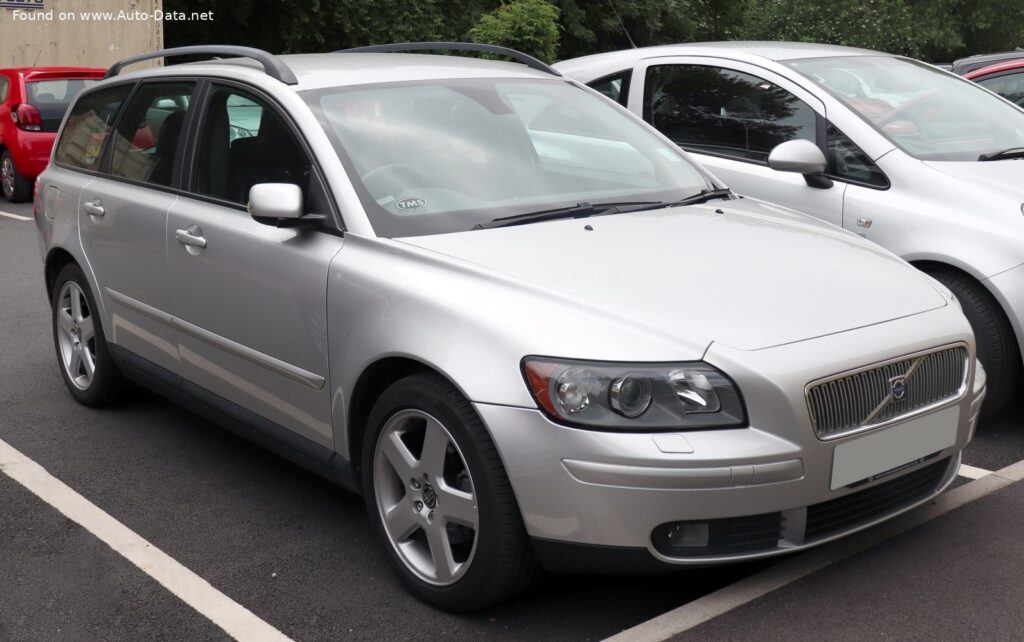
The Volvo V50 2.5 T5 (220 Hp) AWD: A Compact Executive Wagon with Performance Pedigree
The Volvo V50, introduced in 2004, represented a significant step for the Swedish automaker in the compact executive segment. Positioned as the successor to the successful V40, the V50 aimed to combine Volvo’s renowned safety and practicality with a more dynamic driving experience and contemporary styling. Built on Volvo’s P1 platform, shared with the second-generation Ford Focus and Mazda3, the V50 offered a compelling package for buyers seeking a premium compact wagon. The specific variant, the Volvo V50 2.5 T5 (220 Hp) AWD, stood out as the performance flagship, blending a potent turbocharged five-cylinder engine with an advanced all-wheel-drive system, offering impressive acceleration and all-weather capability.
Produced between 2004 and 2007 in this specific configuration, the V50 2.5 T5 AWD was designed to appeal to a discerning market that valued both spirited driving and the versatility of a station wagon. While Volvo’s larger wagons like the V70 and V90 (and their predecessors) were staples in the American market, the V50 brought a more youthful and agile dimension to the lineup, broadening its appeal. This model was crucial in solidifying Volvo’s reputation for offering well-engineered, safe, and surprisingly fun-to-drive vehicles, even in a more compact form factor.
Engine and Performance of the Volvo V50
Powertrain Architecture and Driving Dynamics
At the heart of the Volvo V50 2.5 T5 AWD lies a robust and characterful 2.5-liter (2521 cm3 or 153.84 cu. in.) inline five-cylinder gasoline engine, designated B5254T3. This engine configuration is a Volvo hallmark, celebrated for its unique sound and smooth power delivery. Equipped with a turbocharger and intercooler, it generates a substantial 220 horsepower at 5000 rpm, translating to a power-per-liter output of 87.3 Hp/l. Torque figures are equally impressive, peaking at 236.02 lb.-ft. (320 Nm) across a broad rev range from 1500 to 4800 rpm. This wide torque band ensures strong, responsive acceleration from low speeds and effortless highway cruising.
Power is channeled through a precise 6-speed manual transmission, offering engaging control for the driver. The drivetrain architecture is an intelligent all-wheel-drive (AWD) system, which primarily drives the front wheels but can seamlessly transfer power to the rear wheels via an electrically or mechanically operated clutch when traction demands. This setup provides enhanced grip and stability, particularly in adverse weather conditions or during spirited driving, making the V50 T5 AWD a truly versatile performer.
The performance metrics underscore the V50 T5 AWD’s sporting intentions. It accelerates from 0 to 60 mph in a brisk 6.8 seconds (0-100 km/h in 7.2 seconds) and can reach a maximum speed of 142.92 mph (230 km/h). Despite its performance capabilities, Volvo engineered the engine to meet Euro 4 emission standards, with CO2 emissions rated at 229 g/km. Fuel economy figures, while not groundbreaking for a compact car, were respectable for a performance-oriented AWD wagon of its era: 17.3 US mpg in urban driving, 32.2 US mpg on the extra-urban cycle, and a combined average of 24.5 US mpg (9.6 l/100 km).
Design and Features
Exterior Aesthetics and Interior Functionality
The Volvo V50, with its station wagon body type, perfectly embodies Volvo’s long-standing commitment to practical and elegant design. Measuring 177.72 inches (4514 mm) in length, 69.69 inches (1770 mm) in width, and 57.17 inches (1452 mm) in height, the V50 strikes a balance between a compact footprint and generous interior space. Its design features clean lines, a distinctive Volvo “shoulder” line, and signature vertical taillights, giving it a sophisticated yet understated presence. The 5-door, 5-seat configuration underscores its family-friendly utility, while the sleek profile avoids the boxy appearance often associated with traditional wagons.
Inside, the V50 showcases Volvo’s minimalist Scandinavian design philosophy, characterized by high-quality materials, ergonomic controls, and an intuitive layout. The floating center console, a design hallmark of this generation of Volvos, added a touch of modern flair and practicality. Safety, a paramount concern for Volvo, is evident throughout the V50. While specific features like SIPS (Side Impact Protection System) and WHIPS (Whiplash Protection System) are not detailed in the raw data, they were standard across the V50 range, alongside multiple airbags and a robust safety cage, contributing to its strong crash test ratings.
Practicality is a strong suit for the V50 wagon. It offers a minimum trunk (boot) space of 14.73 cu. ft. (417 liters), which expands to an impressive 46.16 cu. ft. (1307 liters) with the rear seats folded down, accommodating a wide array of cargo needs. The vehicle also boasts a maximum roof load of 165.35 lbs (75 kg) and a substantial permitted trailer load of 3306.93 lbs (1500 kg) with brakes, highlighting its versatility for active lifestyles.
Underneath, the V50 features an independent McPherson strut front suspension and an independent multi-link rear suspension, both with anti-roll bars, providing a balanced ride and confident handling. Braking is handled by ventilated discs at the front and solid discs at the rear, complemented by an Anti-lock Braking System (ABS). The electric power steering system, with a rack and pinion setup, offers precise control and a minimum turning circle of 34.78 ft (10.6 m), making it maneuverable in urban environments. The car rides on 205/55 R16 tires mounted on 6.5J x 16-inch wheel rims.
Technical Specifications
| Category | Specification | US/Imperial Equivalent |
|---|---|---|
General Information |
||
| Brand | Volvo | |
| Model | V50 | |
| Generation | V50 | |
| Type (Engine) | 2.5 T5 (220 Hp) AWD | |
| Start of Production | 2004 year | |
| End of Production | 2007 year | |
| Powertrain Architecture | Internal Combustion engine | |
| Body Type | Station wagon (estate) | |
| Seats | 5 | |
| Doors | 5 | |
Performance Specifications |
||
| Fuel Consumption (Urban) | 13.6 l/100 km | 17.3 US mpg |
| Fuel Consumption (Extra Urban) | 7.3 l/100 km | 32.2 US mpg |
| Fuel Consumption (Combined) | 9.6 l/100 km | 24.5 US mpg |
| CO2 Emissions | 229 g/km | |
| Fuel Type | Petrol (Gasoline) | |
| Acceleration 0-60 mph | 6.8 sec | |
| Acceleration 0-100 km/h | 7.2 sec | |
| Maximum Speed | 230 km/h | 142.92 mph |
| Emission Standard | Euro 4 | |
| Weight-to-Power Ratio | 6.7 kg/Hp | 148.6 Hp/tonne |
| Weight-to-Torque Ratio | 4.6 kg/Nm | 216.2 Nm/tonne |
Engine Specifications |
||
| Power | 220 Hp @ 5000 rpm | |
| Power per Liter | 87.3 Hp/l | |
| Torque | 320 Nm @ 1500-4800 rpm | 236.02 lb.-ft. @ 1500-4800 rpm |
| Engine Layout | Front, Transverse | |
| Engine Model/Code | B5254T3 | |
| Engine Displacement | 2521 cm3 | 2.5 Liters / 153.84 cu. in. |
| Number of Cylinders | 5 | |
| Engine Configuration | Inline | |
| Cylinder Bore | 83 mm | 3.27 in. |
| Piston Stroke | 93.2 mm | 3.67 in. |
| Compression Ratio | 9:1 | |
| Valves per Cylinder | 4 | |
| Fuel Injection System | Multi-port manifold injection | |
| Engine Aspiration | Turbocharger, Intercooler | |
| Valvetrain | DOHC | |
| Engine Oil Capacity | 5.8 l | 6.13 US qt |
| Coolant Capacity | 8 l | 8.45 US qt |
Space, Volume and Weights |
||
| Kerb Weight | 1480 kg | 3262.84 lbs. |
| Max. Weight | 2020 kg | 4453.34 lbs. |
| Max. Load | 540 kg | 1190.5 lbs. |
| Trunk (Boot) Space – Minimum | 417 l | 14.73 cu. ft. |
| Trunk (Boot) Space – Maximum | 1307 l | 46.16 cu. ft. |
| Fuel Tank Capacity | 58 l | 15.32 US gal |
| Max. Roof Load | 75 kg | 165.35 lbs. |
| Permitted Trailer Load with Brakes (12%) | 1500 kg | 3306.93 lbs. |
| Permitted Trailer Load without Brakes | 700 kg | 1543.24 lbs. |
| Permitted Towbar Download | 75 kg | 165.35 lbs. |
Dimensions |
||
| Length | 4514 mm | 177.72 in. |
| Width | 1770 mm | 69.69 in. |
| Height | 1452 mm | 57.17 in. |
| Wheelbase | 2640 mm | 103.94 in. |
| Front Track | 1535 mm | 60.43 in. |
| Rear (Back) Track | 1531 mm | 60.28 in. |
| Minimum Turning Circle (Turning Diameter) | 10.6 m | 34.78 ft. |
Drivetrain, Brakes and Suspension Specs |
||
| Drivetrain Architecture | ICE drives front wheels permanently, rear wheels driven through electrically/mechanically operated clutch if necessary. | |
| Drive Wheel | All-wheel drive (4×4) | |
| Number of Gears and Type of Gearbox | 6 gears, manual transmission | |
| Front Suspension | Independent, type McPherson with coil spring and anti-roll bar | |
| Rear Suspension | Independent multi-link spring suspension with stabilizer | |
| Front Brakes | Ventilated discs | |
| Rear Brakes | Disc | |
| Assisting Systems | ABS (Anti-lock braking system) | |
| Steering Type | Steering rack and pinion | |
| Power Steering | Electric Steering | |
| Tires Size | 205/55 R16 | |
| Wheel Rims Size | 6.5J x 16 | |
Legacy and Market Impact
The Volvo V50 2.5 T5 (220 Hp) AWD carved out a distinct niche in the compact executive segment during its production run from 2004 to 2007. It successfully blended Volvo’s core values of safety and practicality with an unexpected level of performance and dynamic handling, particularly for a station wagon. This variant helped to subtly shift public perception of Volvo, demonstrating that the brand could offer more than just safe, sensible family haulers; it could also deliver an engaging driving experience.
In the North American market, the V50 T5 AWD competed against a formidable lineup of premium compact and mid-size wagons. Its primary rivals included the Audi A4 Avant, BMW 3 Series Touring (E46/E91 generations), and the Mercedes-Benz C-Class Wagon. While these German competitors often had a stronger luxury brand cachet, the V50 offered a compelling alternative with its unique five-cylinder engine, standard AWD, and a slightly more understated, yet sophisticated, Scandinavian aesthetic. Another significant competitor, especially for those prioritizing AWD and utility, was the Subaru Legacy GT Wagon, though the Volvo typically commanded a higher price point and offered a more premium interior.
The V50’s P1 platform, shared with the Ford Focus and Mazda3, was a testament to Ford’s Premier Automotive Group strategy, allowing Volvo to leverage shared components for cost efficiency while maintaining its distinct brand identity and engineering prowess. The T5 engine, in particular, was a highlight, giving the V50 a characterful engine note and strong performance that stood out in its class. Its all-wheel-drive system ensured year-round usability, a significant draw for consumers in regions with harsh winters.
The V50’s legacy is one of a well-executed compact premium wagon that offered a balanced blend of performance, safety, and utility. It contributed to Volvo’s evolving image as a brand capable of producing stylish, driver-focused vehicles without compromising on its foundational values. Today, used examples of the V50 T5 AWD are often sought after by enthusiasts looking for a practical, safe, and fun-to-drive wagon that offers a unique alternative to its more common German counterparts, embodying a period when Volvo successfully integrated performance with its characteristic understated elegance.
