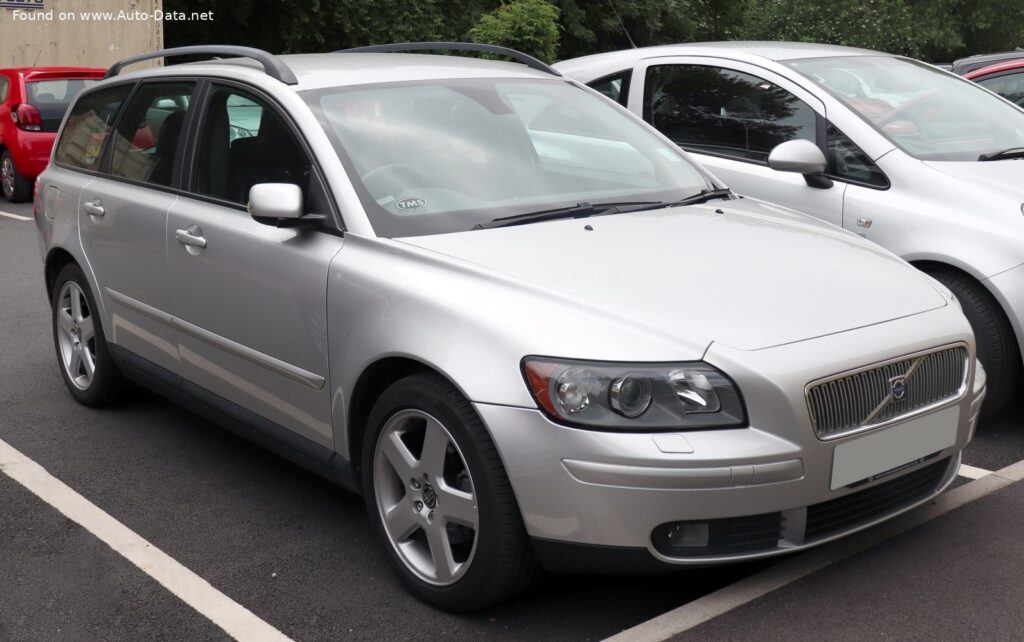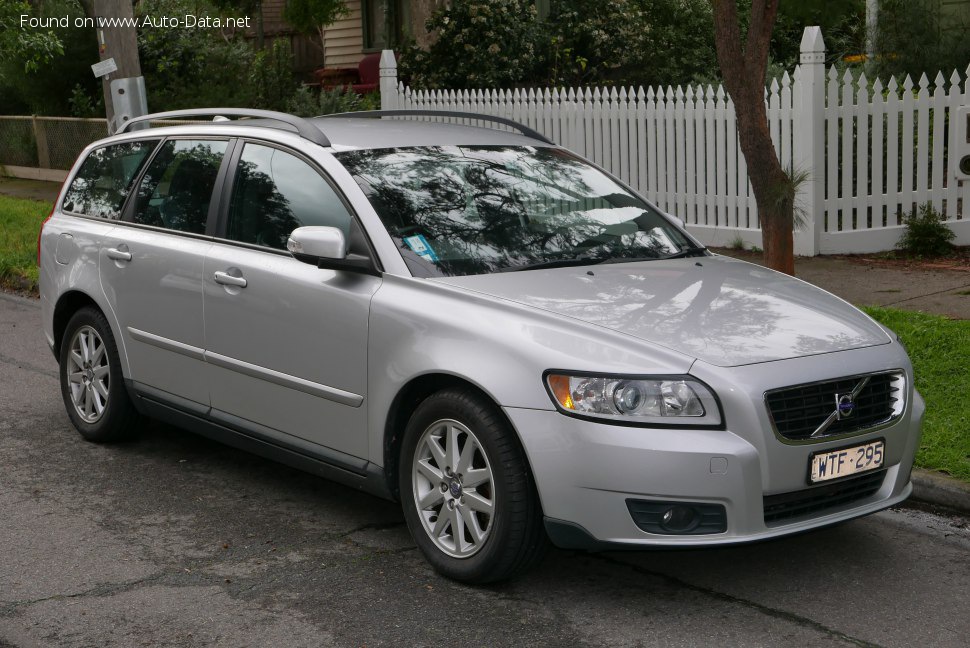
The Volvo V50 (facelift 2007) 1.6 D DRIVe: A European Efficiency Standard Bearer
The Volvo V50, introduced in 2004, represented Volvo’s foray into the compact premium station wagon segment, building upon the platform shared with the Ford Focus and Mazda3. Positioned as a more compact and sportier alternative to the larger V70, the V50 quickly garnered attention for its blend of Scandinavian design, renowned Volvo safety, and practical utility. The model underwent a significant facelift in 2007, enhancing its aesthetics, interior refinement, and crucially, its powertrain offerings. Among these, the Volvo V50 (facelift 2007) 1.6 D DRIVe variant stood out as a testament to Volvo’s commitment to environmental responsibility and fuel efficiency, particularly for the European market where diesel powertrains were highly prevalent and encouraged for their economy and lower CO2 emissions. This specific model, produced from 2007 to 2010, was a cornerstone of Volvo’s DRIVe initiative, focusing on optimizing internal combustion engine performance for maximum efficiency and reduced environmental impact.
Engine & Performance: The DRIVe Philosophy in Action
At the heart of the Volvo V50 (facelift 2007) 1.6 D DRIVe was its highly efficient 1.6-liter (1560 cm3 or 95.2 cu. in.) D4164T inline-four diesel engine. This unit, developed in collaboration with PSA Peugeot Citroën, was a proven workhorse known for its robust design and fuel-sipping characteristics. It produced a respectable 109 horsepower at 4000 rpm, which, while not designed for outright speed, provided ample motivation for daily driving and highway cruising. More significantly, the engine delivered a healthy 240 Nm (177.01 lb.-ft.) of torque at a low 1750 rpm, ensuring strong pulling power from low engine speeds, a hallmark of modern diesel engines.
The “DRIVe” designation was Volvo’s badge for its most environmentally friendly and fuel-efficient models. For the V50 1.6 D DRIVe, this involved a suite of enhancements beyond just the engine itself. These typically included aerodynamic improvements (such as a lowered chassis and optimized grille), low-rolling-resistance tires, and revised engine management software to further reduce fuel consumption and CO2 emissions. Mated to a 5-speed manual transmission, the front-wheel-drive powertrain architecture was optimized for smooth power delivery and maximizing efficiency. The vehicle achieved an impressive combined fuel economy of 4.5 liters per 100 km (equivalent to 52.3 US mpg), with extra-urban figures reaching as high as 3.8 liters per 100 km (61.9 US mpg). Its CO2 emissions of 119 g/km were highly competitive for its era, meeting the Euro 4 emission standard and making it an attractive option for environmentally conscious buyers in Europe. Performance figures included an acceleration from 0 to 60 mph in a calculated 10.9 seconds and a top speed of 118 mph (190 km/h), demonstrating that efficiency did not come at the cost of reasonable dynamism.
Design & Features: Scandinavian Practicality and Safety
The 2007 facelift brought subtle yet effective updates to the V50’s exterior and interior, refreshing its appeal. The station wagon (or estate) body type remained central to its identity, offering a practical and versatile solution for families and individuals needing more cargo space than a traditional sedan. With five doors and seating for five occupants, the V50 struck a balance between a compact footprint and functional utility. The exterior updates included revised front and rear bumpers, a new grille, and updated lighting signatures, giving it a more modern and cohesive look.
Inside, the V50 continued to embody Volvo’s signature minimalist Scandinavian design philosophy, characterized by clean lines, high-quality materials, and ergonomic controls. The floating center console, a distinctive design element, housed the climate and audio controls, contributing to a spacious and uncluttered cabin feel. Practicality was a strong suit, with a minimum trunk (boot) space of 417 liters (14.73 cu. ft.) that could expand to a generous 1307 liters (46.16 cu. ft.) with the rear seats folded, making it highly adaptable for various cargo needs.
Safety, as expected from Volvo, was paramount. The V50 came equipped with a robust safety cage, multiple airbags, and a comprehensive suite of active safety features for its time, including ABS (Anti-lock braking system). The car featured independent McPherson strut front suspension and independent multi-link rear suspension, providing a comfortable yet composed ride. Braking was handled by ventilated discs at the front and solid discs at the rear. Power steering was electric, offering ease of maneuverability, particularly in urban environments. The availability of various tire and wheel sizes, from 195/65 R15 to 215/45 R18, allowed for customization of ride and handling characteristics.
Technical Specifications: Volvo V50 (facelift 2007) 1.6 D DRIVe (109 Hp)
| Category | Specification | Value |
|---|---|---|
| General Information | ||
| Brand | Volvo | |
| Model | V50 | |
| Generation | V50 (facelift 2007) | |
| Type (Engine) | 1.6 D DRIVe (109 Hp) | |
| Start of production | 2007 year | |
| End of production | 2010 year | |
| Powertrain Architecture | Internal Combustion engine | |
| Body type | Station wagon (estate) | |
| Seats | 5 | |
| Doors | 5 | |
| Performance Specs | ||
| Fuel consumption (economy) – urban (NEDC) | 5.7 l/100 km (41.3 US mpg) | |
| Fuel consumption (economy) – extra urban (NEDC) | 3.8 l/100 km (61.9 US mpg) | |
| Fuel consumption (economy) – combined (NEDC) | 4.5 l/100 km (52.3 US mpg) | |
| CO2 emissions (NEDC) | 119 g/km | |
| Fuel Type | Diesel | |
| Acceleration 0 – 60 mph | 10.9 sec | |
| Acceleration 0 – 100 km/h | 11.5 sec | |
| Maximum speed | 190 km/h (118.06 mph) | |
| Emission standard | Euro 4 | |
| Weight-to-power ratio | 12.1 kg/Hp (82.6 Hp/tonne) | |
| Weight-to-torque ratio | 5.5 kg/Nm (182 Nm/tonne) | |
| Engine Specs | ||
| Power | 109 Hp @ 4000 rpm | |
| Power per liter | 69.9 Hp/l | |
| Torque | 240 Nm @ 1750 rpm (177.01 lb.-ft.) | |
| Engine layout | Front, Transverse | |
| Engine Model/Code | D4164T | |
| Engine displacement | 1560 cm3 (1.6 liters / 95.2 cu. in.) | |
| Number of cylinders | 4 | |
| Engine configuration | Inline | |
| Cylinder Bore | 75 mm (2.95 in.) | |
| Piston Stroke | 88.3 mm (3.48 in.) | |
| Compression ratio | 18.3:1 | |
| Number of valves per cylinder | 4 | |
| Fuel injection system | Diesel Commonrail | |
| Engine aspiration | Turbocharger, Intercooler | |
| Valvetrain | DOHC | |
| Engine oil capacity | 3.7 l (3.91 US qt) | |
| Coolant | 7.2 l (7.61 US qt) | |
| Engine systems | Particulate filter | |
| Space, Volume and Weights | ||
| Kerb Weight | 1319 kg (2907.9 lbs.) | |
| Max. weight | 1900 kg (4188.78 lbs.) | |
| Max load | 581 kg (1280.89 lbs.) | |
| Trunk (boot) space – minimum | 417 l (14.73 cu. ft.) | |
| Trunk (boot) space – maximum | 1307 l (46.16 cu. ft.) | |
| Fuel tank capacity | 52 l (13.74 US gal) | |
| Max. roof load | 75 kg (165.35 lbs.) | |
| Permitted trailer load with brakes (12%) | 1300 kg (2866.01 lbs.) | |
| Permitted trailer load without brakes | 700 kg (1543.24 lbs.) | |
| Permitted towbar download | 75 kg (165.35 lbs.) | |
| Dimensions | ||
| Length | 4522 mm (178.03 in.) | |
| Width | 1770 mm (69.69 in.) | |
| Width including mirrors | 2022 mm (79.61 in.) | |
| Height | 1457 mm (57.36 in.) | |
| Wheelbase | 2640 mm (103.94 in.) | |
| Front track | 1535 mm (60.43 in.) | |
| Rear (Back) track | 1531 mm (60.28 in.) | |
| Minimum turning circle (turning diameter) | 10.6 m (34.78 ft.) | |
| Drivetrain, Brakes and Suspension Specs | ||
| Drivetrain Architecture | The Internal combustion engine (ICE) drives the front wheels of the vehicle. | |
| Drive wheel | Front wheel drive | |
| Number of gears and type of gearbox | 5 gears, manual transmission | |
| Front suspension | Independent, type McPherson with coil spring and anti-roll bar | |
| Rear suspension | Independent multi-link spring suspension with stabilizer | |
| Front brakes | Ventilated discs | |
| Rear brakes | Disc | |
| Assisting systems | ABS (Anti-lock braking system) | |
| Steering type | Steering rack and pinion | |
| Power steering | Electric Steering | |
| Tires size | 195/65 R15; 205/55 R16; 205/50 R17; 215/45 R18 | |
| Wheel rims size | 6J x 15; 6J x 16; 7J x 17; 7.5J x 18 | |
Legacy & Market Impact
The Volvo V50, particularly in its 1.6 D DRIVe guise, carved out a distinct niche in the highly competitive European compact premium segment. While never officially sold in this diesel configuration in the United States, its impact in its primary markets, particularly Western Europe, was significant. It offered a compelling alternative to established rivals such as the Audi A4 Avant, BMW 3 Series Touring, and Mercedes-Benz C-Class Estate. The V50 differentiated itself with its slightly more understated yet sophisticated design, its unwavering commitment to safety, and its strong emphasis on practicality and versatility.
The DRIVe badge represented Volvo’s early and concerted effort to tackle environmental concerns, long before widespread hybridization or electrification became commonplace. It demonstrated that significant fuel economy and emissions reductions could be achieved through optimization of conventional internal combustion engines. This approach resonated with European consumers facing rising fuel costs and increasing environmental awareness, often benefiting from tax incentives for low-emission vehicles.
The Volvo V50 (facelift 2007) 1.6 D DRIVe was praised for its comfortable ride, refined diesel engine, and sensible packaging. While not the most powerful in its class, its focus on efficiency and torque made it an effortless cruiser. Its reputation for reliability and solid build quality, characteristic of the Volvo brand, further cemented its appeal. The V50 ultimately contributed to Volvo’s image as a progressive automaker, capable of delivering not just safety and luxury, but also responsible and efficient mobility solutions, setting the stage for future advancements in powertrain technology. Its legacy lies in being a pragmatic, stylish, and environmentally conscious choice for European families and professionals during a period of evolving automotive priorities.