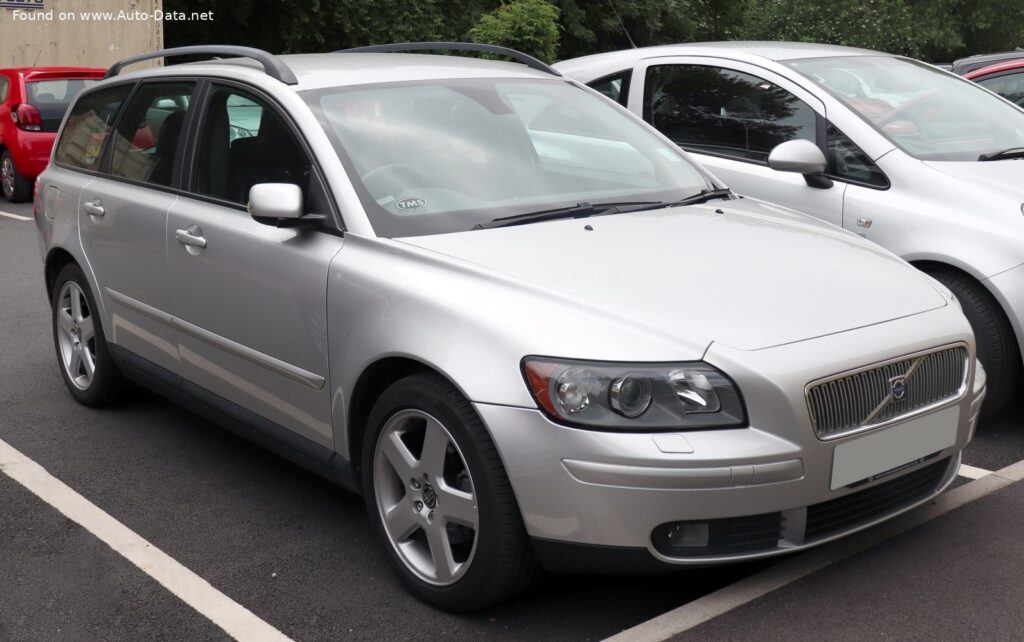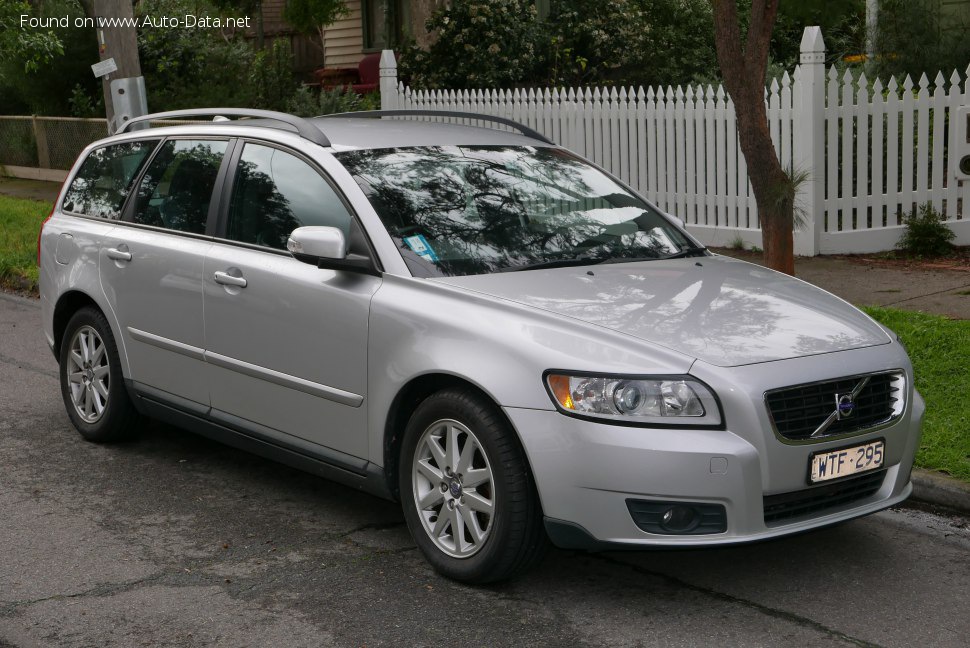
The Volvo V50 (facelift 2007) 2.4 D5 (180 Hp): A Refined European Estate
The Volvo V50, particularly the updated generation featuring the 2007 facelift, represented a pivotal offering in the competitive European premium compact executive station wagon segment. Positioned as a more compact and sportier alternative to Volvo’s larger V70, the V50 successfully blended traditional Volvo attributes of safety and practicality with a more dynamic driving experience and contemporary design. While not widely available in the United States with its full range of powertrains, especially the diesel variants, the Volvo V50 (facelift 2007) with the potent 2.4 D5 (180 Hp) engine was a highly regarded model in its primary European market, appealing to families and professionals seeking a versatile and efficient vehicle. Produced from 2007 to 2010, this iteration showcased Volvo’s commitment to sophisticated engineering and advanced diesel technology.
Engine and Performance of the Volvo V50 (facelift 2007)
At the heart of the Volvo V50 (facelift 2007) 2.4 D5 was Volvo’s renowned 2.4-liter D5 inline five-cylinder turbodiesel engine, identified by the engine code D5244T8. This powerplant was a testament to Volvo’s engineering prowess, offering a compelling blend of power, torque, and efficiency. With a displacement of 2400 cubic centimeters (146.46 cubic inches), the engine featured a DOHC (Double Overhead Camshaft) valvetrain with four valves per cylinder, ensuring optimal airflow and combustion.
Power output for this specific variant was a robust 180 horsepower, achieved at 4000 revolutions per minute. More impressive, particularly for a family-oriented station wagon, was the torque figure: a substantial 400 Newton-meters (295.02 lb.-ft.) available across a broad rev range, from 2000 to 2750 rpm. This low-end torque was crucial for effortless acceleration and strong passing power, making the V50 D5 a confident performer on both urban streets and European highways.
The D5 engine utilized a sophisticated Diesel Commonrail fuel injection system, paired with a turbocharger and intercooler, to optimize fuel delivery and boost performance while maintaining efficiency. Its compression ratio stood at 17.3:1. This powertrain architecture, driving the front wheels, was mated to a precise 6-speed manual transmission, offering engaging control for the driver.
Performance figures were quite respectable for a vehicle of its class. The Volvo V50 (facelift 2007) 2.4 D5 could accelerate from 0 to 60 mph in a brisk 7.6 seconds, with a top speed reaching 139.81 mph (225 km/h). Despite its strong performance, fuel economy was a significant selling point, especially in Europe where diesel engines were highly favored for their efficiency. The combined NEDC fuel consumption was rated at 6.3 liters per 100 kilometers, translating to an impressive 37.3 US mpg. Urban consumption was 8.3 l/100 km (28.3 US mpg), and extra-urban was 5.1 l/100 km (46.1 US mpg). With CO2 emissions of 166 g/km, it met the Euro 4 emission standard, a key consideration for environmental regulations at the time. The engine also featured a particulate filter, a crucial component for reducing diesel emissions.
Design and Features
The Volvo V50 (facelift 2007) retained the elegant and modern styling that characterized its introduction in 2004, while incorporating subtle refinements. As a five-door station wagon, it embodied Volvo’s traditional expertise in designing practical yet appealing family vehicles. The facelift brought minor aesthetic updates to the front fascia, grille, headlights, and taillights, aligning its look with contemporary Volvo design language. Its compact dimensions – a length of 178.03 inches (4522 mm), width of 69.69 inches (1770 mm), and height of 57.36 inches (1457 mm) – made it agile for city driving while offering ample interior space. The wheelbase measured 103.94 inches (2640 mm), contributing to a stable ride and generous cabin room.
Inside, the V50 offered seating for five occupants, characterized by Volvo’s hallmark ergonomic design and comfortable seats. The interior featured high-quality materials and a minimalist “floating” center console, which was a distinctive design element for Volvo models of this era. Practicality was a strong suit, with a minimum trunk capacity of 14.73 cubic feet (417 liters), expanding to a substantial 46.16 cubic feet (1307 liters) with the rear seats folded down, making it highly versatile for cargo hauling.
Safety, as always with Volvo, was paramount. The V50 was built on Volvo’s P1 platform, shared with the S40 sedan and, notably, the Ford Focus and Mazda 3, though heavily modified by Volvo for enhanced safety and rigidity. Standard safety features included ABS (Anti-lock Braking System) and a robust body structure designed to absorb impact forces effectively. The suspension system comprised an independent McPherson strut setup with coil springs and an anti-roll bar at the front, complemented by an independent multi-link spring suspension with a stabilizer bar at the rear. This configuration provided a comfortable ride while maintaining composed handling. Braking power came from ventilated discs at the front and solid discs at the rear. The steering was a rack and pinion system with electric power assistance, offering precise control and ease of maneuverability, with a minimum turning circle of 34.78 feet (10.6 meters). The car could be equipped with various tire sizes, from 205/55 R16 to 215/45 R18, depending on the trim level and wheel options.
Technical Specifications: Volvo V50 (facelift 2007) 2.4 D5 (180 Hp)
| Category | Specification |
|---|---|
General Information |
|
| Brand | Volvo |
| Model | V50 |
| Generation | V50 (facelift 2007) |
| Type (Engine) | 2.4 D5 (180 Hp) |
| Start of Production | 2007 year |
| End of Production | 2010 year |
| Powertrain Architecture | Internal Combustion engine |
| Body type | Station wagon (estate) |
| Seats | 5 |
| Doors | 5 |
Performance Specs |
|
| Fuel Consumption (economy) – urban (NEDC) | 8.3 l/100 km (28.3 US mpg) |
| Fuel Consumption (economy) – extra urban (NEDC) | 5.1 l/100 km (46.1 US mpg) |
| Fuel Consumption (economy) – combined (NEDC) | 6.3 l/100 km (37.3 US mpg) |
| CO2 Emissions (NEDC) | 166 g/km |
| Fuel Type | Diesel |
| Acceleration 0 – 60 mph | 7.6 sec |
| Maximum Speed | 225 km/h (139.81 mph) |
| Emission Standard | Euro 4 |
| Weight-to-power ratio | 8.1 kg/Hp (123.9 Hp/tonne) |
| Weight-to-torque ratio | 3.6 kg/Nm (275.3 Nm/tonne) |
Engine Specs |
|
| Power | 180 Hp @ 4000 rpm |
| Power per liter | 75 Hp/l |
| Torque | 400 Nm @ 2000-2750 rpm (295.02 lb.-ft. @ 2000-2750 rpm) |
| Engine layout | Front, Transverse |
| Engine Model/Code | D5244T8 |
| Engine displacement | 2400 cm3 (146.46 cu. in.) |
| Number of cylinders | 5 |
| Engine configuration | Inline |
| Cylinder Bore | 81 mm (3.19 in.) |
| Piston Stroke | 93.15 mm (3.67 in.) |
| Compression ratio | 17.3:1 |
| Number of valves per cylinder | 4 |
| Fuel injection system | Diesel Commonrail |
| Engine aspiration | Turbocharger, Intercooler |
| Valvetrain | DOHC |
| Engine oil capacity | 6 l (6.34 US qt) |
| Coolant | 9.5 l (10.04 US qt) |
| Engine systems | Particulate filter |
Space, Volume and Weights |
|
| Kerb Weight | 1453 kg (3203.32 lbs.) |
| Max. weight | 2020 kg (4453.34 lbs.) |
| Max load | 567 kg (1250.02 lbs.) |
| Trunk (boot) space – minimum | 417 l (14.73 cu. ft.) |
| Trunk (boot) space – maximum | 1307 l (46.16 cu. ft.) |
| Fuel tank capacity | 60 l (15.85 US gal) |
| Max. roof load | 75 kg (165.35 lbs.) |
| Permitted trailer load with brakes (12%) | 1500 kg (3306.93 lbs.) |
| Permitted trailer load without brakes | 750 kg (1653.47 lbs.) |
| Permitted towbar download | 75 kg (165.35 lbs.) |
Dimensions |
|
| Length | 4522 mm (178.03 in.) |
| Width | 1770 mm (69.69 in.) |
| Width including mirrors | 2022 mm (79.61 in.) |
| Height | 1457 mm (57.36 in.) |
| Wheelbase | 2640 mm (103.94 in.) |
| Front track | 1535 mm (60.43 in.) |
| Rear (Back) track | 1531 mm (60.28 in.) |
| Minimum turning circle (turning diameter) | 10.6 m (34.78 ft.) |
Drivetrain, Brakes and Suspension Specs |
|
| Drivetrain Architecture | The Internal combustion engine (ICE) drives the front wheels of the vehicle. |
| Drive wheel | Front wheel drive |
| Number of gears and type of gearbox | 6 gears, manual transmission |
| Front suspension | Independent, type McPherson with coil spring and anti-roll bar |
| Rear suspension | Independent multi-link spring suspension with stabilizer |
| Front brakes | Ventilated discs |
| Rear brakes | Disc |
| Assisting systems | ABS (Anti-lock braking system) |
| Steering type | Steering rack and pinion |
| Power steering | Electric Steering |
| Tires size | 205/55 R16; 205/50 R17; 215/45 R18 |
| Wheel rims size | 6.5J x 16; 7J x 17; 7.5J x 17; 7.5J x 18 |
Legacy and Market Impact of the Volvo V50 (facelift 2007)
The Volvo V50 (facelift 2007), particularly with the 2.4 D5 engine, solidified Volvo’s position in the premium compact estate segment in Europe. It was a critical model for Volvo, demonstrating their ability to adapt to changing market demands for smaller, more efficient, yet still premium and safe vehicles. In a market where diesel engines were the backbone of efficiency and performance, the D5 engine was a significant asset, offering a compelling blend that few rivals could match.
Its primary competitors in the European market included established players like the BMW 3 Series Touring, Audi A4 Avant, and Mercedes-Benz C-Class Estate. The V50 differentiated itself with its distinctive Scandinavian design, renowned safety features, and a slightly more understated, yet sophisticated, appeal. It also competed with models like the Saab 9-3 SportCombi and the more mainstream but well-regarded Ford Mondeo Estate, though Volvo always aimed for a more premium positioning.
The V50’s heritage built upon Volvo’s long-standing reputation for practical and safe wagons, but infused it with a dose of modern style and driving dynamics. The platform sharing with Ford and Mazda allowed Volvo to develop a car with excellent chassis rigidity and handling characteristics, while still maintaining its unique brand identity and safety standards. The D5 engine, in particular, earned a strong reputation for its smooth power delivery and robust reliability, becoming a favorite among long-distance commuters and those who valued strong performance without sacrificing fuel economy.
While the V50 found its niche as a strong performer in Europe, its limited availability with diesel engines in the US market meant it was often overlooked by American consumers who were generally less accustomed to premium diesel offerings in this segment. However, its success in Europe underscored Volvo’s global strategy to cater to regional preferences while maintaining a consistent brand image. The V50, especially the D5 variant, is remembered as a well-rounded and capable premium compact station wagon that offered a distinct alternative in a competitive landscape, embodying Volvo’s commitment to thoughtful design, advanced engineering, and unwavering safety. Its legacy paved the way for future Volvo compact models, continuing the brand’s evolution in the global automotive market.