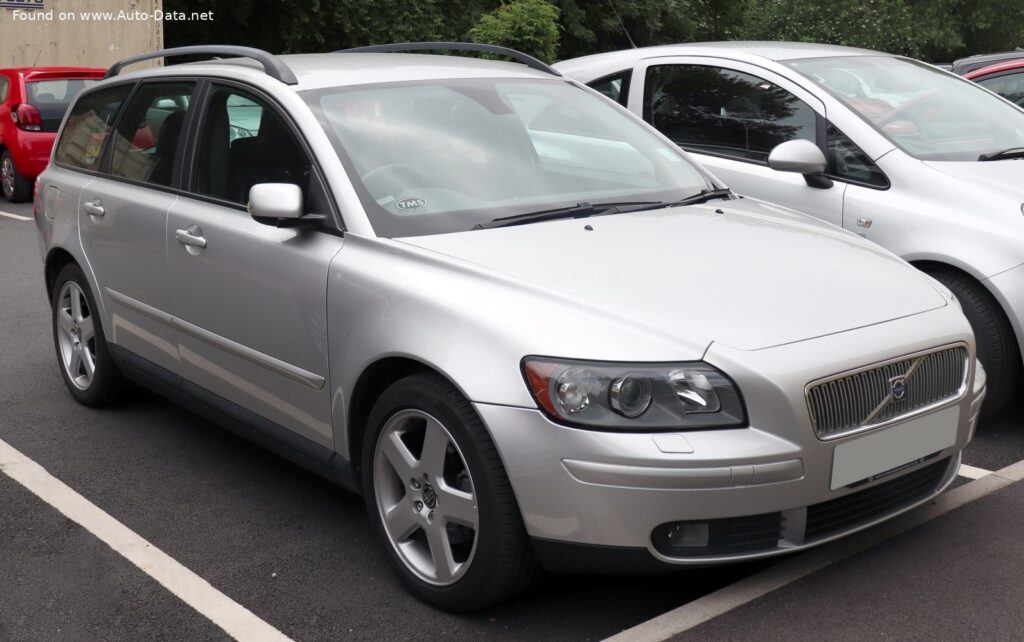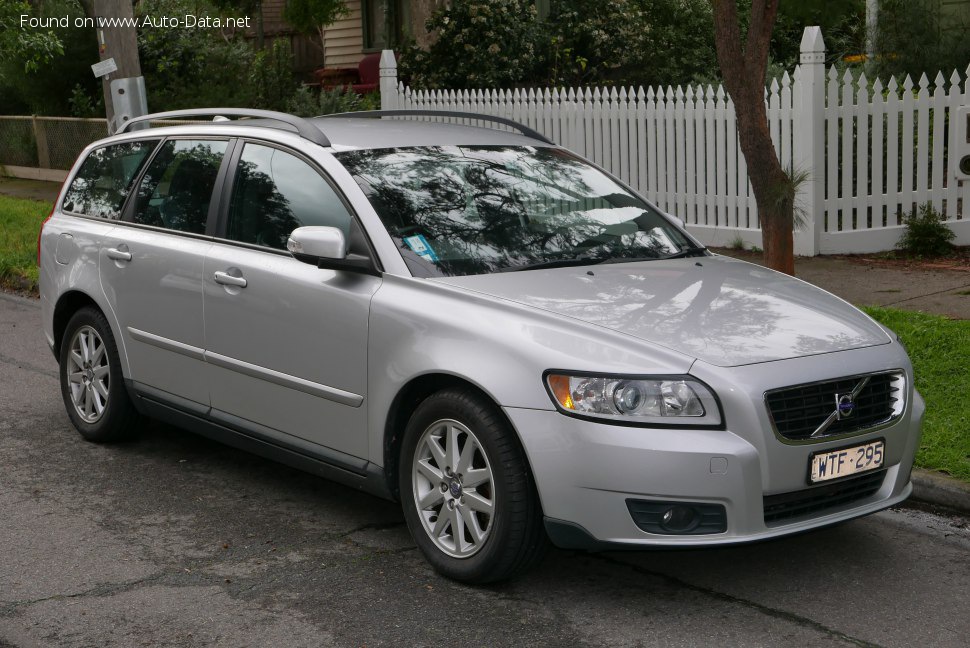
The Volvo V50 (Facelift 2007): A Refined Compact Premium Wagon
The Volvo V50 (facelift 2007) represents a significant evolution of Volvo’s compact premium station wagon, first introduced in 2004. As part of the P1 platform family, shared with the Ford C1 and Mazda 3, the V50 was designed to offer Volvo’s renowned safety and practicality in a more compact, dynamically capable package. The 2007 facelift brought a series of aesthetic and functional enhancements, solidifying its position in the competitive compact executive segment. This particular variant, equipped with the 2.4i (170 Hp) engine, provided a balanced blend of performance and everyday usability, appealing to buyers seeking a versatile and sophisticated vehicle with a distinctive Swedish character. Though primarily a strong contender in the European market, the V50 also carved out a niche in North America, catering to those who appreciated its understated elegance and wagon utility in an SUV-dominated landscape.
Engine & Performance of the Volvo V50 (Facelift 2007) 2.4i
At the heart of the Volvo V50 (facelift 2007) 2.4i lies Volvo’s venerable B5244S4 engine, a naturally aspirated 2.4-liter (2435 cm3 or 148.59 cu. in.) inline-five cylinder unit. This engine configuration is a hallmark of Volvo engineering, known for its distinctive sound, smooth power delivery, and inherent balance. It features a DOHC (Double Overhead Camshaft) valvetrain with four valves per cylinder, optimizing airflow for efficiency and performance. The multi-port manifold injection system ensures precise fuel delivery, contributing to both responsiveness and fuel economy.
The 2.4i engine produces a robust 170 horsepower at 6000 rpm, coupled with 169.64 lb.-ft. of torque peaking at a relatively accessible 4400 rpm. This power output translates into spirited performance for a vehicle of its class and size. The V50 2.4i can accelerate from 0 to 60 mph in a respectable 7.9 seconds, making it agile enough for both city driving and highway merging. Its top speed is electronically limited to 136.7 mph (220 km/h), a testament to its capable powertrain.
Power is delivered to the front wheels via a precise 5-speed manual transmission, offering an engaging driving experience for those who prefer to be more connected to the vehicle’s mechanics. The front-wheel-drive architecture contributes to predictable handling and good traction in various conditions. In terms of efficiency, the 2.4i engine, despite its naturally aspirated design, delivers a combined fuel economy of 27.7 US mpg (8.5 l/100 km) under the NEDC cycle. Urban consumption is rated at 19 US mpg (12.4 l/100 km), while extra-urban driving yields an impressive 35.6 US mpg (6.6 l/100 km). With CO2 emissions of 203 g/km, the vehicle meets the Euro 4 emission standard for its time.
The engine’s layout is front, transverse, contributing to the V50’s compact footprint and maximizing interior space. With a compression ratio of 10.3:1 and a bore of 3.27 inches (83 mm) combined with a piston stroke of 3.54 inches (90 mm), the engine is designed for durability and smooth operation, characteristic of Volvo’s engineering philosophy. The engine oil capacity stands at 6.13 US quarts (5.8 liters), while the cooling system holds 10.04 US quarts (9.5 liters).
Design & Features
The Volvo V50 (facelift 2007) retains the sleek and elegant lines of its pre-facelift predecessor, while incorporating subtle yet impactful changes that refreshed its aesthetic. As a five-door station wagon (often referred to as an “estate” in European markets), the V50 masterfully blended the practicality of a wagon with the stylish appeal of a sport sedan. The facelift introduced a redesigned front fascia with a more prominent grille, updated headlights, and revised bumper, giving it a more modern and assertive presence. The rear also received attention, with new LED taillights and a subtly reshaped bumper that enhanced its sophisticated look.
Measuring 178.03 inches (4522 mm) in length, 69.69 inches (1770 mm) in width (79.61 inches or 2022 mm including mirrors), and 57.36 inches (1457 mm) in height, the V50 is perfectly sized for navigating both urban environments and open roads. Its 103.94-inch (2640 mm) wheelbase contributes to a stable ride and comfortable interior space for five occupants. The minimum turning circle of 34.78 feet (10.6 m) ensures good maneuverability.
Inside, the V50 continued to impress with its Scandinavian-inspired design, characterized by clean lines, high-quality materials, and exceptional ergonomics. A standout feature was the slim, “floating” center console, a design element first introduced in the S40/V50 models, which provided a unique aesthetic and practical storage space behind it. The dashboard layout was intuitive, with logically placed controls and clear instrumentation. Volvo’s commitment to safety was evident through a comprehensive suite of passive and active safety features, including ABS (Anti-lock Braking System), robust chassis construction, and a full complement of airbags, though specific details like SIPS (Side Impact Protection System) and WHIPS (Whiplash Protection System) would be standard for a Volvo of this era.
The V50’s station wagon body type offered significant versatility. The trunk space ranged from 14.73 cu. ft. (417 liters) with all seats in place, expanding to a generous 46.16 cu. ft. (1307 liters) with the rear seats folded down, making it highly practical for hauling cargo, luggage, or sporting equipment. Its maximum load capacity was 1294.11 lbs (587 kg), and it could tow a braked trailer up to 3306.93 lbs (1500 kg), further enhancing its utility.
The V50’s handling characteristics were praised for their composure and responsiveness, thanks to its sophisticated suspension setup. It featured an independent MacPherson strut design with coil springs and an anti-roll bar at the front, complemented by an independent multi-link spring suspension with a stabilizer bar at the rear. This configuration provided a comfortable ride quality while maintaining good body control. Steering was managed by an electric power steering rack and pinion system, offering precise feedback and effort appropriate for various driving conditions. The braking system utilized ventilated discs at the front and solid discs at the rear, ensuring strong and consistent stopping power.
Technical Specifications
| Category | Specification |
|---|---|
| Brand | Volvo |
| Model | V50 (facelift 2007) |
| Type (Engine) | 2.4i (170 Hp) |
| Production Start | 2007 |
| Production End | 2009 |
| Body Type | Station wagon (estate) |
| Seats | 5 |
| Doors | 5 |
| Performance Specs | |
| Fuel Consumption (Urban) | 19 US mpg (12.4 l/100 km) |
| Fuel Consumption (Extra Urban) | 35.6 US mpg (6.6 l/100 km) |
| Fuel Consumption (Combined) | 27.7 US mpg (8.5 l/100 km) |
| CO2 Emissions (NEDC) | 203 g/km |
| Fuel Type | Petrol (Gasoline) |
| Acceleration 0-60 mph | 7.9 sec |
| Acceleration 0-100 km/h | 8.3 sec |
| Maximum Speed | 136.7 mph (220 km/h) |
| Emission Standard | Euro 4 |
| Weight-to-Power Ratio | 8.1 kg/Hp (123.8 Hp/tonne) |
| Weight-to-Torque Ratio | 6 kg/Nm (167.5 Nm/tonne) |
| Engine Specs | |
| Power | 170 Hp @ 6000 rpm |
| Power per liter | 69.8 Hp/l |
| Torque | 169.64 lb.-ft. (230 Nm) @ 4400 rpm |
| Engine Layout | Front, Transverse |
| Engine Model/Code | B5244S4 |
| Engine Displacement | 2.4 liters (2435 cm3 / 148.59 cu. in.) |
| Number of Cylinders | 5 |
| Engine Configuration | Inline |
| Cylinder Bore | 3.27 in. (83 mm) |
| Piston Stroke | 3.54 in. (90 mm) |
| Compression Ratio | 10.3:1 |
| Valves per Cylinder | 4 |
| Fuel Injection System | Multi-port manifold injection |
| Engine Aspiration | Naturally aspirated |
| Valvetrain | DOHC |
| Engine Oil Capacity | 6.13 US qt (5.8 l) |
| Coolant Capacity | 10.04 US qt (9.5 l) |
| Space, Volume and Weights | |
| Kerb Weight | 3026.95 lbs (1373 kg) |
| Max. Weight | 4321.06 lbs (1960 kg) |
| Max Load | 1294.11 lbs (587 kg) |
| Trunk Space (minimum) | 14.73 cu. ft. (417 l) |
| Trunk Space (maximum) | 46.16 cu. ft. (1307 l) |
| Fuel Tank Capacity | 16.38 US gal (62 l) |
| Max. Roof Load | 165.35 lbs (75 kg) |
| Permitted Trailer Load with Brakes (12%) | 3306.93 lbs (1500 kg) |
| Permitted Trailer Load without Brakes | 1543.24 lbs (700 kg) |
| Permitted Towbar Download | 165.35 lbs (75 kg) |
| Dimensions | |
| Length | 178.03 in. (4522 mm) |
| Width | 69.69 in. (1770 mm) |
| Width (incl. mirrors) | 79.61 in. (2022 mm) |
| Height | 57.36 in. (1457 mm) |
| Wheelbase | 103.94 in. (2640 mm) |
| Front Track | 60.43 in. (1535 mm) |
| Rear Track | 60.28 in. (1531 mm) |
| Minimum Turning Circle | 34.78 ft. (10.6 m) |
| Drivetrain, Brakes and Suspension Specs | |
| Drivetrain Architecture | Front-wheel drive, Internal Combustion Engine |
| Drive Wheel | Front wheel drive |
| Number of Gears / Gearbox Type | 5 gears, manual transmission |
| Front Suspension | Independent, MacPherson with coil spring and anti-roll bar |
| Rear Suspension | Independent multi-link spring suspension with stabilizer |
| Front Brakes | Ventilated discs |
| Rear Brakes | Disc |
| Assisting Systems | ABS (Anti-lock braking system) |
| Steering Type | Steering rack and pinion |
| Power Steering | Electric Steering |
| Tire Size | 205/55 R16; 205/50 R17; 215/45 R18 |
| Wheel Rims Size | 6.5J x 16; 7J x 17; 7.5J x 18 |
Legacy & Market Impact of the Volvo V50 (Facelift 2007)
The Volvo V50 (facelift 2007), particularly in its 2.4i guise, played a crucial role in Volvo’s strategy to broaden its appeal beyond its traditional, often larger, sedan and wagon offerings. Positioned in the compact premium segment, it aimed to attract younger buyers and families who valued safety, practicality, and distinctive design, without the bulk of a larger vehicle. Its primary competitors included the BMW 3 Series Touring, Audi A4 Avant, and Mercedes-Benz C-Class Estate in Europe, as well as the Saab 9-3 SportCombi, all of which offered premium amenities and dynamic driving characteristics.
What set the V50 apart was its unique blend of Swedish sensibility. While European rivals often emphasized sportiness, Volvo maintained its focus on comfort, ergonomics, and, above all, safety. The P1 platform, a collaboration with Ford and Mazda, allowed the V50 to offer a more engaging driving experience than previous compact Volvos, striking a good balance between ride comfort and handling agility. The enduring appeal of the inline-five engine, with its smooth power delivery and characteristic exhaust note, also gave the V50 a distinctive personality that many enthusiasts appreciated.
In the North American market, where station wagons had become a niche segment, the V50 served a loyal customer base. It offered a compelling alternative to SUVs, providing comparable cargo capacity in a lower, more car-like form factor, which many preferred for its driving dynamics and fuel efficiency. The facelifted model, with its refreshed styling and continued emphasis on technology and safety (for its time), helped keep the V50 competitive throughout its production run until 2009. While it may not have achieved the sales volumes of its German rivals, the V50 successfully reinforced Volvo’s reputation for building safe, well-engineered, and practical vehicles that stood out from the crowd. Its legacy is one of a stylish and capable compact wagon that perfectly embodied Volvo’s core values in a more accessible package.