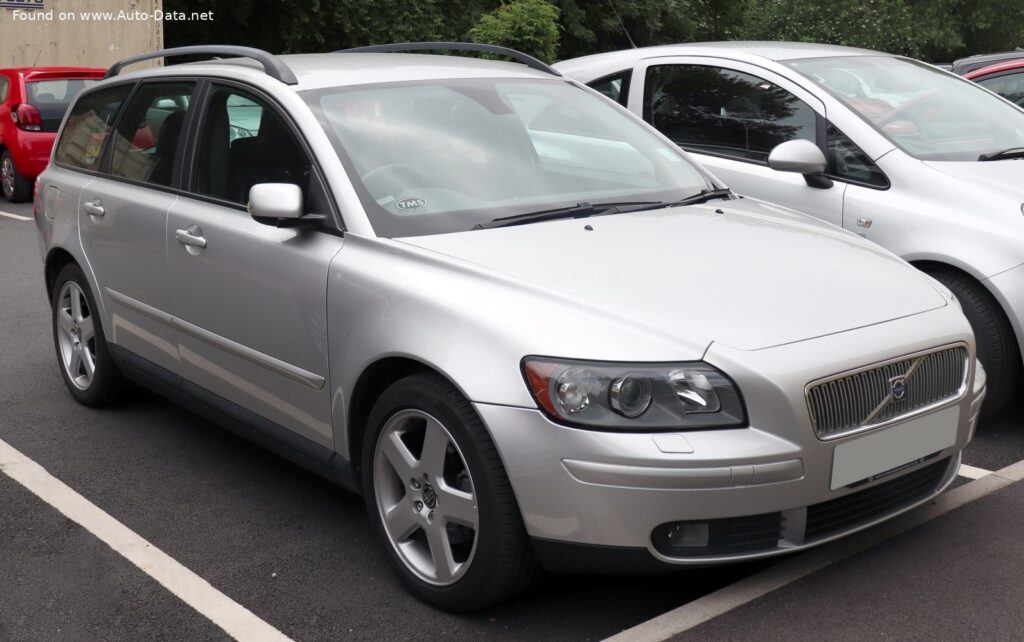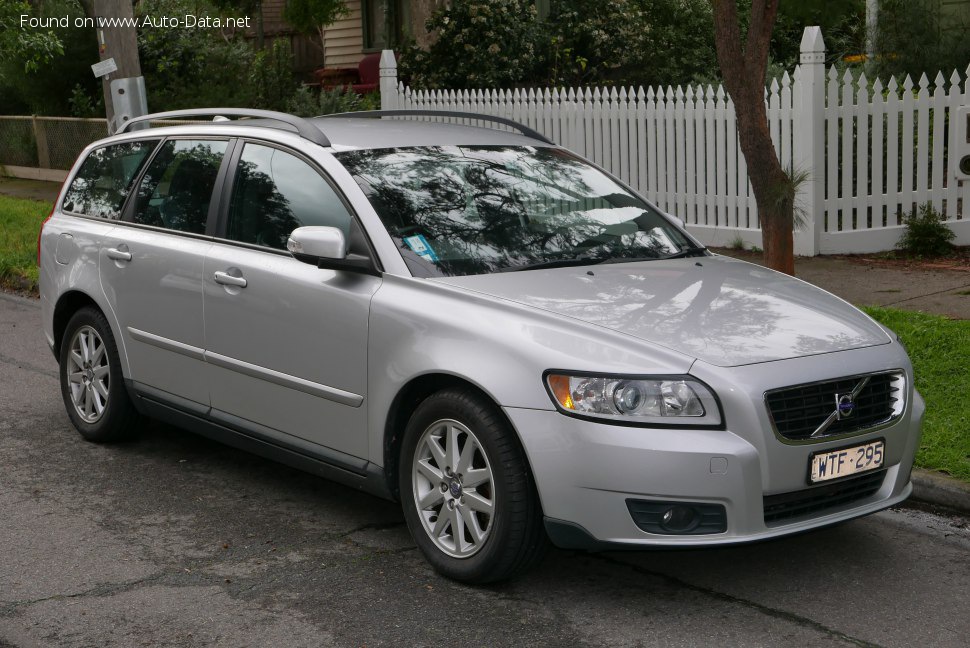
The Volvo V50 (facelift 2007) 2.5 T5 (230 Hp) AWD: A Premium Compact Wagon
The Volvo V50 (facelift 2007) represents a significant chapter in Volvo’s modern history, offering a blend of Scandinavian design, robust performance, and renowned safety in a compact station wagon package. Introduced in 2004, the V50 was Volvo’s entry into the premium compact segment, sharing its Ford C1 platform with the second-generation Ford Focus and the Mazda 3. This strategic platform sharing allowed Volvo to leverage global engineering resources while maintaining its distinct brand identity. The facelifted model, launched in 2007, brought subtle yet impactful enhancements to its exterior styling, interior ergonomics, and mechanical refinement, ensuring its competitiveness through the latter half of its production run until 2012. The specific variant under discussion, the 2.5 T5 (230 Hp) AWD, stood as the performance flagship of the V50 lineup, combining a potent turbocharged five-cylinder engine with an advanced all-wheel-drive system, appealing to discerning drivers seeking practicality without compromising on driving engagement.
While the V50 was sold globally, including in limited numbers in the United States, its primary market and strongest sales were concentrated in Europe. Here, the compact executive wagon segment is highly competitive and deeply ingrained in automotive culture, valuing versatility, fuel efficiency, and dynamic capability. The V50 aimed to capture a niche within this segment, offering a distinctive alternative to German rivals like the BMW 3 Series Touring and Audi A4 Avant, with a unique emphasis on understated luxury, superior comfort, and, of course, Volvo’s legendary safety credentials. The 2.5 T5 AWD model, in particular, provided a compelling proposition for those desiring brisk acceleration and enhanced traction, making it suitable for varying road conditions and climates often encountered across the European continent.
Engine & Performance: The Heart of the Volvo V50 (facelift 2007) T5 AWD
Powertrain Architecture and Configuration
At the core of the Volvo V50 (facelift 2007) 2.5 T5 (230 Hp) AWD model lies Volvo’s celebrated B5254T7 engine, a 2.5-liter (2521 cm³ or 153.84 cu. in.) inline five-cylinder gasoline unit. This engine, known for its distinctive thrum and robust power delivery, is mounted transversally at the front of the vehicle. Its inline-five configuration, a Volvo hallmark for decades, offers a unique balance of smoothness and character, bridging the gap between a four-cylinder and a six-cylinder engine. The engine features Double Overhead Camshafts (DOHC) with four valves per cylinder, ensuring efficient breathing and optimal performance across the rev range.
Turbocharged Power and Torque
The “T5” designation signifies a turbocharged engine, and this unit benefits from a sophisticated turbocharger with an intercooler, significantly boosting its output. It generates a substantial 230 horsepower at 5000 rpm, translating to an impressive power-per-liter figure of 91.2 Hp/l. More critically for real-world driving, the engine delivers a robust 320 Nm (236.02 lb.-ft.) of torque across a broad powerband, from a low 1500 rpm all the way up to 5000 rpm. This wide torque plateau ensures strong, linear acceleration and excellent responsiveness, making overtaking maneuvers effortless and city driving smooth.
Drivetrain and Driving Dynamics
Power is transmitted through a standard 6-speed manual transmission, offering precise control and engaging driving experience. The standout feature of this particular V50 variant is its All-Wheel Drive (AWD) system. This sophisticated drivetrain architecture primarily drives the front wheels, with power automatically and seamlessly transferred to the rear wheels via an electrically or mechanically operated clutch when slippage is detected. This Haldex-based system provides enhanced traction and stability in adverse weather conditions or during spirited driving, improving both safety and dynamic capability.
Performance Metrics
The combination of the potent T5 engine and AWD system results in impressive performance figures for a compact wagon. The Volvo V50 (facelift 2007) 2.5 T5 AWD can accelerate from 0 to 60 mph in a brisk 6.8 seconds (0-100 km/h in 7.2 seconds). Its top speed is electronically limited to 230 km/h (142.92 mph). Despite its performance, Volvo engineered the T5 to offer reasonable fuel economy for its class, with a combined rating of 9.6 l/100 km (24.5 US mpg). CO2 emissions are rated at 229 g/km, reflecting its performance-oriented nature. The weight-to-power ratio stands at 6.4 kg/Hp (155.6 Hp/tonne), underscoring its athletic capabilities.
Design & Features: Scandinavian Practicality and Style
Exterior Design and Body Type
The Volvo V50 (facelift 2007) maintains the distinctive and understated elegance characteristic of Volvo’s design language, updated with subtle refinements for the facelift. As a 5-door station wagon (often referred to as an “estate” in European markets), it offers a sleek and modern profile that avoids the boxy aesthetics of older Volvo wagons, yet retains impressive practicality. The facelift introduced revised front and rear fascias, updated grille designs, and new headlamp and taillamp clusters, giving it a fresher, more contemporary look. Its compact dimensions – 178.03 inches (4522 mm) in length, 69.69 inches (1770 mm) in width, and 57.36 inches (1457 mm) in height – make it agile in urban environments while still providing ample interior space.
Interior Comfort and Versatility
Inside, the V50 exemplifies Scandinavian design principles: minimalist, functional, and user-friendly. The cabin comfortably seats five occupants, with high-quality materials and excellent ergonomics. A defining feature is Volvo’s signature “floating” center console, a slim panel housing climate and audio controls, creating an airy and modern feel. For a compact wagon, the V50 offers significant cargo versatility. With the rear seats in place, it provides 14.73 cu. ft. (417 liters) of trunk space, expanding to a generous 46.16 cu. ft. (1307 liters) with the rear seats folded down. This adaptability makes it suitable for everything from daily commutes to family road trips.
Safety and Technology
As expected from Volvo, safety is a paramount feature of the Volvo V50 (facelift 2007). The vehicle is built on a robust safety cage and incorporates advanced passive safety features, including multiple airbags, whiplash protection system (WHIPS), and side impact protection system (SIPS). Active safety is enhanced by standard Anti-lock Braking System (ABS), and the AWD system significantly contributes to stability and control. The V50 also features a modern independent suspension setup with McPherson struts at the front and a multi-link system at the rear, both equipped with anti-roll bars, ensuring a comfortable ride and predictable handling. Power steering is an electric rack and pinion system, providing precise feedback and ease of maneuverability, with a minimum turning circle of 34.78 ft (10.6 m).
Technical Specifications: Volvo V50 (facelift 2007) 2.5 T5 (230 Hp) AWD
| Category | Specification |
|---|---|
| General Information | |
| Brand | Volvo |
| Model | V50 |
| Generation | V50 (facelift 2007) |
| Type (Engine) | 2.5 T5 (230 Hp) AWD |
| Start of Production | 2007 year |
| End of Production | 2012 year |
| Powertrain Architecture | Internal Combustion engine |
| Body type | Station wagon (estate) |
| Seats | 5 |
| Doors | 5 |
| Performance Specs | |
| Fuel consumption (economy) – urban | 13.5 l/100 km (17.4 US mpg) |
| Fuel consumption (economy) – extra urban | 7.3 l/100 km (32.2 US mpg) |
| Fuel consumption (economy) – combined | 9.6 l/100 km (24.5 US mpg) |
| CO2 emissions | 229 g/km |
| Fuel Type | Petrol (Gasoline) |
| Acceleration 0 – 60 mph | 6.8 sec |
| Acceleration 0 – 100 km/h | 7.2 sec |
| Maximum speed | 230 km/h (142.92 mph) |
| Weight-to-power ratio | 6.4 kg/Hp (155.6 Hp/tonne) |
| Weight-to-torque ratio | 4.6 kg/Nm (216.5 Nm/tonne) |
| Engine Specs | |
| Power | 230 Hp @ 5000 rpm |
| Power per liter | 91.2 Hp/l |
| Torque | 320 Nm @ 1500-5000 rpm (236.02 lb.-ft. @ 1500-5000 rpm) |
| Engine layout | Front, Transverse |
| Engine Model/Code | B5254T7 |
| Engine displacement | 2521 cm³ (153.84 cu. in.) |
| Number of cylinders | 5 |
| Engine configuration | Inline |
| Cylinder Bore | 83 mm (3.27 in.) |
| Piston Stroke | 93.2 mm (3.67 in.) |
| Compression ratio | 9:1 |
| Number of valves per cylinder | 4 |
| Fuel injection system | Multi-port manifold injection |
| Engine aspiration | Turbocharger, Intercooler |
| Valvetrain | DOHC |
| Engine oil capacity | 5.8 l (6.13 US qt) |
| Coolant | 9.5 l (10.04 US qt) |
| Space, Volume and Weights | |
| Kerb Weight | 1478 kg (3258.43 lbs.) |
| Max. weight | 2050 kg (4519.48 lbs.) |
| Max load | 572 kg (1261.04 lbs.) |
| Trunk (boot) space – minimum | 417 l (14.73 cu. ft.) |
| Trunk (boot) space – maximum | 1307 l (46.16 cu. ft.) |
| Fuel tank capacity | 58 l (15.32 US gal) |
| Max. roof load | 75 kg (165.35 lbs.) |
| Permitted trailer load with brakes (12%) | 1500 kg (3306.93 lbs.) |
| Permitted trailer load without brakes | 700 kg (1543.24 lbs.) |
| Permitted towbar download | 75 kg (165.35 lbs.) |
| Dimensions | |
| Length | 4522 mm (178.03 in.) |
| Width | 1770 mm (69.69 in.) |
| Width including mirrors | 2022 mm (79.61 in.) |
| Height | 1457 mm (57.36 in.) |
| Wheelbase | 2640 mm (103.94 in.) |
| Front track | 1535 mm (60.43 in.) |
| Rear (Back) track | 1531 mm (60.28 in.) |
| Minimum turning circle (turning diameter) | 10.6 m (34.78 ft.) |
| Drivetrain, Brakes and Suspension Specs | |
| Drivetrain Architecture | The Internal combustion engine (ICE) drives the front wheels permanently, and the rear wheels are driven through an electrically or mechanically operated clutch if necessary. |
| Drive wheel | All wheel drive (4×4) |
| Number of gears and type of gearbox | 6 gears, manual transmission |
| Front suspension | Independent, type McPherson with coil spring and anti-roll bar |
| Rear suspension | Independent multi-link spring suspension with stabilizer |
| Front brakes | Ventilated discs |
| Rear brakes | Disc |
| Assisting systems | ABS (Anti-lock braking system) |
| Steering type | Steering rack and pinion |
| Power steering | Electric Steering |
| Tires size | 205/55 R16; 205/50 R17; 215/45 R18 |
| Wheel rims size | 6.5J x 16; 7J x 17; 7.5J x 18 |
Legacy & Market Impact of the Volvo V50 (facelift 2007)
The Volvo V50 (facelift 2007), particularly in its potent 2.5 T5 AWD guise, carved out a distinct niche in the highly competitive premium compact segment. While it leveraged the shared Ford C1 platform for cost efficiencies and dynamic capabilities, Volvo successfully imbued the V50 with its unique brand DNA. It was positioned as a more stylish, compact, and dynamic alternative to Volvo’s larger wagons, yet it retained the core values of safety, practicality, and understated luxury that the brand is known for.
Market Positioning and Competitors
In its primary European market, the V50 competed against formidable rivals such as the Audi A4 Avant, BMW 3 Series Touring, and Mercedes-Benz C-Class Estate. While it might not have matched the ultimate dynamic prowess of a rear-wheel-drive BMW or the perceived prestige of an Audi, the V50 offered a compelling package for buyers seeking something a little different. Its five-cylinder engine provided a unique auditory experience and strong performance, and its standard-setting safety features were a significant draw. The V50 also faced competition from other mainstream compact wagons like the Volkswagen Golf Variant (though perhaps a step below in premium aspirations) and the Ford Focus Wagon, highlighting its position at the higher end of the compact segment.
Reputation and Significance
The V50’s reputation centered on its blend of practicality, understated design, and robust engineering. Owners appreciated its comfortable ride, solid build quality, and the peace of mind offered by Volvo’s safety innovations. The T5 AWD model, in particular, gained a following among those who desired strong performance and all-weather capability without resorting to a larger, less fuel-efficient SUV. It was a car that appealed to individuals and families who valued intelligent design and functional elegance over overt flashiness.
Lasting Impact
Although the V50 was eventually succeeded by the V60, its legacy endures as a testament to Volvo’s ability to create a desirable and competitive premium compact wagon. It demonstrated that Volvo could adapt to platform sharing while maintaining its unique identity and commitment to its core values. The Volvo V50 (facelift 2007) 2.5 T5 (230 Hp) AWD remains a sought-after used vehicle for those who appreciate its unique five-cylinder engine, all-wheel-drive traction, and timeless Scandinavian design, standing as a practical and engaging choice in the compact wagon segment. It helped pave the way for Volvo’s continued success in the premium market, blending accessible luxury with advanced engineering and unwavering safety.