
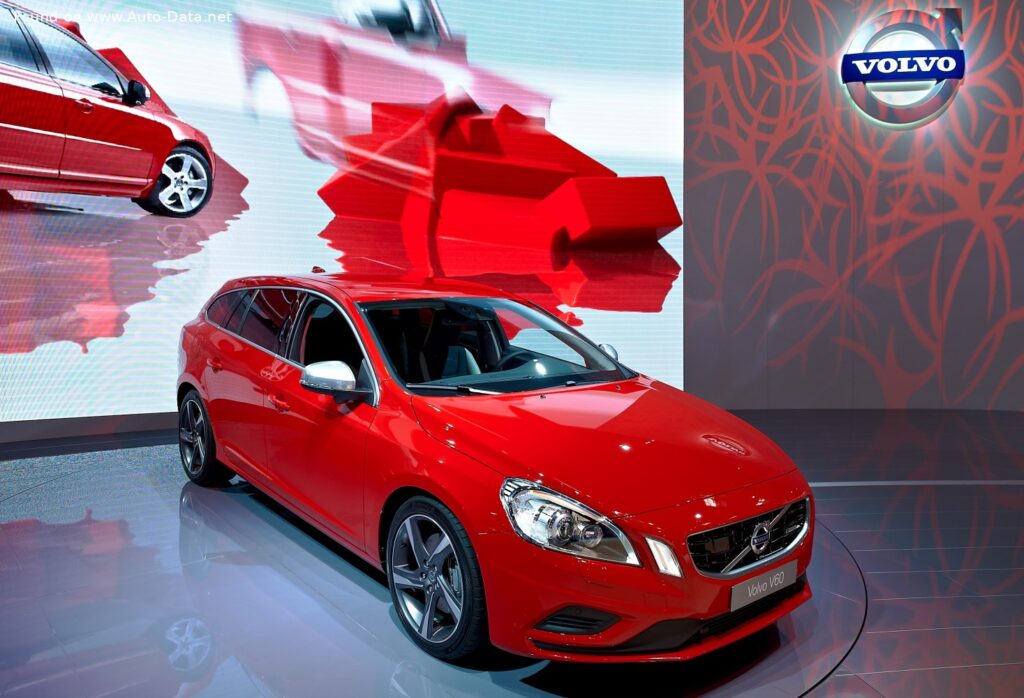
Introduction to the Volvo V60 I 1.6 Drive (115 Hp) Automatic
The Volvo V60, specifically the first generation (V60 I), emerged as a pivotal model for the Swedish automaker, signaling a shift towards more dynamic styling and a broader appeal in the premium mid-size segment. Launched in 2010, the V60 I was designed to be a sportier, more coupe-like alternative to traditional, boxier Volvo wagons, aiming to combine practicality with a sleek aesthetic. While the V60 platform was offered globally in various powertrains, the specific Volvo V60 I 1.6 Drive (115 Hp) Automatic variant, produced from 2011 to 2012, was primarily targeted at the European market. This particular model emphasized fuel efficiency and lower emissions, a crucial selling point in regions with stringent environmental regulations and high fuel costs. It represented Volvo’s commitment to offering economically sensible options without compromising on the brand’s renowned safety and comfort.
Positioned as a premium station wagon, the V60 I competed in a highly contested segment against established German rivals. The 1.6 Drive variant, with its modest yet capable diesel engine and automatic transmission, carved out a niche for buyers prioritizing long-distance cruising economy and a refined driving experience. Its powertrain architecture, featuring an internal combustion engine driving the front wheels, provided a balanced blend of performance and efficiency, making it a popular choice for families and business users across Europe.
The Volvo V60 I 1.6 Drive (115 Hp) Automatic: A Detailed Overview
Engine and Performance
At the heart of the Volvo V60 I 1.6 Drive (115 Hp) Automatic lies a D4162T engine, a 1.6-liter (95.2 cu. in.) inline-four turbodiesel unit. This engine was a product of a collaboration, specifically a Ford/PSA Group design, and was widely regarded for its efficiency. It delivered a respectable 115 horsepower at 3600 rpm, a figure that, while not overtly sporty, was perfectly adequate for daily driving and highway cruising. More importantly for a diesel, it produced a healthy 199.14 lb.-ft. of torque, available across a broad rev range from 1750 to 2500 rpm. This ample low-end torque was crucial for effortless acceleration and strong pulling power, especially when the vehicle was loaded.
The engine utilized a sophisticated diesel common-rail fuel injection system, ensuring precise fuel delivery for optimal combustion and efficiency. Coupled with a turbocharger and intercooler, the engine’s aspiration system maximized power output while maintaining fuel economy. A particulate filter was standard, helping the vehicle meet the Euro 5 emission standard, a key requirement for its European market success. Power was transferred to the front wheels via a smooth-shifting 6-speed automatic transmission, designed to optimize both performance and fuel efficiency.
In terms of performance, the V60 I 1.6 Drive achieved 0-60 mph in a calculated 12.1 seconds, with 0-62 mph (0-100 km/h) taking 12.7 seconds. While not a performance leader, these figures were competitive for its class and intended purpose as an economical family wagon. Its fuel economy was a major highlight, boasting an impressive 52.3 US mpg combined (4.5 l/100 km), with even better figures on the highway (56 US mpg / 4.2 l/100 km). This made it an attractive option for drivers covering significant mileage, offering substantial savings on fuel costs.
Design and Features
The Volvo V60 I marked a significant departure from the brand’s more rectilinear wagon designs of the past. Its “station wagon (estate)” body type featured a sleek, dynamic profile, often described as a “sports wagon” or even a “coupe-like wagon.” With five doors and seating for five occupants, it blended style with everyday practicality. The exterior dimensions of 182.2 inches in length, 73.43 inches in width, and 58.43 inches in height, coupled with a 109.29-inch wheelbase, gave it a substantial road presence while maintaining maneuverability.
Inside, the V60 continued Volvo’s tradition of ergonomic design and high-quality materials. The cabin was well-appointed, with comfortable seating and intuitive controls. Safety, a cornerstone of the Volvo brand, was paramount, with the V60 incorporating advanced features for its time. While specific safety features beyond ABS (Anti-lock Braking System) are not detailed in the provided data, Volvo’s reputation ensures a comprehensive suite of passive and active safety systems would have been standard or available. The trunk space offered a minimum of 24.44 cu. ft. (692 liters), providing ample room for luggage or groceries, further enhancing its appeal as a versatile family vehicle.
Other notable features for this era included the standard particulate filter, essential for reducing diesel emissions. The vehicle’s curb weight of 3384.1 lbs. (1535 kg) contributed to a solid and stable ride, while a maximum load capacity of 1267.66 lbs. (575 kg) underscored its utility. The V60 I also featured a front-wheel-drive architecture, which, combined with its well-tuned suspension, offered predictable handling and a comfortable ride.
Technical Specifications
| Category | Specification | US Equivalent / Notes |
|---|---|---|
| Brand | Volvo | |
| Model | V60 | |
| Generation | V60 I | |
| Type (Engine) | 1.6 Drive (115 Hp) Automatic | |
| Start of Production | 2011 year | |
| End of Production | 2012 year | |
| Powertrain Architecture | Internal Combustion engine | |
| Body type | Station wagon (estate) | |
| Seats | 5 | |
| Doors | 5 | |
| Performance Specs | ||
| Fuel consumption (economy) – urban | 5.1 l/100 km | 46.1 US mpg |
| Fuel consumption (economy) – extra urban | 4.2 l/100 km | 56 US mpg |
| Fuel consumption (economy) – combined | 4.5 l/100 km | 52.3 US mpg |
| Fuel Type | Diesel | |
| Acceleration 0 – 60 mph (Calculated) | 12.1 sec | |
| Acceleration 0 – 100 km/h | 12.7 sec | |
| Emission standard | Euro 5 | |
| Weight-to-power ratio | 13.3 kg/Hp | 74.9 Hp/tonne |
| Weight-to-torque ratio | 5.7 kg/Nm | 175.9 Nm/tonne |
| Engine Specs | ||
| Power | 115 Hp @ 3600 rpm | |
| Power per liter | 73.7 Hp/l | |
| Torque | 270 Nm @ 1750-2500 rpm | 199.14 lb.-ft. @ 1750-2500 rpm |
| Engine layout | Front, Transverse | |
| Engine Model/Code | D4162T | |
| Engine displacement | 1560 cm3 | 1.6 liters / 95.2 cu. in. |
| Number of cylinders | 4 | |
| Engine configuration | Inline | |
| Cylinder Bore | 75 mm | 2.95 in. |
| Piston Stroke | 88.3 mm | 3.48 in. |
| Fuel injection system | Diesel Commonrail | |
| Engine aspiration | Turbocharger, Intercooler | |
| Engine oil capacity | 3.8 l | 4.02 US qt |
| Coolant | 10.5 l | 11.1 US qt |
| Engine systems | Particulate filter | |
| Space, Volume and Weights | ||
| Kerb Weight | 1535 kg | 3384.1 lbs. |
| Max. weight | 2110 kg | 4651.75 lbs. |
| Max load | 575 kg | 1267.66 lbs. |
| Trunk (boot) space – minimum | 692 l | 24.44 cu. ft. |
| Fuel tank capacity | 67.5 l | 17.83 US gal |
| Dimensions | ||
| Length | 4628 mm | 182.2 in. |
| Width | 1865 mm | 73.43 in. |
| Height | 1484 mm | 58.43 in. |
| Wheelbase | 2776 mm | 109.29 in. |
| Front track | 1588 mm | 62.52 in. |
| Rear (Back) track | 1585 mm | 62.4 in. |
| Minimum turning circle (turning diameter) | 11.5 m | 37.73 ft. |
| Drivetrain, Brakes and Suspension Specs | ||
| Drivetrain Architecture | Internal combustion engine drives front wheels | |
| Drive wheel | Front wheel drive | |
| Number of gears and type of gearbox | 6 gears, automatic transmission | |
| Assisting systems | ABS (Anti-lock braking system) | |
Legacy and Market Impact
The Volvo V60 I, particularly in its efficient 1.6 Drive diesel guise, played a significant role in solidifying Volvo’s position in the European premium market. It helped the brand shed its somewhat staid image, offering a car that was not only safe and practical but also stylish and engaging to drive. While this specific diesel variant was not sold in the United States, where the diesel passenger car market has always been niche and dominated by larger engines, it was a cornerstone of Volvo’s European sales strategy.
In Europe, the V60 I 1.6 Drive competed directly with formidable rivals such as the BMW 3 Series Touring (e.g., 318d), Audi A4 Avant (e.g., 2.0 TDI), Mercedes-Benz C-Class Estate (e.g., C 200 CDI), and the Volkswagen Passat Variant (e.g., 1.6 TDI). What set the V60 apart was its unique blend of Scandinavian design, a strong emphasis on safety technology, and, with this particular powertrain, exceptional fuel efficiency. It appealed to buyers who valued understated luxury and environmental responsibility, without sacrificing the utility of a wagon.
The car’s reputation was built on Volvo’s traditional strengths: robust build quality, comfortable long-distance cruising, and a leading approach to safety. The introduction of smaller, highly efficient diesel engines like the 1.6 Drive allowed Volvo to broaden its appeal, offering a more accessible entry point into the premium segment for environmentally conscious consumers. Its success underscored the growing demand for efficient powertrains in Europe during that era, a trend that would continue to shape automotive development for years to come. The V60 I ultimately paved the way for subsequent generations, reinforcing Volvo’s identity as a maker of sophisticated, safe, and increasingly efficient premium vehicles.
