
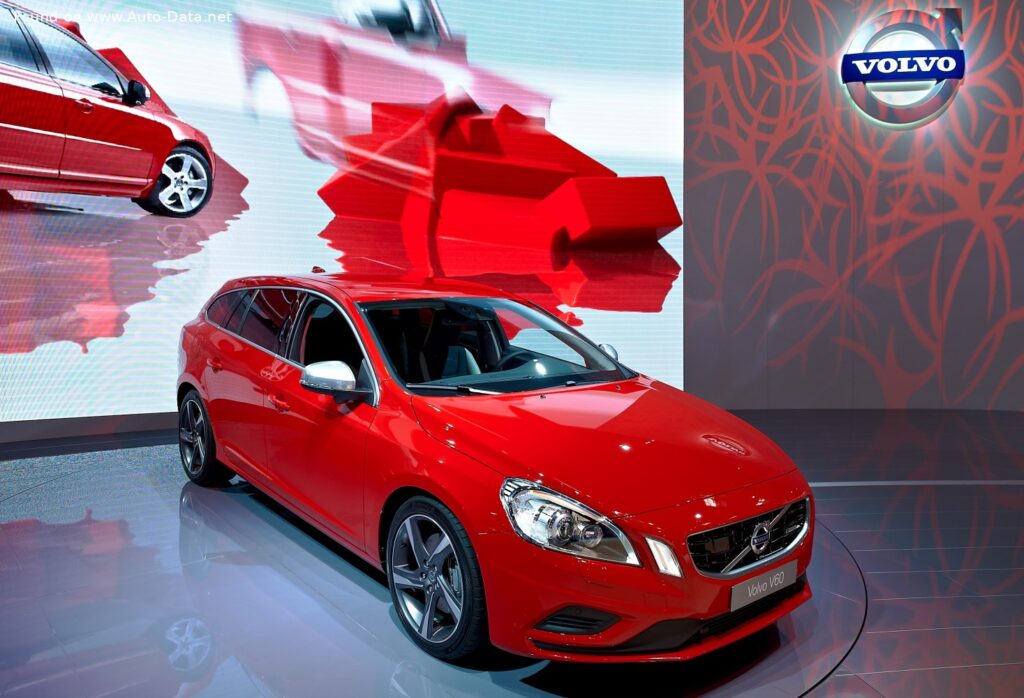
Introduction to the Volvo V60 I
The Volvo V60 I 1.6 T3 (150 Hp) Automatic represents a significant model in Volvo’s lineup, launched in 2011 as part of the first generation V60 series. Positioned as a premium compact executive station wagon, the V60 I was designed to blend the practicality and versatility inherent to wagons with Volvo’s renowned emphasis on safety, sophisticated design, and a dynamic driving experience. While the V60 nameplate has seen varying levels of market penetration globally, this particular generation and engine configuration were primarily aimed at the European market, where compact executive wagons enjoy strong demand due to their blend of family utility and driving refinement. The V60 I served as a sportier, more design-focused alternative to the more traditional V70, targeting a younger demographic that still valued Volvo’s core attributes.
Produced from 2011 to 2015, this specific variant, powered by a 1.6-liter T3 turbocharged gasoline engine paired with an automatic transmission, offered a compelling balance of performance and fuel efficiency. It underscored Volvo’s commitment to downsizing engines while maintaining respectable power output, aligning with tightening European emission standards and consumer demand for more economical vehicles. The V60 I was a key player in Volvo’s strategy to expand its appeal beyond its traditional conservative image, introducing a more expressive and engaging design language that would define the brand for years to come.
Engine and Performance Characteristics of the Volvo V60 I 1.6 T3
At the heart of the Volvo V60 I 1.6 T3 (150 Hp) Automatic lies a modern, transversely mounted 1.6-liter (1596 cm³) inline four-cylinder gasoline engine, designated by Volvo as the B4164T3. This powerplant features advanced technologies such as direct fuel injection and a turbocharger with an intercooler, which allowed it to produce a respectable 150 horsepower at 5700 rpm. The engine’s design focused on delivering a broad torque band, providing 177.01 lb.-ft. (240 Nm) of torque consistently available between 1600 and 4000 rpm. This wide torque plateau was crucial for ensuring responsive acceleration and flexible in-gear performance, making the V60 feel nimble and capable in various driving conditions, from city commutes to highway cruising.
Power was delivered to the front wheels through a smooth-shifting 6-speed automatic transmission. This combination enabled the V60 I 1.6 T3 to accelerate from 0 to 60 mph in a competitive 9.9 seconds (0-100 km/h in 10.4 seconds), a solid figure for a vehicle of its size and segment. The powertrain architecture, with its front-wheel drive layout, contributed to predictable handling and efficient packaging.
Despite its capable performance, efficiency was a significant consideration for the European market. The V60 I 1.6 T3 achieved a combined fuel economy of 31.8 US mpg (7.4 l/100 km), with urban consumption rated at 23.8 US mpg (9.9 l/100 km) and extra-urban figures reaching an impressive 39.9 US mpg (5.9 l/100 km). These figures, alongside its Euro 5 emission standard compliance, highlighted Volvo’s commitment to environmental responsibility and cost-effective ownership. The engine’s weight-to-power ratio stood at 10.2 kg/Hp (97.6 Hp/tonne), reflecting a well-engineered balance between mass and output.
Design and Features
The Volvo V60 I was conceived as a “sports wagon,” a departure from the more traditional, boxy estate cars Volvo was historically known for. Its design ethos was characterized by sleek lines, a coupé-like roofline, and muscular shoulders, giving it a dynamic and athletic stance. The five-door station wagon (estate) body type offered a practical solution for families and individuals needing versatile cargo space without compromising on style. With a length of 182.2 inches (4628 mm), a width of 73.43 inches (1865 mm), and a height of 58.43 inches (1484 mm), the V60 I presented a substantial yet elegant presence on the road. The wheelbase measured 109.29 inches (2776 mm), contributing to a comfortable ride and stable handling.
Inside, the V60 I offered seating for five occupants, with Volvo’s characteristic ergonomic and comfortable interior design. The floating center console, a signature Volvo design element, provided a clean and uncluttered cabin aesthetic. While specific luxury features varied by trim level, standard equipment often included a comprehensive infotainment system, climate control, and high-quality materials throughout the cabin.
Safety, as always with Volvo, was paramount. The V60 I incorporated a host of active and passive safety systems. While the provided data specifically mentions ABS (Anti-lock Braking System) as an assisting system, it’s important to note that the V60 I generation also featured advanced safety technologies that were pioneering for its time, such as City Safety (an automatic braking system to prevent low-speed collisions), pedestrian detection, and various driver assistance systems. These technologies reinforced Volvo’s reputation as a leader in automotive safety, providing peace of mind for both drivers and passengers. The practical aspects were also well-addressed, with a minimum trunk (boot) space of 24.44 cu. ft. (692 liters), making it highly functional for daily use and longer trips. The fuel tank capacity of 17.83 US gallons (67.5 liters) ensured a decent range between fill-ups.
Technical Specifications
| Category | Specification | Value |
|---|---|---|
General Information |
||
| Brand | Volvo | |
| Model | V60 | |
| Generation | V60 I | |
| Type (Engine) | 1.6 T3 (150 Hp) Automatic | |
| Start of Production | 2011 year | |
| End of Production | 2015 year | |
| Powertrain Architecture | Internal Combustion engine | |
| Body Type | Station wagon (estate) | |
| Seats | 5 | |
| Doors | 5 | |
Performance Specifications |
||
| Fuel Consumption (Urban) | 9.9 l/100 km (23.8 US mpg) | |
| Fuel Consumption (Extra Urban) | 5.9 l/100 km (39.9 US mpg) | |
| Fuel Consumption (Combined) | 7.4 l/100 km (31.8 US mpg) | |
| Fuel Type | Petrol (Gasoline) | |
| Acceleration 0-100 km/h | 10.4 sec | |
| Acceleration 0-62 mph | 10.4 sec | |
| Acceleration 0-60 mph (Calculated) | 9.9 sec | |
| Emission Standard | Euro 5 | |
| Weight-to-Power Ratio | 10.2 kg/Hp (97.6 Hp/tonne) | |
| Weight-to-Torque Ratio | 6.4 kg/Nm (156.1 Nm/tonne) | |
Engine Specifications |
||
| Power | 150 Hp @ 5700 rpm | |
| Power per Liter | 94 Hp/l | |
| Torque | 240 Nm @ 1600-4000 rpm (177.01 lb.-ft.) | |
| Engine Layout | Front, Transverse | |
| Engine Model/Code | B4164T3 | |
| Engine Displacement | 1596 cm³ (97.39 cu. in.) | |
| Number of Cylinders | 4 | |
| Engine Configuration | Inline | |
| Cylinder Bore | 79 mm (3.11 in.) | |
| Piston Stroke | 81.4 mm (3.2 in.) | |
| Fuel Injection System | Direct injection | |
| Engine Aspiration | Turbocharger, Intercooler | |
| Engine Oil Capacity | 4.1 l (4.33 US qt) | |
| Coolant Capacity | 9.2 l (9.72 US qt) | |
Space, Volume and Weights |
||
| Kerb Weight | 1537 kg (3388.5 lbs.) | |
| Max. Weight | 2100 kg (4629.71 lbs.) | |
| Max Load | 563 kg (1241.2 lbs.) | |
| Trunk (boot) Space – Minimum | 692 l (24.44 cu. ft.) | |
| Fuel Tank Capacity | 67.5 l (17.83 US gal) | |
Dimensions |
||
| Length | 4628 mm (182.2 in.) | |
| Width | 1865 mm (73.43 in.) | |
| Height | 1484 mm (58.43 in.) | |
| Wheelbase | 2776 mm (109.29 in.) | |
| Front Track | 1588 mm (62.52 in.) | |
| Rear (Back) Track | 1585 mm (62.4 in.) | |
| Minimum Turning Circle (Turning Diameter) | 11.5 m (37.73 ft.) | |
Drivetrain, Brakes and Suspension Specifications |
||
| Drivetrain Architecture | The Internal combustion engine (ICE) drives the front wheels of the vehicle. | |
| Drive Wheel | Front wheel drive | |
| Number of Gears and Type of Gearbox | 6 gears, automatic transmission | |
| Assisting Systems | ABS (Anti-lock braking system) | |
Legacy and Market Impact
The Volvo V60 I, particularly in its 1.6 T3 (150 Hp) Automatic configuration, carved out a distinct niche in the highly competitive European premium compact executive segment. Its reputation was built on Volvo’s traditional strengths: exceptional safety, robust build quality, and ergonomic comfort, but it added a crucial element of sophisticated design and dynamic appeal. The V60 I was instrumental in challenging the perception of Volvo as merely a producer of safe, utilitarian vehicles, instead showcasing a brand capable of delivering stylish, engaging cars that still prioritized practicality.
In its primary European market, the V60 I competed against formidable rivals such as the BMW 3 Series Touring, Audi A4 Avant, and Mercedes-Benz C-Class Estate. While German competitors often emphasized sportiness or outright luxury, the V60 I offered a unique Scandinavian alternative, appealing to buyers who sought a blend of understated elegance, advanced safety features, and functional versatility. Its emphasis on refined turbocharged engines, like the 1.6 T3, also allowed it to compete effectively on efficiency and emissions, which were increasingly important factors for European consumers and fleet operators.
The V60 I’s impact extended beyond sales figures; it helped solidify Volvo’s design direction for the following decade, influencing subsequent models with its sleek profile and modern interior. It demonstrated that a station wagon could be both practical and desirable, contributing to the segment’s enduring popularity in Europe. For Volvo, the V60 I represented a successful step in its journey to become a more contemporary and globally competitive premium automaker, proving that its core values could be seamlessly integrated with modern design and powertrain technologies. Its legacy is one of a well-rounded, safe, and stylish family wagon that skillfully navigated the demands of a discerning European market.
