
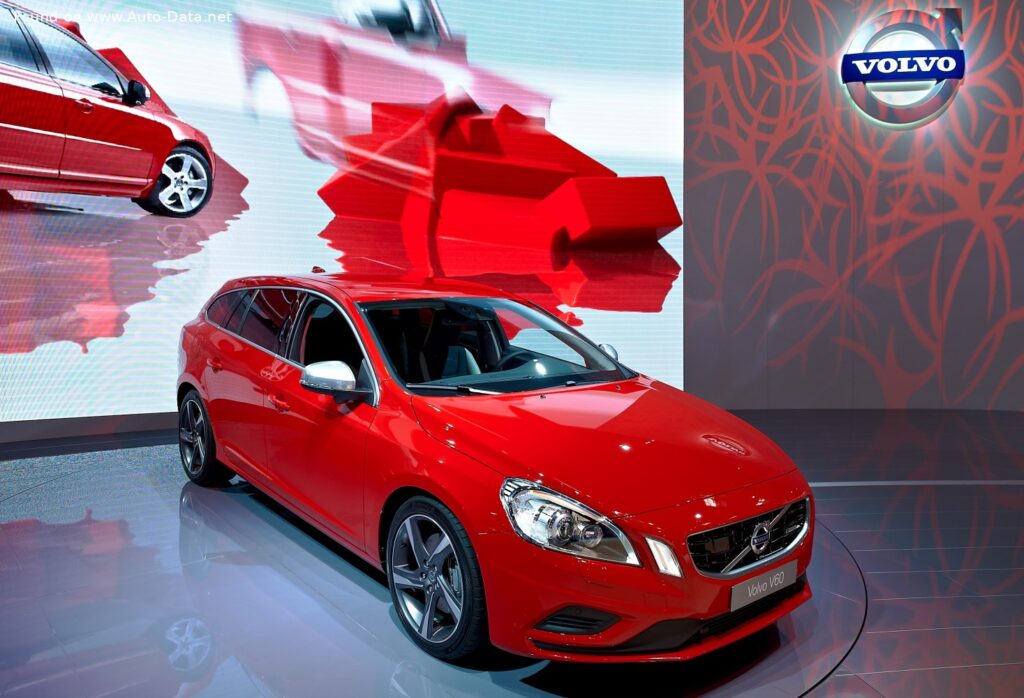
The Volvo V60 I 1.6 T4 (180 Hp): A European Executive Wagon with Punch
The Volvo V60 I 1.6 T4 (180 Hp) represents a crucial period for the Swedish automaker, embodying its commitment to sophisticated design, advanced safety, and efficient powertrains in the premium mid-size segment. Introduced in 2011 as part of the first-generation V60 lineup, this particular variant, with its turbocharged 1.6-liter engine, was primarily aimed at the European market. It offered a compelling blend of spirited performance, respectable fuel economy, and the renowned practicality of a Volvo station wagon, or “estate” as it’s known across the Atlantic. Positioned as a sportier alternative to the traditional V70, the V60 I carved out its niche by combining sleek, coupe-like styling with a versatile five-door, five-seat configuration. Its production ran from 2011 to 2015, establishing a strong reputation for Scandinavian engineering and a focus on the driver experience.
Engine and Performance: The Turbocharged 1.6-Liter Powerplant
At the heart of the Volvo V60 I 1.6 T4 lies a transversely mounted, front-wheel-drive internal combustion engine, specifically the B4164T model. This inline four-cylinder gasoline engine boasts a displacement of 1596 cm3 (97.39 cubic inches). Despite its relatively modest displacement, Volvo leveraged modern engine technology to extract impressive performance. The engine features direct fuel injection and is boosted by a turbocharger with an intercooler, a setup designed to maximize power output while maintaining efficiency.
The result is a robust 180 horsepower, achieved at 5700 revolutions per minute (rpm). This translates to a healthy power-per-liter figure of 112.8 Hp/l, showcasing the engine’s advanced design. Even more significant for everyday driving is the torque output: a substantial 240 Nm (177.01 lb.-ft.) available across a broad rev range, from a low 1600 rpm all the way up to 5000 rpm. This wide torque band ensures responsive acceleration and flexible performance, whether navigating city streets or cruising on the highway.
Mated to a precise 6-speed manual transmission, this powertrain enables the V60 I 1.6 T4 to accelerate from 0 to 100 km/h (0 to 62 mph) in a brisk 8.5 seconds. For the American market perspective, the calculated 0-60 mph time stands at approximately 8.1 seconds, placing it firmly in the category of capable, if not overtly sporty, executive wagons. The vehicle’s weight-to-power ratio is 8.5 kg/Hp (117.1 Hp/tonne), and its weight-to-torque ratio is 6.4 kg/Nm (156.1 Nm/tonne), indicating efficient power delivery for its curb weight of 3388.5 lbs (1537 kg).
Fuel efficiency, a key consideration for European buyers, was a strong point for the 1.6 T4. The combined fuel consumption is rated at 6.6 liters per 100 kilometers, translating to an impressive 35.6 US mpg. Urban driving yields 8.7 l/100 km (27 US mpg), while extra-urban figures reach 5.4 l/100 km (43.6 US mpg). With CO2 emissions of 156 g/km, the V60 I 1.6 T4 met the Euro 5 emission standard, reflecting Volvo’s commitment to environmental responsibility during its production years. The 17.83 US gallon (67.5 liter) fuel tank provided a substantial cruising range.
Design and Features: Scandinavian Style Meets Practicality
The first-generation Volvo V60, produced from 2011 to 2015, marked a significant departure from Volvo’s more traditional, boxy wagon designs. It embraced a sleeker, more dynamic aesthetic, often described as a “sports wagon” or “coupe-like estate.” The V60 I 1.6 T4 (180 Hp) retained this contemporary body type, featuring five doors and comfortable seating for five occupants. Its overall length of 182.2 inches (4628 mm) and width of 73.43 inches (1865 mm) gave it a substantial road presence, while a height of 58.43 inches (1484 mm) contributed to its athletic stance. The 109.29-inch (2776 mm) wheelbase provided a stable ride and ample interior space.
Inside, the V60 upheld Volvo’s reputation for ergonomic design and high-quality materials. The cabin featured a floating center console, a signature Volvo design element of the era, which angled towards the driver for intuitive control. While specific trim levels and optional features varied by market, standard equipment typically included a comprehensive suite of safety technologies, a hallmark of the Volvo brand. This often encompassed features like a robust Anti-lock Braking System (ABS) as standard, with many V60s offering advanced driver-assistance systems such as City Safety (automatic braking at low speeds), pedestrian detection, and blind-spot information systems, depending on the optional packages chosen.
The V60’s practicality as a station wagon was evident in its cargo capacity. While its sleek design slightly reduced the ultimate volume compared to its more upright V70 sibling, it still offered a highly versatile load area. The minimum trunk (boot) space is listed at a generous 692 liters (24.44 cubic feet), suggesting significant capacity likely with the rear seats folded or loaded to the roofline, providing ample room for luggage, groceries, or sports equipment. The maximum permissible weight for the vehicle was 4629.71 lbs (2100 kg), allowing for a maximum load of 1241.2 lbs (563 kg), highlighting its capability as a family hauler or for transporting goods.
The V60 I’s chassis was tuned for a balance of comfort and engaging driving dynamics. With a front track of 62.52 inches (1588 mm) and a rear track of 62.4 inches (1585 mm), it maintained excellent stability. The minimum turning circle of 37.73 feet (11.5 meters) made it reasonably maneuverable in urban environments, a crucial factor in its primary European markets.
Technical Specifications for the Volvo V60 I 1.6 T4 (180 Hp)
| Category | Specification | US Equivalent |
|---|---|---|
| General Information | ||
| Brand | Volvo | |
| Model | V60 | |
| Generation | V60 I | |
| Type (Engine) | 1.6 T4 (180 Hp) | |
| Start of Production | 2011 year | |
| End of Production | 2015 year | |
| Powertrain Architecture | Internal Combustion engine | |
| Body type | Station wagon (estate) | |
| Seats | 5 | |
| Doors | 5 | |
| Performance Specs | ||
| Fuel consumption (economy) – urban | 8.7 l/100 km | 27 US mpg |
| Fuel consumption (economy) – extra urban | 5.4 l/100 km | 43.6 US mpg |
| Fuel consumption (economy) – combined | 6.6 l/100 km | 35.6 US mpg |
| CO2 emissions | 156 g/km | |
| Fuel Type | Petrol (Gasoline) | |
| Acceleration 0 – 100 km/h | 8.5 sec | |
| Acceleration 0 – 62 mph | 8.5 sec | |
| Acceleration 0 – 60 mph (Calculated) | 8.1 sec | |
| Emission standard | Euro 5 | |
| Weight-to-power ratio | 8.5 kg/Hp | 117.1 Hp/tonne |
| Weight-to-torque ratio | 6.4 kg/Nm | 156.1 Nm/tonne |
| Engine Specs | ||
| Power | 180 Hp @ 5700 rpm | |
| Power per liter | 112.8 Hp/l | |
| Torque | 240 Nm @ 1600-5000 rpm | 177.01 lb.-ft. @ 1600-5000 rpm |
| Engine layout | Front, Transverse | |
| Engine Model/Code | B4164T | |
| Engine displacement | 1596 cm3 | 97.39 cu. in. |
| Number of cylinders | 4 | |
| Engine configuration | Inline | |
| Cylinder Bore | 79 mm | 3.11 in. |
| Piston Stroke | 81.4 mm | 3.2 in. |
| Fuel injection system | Direct injection | |
| Engine aspiration | Turbocharger, Intercooler | |
| Engine oil capacity | 4.1 l | 4.33 US qt |
| Engine oil specification | Not specified | |
| Coolant | 9.2 l | 9.72 US qt |
| Space, Volume and Weights | ||
| Kerb Weight | 1537 kg | 3388.5 lbs. |
| Max. weight | 2100 kg | 4629.71 lbs. |
| Max load | 563 kg | 1241.2 lbs. |
| Trunk (boot) space – minimum | 692 l | 24.44 cu. ft. |
| Fuel tank capacity | 67.5 l | 17.83 US gal |
| Dimensions | ||
| Length | 4628 mm | 182.2 in. |
| Width | 1865 mm | 73.43 in. |
| Height | 1484 mm | 58.43 in. |
| Wheelbase | 2776 mm | 109.29 in. |
| Front track | 1588 mm | 62.52 in. |
| Rear (Back) track | 1585 mm | 62.4 in. |
| Minimum turning circle (turning diameter) | 11.5 m | 37.73 ft. |
| Drivetrain, Brakes and Suspension Specs | ||
| Drivetrain Architecture | The Internal combustion engine (ICE) drives the front wheels of the vehicle. | |
| Drive wheel | Front wheel drive | |
| Number of gears and type of gearbox | 6 gears, manual transmission | |
| Assisting systems | ABS (Anti-lock braking system) | |
Legacy and Market Impact of the Volvo V60 I
The first-generation Volvo V60, including the 1.6 T4 (180 Hp) variant, played a pivotal role in Volvo’s strategy to rejuvenate its brand image and expand its presence in the competitive European premium segment. While the V60 I was available in select other markets, its primary battleground was Europe, where station wagons, or “estates,” hold significant cultural and practical importance. It entered a segment dominated by formidable German rivals such as the Audi A4 Avant, BMW 3 Series Touring, and Mercedes-Benz C-Class Estate. Volvo aimed to differentiate the V60 not just through its inherent safety credentials but also with its distinctive Scandinavian design language, which offered a refreshing alternative to the often more conservative German styling.
The 1.6 T4 engine, in particular, demonstrated Volvo’s commitment to “right-sizing” powertrains – offering strong performance from smaller, more fuel-efficient turbocharged engines. This was a direct response to tightening emission regulations and consumer demand for lower running costs in Europe. Its combination of 180 horsepower and a manual transmission appealed to drivers seeking a more engaging experience without sacrificing the practicality of a wagon. The V60 I, with its sleek profile, challenged the perception that wagons had to be purely utilitarian, proving that they could be both stylish and versatile.
In terms of historical significance, the V60 I helped solidify Volvo’s position as a premium brand capable of competing head-to-head with established luxury automakers. It showcased Volvo’s advancements in engine technology, safety innovation (many of its optional active safety features were cutting-edge for the time), and interior design. The V60 contributed to a global shift in perception, moving Volvo beyond its traditional image as a builder of safe, albeit somewhat staid, vehicles, towards one of a dynamic, design-conscious, and technologically advanced automaker. Its success paved the way for subsequent generations of Volvo models that continued to push boundaries in design, technology, and electrification, leaving a lasting legacy as a well-engineered and aesthetically pleasing European executive wagon.
