
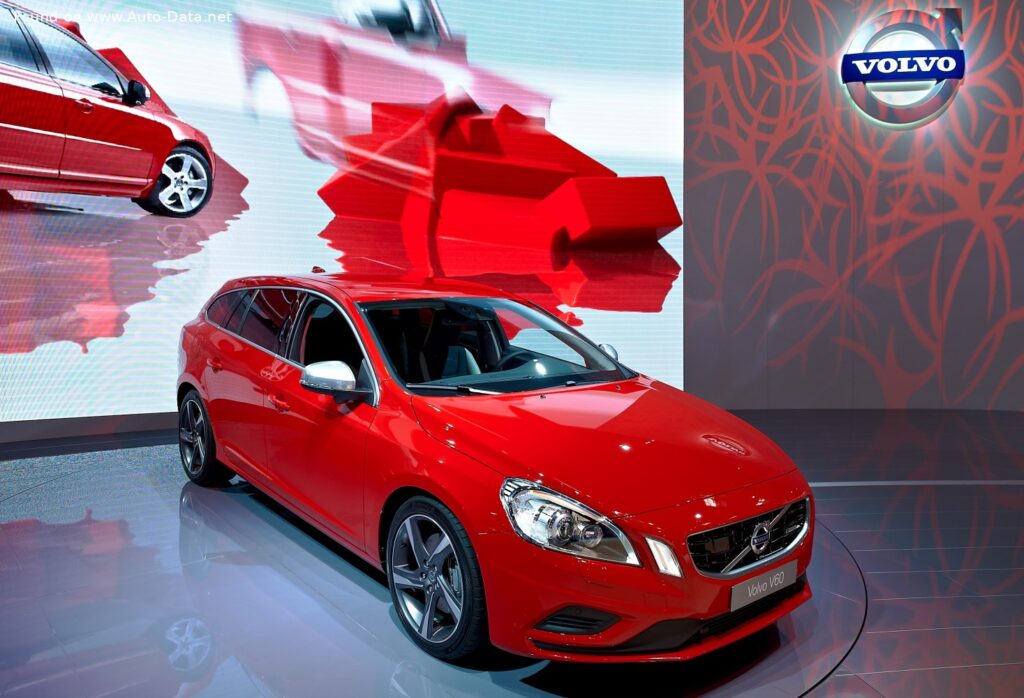
The Volvo V60 I: A Scandinavian Contender in the Premium Wagon Segment
The Volvo V60 I 1.6 T4F (180 Hp) stands as a notable example of Volvo’s commitment to blending practicality, safety, and sophisticated design within the premium compact executive segment. Produced from 2012 to 2015, this first-generation V60, specifically with the 1.6-liter T4F powertrain, was primarily targeted at the European market, where station wagons, or “estates” as they are known across the Atlantic, hold significant appeal for families and business users alike. Positioned as a sportier alternative to its larger V70 sibling, the V60 I aimed to capture a younger, more dynamic clientele while retaining the brand’s core values of safety and functionality. While not as widely available in the United States as its sedan counterpart, the S60, this particular V60 variant highlights Volvo’s strategic focus on efficient, turbocharged engines designed to meet stringent European emission standards while delivering respectable performance.
Engine and Performance: The Efficient Heart of the Volvo V60 I
Under the hood, the Volvo V60 I 1.6 T4F featured a sophisticated 1.6-liter (1596 cm³) inline-four gasoline engine, internally designated B4164T2. This powertrain was engineered for a balance of power and fuel efficiency, a common design philosophy in the European market. Utilizing direct injection and a turbocharger with an intercooler, the engine produced a robust 180 horsepower at 5700 rpm, translating to an impressive 112.8 horsepower per liter. Torque figures were equally compelling, with 177.01 lb-ft (240 Nm) available across a broad rev range from 1600 to 5000 rpm, ensuring strong, flexible acceleration in everyday driving scenarios.
Power was delivered to the front wheels via a precise 6-speed manual transmission, offering an engaging driving experience. This setup allowed the V60 I 1.6 T4F to accelerate from 0 to 60 mph in a brisk 8.1 seconds, a competitive figure for a family wagon of its size and class. Despite its spirited performance, efficiency remained a key attribute. The combined fuel economy was rated at approximately 33.6 US mpg (7 liters per 100 km), with extra-urban driving achieving an impressive 42 US mpg. This efficiency was crucial for its European audience, where fuel costs are a significant consideration. The engine also complied with the Euro 5 emission standard, underscoring its relatively clean operation for the period.
The front, transverse engine layout contributed to favorable weight distribution and allowed for a spacious cabin. With a curb weight of 3388.5 lbs (1537 kg) and a power-to-weight ratio of 8.5 kg per horsepower, the V60 I offered a nimble and responsive driving dynamic that belied its family-hauling capabilities.
Design and Features: Scandinavian Practicality Meets Modern Aesthetics
The Volvo V60 I showcased a distinctively Scandinavian design aesthetic, characterized by clean lines, understated elegance, and a focus on functionality. As a five-door, five-seat station wagon (or “estate”), its body type was inherently practical, offering significant cargo space without sacrificing style. The V60 I measured 182.2 inches (4628 mm) in length, 73.43 inches (1865 mm) in width, and 58.43 inches (1484 mm) in height, with a wheelbase of 109.29 inches (2776 mm). These dimensions provided a solid road presence while ensuring maneuverability, particularly with a minimum turning circle of 37.73 feet (11.5 meters).
Inside, the V60 I continued Volvo’s tradition of ergonomic and minimalist design. The cabin was designed to be driver-centric, with high-quality materials and intuitive controls. Seating for five adults was comfortable, with attention paid to supportive contours and available premium upholstery options. The practicality of the wagon body truly shone in its cargo capacity, offering a generous minimum trunk space of 24.44 cubic feet (692 liters). This made the V60 I an ideal choice for families needing to transport luggage, sports equipment, or groceries with ease.
Safety, a cornerstone of the Volvo brand, was paramount in the V60 I. While specific advanced driver-assistance systems are not detailed in the provided data, the car would have featured standard safety equipment such as ABS (Anti-lock Braking System) and a comprehensive suite of airbags. Volvo vehicles of this era were also known for their robust chassis design and innovative safety structures, aiming to protect occupants in various collision scenarios. The V60’s design extended beyond mere aesthetics, integrating safety features seamlessly into its structure.
Technical Specifications
| Category | Specification |
|---|---|
| General Information | |
| Brand | Volvo |
| Model | V60 |
| Generation | V60 I |
| Type (Engine) | 1.6 T4F (180 Hp) |
| Start of Production | 2012 year |
| End of Production | 2015 year |
| Powertrain Architecture | Internal Combustion engine |
| Body Type | Station wagon (estate) |
| Seats | 5 |
| Doors | 5 |
| Performance Specs | |
| Fuel Consumption (Urban) | 9.5 l/100 km (24.8 US mpg) |
| Fuel Consumption (Extra Urban) | 5.6 l/100 km (42 US mpg) |
| Fuel Consumption (Combined) | 7 l/100 km (33.6 US mpg) |
| Fuel Type | Petrol (Gasoline) |
| Acceleration 0 – 60 mph | 8.1 sec |
| Acceleration 0 – 100 km/h | 8.5 sec |
| Emission Standard | Euro 5 |
| Weight-to-Power Ratio | 8.5 kg/Hp (117.1 Hp/tonne) |
| Weight-to-Torque Ratio | 6.4 kg/Nm (156.1 Nm/tonne) |
| Engine Specs | |
| Power | 180 Hp @ 5700 rpm |
| Power per liter | 112.8 Hp/l |
| Torque | 240 Nm (177.01 lb-ft) @ 1600-5000 rpm |
| Engine Layout | Front, Transverse |
| Engine Model/Code | B4164T2 |
| Engine Displacement | 1596 cm³ (97.39 cu. in.) |
| Number of Cylinders | 4 |
| Engine Configuration | Inline |
| Cylinder Bore | 79 mm (3.11 in.) |
| Piston Stroke | 81.4 mm (3.2 in.) |
| Fuel Injection System | Direct injection |
| Engine Aspiration | Turbocharger, Intercooler |
| Engine Oil Capacity | 4.1 l (4.33 US qt) |
| Coolant Capacity | 9.2 l (9.72 US qt) |
| Space, Volume and Weights | |
| Kerb Weight | 1537 kg (3388.5 lbs) |
| Max. Weight | 2100 kg (4629.71 lbs) |
| Max Load | 563 kg (1241.2 lbs) |
| Trunk (boot) Space – Minimum | 692 l (24.44 cu. ft.) |
| Fuel Tank Capacity | 67.5 l (17.83 US gal) |
| Dimensions | |
| Length | 4628 mm (182.2 in.) |
| Width | 1865 mm (73.43 in.) |
| Height | 1484 mm (58.43 in.) |
| Wheelbase | 2776 mm (109.29 in.) |
| Front Track | 1588 mm (62.52 in.) |
| Rear Track | 1585 mm (62.4 in.) |
| Minimum Turning Circle | 11.5 m (37.73 ft.) |
| Drivetrain, Brakes and Suspension | |
| Drivetrain Architecture | Internal combustion engine drives the front wheels. |
| Drive Wheel | Front wheel drive |
| Number of Gears and Type of Gearbox | 6 gears, manual transmission |
| Assisting Systems | ABS (Anti-lock braking system) |
Legacy and Market Impact of the Volvo V60 I
The Volvo V60 I, particularly in its 1.6 T4F guise, carved out a significant niche in the highly competitive European premium compact executive segment. It faced formidable rivals such as the BMW 3 Series Touring, Audi A4 Avant, and Mercedes-Benz C-Class Estate, all of which offered their own blend of performance, luxury, and brand prestige. However, the V60 I distinguished itself by offering a unique Scandinavian alternative. While the German competitors often emphasized sportiness and driving dynamics, Volvo maintained its focus on safety, comfort, and a more understated, elegant design language.
The V60 I’s reputation was built on its solid build quality, comfortable ride, and, crucially, its exemplary safety record. For many European buyers, the V60 represented a sensible yet stylish choice, providing the practicality of a wagon without the bulk of a larger SUV. The efficient 1.6-liter T4F engine was particularly well-suited to markets where fuel economy and lower emissions were prioritized, making it an attractive option for both private owners and company car fleets. Its combination of a lively turbocharged engine and a manual transmission appealed to drivers who appreciated a more engaging experience.
Ultimately, the V60 I played a vital role in modernizing Volvo’s image, demonstrating that the brand could produce vehicles that were not only safe and practical but also desirable and dynamic. It helped bridge the gap between Volvo’s traditional, boxy wagons and the sleek, contemporary designs that would define the brand’s future. Its success laid the groundwork for subsequent generations of the V60, reinforcing Volvo’s position as a leader in the premium wagon segment and a purveyor of thoughtful, human-centric automotive design. The V60 I, with its balanced performance and practical elegance, remains a testament to Volvo’s enduring appeal in its core markets.
