
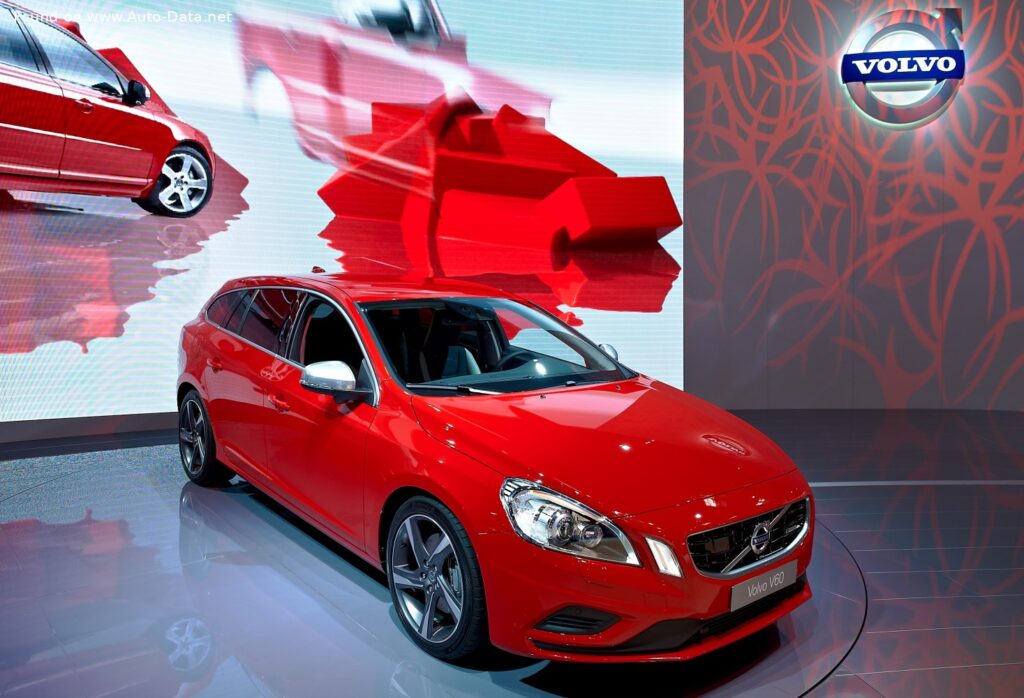
Introduction to the Volvo V60 I 1.6 T4F (180 Hp) Automatic
The Volvo V60 I 1.6 T4F (180 Hp) Automatic represents a compelling chapter in Volvo’s modern history, marking the first generation of its compact executive wagon, produced between 2012 and 2015. Launched as a more dynamically styled alternative to the traditionally boxy Volvo wagons, the V60 I aimed to blend Scandinavian practicality with a sportier aesthetic and driving experience. While the V60 series was available globally, this specific 1.6-liter T4F powertrain, producing 180 horsepower, was particularly significant in European markets. It catered to a growing demand for efficient yet capable engines, especially in regions with stringent emissions regulations and higher fuel costs. This model embodied Volvo’s strategy to maintain its reputation for safety and utility while simultaneously appealing to a broader audience seeking premium features and a more engaging drive.
Positioned in the competitive premium compact executive segment, the V60 I 1.6 T4F Automatic offered a distinctive blend of sophisticated design, advanced technology for its era, and the inherent versatility of a station wagon body type. Its powertrain architecture, featuring a front, transverse-mounted internal combustion engine driving the front wheels, underscored its design for balanced performance and everyday usability. The car was designed for five occupants, offering ample space and comfort for a vehicle of its class, making it a popular choice for families and professionals alike across Europe.
Engine and Performance of the Volvo V60 I
At the heart of the Volvo V60 I 1.6 T4F (180 Hp) Automatic lies a sophisticated 1.6-liter (1596 cm³ or 97.39 cu. in.) inline four-cylinder engine, designated by Volvo as the B4164T2. This powerplant was a testament to the industry’s shift towards smaller displacement, turbocharged engines that could deliver both robust performance and improved fuel efficiency. The engine features direct fuel injection and is boosted by a turbocharger with an intercooler, allowing it to produce an impressive 180 horsepower at 5700 rpm. This power output, combined with a relatively small engine size, translates to a notable power-per-liter figure of 112.8 horsepower per liter.
Crucially, the engine delivers a substantial 240 Nm (177.01 lb.-ft.) of torque across a broad rev range, from 1600 to 5000 rpm. This wide torque band is a significant advantage, providing strong, linear acceleration from low engine speeds and making the car feel responsive and effortless in various driving conditions, from urban commuting to highway cruising. Power is routed to the front wheels via a smooth-shifting 6-speed automatic transmission, which was well-matched to the engine’s characteristics, optimizing both performance and fuel economy.
In terms of acceleration, the V60 I 1.6 T4F (180 Hp) Automatic could sprint from 0 to 60 mph in a respectable 8.7 seconds (0-100 km/h in 9.2 seconds). This performance placed it competitively within its segment, offering enough zest for most drivers without sacrificing efficiency. The vehicle’s weight-to-power ratio of 8.5 kg/Hp (117.1 Hp/tonne) and weight-to-torque ratio of 6.4 kg/Nm (156.1 Nm/tonne) further illustrate the effective engineering behind this powertrain.
Fuel economy was a key selling point for this variant, particularly in its primary markets. The combined fuel consumption was rated at 7.5 liters per 100 kilometers, translating to approximately 31.4 US miles per gallon. Urban driving yielded about 23.1 US mpg, while extra-urban (highway) driving could achieve an impressive 40.6 US mpg. These figures, combined with its Euro 5 emission standard compliance, made it an attractive option for environmentally conscious buyers seeking lower running costs. The fuel tank capacity of 17.83 US gallons (67.5 liters) provided a decent cruising range.
Design and Features
The first-generation Volvo V60 broke from Volvo’s traditional design language, moving towards a more coupe-like, sleek profile for its station wagon (estate) body. While still offering the practicality expected of a Volvo wagon, its designers emphasized dynamic lines and a more athletic stance. The V60 I 1.6 T4F Automatic features a five-door, five-seat configuration, balancing passenger comfort with cargo versatility. Its dimensions – 182.2 inches in length, 73.43 inches in width, and 58.43 inches in height – give it a substantial road presence while remaining maneuverable. The wheelbase of 109.29 inches contributed to a stable ride and generous interior space.
Inside, the V60 I upheld Volvo’s reputation for ergonomic design and high-quality materials. The Scandinavian aesthetic was evident, focusing on clean lines, intuitive controls, and a driver-centric cockpit. While specific interior features are not detailed in the provided data, Volvos of this era typically offered a range of premium amenities, including comfortable seating, advanced infotainment systems (often featuring Volvo’s Sensus interface), and a focus on occupant well-being.
Practicality, a hallmark of Volvo wagons, was well-addressed. The trunk (boot) space offered a minimum of 24.44 cubic feet (692 liters), making it highly capable for luggage, groceries, or sports equipment. This cargo capacity was a significant advantage over many sedan competitors.
Safety, as always with Volvo, was paramount. The V60 I came equipped with a comprehensive suite of safety features, even in this era. The data explicitly mentions ABS (Anti-lock Braking System) as an assisting system, which was standard. Beyond this, it’s characteristic for Volvos of this generation to include a host of passive and active safety technologies such as multiple airbags, Stability and Traction Control, Volvo’s SIPS (Side Impact Protection System), WHIPS (Whiplash Protection System), and often advanced driver-assistance systems like City Safety, which could automatically brake the car to avoid or mitigate low-speed collisions. These features collectively contributed to the V60’s strong safety ratings and reinforced Volvo’s brand identity as a leader in automotive safety.
Technical Specifications
Below is a detailed table outlining the technical specifications for the Volvo V60 I 1.6 T4F (180 Hp) Automatic.
| Category | Specification |
|---|---|
| General Information | |
| Brand | Volvo |
| Model | V60 |
| Generation | V60 I |
| Type (Engine) | 1.6 T4F (180 Hp) Automatic |
| Start of Production | 2012 year |
| End of Production | 2015 year |
| Powertrain Architecture | Internal Combustion engine |
| Body Type | Station wagon (estate) |
| Seats | 5 |
| Doors | 5 |
| Performance Specs | |
| Fuel Consumption (Urban) | 10.2 l/100 km (23.1 US mpg) |
| Fuel Consumption (Extra Urban) | 5.8 l/100 km (40.6 US mpg) |
| Fuel Consumption (Combined) | 7.5 l/100 km (31.4 US mpg) |
| Fuel Type | Petrol (Gasoline) |
| Acceleration 0 – 60 mph | 8.7 sec |
| Acceleration 0 – 100 km/h | 9.2 sec |
| Emission Standard | Euro 5 |
| Weight-to-Power Ratio | 8.5 kg/Hp (117.1 Hp/tonne) |
| Weight-to-Torque Ratio | 6.4 kg/Nm (156.1 Nm/tonne) |
| Engine Specs | |
| Power | 180 Hp @ 5700 rpm |
| Power per Liter | 112.8 Hp/l |
| Torque | 240 Nm @ 1600-5000 rpm (177.01 lb.-ft.) |
| Engine Layout | Front, Transverse |
| Engine Model/Code | B4164T2 |
| Engine Displacement | 1596 cm³ (97.39 cu. in.) |
| Number of Cylinders | 4 |
| Engine Configuration | Inline |
| Cylinder Bore | 79 mm (3.11 in.) |
| Piston Stroke | 81.4 mm (3.2 in.) |
| Fuel Injection System | Direct injection |
| Engine Aspiration | Turbocharger, Intercooler |
| Engine Oil Capacity | 4.1 l (4.33 US qt) |
| Coolant Capacity | 9.8 l (10.36 US qt) |
| Space, Volume and Weights | |
| Kerb Weight | 1537 kg (3388.5 lbs) |
| Max. Weight | 2100 kg (4629.71 lbs) |
| Max Load | 563 kg (1241.2 lbs) |
| Trunk (Boot) Space – Minimum | 692 l (24.44 cu. ft.) |
| Fuel Tank Capacity | 67.5 l (17.83 US gal) |
| Dimensions | |
| Length | 4628 mm (182.2 in.) |
| Width | 1865 mm (73.43 in.) |
| Height | 1484 mm (58.43 in.) |
| Wheelbase | 2776 mm (109.29 in.) |
| Front Track | 1588 mm (62.52 in.) |
| Rear (Back) Track | 1585 mm (62.4 in.) |
| Minimum Turning Circle | 11.5 m (37.73 ft.) |
| Drivetrain, Brakes and Suspension Specs | |
| Drivetrain Architecture | The Internal combustion engine (ICE) drives the front wheels of the vehicle. |
| Drive Wheel | Front wheel drive |
| Number of Gears and Type of Gearbox | 6 gears, automatic transmission |
| Assisting Systems | ABS (Anti-lock braking system) |
Legacy and Market Impact
The Volvo V60 I, particularly in its 1.6 T4F (180 Hp) Automatic guise, played a crucial role in Volvo’s market strategy during the early to mid-2010s. It solidified Volvo’s position in the premium compact executive segment, offering a distinctive alternative to the German triumvirate of BMW, Audi, and Mercedes-Benz. While these German rivals often emphasized outright sportiness or luxury, the V60 I carved out its niche by combining modern Scandinavian design, renowned safety, and practical versatility with an increasingly dynamic driving experience.
In the European market, where station wagons (or “estates”) hold significant cultural and practical importance, the V60 I found strong appeal. Its competitors included formidable models like the BMW 3 Series Touring, Audi A4 Avant, and Mercedes-Benz C-Class Estate. The V60 differentiated itself with its unique styling, which moved away from the traditional, more angular Volvo wagon aesthetic towards a sleeker, almost coupe-like profile. This design shift aimed to attract younger buyers and those who previously might have overlooked a wagon in favor of a sedan or SUV.
The introduction of efficient, turbocharged engines like the 1.6-liter T4F was a strategic move to address evolving market demands for lower emissions and better fuel economy without sacrificing performance. This powertrain enabled the V60 to compete effectively on running costs, a significant factor for European consumers. The “F” in T4F often indicated FlexiFuel capability in some markets, allowing the use of E85 ethanol blend, further highlighting Volvo’s commitment to environmental considerations, though the provided data specifies only “Petrol (Gasoline)”.
The V60 I’s reputation was built on Volvo’s core strengths: safety, durability, and a comfortable, well-appointed interior. Its impact was felt in its ability to broaden Volvo’s appeal beyond its traditional, more conservative customer base, drawing in buyers who appreciated its blend of style, technology, and practicality. The model’s success paved the way for future generations of Volvo vehicles, reinforcing the brand’s commitment to sophisticated design and advanced engineering. It demonstrated that Volvo could innovate in powertrain technology and design while staying true to its fundamental values, maintaining its standing as a respected premium automotive brand globally.
