
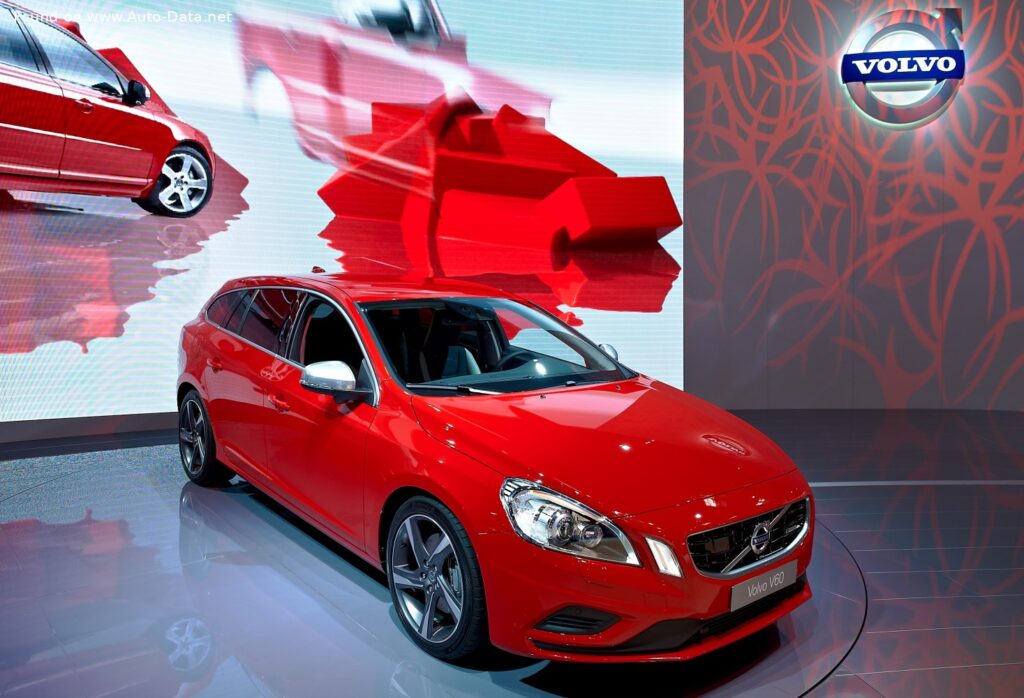
Introduction to the Volvo V60 I 2.0 T5 (240 Hp) Automatic
The Volvo V60 I 2.0 T5 (240 Hp) Automatic represents a significant chapter in Volvo’s modern era, marking the first generation of its premium mid-size sport wagon. Introduced in 2011 and produced through 2013 with this specific powertrain, the V60 was designed to inject a more dynamic and engaging personality into Volvo’s traditionally safety- and practicality-focused lineup. Positioned as a direct competitor in the competitive European D-segment, which includes vehicles like the BMW 3 Series Touring and Audi A4 Avant, the V60 aimed to blend Scandinavian design elegance with spirited performance and advanced safety features. While station wagons, or estates as they are known in Europe, have a strong following across the Atlantic, the V60 also found its niche in North America, offering a compelling alternative to the burgeoning SUV market for those seeking a more car-like driving experience with ample utility.
This particular variant, the 2.0 T5 (240 Hp) Automatic, showcases Volvo’s strategic shift towards more efficient, turbocharged four-cylinder engines, even while retaining the familiar “T5” designation historically associated with five-cylinder powerplants. This move underscored the brand’s commitment to reducing emissions and improving fuel economy without compromising on performance, a hallmark of modern automotive engineering. The V60 I was not merely a utility vehicle; it was presented as a lifestyle choice, emphasizing sleek aesthetics, refined interiors, and a driving experience that was both comfortable and capable.
Engine & Performance: The Heart of the Volvo V60 I 2.0 T5 (240 Hp) Automatic
At the core of the Volvo V60 I 2.0 T5 (240 Hp) Automatic lies a sophisticated powertrain architecture, featuring an internal combustion engine driving the front wheels. The engine, designated B4204T7, is a 2.0-liter (1999 cm³, or 121.99 cu. in.) inline four-cylinder unit, transversely mounted at the front of the vehicle. This engine configuration, a departure from Volvo’s historic five-cylinder T5 engines, nonetheless delivered impressive performance thanks to its advanced engineering. It utilizes direct fuel injection and is equipped with a turbocharger and intercooler, ensuring both robust power delivery and efficient combustion.
This turbocharged four-cylinder engine produces a robust 240 horsepower at 5500 rpm, translating to a power-per-liter output of 120.1 horsepower per liter – a commendable figure for its time. More significantly for real-world driving, the engine generates 320 Nm (236.02 lb-ft) of torque, available across a broad rev range from 1800 to 5000 rpm. This wide torque band contributes to the car’s responsive acceleration and flexible in-gear performance, making it well-suited for both city driving and highway cruising.
Power is seamlessly transferred to the front wheels via a six-speed automatic transmission. This combination allows the V60 T5 to accelerate from 0 to 60 mph in a brisk 7.3 seconds (calculated by Auto-Data.net), or 0 to 100 km/h in 7.7 seconds. Despite its spirited performance, Volvo also focused on efficiency. The vehicle achieved a combined fuel economy of 28.3 US mpg (8.3 liters per 100 km), with urban consumption rated at 20.8 US mpg (11.3 l/100 km) and extra-urban at an impressive 35.6 US mpg (6.6 l/100 km). With CO2 emissions of 194 g/km, it met the Euro 5 emission standard, reflecting Volvo’s commitment to environmental responsibility. The engine’s weight-to-power ratio stood at 6.5 kg/Hp (153.1 Hp/tonne), highlighting its effective power delivery relative to its curb weight of 3456.85 lbs (1568 kg).
Design & Features: Scandinavian Style Meets Practicality
The design of the Volvo V60 I marked a significant stylistic evolution for the brand, moving away from its more utilitarian, boxy aesthetics towards a sleeker, more dynamic profile. Classified as a station wagon (or estate), the V60 I features a five-door body type with seating for five occupants. Its exterior dimensions – a length of 182.2 inches (4628 mm), a width of 73.43 inches (1865 mm), and a height of 58.43 inches (1484 mm) – gave it a substantial yet agile presence on the road. The 109.29-inch (2776 mm) wheelbase contributed to both ride comfort and interior space.
Volvo’s design language for the V60 was characterized by sculpted lines, a coupé-like roofline, and distinctive LED lighting signatures, all contributing to its “sport wagon” moniker. The interior upheld Volvo’s reputation for ergonomic design and high-quality materials, creating a serene and sophisticated cabin environment. While specific interior features are not detailed in the raw data, for a premium vehicle of its era, standard amenities would have included advanced infotainment systems, climate control, and a range of power-operated features.
Safety, as always with Volvo, was paramount. The V60 I generation incorporated a suite of active and passive safety technologies. The provided data explicitly mentions ABS (Anti-lock Braking System) as an assisting system, which was a fundamental safety feature. Beyond this, Volvo vehicles of this period were renowned for their robust safety cages, multiple airbags, and pioneering advancements like City Safety, a low-speed collision avoidance system that debuted around this time, though its standard inclusion on this specific variant would depend on market and trim level. The practical aspect of a station wagon was evident in its cargo capacity, offering a minimum trunk space of 24.44 cu. ft. (692 liters), making it highly versatile for families and active lifestyles.
Technical Specifications
| Category | Specification |
|---|---|
| Brand | Volvo |
| Model | V60 I |
| Type (Engine) | 2.0 T5 (240 Hp) Automatic |
| Production Start | 2011 |
| Production End | 2013 |
| Body Type | Station wagon (estate) |
| Seats | 5 |
| Doors | 5 |
| Performance | |
| Power | 240 Hp @ 5500 rpm |
| Torque | 320 Nm (236.02 lb-ft) @ 1800-5000 rpm |
| Acceleration 0-60 mph | 7.3 seconds |
| Acceleration 0-100 km/h | 7.7 seconds |
| Fuel Type | Petrol (Gasoline) |
| Fuel Economy – Urban | 20.8 US mpg (11.3 l/100 km) |
| Fuel Economy – Extra Urban | 35.6 US mpg (6.6 l/100 km) |
| Fuel Economy – Combined | 28.3 US mpg (8.3 l/100 km) |
| CO2 Emissions | 194 g/km |
| Emission Standard | Euro 5 |
| Weight-to-power ratio | 6.5 kg/Hp (153.1 Hp/tonne) |
| Engine | |
| Engine Layout | Front, Transverse |
| Engine Model/Code | B4204T7 |
| Engine Displacement | 1999 cm³ (2.0 liters / 121.99 cu. in.) |
| Number of Cylinders | 4 |
| Engine Configuration | Inline |
| Cylinder Bore | 87.5 mm (3.44 in) |
| Piston Stroke | 83.1 mm (3.27 in) |
| Compression Ratio | 9.5:1 |
| Valves per Cylinder | 4 |
| Fuel Injection System | Direct injection |
| Engine Aspiration | Turbocharger, Intercooler |
| Engine Oil Capacity | 5.4 liters (5.71 US qt) |
| Coolant Capacity | 10.5 liters (11.1 US qt) |
| Dimensions & Weights | |
| Length | 4628 mm (182.2 in) |
| Width | 1865 mm (73.43 in) |
| Height | 1484 mm (58.43 in) |
| Wheelbase | 2776 mm (109.29 in) |
| Front Track | 1588 mm (62.52 in) |
| Rear Track | 1585 mm (62.4 in) |
| Minimum Turning Circle | 11.5 m (37.73 ft) |
| Kerb Weight | 1568 kg (3456.85 lbs) |
| Max. Weight (GVWR) | 2130 kg (4695.85 lbs) |
| Max Load | 562 kg (1239 lbs) |
| Trunk Space (minimum) | 692 liters (24.44 cu. ft.) |
| Fuel Tank Capacity | 67.5 liters (17.83 US gal) |
| Drivetrain, Brakes & Suspension | |
| Drivetrain Architecture | Internal combustion engine drives front wheels |
| Drive Wheel | Front-wheel drive |
| Gearbox Type | 6 gears, automatic transmission |
| Assisting Systems | ABS (Anti-lock braking system) |
Legacy & Market Impact
The Volvo V60 I, particularly in its 2.0 T5 (240 Hp) Automatic guise, carved out a distinct identity in the global automotive landscape. Its introduction marked a pivotal moment for Volvo, signaling a clear intent to broaden its appeal beyond its traditional conservative image. The V60 was instrumental in showcasing Volvo’s evolving design language – one that was sportier, more elegant, and thoroughly modern, yet unmistakably Scandinavian.
In its primary market of Europe, the V60 was a strong contender in the premium D-segment wagon category. It faced stiff competition from established German rivals such as the BMW 3 Series Touring, Audi A4 Avant, and Mercedes-Benz C-Class Estate. The V60 distinguished itself by offering a compelling blend of dynamic styling, robust performance from its efficient T5 engine, and Volvo’s unparalleled reputation for safety. While the German marques often leaned into outright sportiness or ultimate luxury, the V60 offered a more understated, sophisticated alternative that emphasized comfort, intelligent design, and a unique driving character.
For the North American market, where station wagons have historically struggled against the dominance of SUVs, the V60 represented a niche, yet cherished, offering. It appealed to buyers who desired the practicality of an SUV but preferred the lower center of gravity, superior handling dynamics, and fuel efficiency of a car. The V60 helped to reinforce Volvo’s image as a brand that champions safety and innovative design, even if its sales volumes in the US were modest compared to its European success.
The shift to a four-cylinder “T5” engine, while initially surprising to some Volvo purists accustomed to the brand’s iconic five-cylinder units, proved to be a pragmatic and forward-thinking move. It demonstrated Volvo’s adaptability to global demands for greater fuel efficiency and lower emissions, without sacrificing the premium driving experience expected from the brand. This engine strategy laid the groundwork for Volvo’s subsequent Drive-E powertrain family, which further streamlined its engine offerings.
Ultimately, the Volvo V60 I 2.0 T5 (240 Hp) Automatic is remembered as a well-rounded and engaging sport wagon. It successfully bridged the gap between Volvo’s heritage of practicality and safety and its future vision of dynamic, design-led premium vehicles. Its legacy is one of a car that dared to be different in a segment dominated by convention, offering a unique blend of style, performance, and the inherent safety and thoughtful engineering for which Volvo is renowned.
