
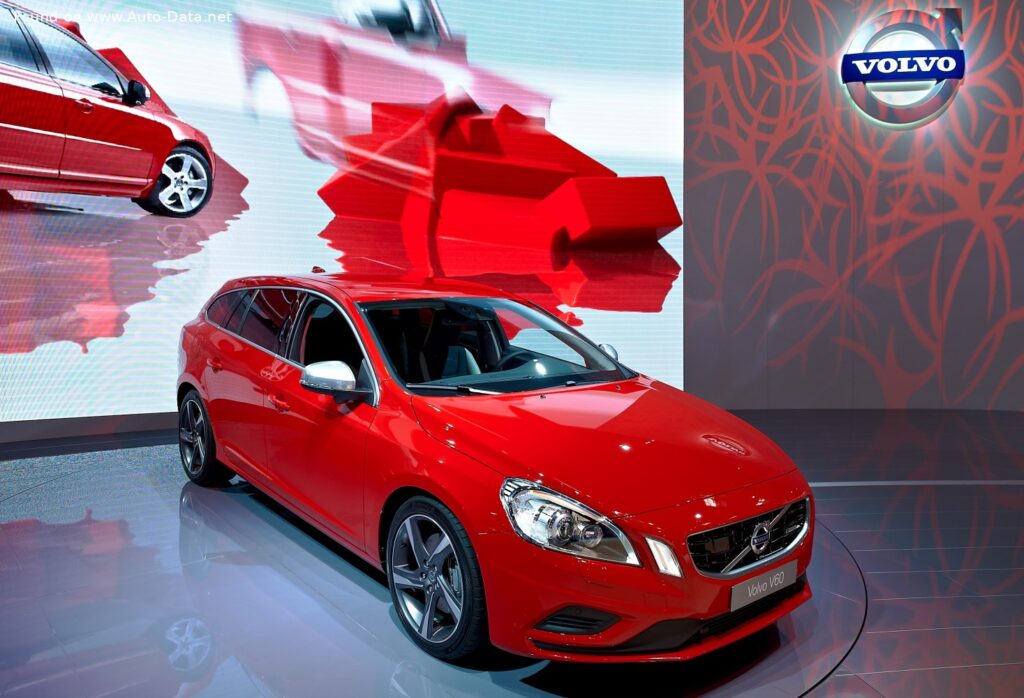
The Volvo V60 I 2.4 D5 (205 Hp): A European Premium Mid-Size Wagon
The Volvo V60 I, introduced in 2010, marked a pivotal moment for the Swedish automaker, signifying its continued evolution in design language and powertrain technology. Positioned as a premium mid-size station wagon, or “estate” as it’s known in Europe, the V60 I was designed to appeal to buyers seeking a blend of practicality, safety, and dynamic driving characteristics. The specific variant, the Volvo V60 I 2.4 D5 (205 Hp), produced between 2010 and 2011, showcased Volvo’s prowess in diesel engine development, offering a compelling package of power and efficiency tailored primarily for the European market.
This first-generation V60 was not merely a V70 successor; it carved out its own niche with a more sporting, coupe-like silhouette that departed from Volvo’s traditional utilitarian wagon aesthetic. While the V60 nameplate eventually found its way to the North American market, this particular 2.4 D5 diesel configuration remained a staple in Europe, where diesel powertrains were highly favored for their torque and fuel economy. The 205 horsepower D5 engine was a testament to Volvo’s engineering, providing robust performance within an environmentally conscious framework, adhering to Euro 5 emission standards of its time.
Engine and Performance of the Volvo V60 I
At the heart of the Volvo V60 I 2.4 D5 (205 Hp) lies Volvo’s renowned D5244T10 engine, a 2.4-liter (2400 cm3 or 146.46 cu. in.) inline five-cylinder diesel powerplant. This engine configuration, a hallmark of Volvo engineering, is celebrated for its distinctive sound, smooth power delivery, and durability. Equipped with a turbocharger and intercooler, the D5 engine produced a robust 205 horsepower at 4000 rpm, translating to a power-per-liter output of 85.4 Hp/l. More significantly for a diesel, it generated a substantial 420 Nm (309.78 lb.-ft.) of torque across a broad and usable rev range, specifically from 1500 to 3250 rpm. This ample torque made for effortless acceleration and strong pulling power, characteristic of premium European diesel vehicles.
Mated to a 6-speed manual transmission, the front-wheel-drive V60 I 2.4 D5 demonstrated impressive performance for its class. It could accelerate from 0 to 60 mph in a brisk 7.5 seconds (0-100 km/h in 7.9 seconds), making it a competitive contender against its German rivals. The engine’s advanced common rail fuel injection system ensured precise fuel delivery, contributing to both its performance and efficiency. Furthermore, the inclusion of a particulate filter highlighted Volvo’s commitment to reducing emissions, allowing the vehicle to meet stringent Euro 5 standards.
Fuel economy was a key selling point for the D5 engine. The combined fuel consumption was rated at an impressive 5.4 liters per 100 kilometers, which translates to approximately 43.6 US mpg. This efficiency was particularly noticeable in extra-urban driving, where it achieved 4.5 l/100 km (52.3 US mpg), while urban driving still yielded a respectable 6.9 l/100 km (34.1 US mpg). With CO2 emissions of 142 g/km, the V60 I 2.4 D5 offered a compelling balance of performance and environmental consideration for its time. Its kerb weight of 3487.71 lbs. (1582 kg) gave it a favorable weight-to-power ratio of 7.7 kg/Hp (129.6 Hp/tonne), underscoring its dynamic capabilities.
Design and Features
The Volvo V60 I, launched in 2010, embodied a significant shift in Volvo’s design philosophy. Moving away from the more angular, boxy aesthetics of its predecessors, the V60 adopted a sleek, dynamic, and almost coupe-like profile, particularly evident in its rear design. This five-door, five-seat station wagon (or estate) body type measured 182.2 inches (4628 mm) in length, 73.43 inches (1865 mm) in width, and 58.43 inches (1484 mm) in height, with a substantial wheelbase of 109.29 inches (2776 mm). These dimensions contributed to a stable ride and a spacious interior, despite its visually compact exterior.
Inside, the V60 I continued Volvo’s tradition of ergonomic design and high-quality materials. The cabin featured comfortable seating, intuitive controls, and a floating center console that became a design signature for the brand. Practicality was not sacrificed for style; the V60 offered a generous minimum trunk space of 24.44 cu. ft. (692 liters), making it a versatile vehicle for families and individuals needing ample cargo capacity.
As expected from Volvo, safety was paramount. While specific advanced driver-assistance systems (ADAS) would evolve significantly in later years, the V60 I came equipped with standard features like ABS (Anti-lock Braking System). Volvo’s commitment to passive safety was also evident in its robust body structure and comprehensive airbag systems. The steering system utilized a rack and pinion setup, providing precise and responsive handling, contributing to the V60’s more engaging driving experience. Its relatively tight minimum turning circle of 37.73 feet (11.5 meters) also made it maneuverable in urban environments.
Technical Specifications
| Category | Specification | Value |
|---|---|---|
General Information |
||
| Brand | Volvo | |
| Model | V60 | |
| Generation | V60 I | |
| Type (Engine) | 2.4 D5 (205 Hp) | |
| Start of production | 2010 year | |
| End of production | 2011 year | |
| Powertrain Architecture | Internal Combustion engine | |
| Body type | Station wagon (estate) | |
| Seats | 5 | |
| Doors | 5 | |
Performance Specs |
||
| Fuel consumption (economy) – urban | 6.9 l/100 km | 34.1 US mpg |
| Fuel consumption (economy) – extra urban | 4.5 l/100 km | 52.3 US mpg |
| Fuel consumption (economy) – combined | 5.4 l/100 km | 43.6 US mpg |
| CO2 emissions | 142 g/km | |
| Fuel Type | Diesel | |
| Acceleration 0 – 60 mph | 7.5 sec | |
| Acceleration 0 – 100 km/h | 7.9 sec | |
| Emission standard | Euro 5 | |
| Weight-to-power ratio | 7.7 kg/Hp | |
| Weight-to-torque ratio | 3.8 kg/Nm | |
Engine Specs |
||
| Power | 205 Hp @ 4000 rpm | |
| Power per liter | 85.4 Hp/l | |
| Torque | 420 Nm @ 1500-3250 rpm | 309.78 lb.-ft. @ 1500-3250 rpm |
| Engine layout | Front, Transverse | |
| Engine Model/Code | D5244T10 | |
| Engine displacement | 2400 cm3 | 146.46 cu. in. |
| Number of cylinders | 5 | |
| Engine configuration | Inline | |
| Piston Stroke | 81 mm | 3.19 in. |
| Fuel injection system | Diesel Commonrail | |
| Engine aspiration | Turbocharger, Intercooler | |
| Engine oil capacity | 5.9 l | 6.23 US qt |
| Coolant | 8.9 l | 9.4 US qt |
| Engine systems | Particulate filter | |
Space, Volume and Weights |
||
| Kerb Weight | 1582 kg | 3487.71 lbs. |
| Max. weight | 2090 kg | 4607.66 lbs. |
| Max load | 508 kg | 1119.95 lbs. |
| Trunk (boot) space – minimum | 692 l | 24.44 cu. ft. |
| Fuel tank capacity | 67.5 l | 17.83 US gal |
Dimensions |
||
| Length | 4628 mm | 182.2 in. |
| Width | 1865 mm | 73.43 in. |
| Height | 1484 mm | 58.43 in. |
| Wheelbase | 2776 mm | 109.29 in. |
| Front track | 1588 mm | 62.52 in. |
| Rear (Back) track | 1585 mm | 62.4 in. |
| Minimum turning circle (turning diameter) | 11.5 m | 37.73 ft. |
Drivetrain, Brakes and Suspension Specs |
||
| Drivetrain Architecture | The Internal combustion engine (ICE) drives the front wheels of the vehicle. | |
| Drive wheel | Front wheel drive | |
| Number of gears and type of gearbox | 6 gears, manual transmission | |
| Assisting systems | ABS (Anti-lock braking system) | |
| Steering type | Steering rack and pinion | |
Legacy and Market Impact of the Volvo V60 I
The Volvo V60 I 2.4 D5 (205 Hp) played a crucial role in shaping Volvo’s image during the early 2010s, particularly in its primary European market. It successfully bridged the gap between Volvo’s traditional values of safety and practicality and a newfound emphasis on dynamic design and engaging driving characteristics. While the V60 I, in its diesel form, was not offered in the United States, its impact in Europe was significant, where it competed fiercely in the premium mid-size segment.
In Europe, the V60 I carved out its niche against established German rivals such as the BMW 3 Series Touring, Audi A4 Avant, and Mercedes-Benz C-Class Estate. The D5 engine, with its distinctive five-cylinder note and strong torque delivery, offered a compelling alternative to the four-cylinder diesels prevalent in many competitors, providing a sense of refinement and effortless power. Its excellent fuel economy and adherence to Euro 5 emission standards made it an attractive option for both private buyers and fleet operators in countries with high fuel taxes and emissions regulations.
The V60 I’s design, often described as a “sports wagon,” represented a bold step for Volvo. It moved away from the boxy, purely functional wagon shape that had long been synonymous with the brand, signaling Volvo’s ambition to be seen as a purveyor of stylish, desirable vehicles without compromising on its core tenets of safety and quality. This design language would influence subsequent Volvo models and helped to modernize the brand’s perception globally.
The V60 I also showcased Volvo’s commitment to internal combustion engine development, particularly with its refined D5 diesel. Even as the automotive industry began its slow pivot towards electrification, engines like the D5 demonstrated that traditional powertrains could still offer impressive efficiency and performance. The reliability and longevity of these Volvo diesel engines further cemented the brand’s reputation for engineering excellence.
Ultimately, the Volvo V60 I, and particularly the potent 2.4 D5 (205 Hp) variant, left a legacy as a sophisticated and capable premium mid-size wagon. It successfully combined Swedish practicality with a newfound sense of style and dynamism, setting the stage for future generations of Volvo vehicles that would continue to push boundaries in design, technology, and sustainability. For many European buyers, it represented the ideal balance of luxury, performance, and everyday usability, firmly establishing its place in the annals of modern automotive history.
