
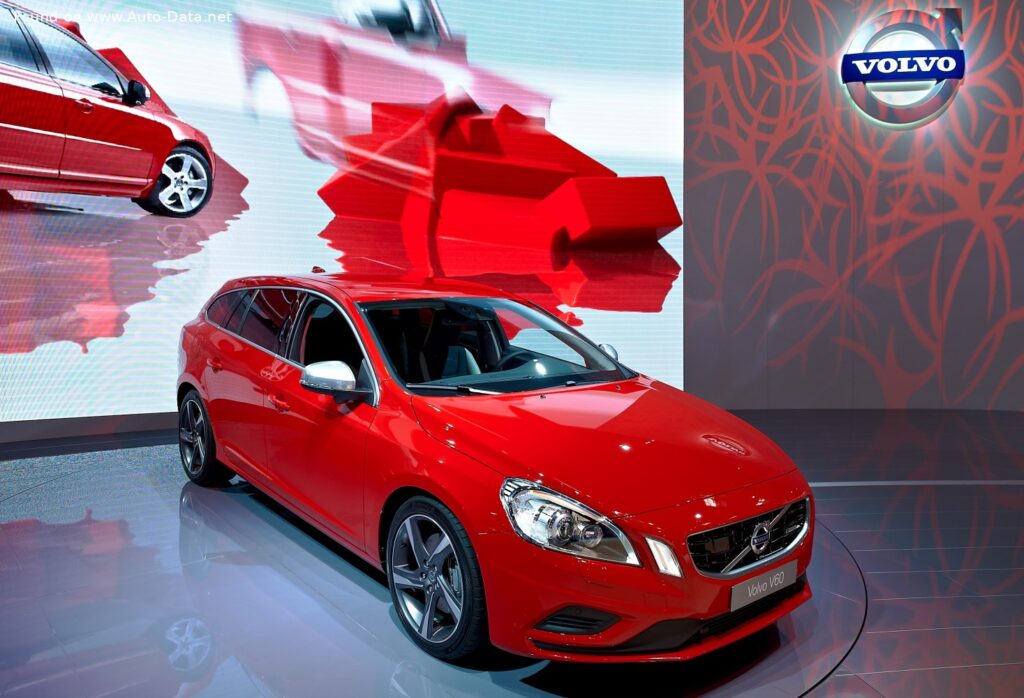
In the landscape of North American automotive history, certain vehicles stand out for their blend of practicality, performance, and distinctive character. The Volvo V60, particularly its first generation (V60 I) introduced in 2010, marked a significant chapter for the Swedish automaker. Moving beyond its traditional image of boxy, utilitarian wagons, the V60 ushered in a new era of sleek design and dynamic driving without sacrificing the brand’s legendary commitment to safety. For discerning drivers in the USA and Canada seeking a sophisticated yet spirited family hauler, the V60 I quickly carved out a niche, offering a compelling alternative to the burgeoning SUV market.
Among the V60 I’s various configurations, the 3.0 T6 AWD Automatic variant stood as a flagship for performance, combining a potent turbocharged engine with Volvo’s renowned all-wheel-drive system. This model epitomized Volvo’s ambition to infuse excitement into its practical offerings, proving that a station wagon could indeed be both elegant and exhilarating.
The Volvo V60 I 3.0 T6 (304 Hp) AWD Automatic: A Performance Wagon for the Discerning Driver
Launched in 2010 and produced until 2014, the first-generation Volvo V60 (V60 I) was a pivotal model that showcased Volvo’s evolving design philosophy. Billed as a “sportswagon,” it aimed to combine the versatility of an estate car with the aesthetics and driving dynamics of a coupe. The 3.0 T6 (304 Hp) AWD Automatic variant was at the pinnacle of this ambition, delivering robust performance and confident handling, making it a formidable contender in the premium compact executive segment.
The Engine & Performance: Unleashing the Swedish Six
At the heart of the Volvo V60 I 3.0 T6 (304 Hp) AWD Automatic lay a masterpiece of Swedish engineering: the B6304T4 engine. This 3.0-liter (2953 cm3 or 180.2 cu. in.) inline six-cylinder powerplant was a testament to smooth power delivery and refined performance. Bolstered by a sophisticated turbocharger and intercooler system, this engine produced a formidable 304 horsepower at 5600 rpm. More impressively, it generated a robust 440 Newton-meters (324.53 lb.-ft.) of torque across a broad and accessible rev range, from 2100 to 4200 rpm. This meant effortless acceleration and strong passing power in nearly any driving situation.
Mated to a smooth-shifting 6-speed automatic transmission and Volvo’s capable All-Wheel Drive (AWD) system, the V60 T6 could launch from 0 to 60 mph in a swift 5.9 seconds. Its top speed was electronically limited to 155.34 mph (250 km/h), a clear indicator of its performance credentials. The AWD system provided excellent traction and stability, particularly beneficial for North American drivers facing diverse weather conditions, from snowy winters to rainy summers. Despite its power, the engine was designed to meet Euro 5 emission standards, reflecting Volvo’s commitment to balancing performance with environmental responsibility.
Features: Safety, Sophistication, and Scandinavian Style
As a modern Volvo introduced in the early 2010s, the V60 I 3.0 T6 (304 Hp) AWD Automatic was packed with features that emphasized safety, comfort, and a distinctly Scandinavian sense of style. While the raw data primarily highlights the Anti-lock Braking System (ABS), Volvo’s reputation for pioneering safety extended far beyond this fundamental system.
The V60 I generation was among the first to widely feature Volvo’s groundbreaking City Safety system as standard, an innovation designed to prevent or mitigate low-speed collisions by automatically braking if a frontal impact was imminent. Advanced Driver-Assistance Systems (ADAS) of the era also included optional features like Pedestrian Detection with Full Auto Brake, Driver Alert Control (DAC) to warn against fatigued driving, Lane Departure Warning, and Blind Spot Information System (BLIS). These systems underscored Volvo’s unwavering dedication to protecting occupants and vulnerable road users, a significant selling point in the safety-conscious North American market.
Inside, the V60 I boasted a cabin characterized by ergonomic design and high-quality materials. The “floating” center console, a Volvo signature, housed intuitive controls. While infotainment systems were evolving rapidly during this period, the V60 offered Volvo’s Sensus system, integrating audio, navigation, and vehicle settings through a central screen. Connectivity typically included Bluetooth for hands-free calling and audio streaming, along with USB and auxiliary inputs. Premium sound systems, often featuring Harman Kardon or Dynaudio, enhanced the driving experience. The V60’s design language was a significant departure from its predecessors, featuring a more sculpted, athletic profile with a sloping roofline that gave it a coupe-like appearance, challenging the traditional wagon aesthetic. This blend of practicality with sporty elegance resonated well with North American buyers looking for something less conventional than an SUV.
Technical Specifications
The following table provides a detailed overview of the Volvo V60 I 3.0 T6 (304 Hp) AWD Automatic’s technical data:
| Category | Specification |
| General Information | |
| Brand | Volvo |
| Model | V60 |
| Generation | V60 I |
| Type (Engine) | 3.0 T6 (304 Hp) AWD Automatic |
| Production Start | 2010 year |
| Production End | 2014 year |
| Powertrain Architecture | Internal Combustion engine |
| Body Type | Station wagon (estate) |
| Seats | 5 |
| Doors | 5 |
| Performance Specs | |
| Fuel Consumption (Urban) | 14.8 l/100 km (15.9 US mpg) |
| Fuel Consumption (Extra Urban) | 7.5 l/100 km (31.4 US mpg) |
| Fuel Consumption (Combined) | 10.2 l/100 km (23.1 US mpg) |
| CO2 Emissions | 237 g/km |
| Fuel Type | Petrol (Gasoline) |
| Acceleration 0-60 mph | 5.9 sec |
| Acceleration 0-100 km/h | 6.2 sec |
| Maximum Speed | 250 km/h (155.34 mph) |
| Emission Standard | Euro 5 |
| Weight-to-Power Ratio | 5.6 kg/Hp (177.7 Hp/tonne) |
| Weight-to-Torque Ratio | 3.9 kg/Nm (257.2 Nm/tonne) |
| Engine Specs | |
| Power | 304 Hp @ 5600 rpm |
| Power per litre | 102.9 Hp/l |
| Torque | 440 Nm (324.53 lb.-ft.) @ 2100-4200 rpm |
| Engine Layout | Front, Transverse |
| Engine Model/Code | B6304T4 |
| Engine Displacement | 2953 cm3 (180.2 cu. in.) |
| Number of Cylinders | 6 |
| Engine Configuration | Inline |
| Piston Stroke | 82 mm (3.23 in.) |
| Fuel Injection System | Multi-port manifold injection |
| Engine Aspiration | Turbocharger, Intercooler |
| Engine Oil Capacity | 6.8 l (7.19 US qt) |
| Coolant Capacity | 8.9 l (9.4 US qt) |
| Space, Volume & Weights | |
| Kerb Weight | 1711 kg (3772.11 lbs.) |
| Max. Weight | 2220 kg (4894.26 lbs.) |
| Max Load | 509 kg (1122.15 lbs.) |
| Trunk (boot) Space – Minimum | 692 l (24.44 cu. ft.) |
| Fuel Tank Capacity | 67.5 l (17.83 US gal) |
| Dimensions | |
| Length | 4628 mm (182.2 in.) |
| Width | 1865 mm (73.43 in.) |
| Height | 1484 mm (58.43 in.) |
| Wheelbase | 2776 mm (109.29 in.) |
| Front Track | 1588 mm (62.52 in.) |
| Rear (Back) Track | 1585 mm (62.4 in.) |
| Minimum Turning Circle | 11.5 m (37.73 ft.) |
| Drivetrain, Brakes & Suspension | |
| Drive Wheel | All wheel drive (4×4) |
| Number of Gears & Type | 6 gears, automatic transmission |
| Assisting Systems | ABS (Anti-lock braking system) |
| Steering Type | Steering rack and pinion |
Market Legacy: A Niche Player with Enduring Appeal
When the Volvo V60 I 3.0 T6 AWD Automatic arrived in North America, it entered a competitive, albeit shrinking, market for premium wagons. Its launch MSRP for the T6 variant typically hovered in the range of $40,000 to $50,000 USD (depending on model year and optional packages), placing it squarely against established German rivals. Key competitors included the Audi A4 Avant, the BMW 3 Series Sports Wagon, and, to a lesser extent, luxury Japanese offerings like the Acura TSX Sport Wagon. While SUVs were rapidly gaining dominance, the V60 aimed to capture the hearts of drivers who appreciated a lower center of gravity, engaging driving dynamics, and distinct European styling.
North American drivers received the V60 I T6 with a mix of appreciation and cautious enthusiasm. Critics lauded its powerful engine, especially the smooth inline-six, and the confidence-inspiring AWD system. The refreshed, more dynamic design was a definite hit, signaling a modern evolution for the brand. Volvo’s continued leadership in safety technology was also a significant draw. However, some traditional wagon buyers found the V60’s sloped roofline and sportier dimensions translated to less cargo space than older, boxier Volvo wagons or competing SUVs. This meant it appealed more to those prioritizing style and performance over ultimate utility.
Despite its relatively niche position, the V60 I T6 carved out a loyal following among those who valued understated luxury, robust performance, and unparalleled safety in a practical yet stylish package. It cemented Volvo’s reputation for building vehicles that were both sensible and desirable, paving the way for future generations of the V60 and affirming the enduring appeal of a well-engineered premium station wagon in the North American market.
