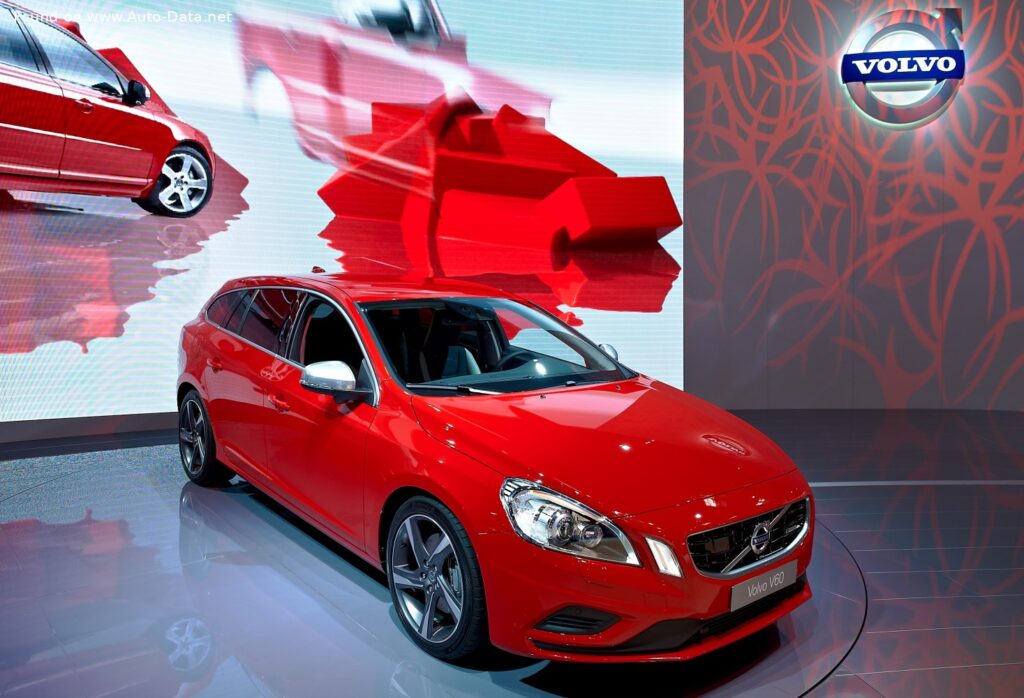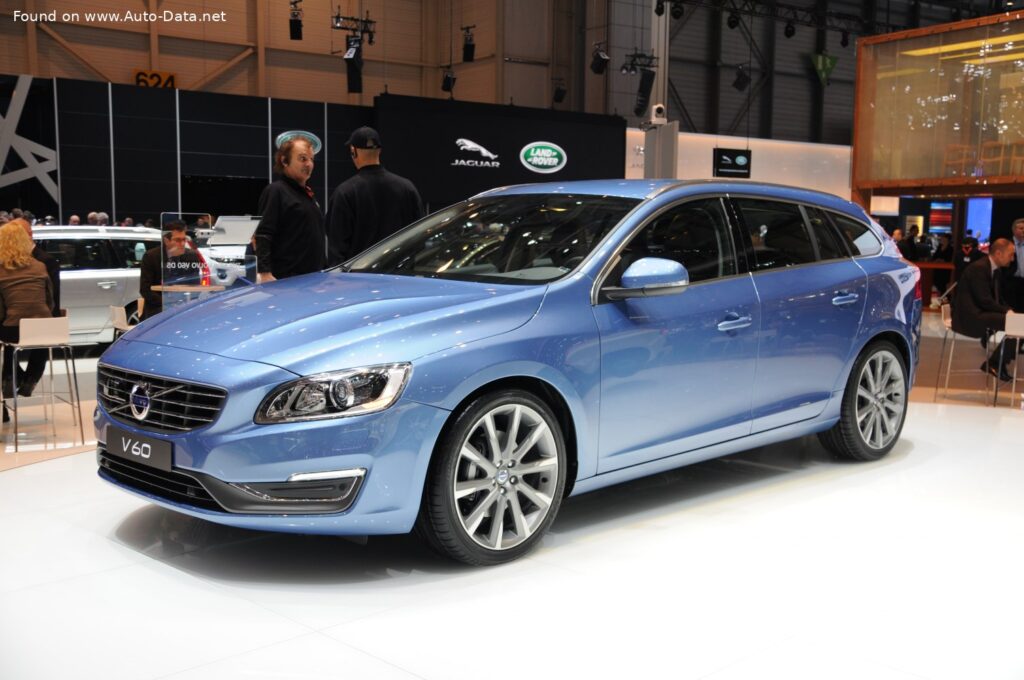
Introduction to the Volvo V60 I (2013 Facelift)
The Volvo V60, a premium compact executive station wagon, represents a significant chapter in the Swedish automaker’s modern history, blending Scandinavian design with robust engineering and a strong emphasis on safety. The first generation V60, designated V60 I, made its debut in 2010. The model under review, the Volvo V60 I (2013 facelift) 1.6 D2 (115 Hp) Automatic, hails from the mid-cycle refresh that brought updated styling, enhanced technology, and refined powertrains to the lineup. Produced from 2013 to 2015, this particular variant was a key offering in the European market, catering to drivers seeking a highly fuel-efficient yet practical family or executive vehicle without compromising on Volvo’s renowned comfort and safety standards.
Positioned as a more dynamic and stylish alternative to traditional, boxier station wagons, the V60 I facelift aimed to inject a sportier appeal into Volvo’s range while retaining the brand’s core values. This 1.6 D2 model, with its diesel powertrain and automatic transmission, was particularly popular in markets where diesel engines were favored for their impressive fuel economy and lower CO2 emissions. While the V60 itself was available in North America, this specific D2 diesel variant was predominantly marketed and sold in Europe, illustrating the differing market demands and regulatory landscapes concerning powertrain choices. It served as a testament to Volvo’s commitment to offering diverse and efficient engine options tailored to regional preferences.
Powertrain and Performance: The 1.6 D2 Engine in the Volvo V60 I (2013 Facelift)
At the heart of this particular Volvo V60 I (2013 facelift) lies the D2 engine, a 1.6-liter (1560 cm³ or 95.2 cu. in.) inline four-cylinder diesel unit. Known internally by the code D4162T, this engine was a cornerstone of Volvo’s efficiency strategy during its production years. Equipped with a turbocharger and intercooler, along with a sophisticated common rail fuel injection system, it delivered a respectable 115 horsepower at 3600 rpm. While 115 HP might not suggest blistering performance, the engine’s real strength lay in its torque delivery: a robust 270 Nm (199.14 lb.-ft.) available across a broad rev range from 1750 to 2500 rpm. This ample torque provided strong pulling power and effortless cruising, particularly important for a vehicle designed to carry passengers and cargo.
Power was sent to the front wheels through a smooth-shifting 6-speed automatic transmission, contributing to a relaxed driving experience in both urban and highway conditions. The V60 I 1.6 D2 achieved an acceleration from 0 to 60 mph in a calculated 12.1 seconds (0-100 km/h in 12.7 seconds), which, while not class-leading, was perfectly adequate for daily driving and demonstrated the car’s focus on efficiency over outright speed. The powertrain architecture, with the internal combustion engine driving the front wheels, provided predictable handling characteristics and optimized packaging.
Where this D2 variant truly excelled was in its fuel economy and environmental performance. With a combined fuel consumption rating of 4.5 liters per 100 kilometers, translating to an impressive 52.3 US mpg, it was a highly economical choice for long-distance travel. Urban consumption was rated at 5.1 l/100 km (46.1 US mpg), and extra-urban at 4.2 l/100 km (56 US mpg). These figures, combined with CO2 emissions of just 119 g/km, allowed the V60 D2 to meet Euro 5 emission standards, making it an attractive option in European markets with strict environmental regulations and taxation based on emissions. The inclusion of a particulate filter further underscored its commitment to cleaner diesel operation.
Design, Interior, and Safety Innovations
The Volvo V60 I (2013 facelift) brought a refreshed aesthetic that enhanced its already sleek and dynamic profile. The most noticeable exterior changes included a new, wider grille, redesigned headlights that integrated into the front fascia more seamlessly, and updated front and rear bumpers. These modifications gave the V60 a more contemporary and unified appearance, moving away from some of the earlier model’s more disparate design elements. The station wagon (estate) body type, with its five doors and seating for five, offered a blend of practicality and style, challenging the traditional perception of a family wagon as merely utilitarian.
Dimensionally, the V60 I facelift measured 182.48 inches (4635 mm) in length, 71.85 inches (1825 mm) in width, and 58.43 inches (1484 mm) in height, riding on a 109.29-inch (2776 mm) wheelbase. These proportions contributed to a stable road presence and a comfortable interior. The minimum turning circle of 37.07 feet (11.3 m) ensured decent maneuverability in urban environments. Inside, Volvo maintained its reputation for ergonomic design and high-quality materials. The cabin was designed with driver and passenger comfort in mind, featuring supportive seats and intuitive controls. The trunk space offered a practical 15.19 cu. ft. (430 liters) of cargo capacity, expandable by folding down the rear seats, making it versatile for various needs from grocery runs to family vacations.
Safety remained a paramount concern for Volvo, and the V60 I facelift was no exception. While the provided data specifically mentions ABS (Anti-lock Braking System), the V60 from this era would have been equipped with a comprehensive suite of safety features as standard. This typically included multiple airbags, traction control, stability control, and Volvo’s proprietary SIPS (Side Impact Protection System) and WHIPS (Whiplash Protection System). Furthermore, advanced driver-assistance systems like City Safety (Volvo’s low-speed collision mitigation system), pedestrian detection, and blind-spot information systems were often available, underscoring Volvo’s leadership in automotive safety technology. The robust body structure, combined with ventilated disc front brakes and disc rear brakes, provided confident stopping power and occupant protection.
Technical Specifications of the Volvo V60 I (2013 Facelift) 1.6 D2 Automatic
The following table provides a detailed breakdown of the technical specifications for the Volvo V60 I (2013 facelift) 1.6 D2 (115 Hp) Automatic model.
General Information |
|
| Brand | Volvo |
| Model | V60 |
| Generation | V60 I (2013 facelift) |
| Type (Engine) | 1.6 D2 (115 Hp) Automatic |
| Start of Production | 2013 year |
| End of Production | 2015 year |
| Powertrain Architecture | Internal Combustion engine |
| Body Type | Station wagon (estate) |
| Seats | 5 |
| Doors | 5 |
Performance Specifications |
|
| Fuel Consumption (Economy) – Urban | 5.1 l/100 km (46.1 US mpg) |
| Fuel Consumption (Economy) – Extra Urban | 4.2 l/100 km (56 US mpg) |
| Fuel Consumption (Economy) – Combined | 4.5 l/100 km (52.3 US mpg) |
| CO2 Emissions | 119 g/km |
| Fuel Type | Diesel |
| Acceleration 0 – 62 mph (0 – 100 km/h) | 12.7 sec |
| Acceleration 0 – 60 mph (Calculated) | 12.1 sec |
| Emission Standard | Euro 5 |
| Weight-to-Power Ratio | 14.8 kg/Hp (67.6 Hp/tonne) |
| Weight-to-Torque Ratio | 6.3 kg/Nm (158.6 Nm/tonne) |
Engine Specifications |
|
| Power | 115 Hp @ 3600 rpm |
| Power per Liter | 73.7 Hp/l |
| Torque | 270 Nm @ 1750-2500 rpm (199.14 lb.-ft.) |
| Engine Layout | Front, Transverse |
| Engine Model/Code | D4162T |
| Engine Displacement | 1560 cm³ (1.6 liters / 95.2 cu. in.) |
| Number of Cylinders | 4 |
| Engine Configuration | Inline |
| Cylinder Bore | 75 mm (2.95 in.) |
| Piston Stroke | 88.3 mm (3.48 in.) |
| Fuel Injection System | Diesel Commonrail |
| Engine Aspiration | Turbocharger, Intercooler |
| Engine Oil Capacity | 3.8 liters (4.02 US qt) |
| Engine Oil Specification | Not specified |
| Coolant Capacity | 10.5 liters (11.1 US qt) |
| Engine Systems | Particulate filter |
Space, Volume and Weights |
|
| Kerb Weight | 1702 kg (3752.27 lbs) |
| Max. Weight | 2130 kg (4695.85 lbs) |
| Max Load | 428 kg (943.58 lbs) |
| Trunk (Boot) Space – Minimum | 430 liters (15.19 cu. ft.) |
| Fuel Tank Capacity | 67.5 liters (17.83 US gal) |
Dimensions |
|
| Length | 4635 mm (182.48 in.) |
| Width | 1825 mm (71.85 in.) |
| Height | 1484 mm (58.43 in.) |
| Wheelbase | 2776 mm (109.29 in.) |
| Front Track | 1588 mm (62.52 in.) |
| Rear (Back) Track | 1585 mm (62.4 in.) |
| Minimum Turning Circle (Turning Diameter) | 11.3 m (37.07 ft.) |
Drivetrain, Brakes and Suspension Specs |
|
| Drivetrain Architecture | The Internal combustion engine (ICE) drives the front wheels of the vehicle. |
| Drive Wheel | Front wheel drive |
| Number of Gears and Type of Gearbox | 6 gears, automatic transmission |
| Front Brakes | Ventilated discs |
| Rear Brakes | Disc |
| Assisting Systems | ABS (Anti-lock braking system) |
| Steering Type | Steering rack and pinion |
Legacy and Market Impact of the Volvo V60 I (2013 Facelift)
The Volvo V60 I (2013 facelift), particularly in its 1.6 D2 Automatic guise, carved out a significant niche in the highly competitive European premium compact executive segment. Its blend of stylish wagon practicality, renowned Volvo safety, and exceptional fuel efficiency made it a compelling choice for families and corporate fleets across the continent. In a market increasingly leaning towards SUVs, the V60 stood out as a sophisticated alternative, offering car-like driving dynamics with generous cargo space, often preferred by those who valued driving engagement and lower centers of gravity.
Volvo’s brand reputation for safety and reliability was a key selling point, providing peace of mind for buyers. The 2013 facelift helped to keep the V60 visually fresh and technologically relevant against newer rivals. Its competitors in Europe were formidable, including established players like the BMW 3 Series Touring, Audi A4 Avant, Mercedes-Benz C-Class Estate, and more mainstream but equally competent offerings such as the Volkswagen Passat Estate and Ford Mondeo Estate. The V60 differentiated itself with a distinct Scandinavian aesthetic, a focus on passenger comfort, and its pioneering safety innovations.
The 1.6 D2 engine, while less common or entirely absent in North American V60 models (which typically featured larger gasoline engines like the T5 or T6), was a strategic and successful powertrain for the European market. It allowed Volvo to offer an entry-level diesel option that was incredibly economical to run, aligning with European demand for low running costs and reduced emissions. This engine choice played a crucial role in expanding the V60’s market appeal, making premium ownership more accessible and environmentally conscious.
Ultimately, the Volvo V60 I facelift, and its efficient D2 variant, contributed to Volvo’s narrative of modernizing its image while staying true to its core values. It demonstrated that a station wagon could be both practical and desirable, stylish and safe, and efficient without being underpowered for its intended purpose. Its success laid important groundwork for the subsequent generations of the V60, solidifying Volvo’s position as a leader in premium family vehicles and cementing the V60’s legacy as a smart and elegant choice in its class.