The Volvo V60 I (2013 Facelift): A European Flex-Fuel Innovator
The Volvo V60 I, particularly in its 2013 facelifted iteration, represented Volvo’s continued commitment to the premium compact executive station wagon segment. Positioned as a versatile and stylish alternative to traditional sedans, the V60 blended Scandinavian design principles with practical functionality. This particular variant, the Volvo V60 I (2013 facelift) 1.6 T4F (180 Hp) Ethanol Automatic, stands out due to its advanced flex-fuel capabilities, allowing it to run on either conventional gasoline or E85 ethanol. While the V60 was sold in various global markets, including North America, this specific T4F ethanol-compatible powertrain was primarily targeted at European markets, where bioethanol fuels were gaining traction as a more environmentally conscious alternative. This model, produced between 2013 and 2015, underscored Volvo’s reputation for innovation, safety, and environmental responsibility within its core European demographic.
Powertrain and Performance of the Volvo V60 I (2013 facelift)
At the heart of this particular Volvo V60 I (2013 facelift) variant is a sophisticated 1.6-liter (1596 cm3 or 97.39 cu. in.) turbocharged inline-four engine, designated B4164T2. This compact yet potent powerplant utilizes direct fuel injection and a double overhead camshaft (DOHC) valvetrain to produce a respectable 180 horsepower at 5700 rpm. Torque output is equally impressive for its displacement, generating 177.01 lb.-ft. across a broad range from 1600 to 5000 rpm, ensuring responsive acceleration and flexible cruising performance.
The “T4F” designation signifies its flex-fuel capability, meaning the engine is engineered to run optimally on either gasoline or E85 ethanol. This adaptability was a significant technological feature for its time, especially in European countries promoting renewable fuels. When running on gasoline, the V60 1.6 T4F achieved a combined fuel economy of approximately 32.7 US mpg (7.2 l/100 km). While E85 typically results in slightly higher fuel consumption due to its lower energy density, the car maintained competitive figures, illustrating the efficiency of Volvo’s engineering.
Power is delivered to the front wheels via a smooth-shifting 6-speed automatic transmission. This combination allows the V60 to accelerate from 0 to 60 mph in a brisk 8.7 seconds, with a maximum speed of 136.7 mph (220 km/h). These performance figures place it squarely in the competitive premium segment, offering a blend of spirited driving dynamics and everyday usability. The front, transverse engine layout contributes to a balanced weight distribution and optimized interior space, while the front-wheel drive architecture provides predictable handling characteristics and efficiency.
Design and Features: Scandinavian Elegance Meets Practicality
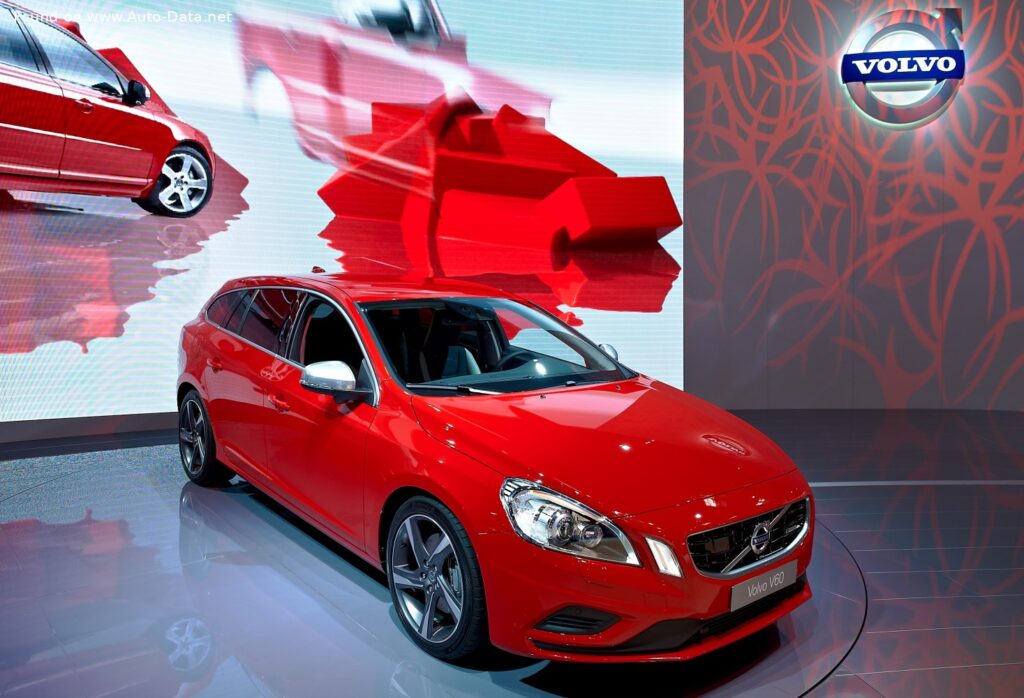
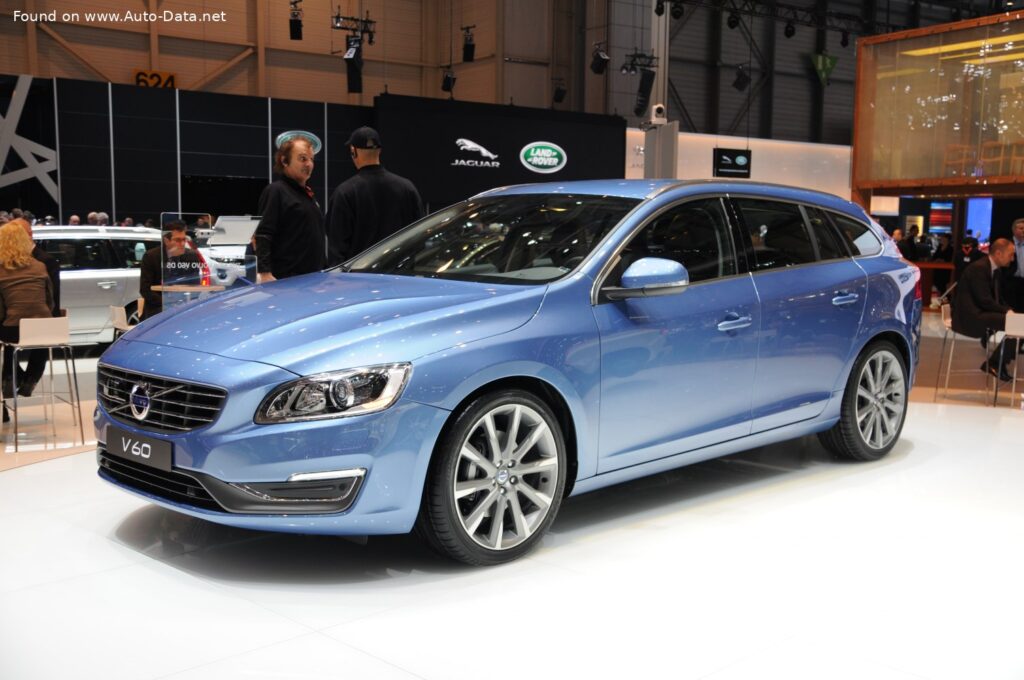
The 2013 facelift of the Volvo V60 I brought subtle yet impactful enhancements to its already appealing design. As a five-door station wagon (often referred to as an “estate” in Europe), the V60 expertly blended the sleek profile of a coupe with the practicality of a wagon. The facelift introduced a more cohesive and sophisticated front fascia, featuring a wider grille, revised headlights, and updated bumpers, giving the car a more assertive and contemporary presence. The signature Volvo “iron mark” badge was prominently displayed, reinforcing the brand’s identity.
Inside, the V60 offered a quintessential Scandinavian experience: a minimalist yet highly functional cabin crafted with high-quality materials. The interior was designed to accommodate five occupants comfortably, with supportive seats and ample legroom. Volvo’s unwavering commitment to safety was evident through a suite of advanced features for its era, including multiple airbags, stability control, and a robust body structure. Depending on trim levels and optional packages, the V60 could also be equipped with features like City Safety (Volvo’s low-speed collision avoidance system), adaptive cruise control, and a comprehensive infotainment system, all contributing to a safe, comfortable, and connected driving experience.
Dimensions of the V60 were optimized for urban maneuverability and highway stability. With a length of 182.48 inches (4635 mm), a width of 74.76 inches (1899 mm), and a height of 58.43 inches (1484 mm), it struck an ideal balance for a compact executive wagon. The 109.29-inch (2776 mm) wheelbase provided a stable ride and generous interior volume. Its independent McPherson strut front suspension and independent coil spring rear suspension, combined with ventilated disc brakes up front and disc brakes at the rear, ensured a refined ride quality and confident stopping power, further complemented by an Anti-lock Braking System (ABS) and precise rack and pinion steering.
Technical Specifications: Volvo V60 I (2013 facelift) 1.6 T4F (180 Hp) Ethanol Automatic
| Category | Specification | Value |
|---|---|---|
| General Information | ||
| Brand | Volvo | |
| Model | V60 | |
| Generation | V60 I (2013 facelift) | |
| Type (Engine) | 1.6 T4F (180 Hp) Ethanol Automatic | |
| Production Start | 2013 year | |
| Production End | 2015 year | |
| Powertrain Architecture | Internal Combustion engine | |
| Body type | Station wagon (estate) | |
| Seats | 5 | |
| Doors | 5 | |
| Performance Specifications | ||
| Fuel consumption (economy) – urban (Gasoline) | 9.9 l/100 km (23.8 US mpg) | |
| Fuel consumption (economy) – urban (Ethanol – E85) | 13.3 l/100 km | |
| Fuel consumption (economy) – extra urban (Gasoline) | 5.7 l/100 km (41.3 US mpg) | |
| Fuel consumption (economy) – extra urban (Ethanol – E85) | 7.8 l/100 km | |
| Fuel consumption (economy) – combined (Gasoline) | 7.2 l/100 km (32.7 US mpg) | |
| Fuel consumption (economy) – combined (Ethanol – E85) | 9.8 l/100 km | |
| CO2 emissions (Gasoline) | 167 g/km | |
| CO2 emissions (Ethanol – E85) | 161 g/km | |
| Fuel Type | Petrol / Ethanol – E85 | |
| Acceleration 0 – 60 mph | 8.7 sec | |
| Maximum speed | 136.7 mph (220 km/h) | |
| Engine Specifications | ||
| Power | 180 Hp @ 5700 rpm | |
| Power per liter | 112.8 Hp/l | |
| Torque | 177.01 lb.-ft. @ 1600-5000 rpm (240 Nm) | |
| Engine layout | Front, Transverse | |
| Engine Model/Code | B4164T2 | |
| Engine displacement | 1.6 l (1596 cm3, 97.39 cu. in.) | |
| Number of cylinders | 4 | |
| Engine configuration | Inline | |
| Cylinder Bore | 3.11 in. (79 mm) | |
| Piston Stroke | 3.2 in. (81.4 mm) | |
| Compression ratio | 10:1 | |
| Number of valves per cylinder | 4 | |
| Fuel injection system | Direct injection | |
| Engine aspiration | Turbocharger | |
| Valvetrain | DOHC | |
| Engine oil capacity | 4.33 US qt (4.1 l) | |
| Coolant capacity | 9.72 US qt (9.2 l) | |
| Space, Volume and Weights | ||
| Fuel tank capacity | 17.83 US gal (67.5 l) | |
| Dimensions | ||
| Length | 182.48 in. (4635 mm) | |
| Width | 74.76 in. (1899 mm) | |
| Height | 58.43 in. (1484 mm) | |
| Wheelbase | 109.29 in. (2776 mm) | |
| Front track | 62.52 – 62.13 in. (1588-1578 mm) | |
| Rear (Back) track | 62.4 – 62.01 in. (1585-1575 mm) | |
| Ride height (ground clearance) | 5.35 in. (136 mm) | |
| Minimum turning circle (turning diameter) | 37.73 – 40.68 ft. (11.5 – 12.4 m) | |
| Drivetrain, Brakes and Suspension | ||
| Drivetrain Architecture | The Internal combustion engine (ICE) drives the front wheels of the vehicle. | |
| Drive wheel | Front wheel drive | |
| Number of gears and type of gearbox | 6 gears, automatic transmission | |
| Front suspension | Independent, type McPherson with coil spring and anti-roll bar | |
| Rear suspension | Independent coil spring | |
| Front brakes | Ventilated discs | |
| Rear brakes | Disc | |
| Assisting systems | ABS (Anti-lock braking system) | |
| Steering type | Steering rack and pinion | |
Legacy and Market Impact in the European Context
The Volvo V60 I (2013 facelift) 1.6 T4F Ethanol Automatic played a significant role in Volvo’s strategy to maintain its competitive edge in the highly contested European premium compact executive segment. In Europe, where station wagons historically command a strong market share due to their blend of practicality and refined aesthetics, the V60 faced formidable rivals such as the BMW 3 Series Touring, Audi A4 Avant, Mercedes-Benz C-Class Estate, and the Volkswagen Passat Estate. Volvo differentiated itself through its emphasis on safety, understated luxury, and a distinctive Scandinavian design philosophy that prioritized ergonomics and user-friendliness.
The inclusion of the flex-fuel T4F engine was particularly impactful in markets like Sweden and France, where ethanol-based fuels (E85) were more readily available and often incentivized through lower taxes or environmental policies. This commitment to alternative fuels underscored Volvo’s forward-thinking approach to environmental sustainability, long before widespread electrification became the industry’s primary focus. It allowed the V60 to appeal to environmentally conscious buyers who sought to reduce their carbon footprint without fully transitioning to electric or hybrid vehicles, offering a tangible reduction in CO2 emissions when running on E85 (161 g/km vs. 167 g/km on gasoline).
The 2013 facelift ensured the V60 remained fresh and relevant, with its updated styling cues aligning with Volvo’s evolving design language. Its reputation for robust build quality, comfortable long-distance cruising, and a comprehensive suite of safety features made it a popular choice among families and professionals alike. The V60 cemented Volvo’s position as a brand that delivered sophisticated and safe vehicles without sacrificing performance or style. Its legacy continues to influence subsequent Volvo models, demonstrating how a well-executed mid-cycle refresh and a focus on market-specific powertrain innovations can sustain a model’s appeal and contribute to a brand’s enduring identity in a demanding automotive landscape.