The Volvo V60 I (2013 Facelift): A Refined European Estate
The Volvo V60 I (2013 facelift) represents a significant refresh of Volvo’s first-generation mid-size premium station wagon, first introduced in 2010. This particular iteration, produced from 2015 to 2018, specifically the 2.0 D2 (120 Hp) Automatic variant, was a cornerstone of Volvo’s European product lineup. Positioned in the highly competitive D-segment, the V60 offered a compelling blend of Scandinavian design, renowned safety, and practical versatility, all wrapped in a sleek, dynamic package. While the V60 nameplate has seen limited distribution in the United States, particularly for its diesel variants, this generation played a crucial role in Volvo’s global strategy, especially in markets where diesel power and the station wagon body style held strong appeal.
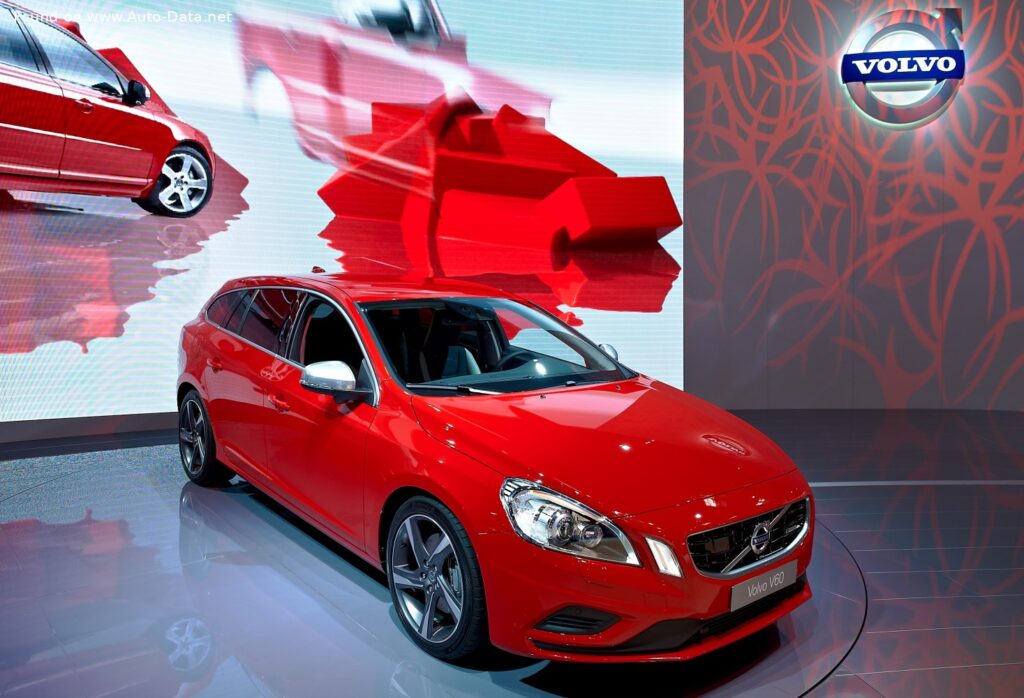
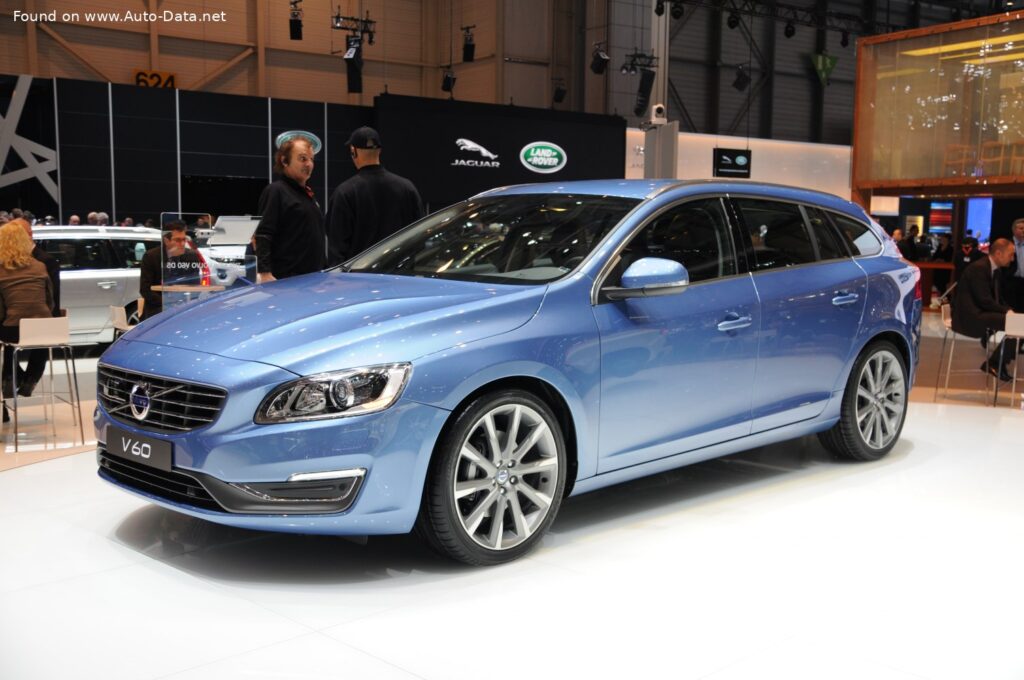
The 2013 facelift brought a host of exterior and interior updates, aligning the V60’s aesthetics with Volvo’s evolving design language. It smoothed out some of the more aggressive lines of the original, introducing larger, more cohesive headlights and a wider grille, giving the car a more sophisticated and contemporary appearance. Under the hood, the V60 also benefited from Volvo’s new Drive-E powertrain family, emphasizing efficiency and reduced emissions without compromising the refined driving experience expected from the Swedish marque.
Engine & Performance: The Efficient 2.0 D2 Powertrain in the Volvo V60 I (2013 Facelift)
At the heart of this particular Volvo V60 I (2013 facelift) is the D4204T8 engine, a 2.0-liter (120.16 cubic inches) inline four-cylinder diesel unit from Volvo’s then-new Drive-E engine family. This modern powertrain was engineered for optimal efficiency and smooth power delivery, a hallmark of Volvo’s commitment to sustainable performance. The engine is configured with a front, transverse layout, driving the front wheels, a common arrangement for vehicles in this class, optimizing interior space and manufacturing efficiency.
The 2.0 D2 engine produces a respectable 120 horsepower at 3750 rpm, delivering its power in a linear and accessible manner. More importantly for a diesel, it generates a robust 206.52 lb.-ft. (280 Nm) of torque, available across a broad rev range from 1500 to 2250 rpm. This ample low-end torque is crucial for effortless acceleration, particularly in urban driving and when carrying loads or towing. The engine features a Commonrail fuel injection system, ensuring precise fuel delivery for efficiency and reduced emissions, complemented by a turbocharger and intercooler for enhanced power output and responsiveness.
Paired with a smooth-shifting 6-speed automatic transmission, the V60 D2 offers a refined driving experience. While not designed for outright speed, its performance figures are perfectly adequate for daily driving in Europe. The car accelerates from 0 to 60 mph in a measured 11.1 seconds, with a top speed of 121.17 mph (195 km/h). Where this powertrain truly shines is in its fuel economy. The V60 D2 boasts an impressive combined fuel consumption of 56 US mpg (4.2 l/100 km), and CO2 emissions of just 111 g/km, making it an environmentally conscious and cost-effective choice for long-distance travel and daily commuting. The engine’s DOHC valvetrain and 16:1 compression ratio further contribute to its efficiency and durability.
Design & Features: Scandinavian Practicality and Elegance
Exterior Design
The Volvo V60 I (2013 facelift) maintains Volvo’s distinctive Scandinavian design ethos, characterized by clean lines, understated elegance, and a strong emphasis on functionality. As a station wagon (often referred to as an “estate” in Europe), the V60 prioritizes practicality without sacrificing visual appeal. The facelifted model introduced a more unified front fascia, with larger, single-frame headlights replacing the previous split design, and a wider grille bearing the prominent Volvo iron mark. The updated styling contributed to a more sophisticated and premium appearance, aligning it with its larger S60 sedan sibling.
With a length of 182.48 inches (4635 mm), a width of 71.85 inches (1825 mm), and a height of 58.43 inches (1484 mm), the V60 strikes a balanced profile. Its wheelbase of 109.29 inches (2776 mm) provides a stable ride and contributes to a spacious cabin. The vehicle’s drag coefficient (Cd) of 0.29 is commendable for a wagon, aiding in both fuel efficiency and reduced wind noise at higher speeds. The practical nature of the wagon body is evident in its cargo capacity, offering 15.19 cubic feet (430 liters) of trunk space, which can be significantly expanded with the rear seats folded down, making it ideal for families and active lifestyles.
Interior and Safety Features
Inside, the V60 offers a cabin that is typically Volvo: ergonomically designed, comfortable, and constructed with high-quality materials. The minimalist “floating” center console was a signature design element of this era, providing intuitive access to infotainment and climate controls. Seating for five passengers is comfortable, with an emphasis on supportive seats that are excellent for long journeys. Volvo’s reputation for safety is legendary, and even though the provided data only explicitly lists ABS (Anti-lock Braking System), the V60 I (2013 facelift) would have incorporated a comprehensive suite of active and passive safety technologies. These typically included multiple airbags, traction control, stability control, and Volvo’s pioneering City Safety system, which helps prevent low-speed collisions by automatically braking the car. Higher trims would have offered advanced driver-assistance systems such as pedestrian detection, adaptive cruise control, and blind-spot monitoring, underscoring Volvo’s commitment to protecting its occupants.
Technical Specifications
| Category | Specification | US Equivalent / Notes |
|---|---|---|
| General Information | ||
| Brand | Volvo | |
| Model | V60 | |
| Generation | V60 I (2013 facelift) | |
| Type (Engine) | 2.0 D2 (120 Hp) Automatic | |
| Start of Production | 2015 year | |
| End of Production | 2018 year | |
| Powertrain Architecture | Internal Combustion engine | |
| Body type | Station wagon (estate) | |
| Seats | 5 | |
| Doors | 5 | |
| Performance Specs | ||
| Fuel consumption (combined) | 4.2 l/100 km | 56 US mpg |
| CO2 emissions | 111 g/km | |
| Fuel Type | Diesel | |
| Acceleration 0 – 60 mph | 11.1 sec | |
| Maximum speed | 195 km/h | 121.17 mph |
| Engine Specs | ||
| Power | 120 Hp @ 3750 rpm | |
| Power per liter | 60.9 Hp/l | |
| Torque | 280 Nm @ 1500-2250 rpm | 206.52 lb.-ft. @ 1500-2250 rpm |
| Engine layout | Front, Transverse | |
| Engine Model/Code | D4204T8 | |
| Engine displacement | 1969 cm3 | 2.0 Liters / 120.16 cu. in. |
| Number of cylinders | 4 | |
| Engine configuration | Inline | |
| Cylinder Bore | 82 mm | 3.23 in. |
| Piston Stroke | 93.2 mm | 3.67 in. |
| Compression ratio | 16:1 | |
| Number of valves per cylinder | 4 | |
| Fuel injection system | Diesel Commonrail | |
| Engine aspiration | Turbocharger, Intercooler | |
| Valvetrain | DOHC | |
| Engine oil capacity | 5.2 l | 5.49 US qt |
| Coolant | 8.9 l | 9.4 US qt |
| Space, Volume and Weights | ||
| Trunk (boot) space – minimum | 430 l | 15.19 cu. ft. |
| Fuel tank capacity | 67.5 l | 17.83 US gal |
| Max. roof load | 75 kg | 165.35 lbs. |
| Permitted trailer load with brakes (8%) | 1800 kg | 3968.32 lbs. |
| Permitted trailer load with brakes (12%) | 1500 kg | 3306.93 lbs. |
| Dimensions | ||
| Length | 4635 mm | 182.48 in. |
| Width | 1825 mm | 71.85 in. |
| Width with mirrors folded | 1899 mm | 74.76 in. |
| Width including mirrors | 2097 mm | 82.56 in. |
| Height | 1484 mm | 58.43 in. |
| Wheelbase | 2776 mm | 109.29 in. |
| Front track | 1588-1578 mm | 62.52 – 62.13 in. |
| Rear (Back) track | 1585-1575 mm | 62.4 – 62.01 in. |
| Ride height (ground clearance) | 136 mm | 5.35 in. |
| Drag coefficient (Cd) | 0.29 | |
| Minimum turning circle (diameter) | 11.5 – 12.4 m | 37.73 – 40.68 ft. |
| Drivetrain, Brakes and Suspension Specs | ||
| Drivetrain Architecture | Internal combustion engine drives front wheels | |
| Drive wheel | Front wheel drive | |
| Number of gears and type of gearbox | 6 gears, automatic transmission | |
| Front suspension | Independent, type McPherson with coil spring and anti-roll bar | |
| Rear suspension | Independent coil spring | |
| Front brakes | Ventilated discs | |
| Rear brakes | Disc | |
| Assisting systems | ABS (Anti-lock braking system) | |
| Steering type | Steering rack and pinion |
Legacy & Market Impact of the Volvo V60 I (2013 Facelift)
The Volvo V60 I (2013 facelift), particularly in its 2.0 D2 Automatic guise, carved out a significant niche in the European premium mid-size segment. While the station wagon body style has waned in popularity in the United States, it remained a strong seller in many European markets, where its blend of practicality, understated luxury, and superior fuel economy made it an attractive proposition. The D2 variant, with its emphasis on efficiency and lower running costs, was particularly appealing to fleet buyers and environmentally conscious private owners.
In its primary markets, the V60 competed against formidable rivals such as the BMW 3 Series Touring, Audi A4 Avant, Mercedes-Benz C-Class Estate, and more mainstream but still well-regarded options like the Volkswagen Passat Variant and Ford Mondeo Estate. Against these competitors, the V60 distinguished itself with its unique Scandinavian design, its unparalleled reputation for safety, and a driving experience focused on comfort and refinement rather than outright sportiness. The facelifted model helped keep the V60 competitive in terms of aesthetics and technology during its production run.
The introduction of the Drive-E engine family, including the D2 unit, was a crucial step for Volvo. It showcased the brand’s engineering prowess in developing highly efficient, modular powertrains that could meet increasingly stringent emissions regulations while still delivering a satisfying driving experience. The V60 D2 demonstrated that a premium vehicle could offer exceptional fuel economy without resorting to hybrid technology, making it a pragmatic choice for many consumers.
The V60’s legacy is also intertwined with Volvo’s broader brand image. It reinforced the company’s commitment to building safe, comfortable, and practical vehicles that prioritize the well-being of their occupants. While the diesel engine’s prominence has diminished in recent years due to changing environmental perceptions and regulations, during its time, the V60 D2 was a testament to the efficiency and capability of modern diesel technology. It contributed to Volvo’s reputation as a premium brand that offered a compelling alternative to German luxury rivals, appealing to buyers who valued thoughtful design, advanced safety, and environmental responsibility.
Ultimately, the Volvo V60 I (2013 facelift) 2.0 D2 (120 Hp) Automatic stands as a well-rounded and significant model in Volvo’s recent history, embodying the brand’s core values and successfully navigating the demands of the European automotive landscape before the advent of the next-generation V60 in 2018.