The Volvo V60 I (2013 facelift): A Refined European Estate
The Volvo V60 I (2013 facelift) represents a significant refresh of Volvo’s first-generation premium compact executive station wagon, originally introduced in 2010. Launched for the 2013 model year, this updated iteration solidified the V60’s position in the highly competitive European market, blending Volvo’s signature safety and practicality with a more contemporary design and enhanced efficiency. While primarily a European-market vehicle, especially in its diesel configurations, the V60 I (2013 facelift) showcases Volvo’s commitment to sophisticated engineering and understated luxury, setting a benchmark for the segment with its advanced powertrains and comfortable, family-oriented design. This particular variant, the 2.0 D3 (136 Hp) Automatic, was a popular choice for its balance of performance and exceptional fuel economy, catering to a discerning clientele that valued long-distance comfort and reduced running costs.
Engine & Performance: Powering the Volvo V60 I (2013 facelift) with Diesel Efficiency
Under the hood, the Volvo V60 I (2013 facelift) 2.0 D3 variant featured Volvo’s robust D5204T7 engine, a 2.0-liter (121.07 cubic inches) inline five-cylinder turbodiesel. This engine configuration, a hallmark of Volvo’s diesel offerings for many years, delivered a distinctive thrum and smooth power delivery that set it apart from its four-cylinder competitors. The D3 engine produced a respectable 136 horsepower at 3500 rpm and a substantial 258.15 lb.-ft. of torque, available across a broad rev range from 1500 to 2250 rpm. This low-end torque was particularly beneficial for everyday driving, providing effortless acceleration and strong pulling power, especially when fully loaded or navigating city traffic.
Power was seamlessly transferred to the front wheels via a six-speed automatic transmission, optimized for both smooth shifts and fuel efficiency. This powertrain combination allowed the V60 D3 to accelerate from 0 to 60 mph in a brisk 9.9 seconds, a commendable figure for a family-oriented station wagon of its size and weight. The engine’s design, featuring a common rail fuel injection system and a turbocharger with an intercooler, ensured optimal combustion and performance while adhering to the Euro 5 emission standard. A particulate filter was standard, reflecting Volvo’s commitment to minimizing environmental impact.
One of the most compelling attributes of this diesel variant was its outstanding fuel economy. The Volvo V60 I (2013 facelift) 2.0 D3 boasted an impressive combined fuel consumption rating of 48 US mpg (4.9 l/100 km). Urban driving yielded 38.6 US mpg (6.1 l/100 km), while extra-urban cycles saw an even more remarkable 54.7 US mpg (4.3 l/100 km). These figures, coupled with CO2 emissions of just 129 g/km, made the V60 D3 an exceptionally cost-effective and environmentally conscious choice for European consumers, particularly those covering long distances.
Design & Features: Blending Scandinavian Style with Practicality
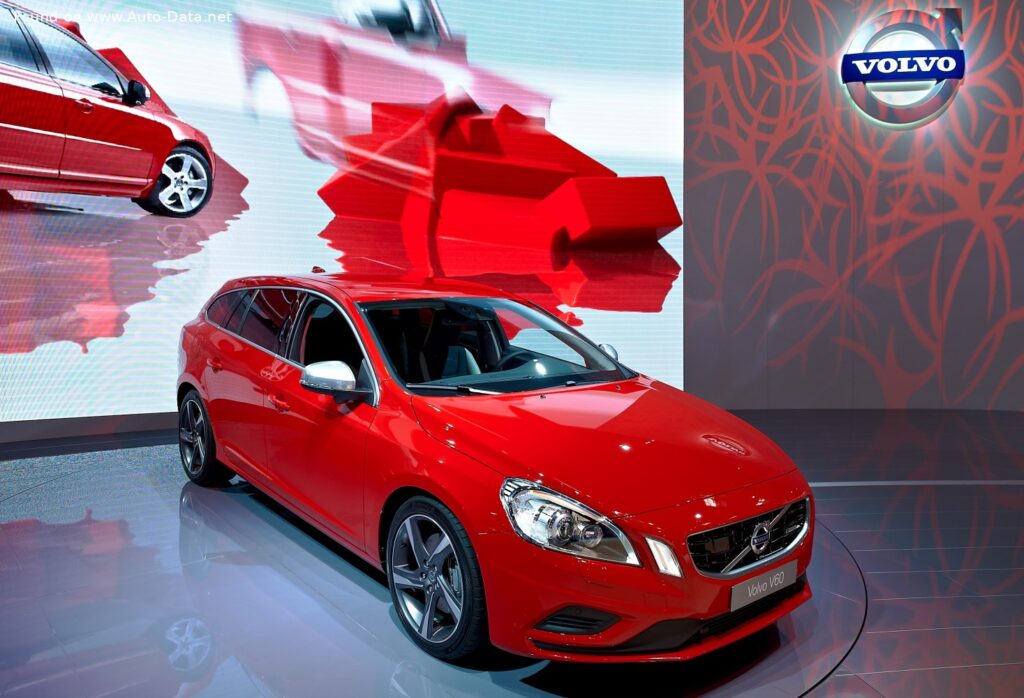
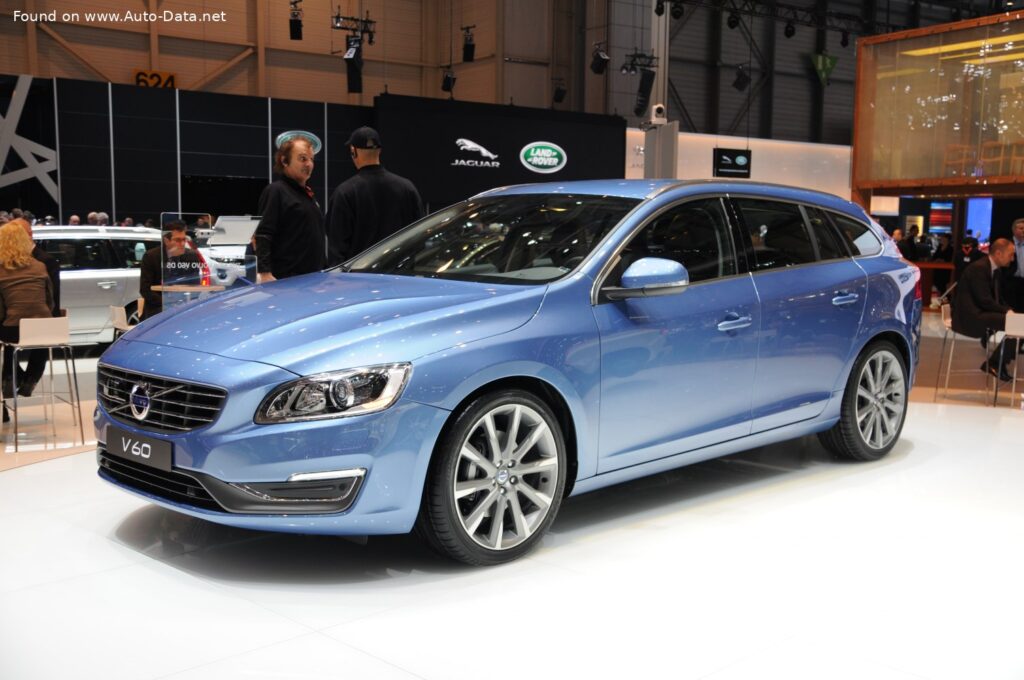
The Volvo V60 I (2013 facelift) retained the sleek and sporty profile that distinguished it from more traditional, boxy Volvo wagons of the past. Its “Station wagon (estate)” body type masterfully combined the practicality of a family hauler with the dynamic aesthetics of a sport sedan. The 2013 facelift introduced subtle yet effective design enhancements, including a redesigned front fascia with a wider grille, new headlights, and updated LED daytime running lights, giving the car a more modern and cohesive appearance. The rear also saw minor revisions, contributing to a fresher overall look.
Inside, the V60 offered a quintessential Volvo experience: a meticulously crafted cabin focused on ergonomics, comfort, and safety. With seating for five passengers, the interior was characterized by high-quality materials, intuitive controls, and supportive seats, making it ideal for long journeys. The trunk space, at 15.19 cubic feet (430 liters), provided ample room for luggage, groceries, or sports equipment, further enhancing its versatility as a family vehicle.
Volvo’s unwavering commitment to safety was evident in the V60. While specific advanced driver-assistance systems are not detailed in the provided data, the vehicle inherently incorporated a robust chassis, comprehensive airbag systems, and standard ABS (Anti-lock Braking System). The steering system, a rack and pinion setup, provided precise and predictable handling, complementing the car’s refined ride quality. The V60’s dimensions – 182.48 inches in length, 71.85 inches in width, and 58.43 inches in height – contributed to a stable on-road presence and an agile turning circle of 37.07 feet (11.3 meters), making it manageable in urban environments.
Technical Specifications
| Category | Specification |
|---|---|
| Brand | Volvo |
| Model | V60 |
| Generation | V60 I (2013 facelift) |
| Type (Engine) | 2.0 D3 (136 Hp) Automatic |
| Start of production | 2013 year |
| End of production | 2018 year |
| Powertrain Architecture | Internal Combustion engine |
| Body type | Station wagon (estate) |
| Seats | 5 |
| Doors | 5 |
Performance Specs |
|
| Fuel consumption (economy) – urban | 6.1 l/100 km (38.6 US mpg) |
| Fuel consumption (economy) – extra urban | 4.3 l/100 km (54.7 US mpg) |
| Fuel consumption (economy) – combined | 4.9 l/100 km (48 US mpg) |
| CO2 emissions | 129 g/km |
| Fuel Type | Diesel |
| Acceleration 0 – 60 mph | 9.9 sec |
| Acceleration 0 – 62 mph (0-100 km/h) | 10.4 sec |
| Emission standard | Euro 5 |
| Weight-to-power ratio | 12.7 kg/Hp, 78.8 Hp/tonne |
| Weight-to-torque ratio | 4.9 kg/Nm, 202.9 Nm/tonne |
Engine Specs |
|
| Power | 136 Hp @ 3500 rpm |
| Power per liter | 68.5 Hp/l |
| Torque | 350 Nm (258.15 lb.-ft.) @ 1500-2250 rpm |
| Engine layout | Front, Transverse |
| Engine Model/Code | D5204T7 |
| Engine displacement | 1984 cm3 (121.07 cu. in.) |
| Number of cylinders | 5 |
| Engine configuration | Inline |
| Cylinder Bore | 81 mm (3.19 in.) |
| Piston Stroke | 77 mm (3.03 in.) |
| Compression ratio | 16.5:1 |
| Fuel injection system | Diesel Commonrail |
| Engine aspiration | Turbocharger, Intercooler |
| Engine oil capacity | 5.9 l (6.23 US qt) |
| Engine oil specification | Specific type not provided in data |
| Coolant capacity | 8.9 l (9.4 US qt) |
| Engine systems | Particulate filter |
Space, Volume and Weights |
|
| Kerb Weight | 1725 kg (3802.97 lbs.) |
| Max. weight | 2200 kg (4850.17 lbs.) |
| Max load | 475 kg (1047.2 lbs.) |
| Trunk (boot) space – minimum | 430 l (15.19 cu. ft.) |
| Fuel tank capacity | 67.5 l (17.83 US gal) |
Dimensions |
|
| Length | 4635 mm (182.48 in.) |
| Width | 1825 mm (71.85 in.) |
| Height | 1484 mm (58.43 in.) |
| Wheelbase | 2776 mm (109.29 in.) |
| Front track | 1588 mm (62.52 in.) |
| Rear (Back) track | 1585 mm (62.4 in.) |
| Minimum turning circle (turning diameter) | 11.3 m (37.07 ft.) |
Drivetrain, Brakes and Suspension Specs |
|
| Drivetrain Architecture | Internal combustion engine drives the front wheels |
| Drive wheel | Front wheel drive |
| Number of gears and type of gearbox | 6 gears, automatic transmission |
| Assisting systems | ABS (Anti-lock braking system) |
| Steering type | Steering rack and pinion |
Legacy & Market Impact of the Volvo V60 I (2013 facelift)
The Volvo V60 I (2013 facelift), particularly in its 2.0 D3 Automatic configuration, solidified Volvo’s reputation as a purveyor of sophisticated, safe, and highly practical vehicles. In its primary European market, the V60 competed fiercely against established rivals such as the BMW 3 Series Touring, Audi A4 Avant, Mercedes-Benz C-Class Estate, and the Volkswagen Passat Variant. What set the V60 apart was its unique blend of Scandinavian design, an unwavering focus on passenger safety, and the distinctive character of its five-cylinder diesel engines.
This generation of V60 continued Volvo’s long-standing heritage of producing excellent station wagons, but with a decidedly more emotional and dynamic design language. It moved away from the utilitarian aesthetic of previous Volvo estates, appealing to a broader audience that desired both functionality and style. The 2013 facelift ensured the model remained fresh and competitive throughout its production run, from 2013 to 2018.
The D3 engine, with its balance of 136 horsepower and robust torque, coupled with the efficient automatic transmission, made the V60 a popular choice for both private buyers and company car fleets across Europe. Its excellent fuel economy and relatively low CO2 emissions were significant selling points in markets with stringent environmental regulations and tax incentives for efficient vehicles. The V60 was seen as a premium, yet understated, choice for families and professionals who prioritized comfort, safety, and efficiency without sacrificing driving enjoyment.
The V60 I (2013 facelift) represented a pivotal moment for Volvo, showcasing its transition towards a more modern and design-led brand while staying true to its core values. It laid much of the groundwork for the successful second-generation V60 that followed, demonstrating Volvo’s ability to innovate and compete effectively in the global automotive landscape, even with models primarily tailored for specific regional markets. Its legacy is one of a well-rounded, safe, and efficient premium estate that perfectly embodied Swedish automotive excellence.