Introduction to the Volvo V60 I (2013 facelift) 2.0 D4 (181 Hp) Automatic
The Volvo V60 I (2013 facelift) 2.0 D4 (181 Hp) Automatic represents a significant iteration of Volvo’s premium compact executive wagon, a segment where the Swedish automaker has long excelled. Introduced as part of the mid-cycle refresh for the first-generation V60, this particular model, produced from 2013 to 2015, underscored Volvo’s commitment to sophisticated design, advanced safety, and efficient powertrains. While the V60 was available in North America, this specific diesel variant, with its potent yet economical D4 engine, was primarily targeted at and immensely popular in European markets, where diesel engines held a substantial market share due to their fuel efficiency and lower CO2 emissions. It carved out a niche for itself as a stylish, practical, and dynamically capable alternative to its German rivals, embodying Volvo’s modern design language and engineering prowess.
The 2013 facelift brought a series of aesthetic and technological enhancements to the V60, aligning its appearance more closely with the contemporary Volvo S60 sedan and other models in the lineup. Beyond the visual updates, the introduction of the new Drive-E powertrain family, including the 2.0-liter D4 diesel engine, marked a pivotal moment for the brand, showcasing its in-house engine development capabilities aimed at balancing performance with environmental responsibility. This particular configuration, featuring 181 horsepower and paired with a smooth automatic transmission, offered a compelling blend of everyday usability and long-distance cruising comfort, making it a highly desirable option for European families and business users.
Engine & Performance: The Drive-E D4 Powertrain in the Volvo V60 I (2013 facelift)
At the heart of the Volvo V60 I (2013 facelift) 2.0 D4 lies Volvo’s innovative Drive-E D4204T5 engine. This 2.0-liter (1969 cm³ or 120.16 cu. in.) inline four-cylinder diesel engine was a cornerstone of Volvo’s new modular engine architecture, designed for exceptional efficiency and robust performance. Featuring a sophisticated commonrail fuel injection system and a turbocharger with an intercooler, the engine delivered a commendable 181 horsepower at 4250 rpm. This power output, combined with a remarkable 295.02 lb.-ft. (400 Nm) of torque available across a broad band from 1750 to 2500 rpm, provided the V60 with strong acceleration and effortless overtaking capabilities.
The D4 engine’s generous torque ensured a responsive driving experience, particularly in urban environments and during highway cruising. Mated to a 6-speed automatic transmission, the powertrain delivered power smoothly to the front wheels. This combination allowed the V60 D4 to accelerate from 0 to 60 mph in a brisk 7.2 seconds (0-100 km/h in 7.6 seconds) and reach a top speed of 139.81 mph (225 km/h). Despite its impressive performance figures, the engine was engineered for fuel economy, achieving a combined fuel consumption rating of 4.3 l/100 km (equivalent to 54.7 US mpg or 65.7 UK mpg). This efficiency was further highlighted by its low CO2 emissions of 112 g/km, making it an environmentally conscious choice in its segment. The engine’s design, including a DOHC valvetrain and a relatively high compression ratio of 15.8:1, optimized combustion for both power and efficiency.
Design & Features: Evolution of Volvo’s Practical Elegance
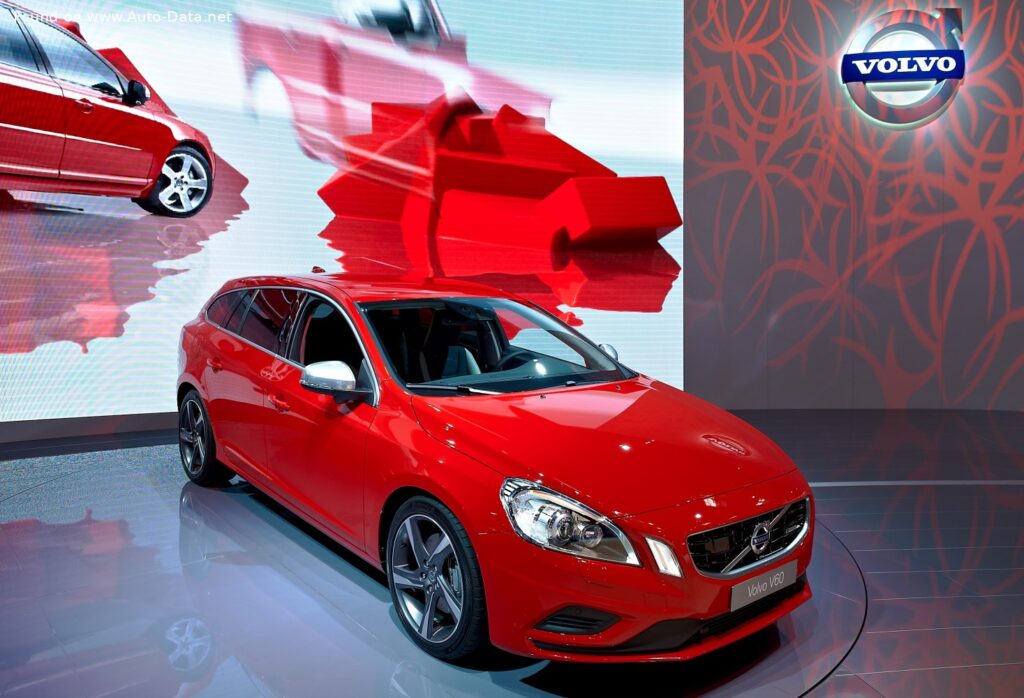
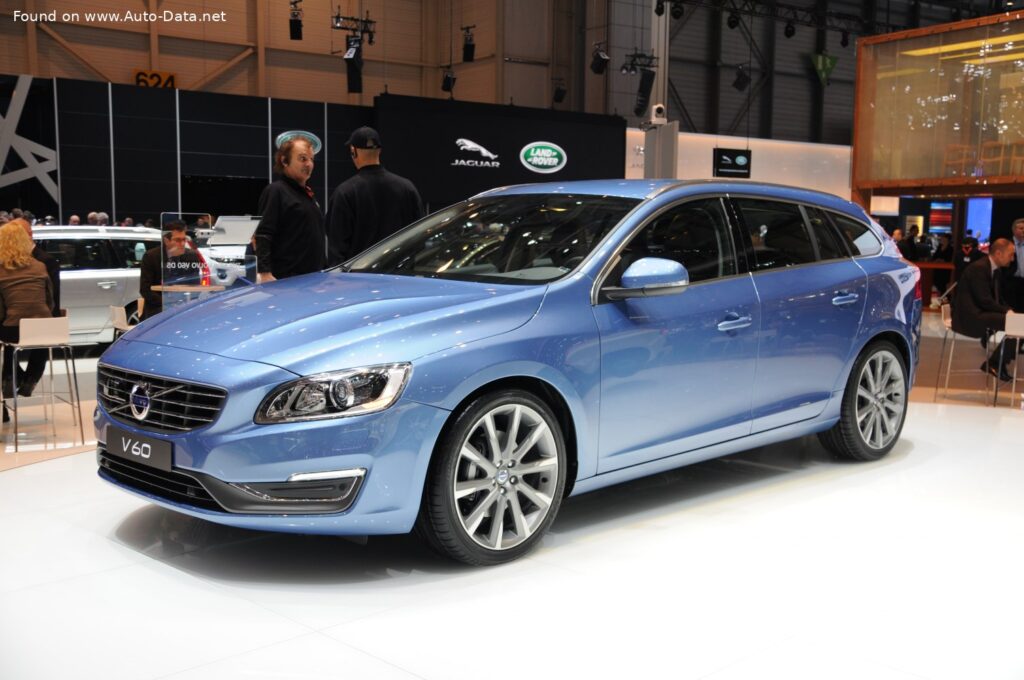
The Volvo V60 I (2013 facelift) retained the core design principles of its pre-facelift predecessor but introduced several refinements that enhanced its visual appeal and modernity. As a five-door, five-seat station wagon (or estate, as it’s known in Europe), the V60 masterfully blended sleek, coupe-like aesthetics with the inherent practicality expected of a wagon. The facelift brought a more unified front fascia, featuring a wider grille, revised headlights with a single-piece lens, and new front bumper designs that gave the car a more assertive and contemporary look. The interior also received subtle updates, primarily focusing on improved materials and infotainment system enhancements, though the fundamental layout remained driver-centric and ergonomically sound.
Measuring 182.48 inches (4635 mm) in length, 74.76 inches (1899 mm) in width, and 58.43 inches (1484 mm) in height, with a wheelbase of 109.29 inches (2776 mm), the V60 offered a well-proportioned stance. Its design emphasized a dynamic profile, shying away from the boxy wagon stereotype while still providing a respectable cargo area. Volvo’s unwavering commitment to safety was evident in the V60, featuring a comprehensive suite of active and passive safety systems. Standard assisting systems included ABS (Anti-lock braking system), and depending on market and trim, could be augmented with features like City Safety (Volvo’s low-speed collision mitigation system), pedestrian detection, and various driver assistance technologies that were cutting-edge for its era. The independent McPherson front suspension and independent coil spring rear suspension, coupled with a rack and pinion steering system, provided a comfortable yet engaging driving experience, characteristic of Volvo’s balanced chassis tuning.
Technical Specifications
| General Information | |
| Brand | Volvo |
| Model | V60 |
| Generation | V60 I (2013 facelift) |
| Type (Engine) | 2.0 D4 (181 Hp) Automatic |
| Start of Production | 2013 year |
| End of Production | 2015 year |
| Powertrain Architecture | Internal Combustion engine |
| Body Type | Station wagon (estate) |
| Seats | 5 |
| Doors | 5 |
| Performance Specs | |
| Fuel Consumption (economy) – Urban | 5.1 l/100 km (46.1 US mpg) |
| Fuel Consumption (economy) – Extra Urban | 3.9 l/100 km (60.3 US mpg) |
| Fuel Consumption (economy) – Combined | 4.3 l/100 km (54.7 US mpg) |
| CO2 Emissions | 112 g/km |
| Fuel Type | Diesel |
| Acceleration 0 – 60 mph | 7.2 sec |
| Acceleration 0 – 100 km/h | 7.6 sec |
| Maximum Speed | 139.81 mph (225 km/h) |
| Engine Specs | |
| Power | 181 Hp @ 4250 rpm. |
| Power per liter | 91.9 Hp/l |
| Torque | 295.02 lb.-ft. (400 Nm) @ 1750-2500 rpm. |
| Engine Layout | Front, Transverse |
| Engine Model/Code | D4204T5 |
| Engine Displacement | 2.0 l (1969 cm³ / 120.16 cu. in.) |
| Number of Cylinders | 4 |
| Engine Configuration | Inline |
| Cylinder Bore | 3.23 in. (82 mm) |
| Piston Stroke | 3.67 in. (93.2 mm) |
| Compression Ratio | 15.8:1 |
| Number of Valves per Cylinder | 4 |
| Fuel Injection System | Diesel Commonrail |
| Engine Aspiration | Turbocharger, Intercooler |
| Valvetrain | DOHC |
| Engine Oil Capacity | 5.92 US qt (5.6 l) |
| Coolant Capacity | 9.4 US qt (8.9 l) |
| Space, Volume and Weights | |
| Fuel Tank Capacity | 17.83 US gal (67.5 l) |
| Dimensions | |
| Length | 182.48 in. (4635 mm) |
| Width | 74.76 in. (1899 mm) |
| Height | 58.43 in. (1484 mm) |
| Wheelbase | 109.29 in. (2776 mm) |
| Front Track | 62.52 – 62.13 in. (1588-1578 mm) |
| Rear (Back) Track | 62.4 – 62.01 in. (1585-1575 mm) |
| Ride Height (Ground Clearance) | 5.35 in. (136 mm) |
| Minimum Turning Circle (Turning Diameter) | 37.73 – 40.68 ft. (11.5 – 12.4 m) |
| Drivetrain, Brakes and Suspension Specs | |
| Drivetrain Architecture | The Internal combustion engine (ICE) drives the front wheels of the vehicle. |
| Drive Wheel | Front wheel drive |
| Number of Gears and Type of Gearbox | 6 gears, automatic transmission |
| Front Suspension | Independent, type McPherson with coil spring and anti-roll bar |
| Rear Suspension | Independent coil spring |
| Front Brakes | Ventilated discs |
| Rear Brakes | Disc |
| Assisting Systems | ABS (Anti-lock braking system) |
| Steering Type | Steering rack and pinion |
Legacy & Market Impact of the Volvo V60 I (2013 facelift) 2.0 D4 (181 Hp) Automatic
The Volvo V60 I (2013 facelift) 2.0 D4 (181 Hp) Automatic played a crucial role in Volvo’s product strategy, particularly in its primary European markets. It solidified Volvo’s position as a strong contender in the premium compact executive segment, competing directly with established German rivals such as the BMW 3 Series Touring, Audi A4 Avant, and Mercedes-Benz C-Class Estate. While these competitors offered a broader range of engine options and often more aggressive styling, the V60 distinguished itself with its unique Scandinavian design ethos, emphasis on comfort, and an unparalleled reputation for safety.
The introduction of the Drive-E D4 engine during the facelift was a significant factor in its market appeal. In an era increasingly focused on environmental regulations and fuel efficiency, a powerful yet highly economical diesel engine was a major selling point. The 2.0 D4 (181 Hp) variant offered a compelling balance that resonated with European consumers who often covered long distances and valued low running costs without compromising on performance. Its combined fuel economy of over 50 US mpg was particularly impressive for a vehicle of its size and power, contributing to lower fuel bills and reduced carbon footprint, which was often incentivized by tax structures in various European countries.
Beyond its powertrain, the V60’s practical station wagon body style, while less popular in the U.S., remained a staple in Europe. It offered a versatile cabin with ample space for five occupants and their luggage, making it an ideal choice for families. Volvo’s commitment to interior quality, ergonomic design, and advanced safety features further cemented its legacy. The V60 I (2013 facelift) was a testament to Volvo’s evolving design language and engineering capabilities, bridging the gap between its traditional, more utilitarian wagons and a new generation of stylish, performance-oriented vehicles. It showcased Volvo’s ability to innovate while staying true to its core values of safety, quality, and practicality, influencing future models and reinforcing the brand’s premium image globally. The success of this generation of V60, particularly its diesel variants, laid important groundwork for Volvo’s subsequent move towards electrification and further engine downsizing, demonstrating the brand’s adaptive and forward-thinking approach to automotive development.