The Volvo V60 I (2013 facelift) 2.0 D4 (190 Hp): A Refined European Wagon
The Volvo V60, specifically the I generation (internally known as the P3 platform) with its 2013 facelift, represented a pivotal model in the Swedish automaker’s lineup. Introduced in its updated form for the 2014 model year, this premium compact executive station wagon (or “estate” in European parlance) continued Volvo’s tradition of combining elegant design, robust safety, and practical utility. The particular variant under scrutiny, the Volvo V60 I (2013 facelift) 2.0 D4 (190 Hp), produced between 2015 and 2018, showcased Volvo’s commitment to efficient and powerful diesel powertrains, a staple in the European market where this specific engine configuration found its primary audience. While diesel engines of this displacement and power output were less common in the North American market for passenger cars by this era, the D4 engine was a cornerstone of Volvo’s Drive-E powertrain family, emphasizing technological advancement and environmental responsibility.
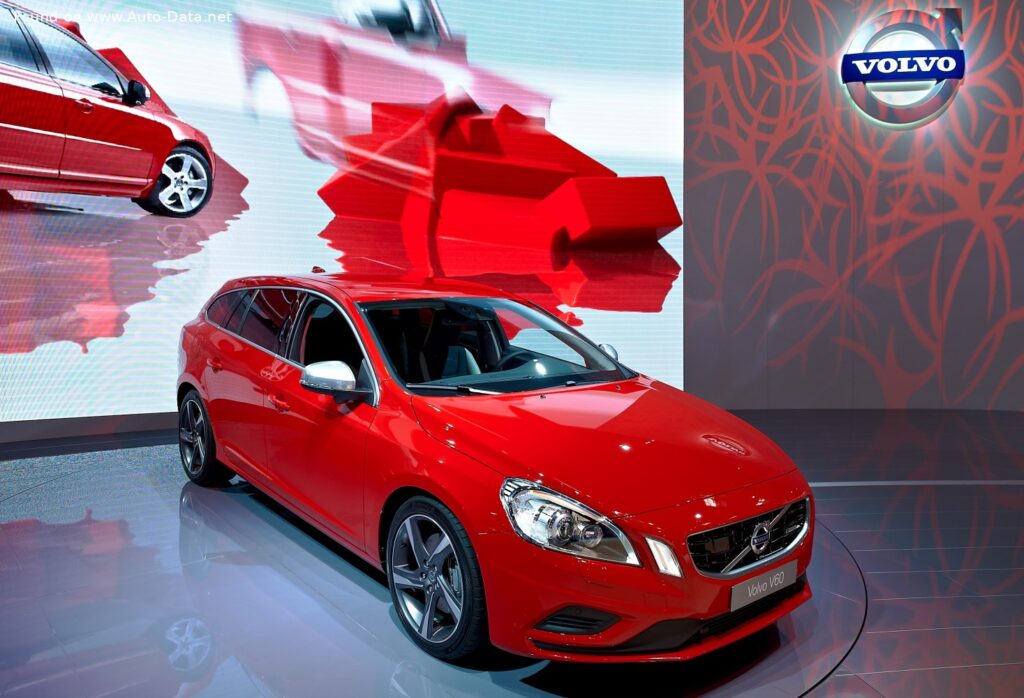
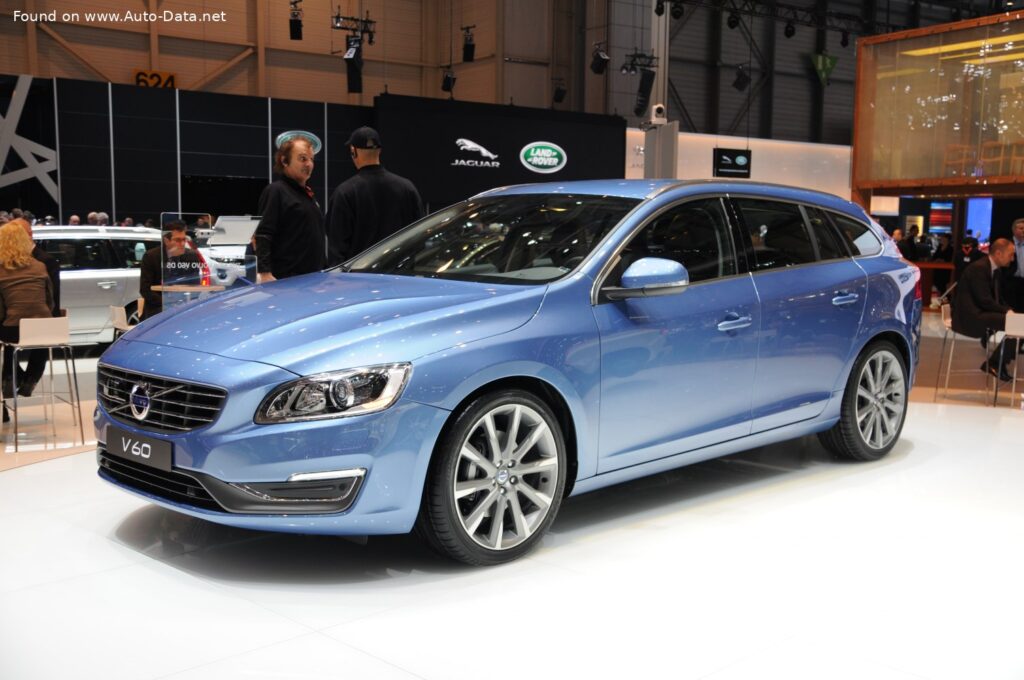
This facelifted V60 maintained its distinctive, coupe-like profile, setting it apart from more traditional boxy wagons and aligning it with Volvo’s evolving design language. It competed in a fiercely contested segment against established German rivals, offering a unique Scandinavian alternative that prioritized comfort, subtle luxury, and advanced safety features. The 2.0 D4 variant, with its impressive blend of performance and fuel economy, underscored Volvo’s engineering prowess and its strategic focus on downsized, high-output engines.
Engine & Performance: The Drive-E D4 Powerhouse in the Volvo V60 I (2013 facelift)
At the heart of the Volvo V60 I (2013 facelift) 2.0 D4 (190 Hp) lies Volvo’s advanced 2.0-liter (1969 cm³) D4204T14 inline-four diesel engine, a member of the modular Drive-E engine family. This engine was a significant step for Volvo, moving away from five-cylinder units to a more compact and efficient four-cylinder architecture. Equipped with a sophisticated twin-turbocharger system and an intercooler, this powerplant delivered a substantial 190 horsepower at 4250 rpm. More impressively for a diesel, it produced a robust 295.02 lb.-ft. of torque, available across a broad and usable rev range from 1750 to 2500 rpm. This ample torque ensured strong acceleration and effortless cruising, characteristic of premium diesel vehicles.
Mated to a precise 6-speed manual transmission, the D4 engine propelled the V60 from 0 to 60 mph in a brisk 7.3 seconds (0-100 km/h in 7.7 seconds), demonstrating its capability to deliver spirited performance despite its primary focus on efficiency. The top speed reached 139.81 mph (225 km/h), making it a comfortable long-distance cruiser on European highways. Beyond raw power, the D4 engine excelled in fuel economy, boasting an impressive combined consumption figure of 58.8 US mpg (4 l/100 km). This, coupled with CO2 emissions of just 104 g/km, highlighted Volvo’s commitment to reducing environmental impact without compromising on driving dynamics. The engine’s DOHC valvetrain and common rail direct fuel injection system further contributed to its refined operation and efficiency, making it a highly competitive offering in its class.
Design & Features of the Volvo V60 I (2013 facelift)
The 2013 facelift brought a refreshed aesthetic to the V60, aligning it more closely with Volvo’s contemporary design language. The front fascia received a significant update, featuring a wider grille, new headlights, and a redesigned bumper that gave the car a more assertive and modern presence. The distinctive, sweeping roofline and strong shoulder line remained, preserving the V60’s dynamic and almost coupe-like station wagon silhouette. With a length of 182.48 inches and a width of 71.85 inches, the V60 struck a balance between a compact footprint and a spacious interior, making it maneuverable in urban settings while still offering ample room for five occupants.
Inside, the V60 continued Volvo’s tradition of ergonomic and minimalist Scandinavian design. High-quality materials, refined finishes, and comfortable seating were hallmarks of its cabin. While not as cavernous as some traditional wagons, the 430 liters (15.19 cu. ft.) of minimum trunk space was practical for daily use, and its versatility could be expanded with the rear seats folded. Key features for the era included Volvo’s renowned safety systems, which were continuously updated. Although specific details on active safety features are not provided, it’s a given that a Volvo from this period would incorporate an array of passive and active safety technologies as standard or optional equipment, such as City Safety (autonomous emergency braking), pedestrian detection, and advanced stability control (ABS was standard, of course). The car’s low drag coefficient of 0.29 also contributed to both its fuel efficiency and reduced wind noise at higher speeds.
Technical Specifications: Volvo V60 I (2013 facelift) 2.0 D4 (190 Hp)
| Category | Specification | Metric / US Equivalent |
|---|---|---|
| General Information | ||
| Brand | Volvo | |
| Model | V60 | |
| Generation | V60 I (2013 facelift) | |
| Type (Engine) | 2.0 D4 (190 Hp) | |
| Start of Production | 2015 year | |
| End of Production | 2018 year | |
| Powertrain Architecture | Internal Combustion engine | |
| Body type | Station wagon (estate) | |
| Seats | 5 | |
| Doors | 5 | |
| Performance Specs | ||
| Fuel consumption (combined) | 4 l/100 km | 58.8 US mpg |
| CO2 emissions | 104 g/km | |
| Fuel Type | Diesel | |
| Acceleration 0 – 60 mph | 7.3 sec | |
| Maximum speed | 225 km/h | 139.81 mph |
| Engine Specs | ||
| Power | 190 Hp @ 4250 rpm. | |
| Power per liter | 96.5 Hp/l | |
| Torque | 400 Nm @ 1750-2500 rpm. | 295.02 lb.-ft. @ 1750-2500 rpm. |
| Engine layout | Front, Transverse | |
| Engine Model/Code | D4204T14 | |
| Engine displacement | 1969 cm3 | 120.16 cu. in. |
| Number of cylinders | 4 | |
| Engine configuration | Inline | |
| Cylinder Bore | 82 mm | 3.23 in. |
| Piston Stroke | 93.2 mm | 3.67 in. |
| Compression ratio | 15.8:1 | |
| Number of valves per cylinder | 4 | |
| Fuel injection system | Diesel Commonrail | |
| Engine aspiration | Twin-Turbo, Intercooler | |
| Valvetrain | DOHC | |
| Engine oil capacity | 5.2 l | 5.49 US qt |
| Engine oil specification | Not specified | |
| Coolant | 8.9 l | 9.4 US qt |
| Space, Volume and Weights | ||
| Trunk (boot) space – minimum | 430 l | 15.19 cu. ft. |
| Fuel tank capacity | 67.5 l | 17.83 US gal |
| Max. roof load | 75 kg | 165.35 lbs. |
| Permitted trailer load with brakes (8%) | 1800 kg | 3968.32 lbs. |
| Permitted trailer load with brakes (12%) | 1500 kg | 3306.93 lbs. |
| Dimensions | ||
| Length | 4635 mm | 182.48 in. |
| Width | 1825 mm | 71.85 in. |
| Width with mirrors folded | 1899 mm | 74.76 in. |
| Width including mirrors | 2097 mm | 82.56 in. |
| Height | 1484 mm | 58.43 in. |
| Wheelbase | 2776 mm | 109.29 in. |
| Front track | 1588-1578 mm | 62.52 – 62.13 in. |
| Rear (Back) track | 1585-1575 mm | 62.4 – 62.01 in. |
| Ride height (ground clearance) | 136 mm | 5.35 in. |
| Drag coefficient (Cd) | 0.29 | |
| Minimum turning circle (turning diameter) | 11.5 – 12.4 m | 37.73 – 40.68 ft. |
| Drivetrain, Brakes and Suspension Specs | ||
| Drivetrain Architecture | The Internal combustion engine (ICE) drives the front wheels of the vehicle. | |
| Drive wheel | Front wheel drive | |
| Number of gears and type of gearbox | 6 gears, manual transmission | |
| Front suspension | Independent, type McPherson with coil spring and anti-roll bar | |
| Rear suspension | Independent coil spring | |
| Front brakes | Ventilated discs | |
| Rear brakes | Disc | |
| Assisting systems | ABS (Anti-lock braking system) | |
| Steering type | Steering rack and pinion |
Legacy & Market Impact of the Volvo V60 I (2013 facelift)
The Volvo V60 I (2013 facelift) 2.0 D4 (190 Hp) carved out a significant niche for itself in the highly competitive European premium compact executive segment. Its primary rivals included the BMW 3 Series Touring, Audi A4 Avant, and Mercedes-Benz C-Class Estate, all of which offered powerful and efficient diesel options. The V60 distinguished itself with its unique blend of understated Scandinavian luxury, a strong emphasis on safety technology, and its distinctive, sportier wagon styling that appealed to buyers seeking practicality without sacrificing aesthetic appeal. While not as overtly sporty as some German competitors, the V60 offered a comfortable and composed ride, excellent refinement, and a feeling of solidity that was unmistakably Volvo.
The D4 engine itself was a testament to Volvo’s engineering evolution. As part of the Drive-E family, it signaled Volvo’s move towards a common engine architecture, streamlining production and allowing for greater efficiency and power density across its lineup. For the European market, this 190-horsepower diesel offered an ideal balance of performance for long-distance travel and impressive fuel economy, making it a popular choice for both private buyers and company car fleets. Its low CO2 emissions were also a key factor in markets with strict environmental regulations and tax incentives for cleaner vehicles.
Historically, the V60 I (2013 facelift) played a crucial role in Volvo’s brand rejuvenation, helping to solidify its image as a modern, technology-driven automaker that still upheld its core values of safety and practicality. It laid the groundwork for future models, including the second-generation V60, by demonstrating that Volvo could produce stylish, efficient, and highly competitive vehicles. Its legacy is that of a sophisticated and understated premium wagon that offered a compelling alternative to the more mainstream German offerings, proving that Volvo’s unique approach to automotive design and engineering continued to resonate with discerning customers.