The Volvo V60 I (2013 facelift) 2.0 T4 (190 Hp) Automatic: A Mid-Cycle Refresh of Scandinavian Practicality
The Volvo V60 I (2013 facelift) 2.0 T4 (190 Hp) Automatic represents a significant refresh in the first generation of Volvo’s premium compact executive wagon. Introduced in 2015 and produced until 2018, this particular iteration showcased Volvo’s commitment to refining its successful V60 platform, offering a compelling blend of elegant Scandinavian design, advanced safety features, and a dynamic yet efficient powertrain. While the V60 was a global model, this specific 2.0 T4 engine variant, with its emphasis on balanced performance and fuel economy, found a particularly strong footing in European markets, where it competed fiercely in the highly contested premium wagon segment. The facelift brought subtle but impactful changes to the exterior styling, interior ergonomics, and—critically—powertrain options, solidifying the V60’s reputation as a sophisticated and practical choice for discerning buyers.
Engine and Performance: The Drive-E 2.0 T4 in the Volvo V60 I (2013 facelift)
At the heart of the Volvo V60 I (2013 facelift) 2.0 T4 (190 Hp) Automatic lies Volvo’s advanced Drive-E powertrain, a testament to the brand’s engineering prowess in developing efficient and potent four-cylinder engines. This particular configuration features a 2.0-liter (120.16 cubic inches) inline four-cylinder gasoline engine, designated with the internal code B4204T19. Equipped with a turbocharger and intercooler, along with direct fuel injection and a DOHC valvetrain, this engine delivers a robust 190 horsepower at 4700 rpm. Its impressive power per liter of 96.5 horsepower/liter speaks to its modern design and forced induction technology.
More impressive than the peak horsepower is the torque delivery. The 2.0 T4 generates a substantial 221.27 lb.-ft. (300 Nm) of torque, available across a broad rev range from a low 1300 rpm all the way up to 4000 rpm. This wide powerband ensures strong, responsive acceleration from a standstill and excellent in-gear flexibility, making it well-suited for both city driving and highway cruising. Power is efficiently managed by a 6-speed automatic transmission, channeling drive to the front wheels. This combination allows the V60 T4 to accelerate from 0 to 60 mph in a brisk 6.9 seconds (0-100 km/h in 7.3 seconds) and achieve a top speed of 139.81 mph (225 km/h).
Despite its spirited performance, the V60 2.0 T4 maintains impressive fuel economy. It achieves a combined fuel consumption rating of 40.6 US mpg (5.8 liters per 100 km), which was competitive for its class at the time. CO2 emissions are rated at 136 g/km, reflecting Volvo’s commitment to environmental responsibility. The engine’s layout is front, transverse, contributing to the vehicle’s efficient packaging and favorable weight distribution. With an 11.3:1 compression ratio and 4 valves per cylinder, the engine is designed for optimal combustion efficiency and performance.
Design and Features: Form Meets Function
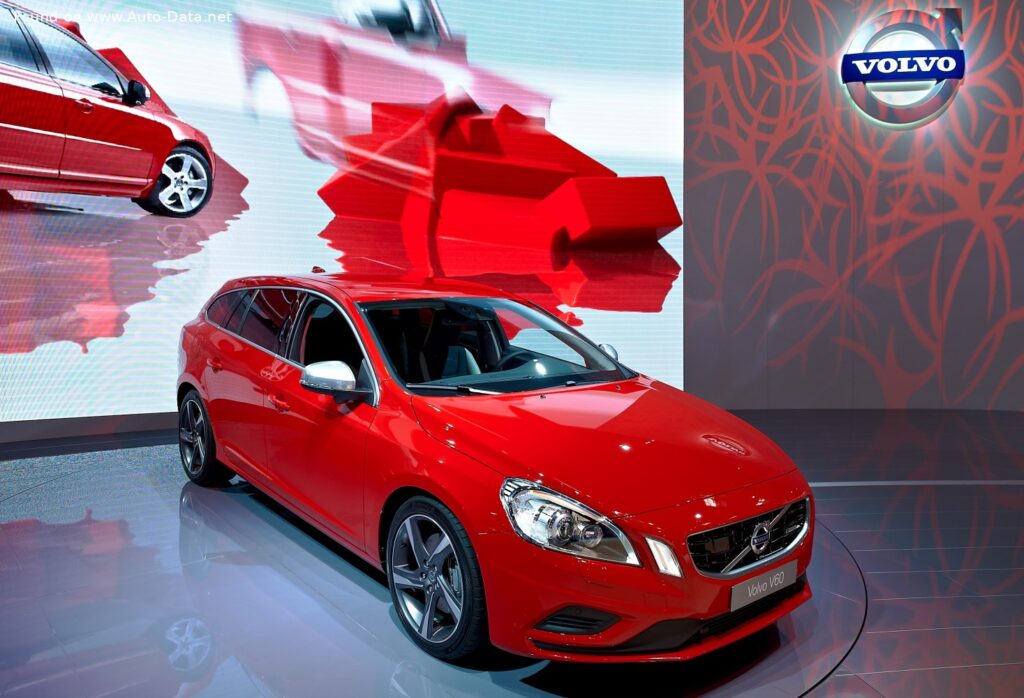
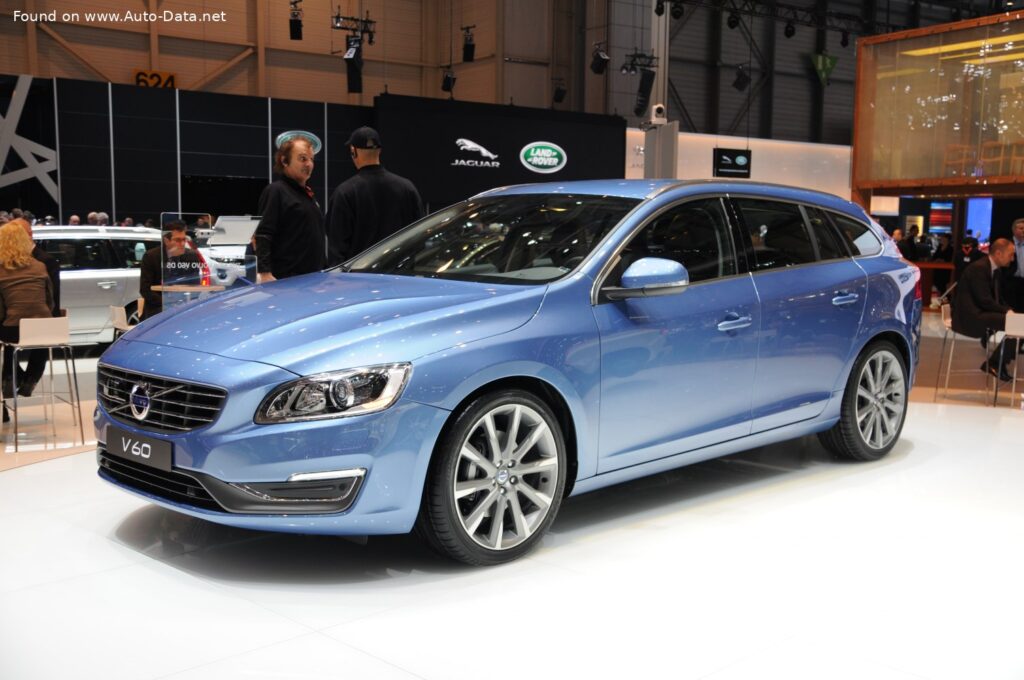
The Volvo V60 I (2013 facelift) retains the sleek and dynamic profile that characterized the first-generation model, while incorporating subtle refinements. As a 5-door station wagon (often referred to as an estate in Europe), it blends the practicality of a family vehicle with the sophisticated lines of a sport sedan. The facelift introduced revised front and rear fascias, new headlight designs, and updated interior trim options, giving the V60 a fresher, more contemporary look. Its dimensions – 182.48 inches in length, 74.76 inches in width, and 58.43 inches in height – give it a substantial road presence without feeling overly cumbersome, aided by a generous 109.29-inch wheelbase.
Inside, the V60 offers a quintessentially Scandinavian cabin, characterized by minimalist design, high-quality materials, and exceptional ergonomic comfort. The five-seat configuration provides ample space for occupants, with supportive seating designed for long-distance comfort. The focus on practicality is evident in the 15.19 cubic feet (430 liters) of trunk space, which, while not class-leading, is highly functional for daily use and expandable with the rear seats folded. Volvo’s commitment to safety is paramount, and the V60 I (2013 facelift) came equipped with a comprehensive suite of active and passive safety features. These included standard ABS (Anti-lock Braking System), multiple airbags, and Volvo’s renowned City Safety system, which could automatically brake the car to avoid or mitigate collisions at low speeds. Higher trims and optional packages would have included advanced driver-assistance systems like pedestrian detection, adaptive cruise control, and lane-keeping assist, underscoring its role as a pioneer in automotive safety technology.
The ride and handling characteristics of the V60 are well-balanced, favoring comfort and stability. The independent front suspension, featuring McPherson struts with coil springs and an anti-roll bar, works in harmony with the independent coil spring rear suspension to provide a composed and refined ride. Ventilated disc brakes up front and disc brakes at the rear ensure strong stopping power. The steering system, a rack and pinion setup, offers precise control and good feedback, making the V60 an enjoyable car to drive on various road conditions. With a ground clearance of 5.35 inches, it is well-suited for typical urban and highway environments.
Technical Specifications: Volvo V60 I (2013 facelift) 2.0 T4 (190 Hp) Automatic
| Category | Specification | US Equivalent / Notes |
|---|---|---|
| General Information | ||
| Brand | Volvo | |
| Model | V60 | |
| Generation | V60 I (2013 facelift) | |
| Type (Engine) | 2.0 T4 (190 Hp) Automatic | |
| Start of Production | 2015 year | |
| End of Production | 2018 year | |
| Powertrain Architecture | Internal Combustion engine | |
| Body type | Station wagon (estate) | 5 Doors, 5 Seats |
| Performance Specs | ||
| Fuel consumption (combined) | 5.8 l/100 km | 40.6 US mpg |
| CO2 emissions | 136 g/km | |
| Fuel Type | Petrol (Gasoline) | |
| Acceleration 0 – 60 mph | 6.9 sec | Calculated by Auto-Data.net |
| Acceleration 0 – 100 km/h | 7.3 sec | |
| Maximum speed | 225 km/h | 139.81 mph |
| Engine Specs | ||
| Power | 190 Hp @ 4700 rpm | |
| Power per liter | 96.5 Hp/l | |
| Torque | 300 Nm @ 1300-4000 rpm | 221.27 lb.-ft. @ 1300-4000 rpm |
| Engine layout | Front, Transverse | |
| Engine Model/Code | B4204T19 | |
| Engine displacement | 1969 cm3 | 2.0 liters / 120.16 cu. in. |
| Number of cylinders | 4 | Inline configuration |
| Cylinder Bore | 82 mm | 3.23 in. |
| Piston Stroke | 93.2 mm | 3.67 in. |
| Compression ratio | 11.3:1 | |
| Number of valves per cylinder | 4 | |
| Fuel injection system | Direct injection | |
| Engine aspiration | Turbocharger, Intercooler | |
| Valvetrain | DOHC | |
| Engine oil capacity | 5.9 l | 6.23 US qt |
| Coolant capacity | 8.3 l | 8.77 US qt |
| Space, Volume and Weights | ||
| Trunk (boot) space – minimum | 430 l | 15.19 cu. ft. |
| Fuel tank capacity | 67.5 l | 17.83 US gal |
| Dimensions | ||
| Length | 4635 mm | 182.48 in. |
| Width | 1899 mm | 74.76 in. |
| Height | 1484 mm | 58.43 in. |
| Wheelbase | 2776 mm | 109.29 in. |
| Front track | 1588-1578 mm | 62.52 – 62.13 in. |
| Rear (Back) track | 1585-1575 mm | 62.4 – 62.01 in. |
| Ride height (ground clearance) | 136 mm | 5.35 in. |
| Minimum turning circle | 11.5 – 12.4 m | 37.73 – 40.68 ft. |
| Drivetrain, Brakes and Suspension Specs | ||
| Drivetrain Architecture | Internal combustion engine (ICE) drives front wheels | Front-wheel drive |
| Drive wheel | Front wheel drive | |
| Number of gears and type of gearbox | 6 gears, automatic transmission | |
| Front suspension | Independent, type McPherson with coil spring and anti-roll bar | |
| Rear suspension | Independent coil spring | |
| Front brakes | Ventilated discs | |
| Rear brakes | Disc | |
| Assisting systems | ABS (Anti-lock braking system) | |
| Steering type | Steering rack and pinion |
Legacy and Market Impact
The Volvo V60 I (2013 facelift) 2.0 T4 (190 Hp) Automatic played a crucial role in Volvo’s strategy to expand its market share in the premium compact executive segment, particularly in Europe. While the V60 was available in the United States, often with more powerful T5 and T6 engine options, the T4 variant was specifically tailored for markets where fuel efficiency and lower emissions were key considerations, often influenced by taxation structures. Its balanced performance, combined with Volvo’s legendary safety reputation and elegant design, made it a strong contender against established rivals.
In its primary European markets, the V60 2.0 T4 competed head-to-head with formidable German rivals such as the BMW 3 Series Touring, Audi A4 Avant, and Mercedes-Benz C-Class Estate, as well as the more niche Jaguar XF Sportbrake and even the Volkswagen Passat Estate in higher trims. What set the V60 apart was its distinct Scandinavian character – a less aggressive, more understated luxury that prioritized comfort, practicality, and intuitive technology. Volvo’s commitment to developing its own Drive-E engines, like the 2.0 T4, allowed it to offer competitive power and efficiency without relying on larger, less economical powertrains.
The V60’s reputation was built on its solid build quality, comfortable ride, and, above all, its pioneering safety features. It consistently garnered high marks in safety tests, reinforcing Volvo’s core brand identity. The facelifted model, with its refreshed styling and refined powertrains, helped maintain the V60’s relevance during the latter part of its first generation’s lifecycle. It solidified Volvo’s position as a credible alternative to the German luxury brands, appealing to consumers who valued a more progressive, design-led approach to premium motoring. The success of the first-generation V60, particularly in its refreshed form, laid important groundwork for the subsequent all-new V60, showcasing Volvo’s enduring appeal in the premium wagon segment and its ability to innovate while staying true to its core values of safety, quality, and design.