The Volvo V60 I (2013 Facelift) 2.4 D4 (163 Hp) AWD Automatic: A European Executive Wagon
The Volvo V60 I (2013 facelift) 2.4 D4 (163 Hp) AWD Automatic represents a significant iteration of Volvo’s compact executive station wagon, a vehicle renowned for blending Scandinavian design, advanced safety, and practical utility. Introduced as a facelift model in 2013 and produced until 2015, this specific variant, with its potent 2.4-liter D4 diesel engine and all-wheel-drive (AWD) system, carved out a strong niche in the European market. While not widely available in the United States with this particular diesel powertrain, the V60 I played a crucial role in Volvo’s global strategy, showcasing the brand’s commitment to efficiency, performance, and its enduring legacy in the station wagon segment. Positioned as a direct competitor to premium German offerings, the V60 aimed to deliver a compelling alternative for discerning buyers seeking a blend of luxury, safety, and versatility.
Engine and Performance of the Volvo V60 I (2013 Facelift)
Powertrain Architecture and Dynamics
At the heart of this particular V60 I model lies Volvo’s robust D5244T17 engine, a 2.4-liter, inline five-cylinder common rail diesel powerplant. This configuration, a hallmark of Volvo engineering for many years, is lauded for its distinctive sound profile and impressive torque delivery. Equipped with a turbocharger and intercooler, the engine produces a respectable 163 horsepower at 4000 rpm, translating to a power-per-liter output of 67.9 Hp/l. More significantly for a diesel, it generates a substantial 309.78 lb.-ft. of torque, available across a broad and usable range from 1500 to 2500 rpm. This ample torque ensures strong acceleration and effortless cruising, particularly beneficial for highway driving and hauling loads.
Power is channeled through a smooth-shifting 6-speed automatic transmission, which is well-matched to the engine’s characteristics, optimizing both performance and fuel efficiency. The V60 I 2.4 D4 (163 Hp) also features an all-wheel-drive (AWD) system, enhancing traction and stability across various driving conditions, from slippery winter roads to spirited cornering. This combination of a powerful diesel engine, automatic transmission, and AWD made it a highly capable and appealing choice in markets where such attributes are highly valued.
Acceleration and Fuel Economy
In terms of outright performance, this V60 variant accelerates from 0 to 60 mph in a respectable 9.9 seconds, with a top speed reaching 133.59 mph. While not a performance-oriented powerhouse, these figures underscore its capability as a comfortable and competent long-distance cruiser.
Fuel economy, a primary draw for diesel powertrains, is particularly impressive. The combined fuel consumption for this model is rated at 39.9 US mpg. For urban driving, it achieves 29 US mpg, while extra-urban (highway) figures soar to an excellent 50 US mpg. These efficiency metrics, combined with its 17.83 US gallon fuel tank, provide a significant driving range, making it an ideal choice for European commuters and travelers. CO2 emissions are listed at 158 g/km, reflecting its relatively clean operation for a vehicle of its size and power from that era.
Design and Features
Exterior and Interior Refresh
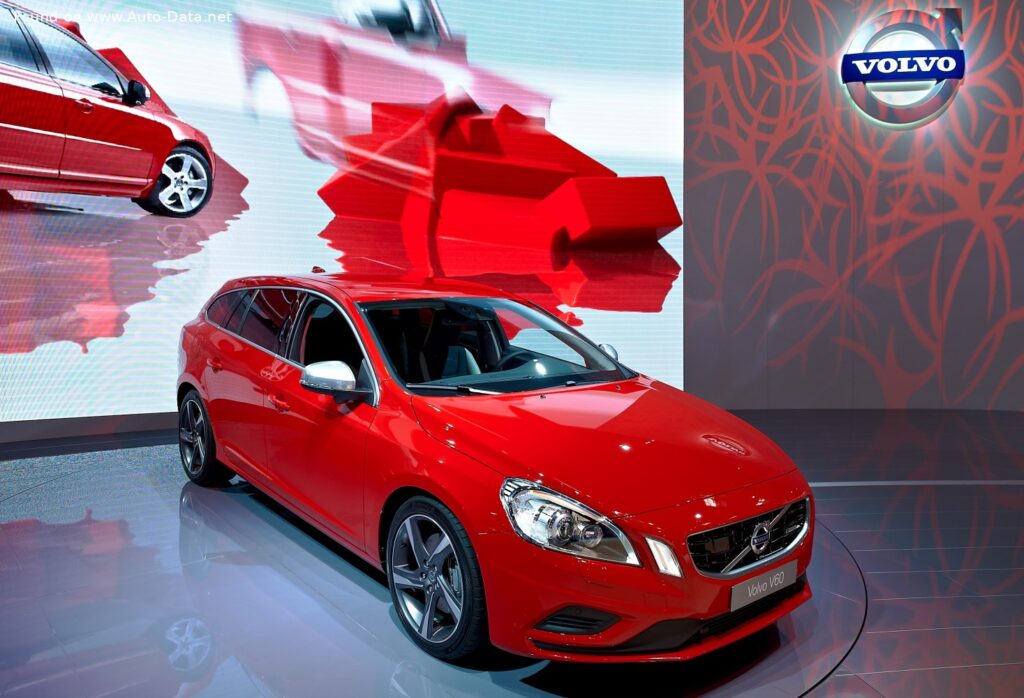
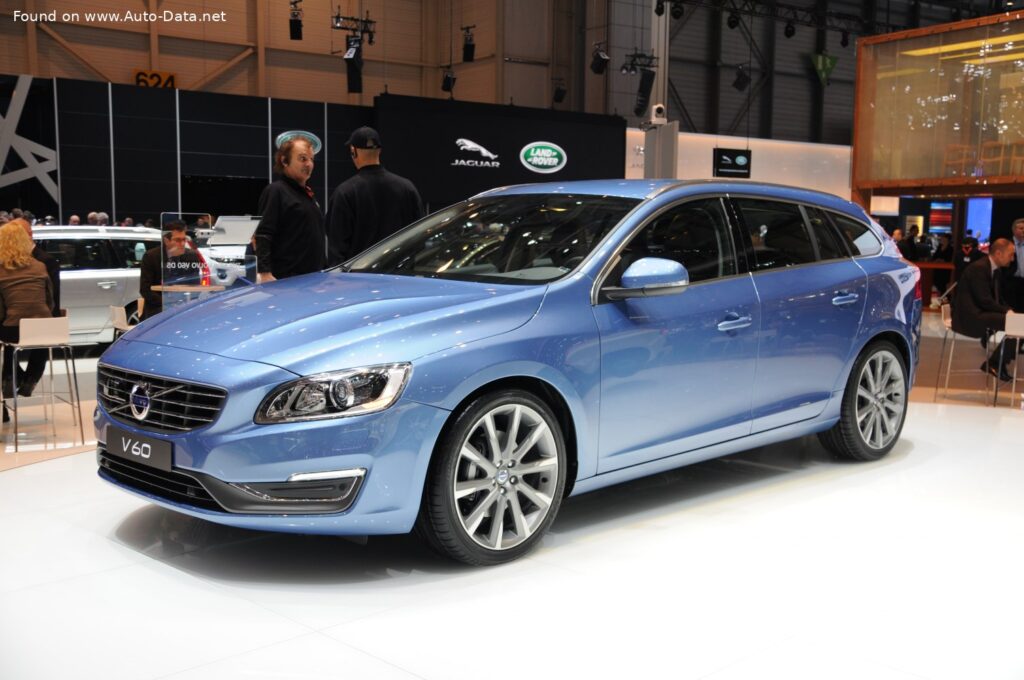
The 2013 facelift brought a refreshed aesthetic to the V60 I, aligning its design more closely with Volvo’s evolving contemporary language. Key exterior updates included a wider grille, revised headlights that integrated daytime running lights, and updated bumpers, giving the car a more modern and cohesive appearance. The V60 retained its distinctive, sleek station wagon silhouette, characterized by its flowing roofline and strong shoulder lines, embodying a sporty yet elegant profile that differentiated it from more traditional boxy wagons. Its five-door, five-seat configuration emphasizes its practicality as a family or executive vehicle.
Inside, the V60 continued Volvo’s tradition of ergonomic design and high-quality materials. The cabin is designed with a focus on driver comfort and passenger well-being, featuring supportive seating and intuitive controls. The Sensus infotainment system, refined for the facelift, offered improved functionality and connectivity options for its time. Practicality is a strong suit, with a minimum trunk space of 15.19 cubic feet, which, while not class-leading, is ample for daily needs and expandable with the rear seats folded down. The overall interior ambiance reflects Scandinavian minimalism and functional luxury.
Safety and Chassis Engineering
Volvo’s unwavering commitment to safety is evident in the V60 I. Standard safety features include ABS (Anti-lock Braking System), and the car was built with Volvo’s renowned safety cage structure. The V60 also benefited from Volvo’s pioneering City Safety system, which automatically applies the brakes to mitigate or avoid low-speed collisions – a significant technological advancement for its time.
The chassis features an independent McPherson strut front suspension with coil springs and an anti-roll bar, paired with an independent coil spring rear suspension. This setup provides a comfortable ride while maintaining composed handling. Stopping power comes from ventilated disc brakes at the front and disc brakes at the rear, ensuring confident and reliable deceleration. The steering is a rack-and-pinion type, offering precise control.
Technical Specifications
| Specification | Value |
|---|---|
| General Information | |
| Brand | Volvo |
| Model | V60 |
| Generation | V60 I (2013 facelift) |
| Type (Engine) | 2.4 D4 (163 Hp) AWD Automatic |
| Start of Production | 2013 year |
| End of Production | 2015 year |
| Powertrain Architecture | Internal Combustion engine |
| Body type | Station wagon (estate) |
| Seats | 5 |
| Doors | 5 |
| Performance Specs | |
| Fuel consumption (economy) – urban | 8.1 l/100 km (29 US mpg) |
| Fuel consumption (economy) – extra urban | 4.7 l/100 km (50 US mpg) |
| Fuel consumption (economy) – combined | 5.9 l/100 km (39.9 US mpg) |
| CO2 emissions | 158 g/km |
| Fuel Type | Diesel |
| Acceleration 0 – 60 mph | 9.9 sec |
| Maximum speed | 215 km/h (133.59 mph) |
| Engine Specs | |
| Power | 163 Hp @ 4000 rpm |
| Power per liter | 67.9 Hp/l |
| Torque | 420 Nm (309.78 lb.-ft.) @ 1500-2500 rpm |
| Engine layout | Front, Transverse |
| Engine Model/Code | D5244T17 |
| Engine displacement | 2400 cm3 (146.46 cu. in. / 2.4 l) |
| Number of cylinders | 5 |
| Engine configuration | Inline |
| Cylinder Bore | 81 mm (3.19 in.) |
| Piston Stroke | 93.2 mm (3.67 in.) |
| Compression ratio | 16.5:1 |
| Number of valves per cylinder | 4 |
| Fuel injection system | Diesel Commonrail |
| Engine aspiration | Turbocharger, Intercooler |
| Valvetrain | DOHC |
| Engine oil capacity | 5.9 l (6.23 US qt) |
| Engine oil specification | Not specified in data |
| Coolant | 8.9 l (9.4 US qt) |
| Space, Volume and Weights | |
| Trunk (boot) space – minimum | 430 l (15.19 cu. ft.) |
| Fuel tank capacity | 67.5 l (17.83 US gal) |
| Dimensions | |
| Length | 4635 mm (182.48 in.) |
| Width | 1899 mm (74.76 in.) |
| Height | 1484 mm (58.43 in.) |
| Wheelbase | 2776 mm (109.29 in.) |
| Front track | 1588-1578 mm (62.52 – 62.13 in.) |
| Rear (Back) track | 1585-1575 mm (62.4 – 62.01 in.) |
| Ride height (ground clearance) | 136 mm (5.35 in.) |
| Minimum turning circle (turning diameter) | 11.5 – 12.4 m (37.73 – 40.68 ft.) |
| Drivetrain, Brakes and Suspension Specs | |
| Drive wheel | All-wheel drive (4×4) |
| Number of gears and type of gearbox | 6 gears, automatic transmission |
| Front suspension | Independent, type McPherson with coil spring and anti-roll bar |
| Rear suspension | Independent coil spring |
| Front brakes | Ventilated discs |
| Rear brakes | Disc |
| Assisting systems | ABS (Anti-lock braking system) |
| Steering type | Steering rack and pinion |
Legacy and Market Impact
The Volvo V60 I, particularly in its 2013 facelift guise with the 2.4 D4 AWD Automatic powertrain, cemented Volvo’s reputation as a purveyor of sophisticated, safe, and highly practical vehicles in the European premium segment. While the diesel engine option was not a primary focus for the V60 in the North American market, it was a cornerstone of its success across Europe, where diesel powertrains were highly favored for their fuel efficiency and robust torque, especially for high-mileage drivers and fleet operators.
In its primary European markets, the V60 competed fiercely with established rivals such as the BMW 3 Series Touring, Audi A4 Avant, and Mercedes-Benz C-Class Estate. Volvo differentiated itself through its distinct Scandinavian design, unparalleled safety record, and a more understated luxury appeal compared to its German counterparts. The V60 offered a compelling blend of dynamic driving characteristics, executive comfort, and the inherent versatility of a station wagon, which remained a popular body style in many European countries.
The all-wheel-drive system further broadened its appeal, providing enhanced capability in adverse weather conditions common in regions across Europe. This particular D4 engine, with its five-cylinder configuration, was also part of a lineage of highly regarded Volvo diesel engines, known for their durability and smooth power delivery. The V60 I demonstrated Volvo’s adeptness at balancing performance with environmental considerations for its time, achieving respectable CO2 emissions while delivering strong fuel economy.
The V60 I generation ultimately helped pave the way for Volvo’s continued evolution towards more modern, electrified powertrains and a renewed focus on design and technology. It remains a testament to Volvo’s core values, offering a compelling package for those who prioritize safety, comfort, and practical elegance in a premium station wagon format. Its legacy endures as a well-engineered and highly capable vehicle that perfectly encapsulated Volvo’s identity during a pivotal period in the automotive industry.