The Volvo V60 I (2013 facelift) 3.0 T6 AWD (304 Hp) Automatic: A Blend of Performance and Practicality
The Volvo V60 I (2013 facelift) 3.0 T6 AWD (304 Hp) Automatic represents a significant iteration of Volvo’s first-generation compact executive station wagon, blending Scandinavian design with robust performance and the brand’s renowned emphasis on safety. Introduced as part of the comprehensive 2013 facelift for the V60, this particular variant, equipped with the potent 3.0-liter T6 engine and all-wheel drive, stood out in the premium segment. Manufactured between 2013 and 2018, it solidified the V60’s position as a sophisticated and capable alternative to its German rivals, offering a unique proposition for buyers seeking both driving engagement and family-friendly utility. While primarily designed for the European market, the V60, especially in its T6 AWD guise, found a receptive audience in North America, where its blend of luxury, safety, and performance carved out a niche for those looking beyond traditional sedans and SUVs.
This facelifted model brought subtle but impactful styling updates, enhancing the V60’s already sleek and dynamic profile. Underneath its refined exterior, the T6 AWD variant boasted a powerful turbocharged inline-six engine, paired with an efficient automatic transmission and a confidence-inspiring all-wheel-drive system. It was designed to offer a compelling driving experience without compromising on the practicality expected of a Volvo station wagon, making it a versatile choice for a wide range of consumers.
Engine and Performance: The Heart of the Volvo V60 I (2013 facelift) 3.0 T6 AWD (304 Hp) Automatic
At the core of the dynamic Volvo V60 I (2013 facelift) 3.0 T6 AWD (304 Hp) Automatic lies a formidable 3.0-liter (2953 cm³ or 180.2 cu. in.) turbocharged inline-six engine, designated with the model code B6304T4. This transversely mounted powerplant was engineered to deliver a compelling balance of power and refinement. With a bore of 3.23 inches (82 mm) and a stroke of 3.67 inches (93.2 mm), and a compression ratio of 9.3:1, the engine utilized a multi-port manifold injection system and was boosted by a turbocharger with an intercooler, ensuring optimal air charge density for maximum efficiency and output.
The T6 engine produced a robust 304 horsepower at 5600 rpm, translating to an impressive power-per-liter figure of 102.9 Hp/l. More critically for real-world driving, it delivered a substantial 324.53 lb.-ft. (440 Nm) of torque, available across a broad and usable rev range from 2100 to 4200 rpm. This wide torque band ensured brisk acceleration and effortless overtaking capabilities. The power was channeled through a sophisticated 6-speed automatic transmission to an all-wheel-drive (AWD) system, providing exceptional traction and stability in various driving conditions, from spirited cornering to adverse weather.
Performance figures for this V60 T6 AWD were certainly impressive for a family wagon. It could accelerate from 0 to 60 mph in a swift 5.7 seconds, with the 0-100 km/h sprint completed in 6 seconds. This level of performance was competitive within its segment, offering a genuine enthusiast appeal. Despite its power, Volvo also focused on achieving reasonable fuel economy for its class, with a combined rating of 23.1 US mpg (10.2 l/100 km). Urban consumption was rated at 15.9 US mpg (14.8 l/100 km), while extra-urban driving could achieve up to 31.4 US mpg (7.5 l/100 km). The vehicle complied with Euro 5 emission standards, with CO2 emissions of 237 g/km. The weight-to-power ratio stood at 6 kg/Hp (166.8 Hp/tonne), underscoring its performance credentials.
Design and Features
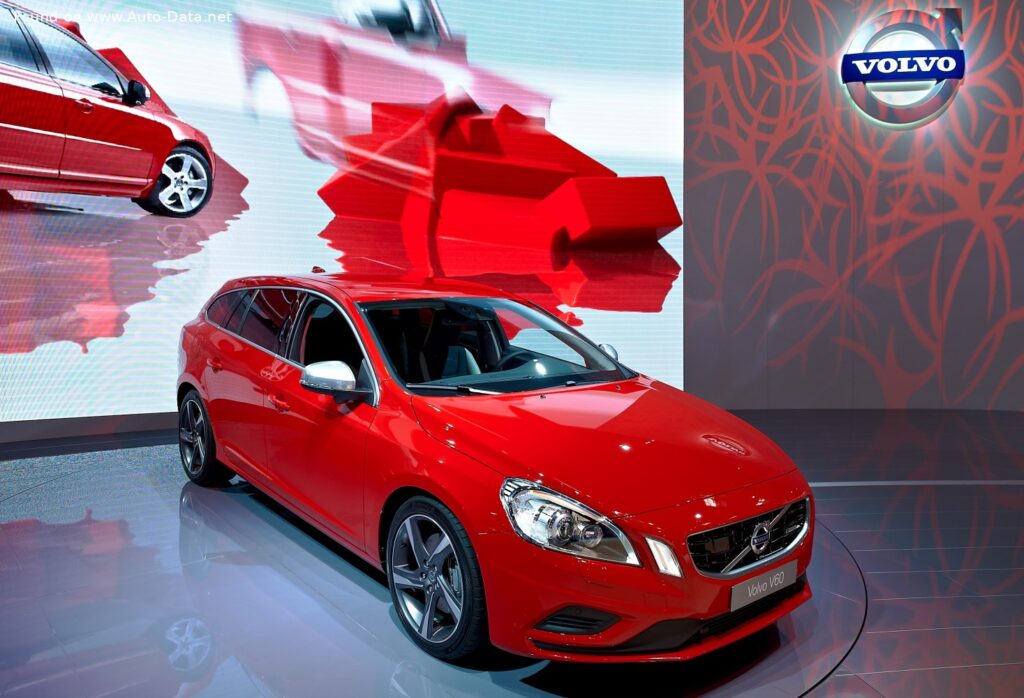
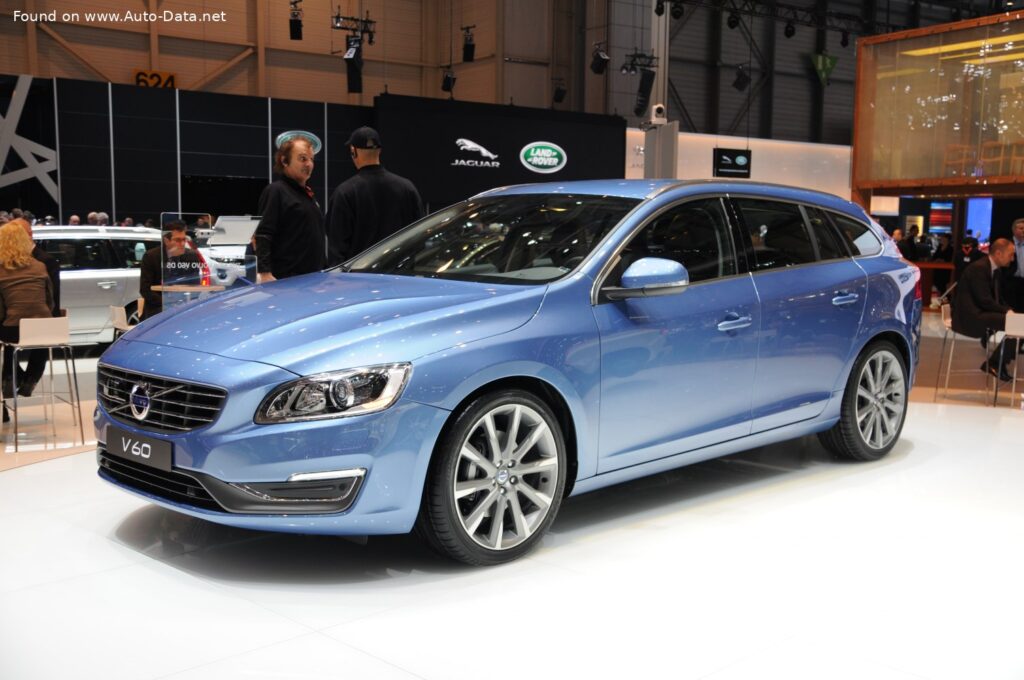
The Volvo V60 I (2013 facelift) maintained the elegant and athletic “shooting brake” inspired design that defined the first generation V60, with the facelift introducing several subtle yet impactful enhancements. The five-door, five-seat station wagon (or “estate” in European parlance) body type offered a blend of sporty aesthetics and practical utility. The updated front fascia featured a wider grille, revised headlights that often integrated LED daytime running lights, and a more sculpted bumper, giving the car a more assertive and contemporary look. The rear also received minor tweaks, including new exhaust finishers and updated taillight graphics, maintaining its distinctive Volvo identity.
Measuring 182.48 inches (4635 mm) in length, 71.85 inches (1825 mm) in width, and 58.43 inches (1484 mm) in height, the V60 struck a balanced stance. Its 109.29-inch (2776 mm) wheelbase contributed to a composed ride and ample interior space for five occupants. The trunk offered a practical minimum of 15.19 cu. ft. (430 liters) of cargo space, expandable by folding down the rear seats, making it suitable for family trips or hauling gear.
Inside, the V60’s cabin was a testament to Volvo’s commitment to ergonomic design and premium materials. The facelift brought updated infotainment options and instrument clusters, enhancing the user experience. Volvo’s pioneering reputation for safety was evident, with standard features like ABS (Anti-lock Braking System) and a host of passive and active safety systems, often including City Safety (autonomous emergency braking), pedestrian detection, and various driver assistance technologies, depending on the trim and options. The steering system utilized a rack and pinion setup, contributing to precise handling and a minimum turning circle of 37.07 feet (11.3 meters), aiding maneuverability in urban environments. The vehicle’s kerb weight of 4016.82 lbs (1822 kg) and a maximum load capacity of 1075.86 lbs (488 kg) underscored its robust construction and utility.
Technical Specifications
| Category | Specification |
|---|---|
| General Information | |
| Brand | Volvo |
| Model | V60 |
| Generation | V60 I (2013 facelift) |
| Type (Engine) | 3.0 T6 AWD (304 Hp) Automatic |
| Production Start | 2013 |
| Production End | 2018 |
| Powertrain Architecture | Internal Combustion Engine |
| Body type | Station wagon (estate) |
| Seats | 5 |
| Doors | 5 |
| Performance Specs | |
| Fuel consumption (urban) | 14.8 l/100 km (15.9 US mpg) |
| Fuel consumption (extra urban) | 7.5 l/100 km (31.4 US mpg) |
| Fuel consumption (combined) | 10.2 l/100 km (23.1 US mpg) |
| CO2 emissions | 237 g/km |
| Fuel Type | Petrol (Gasoline) |
| Acceleration 0 – 60 mph | 5.7 sec |
| Acceleration 0 – 100 km/h | 6 sec |
| Emission standard | Euro 5 |
| Weight-to-power ratio | 6 kg/Hp (166.8 Hp/tonne) |
| Weight-to-torque ratio | 4.1 kg/Nm (241.5 Nm/tonne) |
| Engine Specs | |
| Power | 304 Hp @ 5600 rpm |
| Power per liter | 102.9 Hp/l |
| Torque | 440 Nm (324.53 lb.-ft.) @ 2100-4200 rpm |
| Engine layout | Front, Transverse |
| Engine Model/Code | B6304T4 |
| Engine displacement | 2953 cm³ (180.2 cu. in.) |
| Number of cylinders | 6 |
| Engine configuration | Inline |
| Cylinder Bore | 82 mm (3.23 in.) |
| Piston Stroke | 93.2 mm (3.67 in.) |
| Compression ratio | 9.3:1 |
| Fuel injection system | Multi-port manifold injection |
| Engine aspiration | Turbocharger, Intercooler |
| Engine oil capacity | 6.8 l (7.19 US qt) |
| Coolant capacity | 8.9 l (9.4 US qt) |
| Space, Volume and Weights | |
| Kerb Weight | 1822 kg (4016.82 lbs) |
| Max. weight | 2310 kg (5092.68 lbs) |
| Max load | 488 kg (1075.86 lbs) |
| Trunk (boot) space – minimum | 430 l (15.19 cu. ft.) |
| Fuel tank capacity | 67.5 l (17.83 US gal) |
| Dimensions | |
| Length | 4635 mm (182.48 in.) |
| Width | 1825 mm (71.85 in.) |
| Height | 1484 mm (58.43 in.) |
| Wheelbase | 2776 mm (109.29 in.) |
| Front track | 1588 mm (62.52 in.) |
| Rear (Back) track | 1585 mm (62.4 in.) |
| Minimum turning circle | 11.3 m (37.07 ft.) |
| Drivetrain, Brakes and Suspension | |
| Drive wheel | All wheel drive (4×4) |
| Number of gears and type of gearbox | 6 gears, automatic transmission |
| Assisting systems | ABS (Anti-lock braking system) |
| Steering type | Steering rack and pinion |
Legacy and Market Impact
The Volvo V60 I, particularly in its T6 AWD configuration, carved out a distinct and respected position within the competitive premium compact executive segment. It stood as a compelling alternative to established German rivals such as the BMW 3 Series Touring, Audi A4 Avant, and Mercedes-Benz C-Class Estate. While these competitors often emphasized outright sportiness or ultimate luxury, the V60 offered a unique blend of understated elegance, robust performance, and unparalleled safety, which resonated strongly with its target demographic.
Volvo’s heritage in building practical yet stylish wagons was fully embodied by the V60. The 2013 facelift, and specifically the powerful 3.0 T6 AWD variant, reinforced this legacy by demonstrating that a Volvo wagon could be both sensible and exhilarating to drive. Its strong turbocharged inline-six engine and all-wheel-drive system provided a confident and engaging driving experience, distinguishing it from front-wheel-drive or less powerful variants. This performance focus, combined with Volvo’s reputation for building durable and secure vehicles, made the V60 T6 AWD particularly appealing to discerning buyers who valued both dynamics and peace of mind.
In the North American market, where station wagons faced stiff competition from SUVs, the V60 T6 AWD found a niche among enthusiasts and families who appreciated its lower center of gravity, car-like handling, and distinctive styling. It provided a sportier and more upscale alternative to mainstream crossovers, offering a driving experience often compared favorably to its European counterparts. The V60 I, including this facelifted T6 model, played a crucial role in maintaining Volvo’s brand identity during a transitional period for the company, bridging the gap between its older P2 platform vehicles and the subsequent generation of models built on the Scalable Product Architecture (SPA). Its strong engineering, timeless design, and commitment to safety and performance ensured its place as a respected and desirable vehicle in Volvo’s modern history. The V60 I ultimately paved the way for its successful successor, demonstrating the enduring appeal of a well-executed premium station wagon.