The Volvo V60 II: A Modern Interpretation of the Premium Station Wagon
The Volvo V60 II 2.0 B3 (163 Hp) Mild Hybrid Automatic represents a sophisticated and highly competent entry into the premium mid-size station wagon segment. Launched in March 2020 and produced until February 2022, this particular iteration of the second-generation V60 showcases Volvo’s strategic shift towards electrification, even in its transitional mild-hybrid forms. As an MHEV (Mild Hybrid Electric Vehicle), it combines a traditional gasoline internal combustion engine with a supplementary electric motor to enhance efficiency and reduce emissions, aligning with the brand’s broader environmental goals. Primarily positioned for the European market, where station wagons, or “estates” as they are often called, maintain a strong foothold, the V60 II B3 offers a compelling blend of Scandinavian design, advanced technology, renowned safety, and practical utility, all delivered with the smooth performance of an automatic transmission. This model embodies Volvo’s commitment to providing luxurious yet responsible mobility solutions for families and professionals alike.
Powertrain and Performance of the Volvo V60 II 2.0 B3 Mild Hybrid Automatic
At the heart of the Volvo V60 II 2.0 B3 (163 Hp) Mild Hybrid Automatic lies an advanced powertrain architecture designed for efficiency and refined performance. The system features a 2.0-liter (1969 cm³) inline-four gasoline engine, internally designated as B420T3. This direct-injected, turbocharged, and intercooled engine produces a respectable 163 horsepower at 4800 rpm and a substantial 195.45 lb.-ft. of torque, available across a broad rev range from 1500 to 3900 rpm. This wide torque band ensures responsive acceleration and flexible driving dynamics in various conditions.
Complementing the gasoline engine is a 14-horsepower electric motor, which contributes an additional 29.5 lb.-ft. of torque. This mild-hybrid setup is not designed for electric-only propulsion but rather to provide torque assist during acceleration, enable a smoother and more efficient operation of the start/stop system, and recover energy through regenerative braking. The electric motor and internal combustion engine work in harmony, driving the front wheels through a seamless 8-speed Geartronic automatic transmission. This combination results in a brisk 0-60 mph acceleration time of 8.6 seconds, making it capable enough for daily commuting and highway merging. The top speed is electronically limited to 111.85 mph, a standard practice for Volvo models of this era, emphasizing safety over outright velocity.
Fuel economy is a key benefit of this mild-hybrid system. According to the WLTP (Worldwide Harmonized Light Vehicles Test Procedure) cycle, the combined fuel consumption ranges from 31.4 to 36.8 US mpg, with CO2 emissions between 144 and 169 g/km. These figures underscore the B3’s commitment to environmental responsibility, meeting the stringent Euro 6d emission standard. The inclusion of a particulate filter further aids in reducing harmful emissions, ensuring cleaner operation. The engine’s DOHC valvetrain and 10.5:1 compression ratio are indicative of modern engineering focused on maximizing power output and efficiency from a relatively compact displacement.
Design, Practicality, and Advanced Features
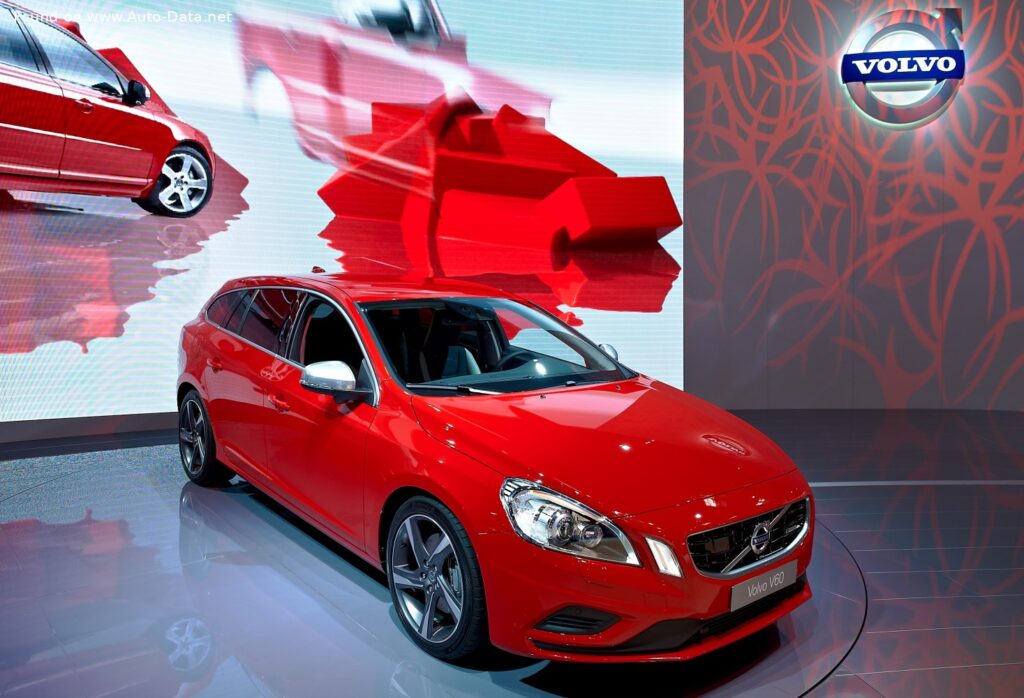
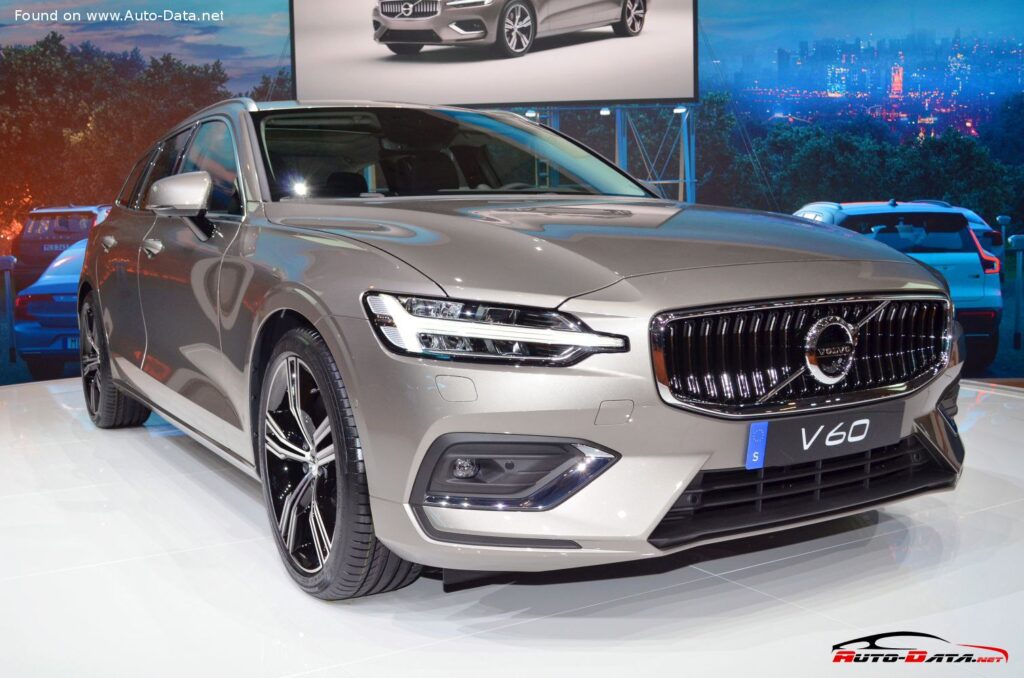
The design of the Volvo V60 II is a testament to contemporary Scandinavian aesthetics, characterized by clean lines, elegant proportions, and a sophisticated stance. As a station wagon (or estate), it proudly carries Volvo’s long-standing heritage in this body type, blending practical utility with premium styling. The exterior features Volvo’s signature “Thor’s Hammer” LED daytime running lights, a distinctive grille, and a sleek profile that manages to be both aerodynamic (with a drag coefficient of 0.29) and visually appealing.
Inside, the V60 II offers a refined and spacious cabin designed for five occupants. The interior ambiance is one of understated luxury, utilizing high-quality materials, ergonomic controls, and a minimalist design philosophy. While specific infotainment details are not provided in the technical data, the V60 II typically featured Volvo’s Sensus Connect system with a large, vertically oriented touchscreen, offering intuitive control over navigation, media, and vehicle settings. Comfort is paramount, with well-bolstered seats and ample legroom.
Practicality is a hallmark of any Volvo wagon, and the V60 II excels in this regard. The trunk space is generous, offering 18.68 cubic feet with the rear seats up, expanding to a cavernous 50.89 cubic feet when the seats are folded down. This flexibility makes it ideal for everything from grocery runs to transporting luggage for a family vacation. The vehicle also boasts a maximum roof load capacity of 165.35 lbs. and impressive towing capabilities, rated at 3968.32 lbs. with brakes and 1653.47 lbs. without brakes, further enhancing its utility.
Dimensionally, the V60 II measures 187.44 inches in length, 72.83 inches in width (80.31 inches including mirrors), and 56.38 inches in height, with a wheelbase of 113.07 inches. These dimensions contribute to a comfortable ride and stable handling. The chassis features a double wishbone front suspension and a unique rear setup with a transverse stabilizer and leaf spring, a design choice often used by Volvo to optimize packaging, ride comfort, and cargo space. Braking performance is handled by disc brakes on both front and rear axles, supported by an Anti-lock Braking System (ABS) for enhanced safety. Electric power steering provides precise and effortless maneuverability, aided by a relatively tight minimum turning circle of 37.4 to 39.7 feet. Wheel rim sizes range from 16 to 20 inches, allowing for various aesthetic and performance preferences.
Comprehensive Technical Specifications for the Volvo V60 II 2.0 B3 (163 Hp) Mild Hybrid Automatic
| General Information | |
|---|---|
| Brand | Volvo |
| Model | V60 |
| Generation | V60 II |
| Type (Engine) | 2.0 B3 (163 Hp) Mild Hybrid Automatic |
| Start of Production | March, 2020 |
| End of Production | February, 2022 |
| Powertrain Architecture | MHEV (Mild Hybrid Electric Vehicle) |
| Body Type | Station wagon (estate) |
| Seats | 5 |
| Doors | 5 |
| Performance Specifications | |
| Combined Fuel Consumption (WLTP) | 31.4 – 36.8 US mpg (6.4-7.5 l/100 km) |
| CO2 Emissions (WLTP) | 144-169 g/km |
| Fuel Type | Petrol (Gasoline) |
| Acceleration 0 – 60 mph | 8.6 sec |
| Maximum Speed | 111.85 mph (180 km/h) |
| Emission Standard | Euro 6d |
| Electric Cars and Hybrids Specifications | |
| Electric Motor Power | 14 Hp |
| Electric Motor Torque | 29.5 lb.-ft. (40 Nm) |
| Internal Combustion Engine Specifications | |
| Power | 163 Hp @ 4800 rpm |
| Power per Liter | 82.8 Hp/l |
| Torque | 195.45 lb.-ft. @ 1500-3900 rpm (265 Nm) |
| Maximum Engine Speed | 6200 rpm |
| Engine Layout | Front, Transverse |
| Engine Model/Code | B420T3 |
| Engine Displacement | 120.16 cu. in. (1969 cm³) |
| Number of Cylinders | 4 |
| Engine Configuration | Inline |
| Cylinder Bore | 3.23 in. (82 mm) |
| Piston Stroke | 3.67 in. (93.2 mm) |
| Compression Ratio | 10.5:1 |
| Number of Valves per Cylinder | 4 |
| Fuel Injection System | Direct injection |
| Engine Aspiration | Turbocharger, Intercooler |
| Valvetrain | DOHC |
| Engine Oil Capacity | 6.45 US qt (6.1 l) |
| Engine Systems | Start & Stop System, Particulate filter |
| Space, Volume and Weights | |
| Trunk (boot) Space – Minimum | 18.68 cu. ft. (529 l) |
| Trunk (boot) Space – Maximum | 50.89 cu. ft. (1441 l) |
| Fuel Tank Capacity | 15.85 US gal (60 l) |
| Max. Roof Load | 165.35 lbs. (75 kg) |
| Permitted Trailer Load with Brakes (12%) | 3968.32 lbs. (1800 kg) |
| Permitted Trailer Load without Brakes | 1653.47 lbs. (750 kg) |
| Dimensions | |
| Length | 187.44 in. (4761 mm) |
| Width | 72.83 in. (1850 mm) |
| Width with Mirrors Folded | 75.43 in. (1916 mm) |
| Width Including Mirrors | 80.31 in. (2040 mm) |
| Height | 56.38 in. (1432 mm) |
| Wheelbase | 113.07 in. (2872 mm) |
| Front Track | 62.72 – 63.39 in. (1593-1610 mm) |
| Rear (Back) Track | 62.72 – 63.39 in. (1593-1610 mm) |
| Ride Height (Ground Clearance) | 5.59 in. (142 mm) |
| Drag Coefficient (Cd) | 0.29 |
| Minimum Turning Circle (Turning Diameter) | 37.4 – 39.7 ft. (11.4-12.1 m) |
| Drivetrain, Brakes and Suspension Specifications | |
| Drivetrain Architecture | ICE and electric motor drive front wheels in mixed mode. |
| Drive Wheel | Front wheel drive |
| Number of Gears and Type of Gearbox | 8 gears, automatic transmission Geartronic |
| Front Suspension | Double wishbone, Transverse stabilizer |
| Rear Suspension | Transverse stabilizer, Leaf spring |
| Front Brakes | Disc, 11.65-14.61 in. (296-371 mm) |
| Rear Brakes | Disc, 11.89-12.60 in. (302-320 mm) |
| Assisting Systems | ABS (Anti-lock braking system) |
| Steering Type | Steering rack and pinion |
| Power Steering | Electric Steering |
| Wheel Rims Size | 16; 17; 18; 19; 20 |
Legacy and Market Standing in the European Premium Segment
The Volvo V60 II 2.0 B3 (163 Hp) Mild Hybrid Automatic holds a significant place within Volvo’s modern lineup and the broader premium automotive market, particularly in Europe. Volvo has long cultivated a reputation for building safe, reliable, and practical vehicles, a legacy that the V60 II continues to uphold and enhance. This specific mild-hybrid variant, produced between 2020 and 2022, was a key component of Volvo’s strategy to gradually electrify its entire fleet, offering consumers a stepping stone toward more sustainable mobility without the need for plug-in charging or significant changes in driving habits.
In the highly competitive premium mid-size station wagon segment, the V60 II B3 faced formidable rivals such as the Audi A4 Avant, BMW 3 Series Touring, and Mercedes-Benz C-Class Estate. While these German competitors often emphasized sportier driving dynamics or overt luxury, the V60 carved out its niche by prioritizing a unique blend of sophisticated Scandinavian design, exceptional safety features (a Volvo hallmark), and a relaxed, comfortable driving experience. Its mild-hybrid powertrain offered a compelling proposition for those seeking improved fuel efficiency and lower emissions, aligning with evolving environmental regulations and consumer preferences in Europe.
The V60’s market impact stems from its ability to offer a pragmatic yet aspirational choice. Its generous cargo capacity, comfortable interior, and advanced safety systems made it a highly attractive option for families and individuals who valued utility and peace of mind. The B3 mild-hybrid engine, with its smooth power delivery and enhanced efficiency, further bolstered its appeal as a responsible yet capable daily driver. The vehicle’s relatively short production run for this specific powertrain variant reflects the rapid pace of development in automotive electrification, as Volvo quickly transitioned to more advanced hybrid and full-electric offerings.
Ultimately, the Volvo V60 II 2.0 B3 (163 Hp) Mild Hybrid Automatic stands as an excellent example of a modern premium station wagon that successfully integrates mild-hybrid technology to deliver a balanced package of performance, efficiency, and practicality. It reinforced Volvo’s position as a leader in automotive safety and design, while also demonstrating the brand’s clear trajectory towards a more electrified future. Its legacy is one of intelligent engineering and thoughtful design, making it a respected contender in its class during its production years.