Introduction to the Volvo V60 II 2.0 B3 (163 Hp) Mild Hybrid DCT
The Volvo V60 II, introduced in 2018, represents the second generation of Volvo’s mid-size premium station wagon, building upon a rich heritage of practical yet luxurious family vehicles. Positioned in the highly competitive D-segment, the V60 II combines Volvo’s distinctive Scandinavian design philosophy with advanced safety features and efficient powertrains. The specific variant under examination, the Volvo V60 II 2.0 B3 (163 Hp) Mild Hybrid DCT, launched in February 2022, exemplifies Volvo’s commitment to electrification and refined performance within its core European and international markets. While the V60 is a global model, this particular B3 mild-hybrid powertrain is a key offering in regions prioritizing fuel efficiency and lower emissions, complementing the brand’s broader strategy of transitioning towards a fully electric future.
This iteration of the V60 II seamlessly integrates a mild-hybrid electric vehicle (MHEV) system, enhancing both performance and fuel economy without requiring plug-in charging. As a sophisticated station wagon, it caters to discerning buyers seeking a versatile vehicle that excels in comfort, safety, and everyday usability, making it a strong contender in the premium estate segment against rivals from Germany and other European manufacturers.
Engine and Performance of the Volvo V60 II 2.0 B3 (163 Hp) Mild Hybrid DCT
At the heart of the Volvo V60 II 2.0 B3 (163 Hp) Mild Hybrid DCT lies an advanced mild-hybrid powertrain architecture, designated as MHEV. This system is designed to provide power assistance to the internal combustion engine, recovering energy during braking and coasting to improve efficiency and reduce emissions. The integration of the electric motor directly into the transmission ensures a seamless blend of power delivery from both sources, primarily driving the front wheels.
Powertrain Architecture
The internal combustion engine (ICE) component is a 2.0-liter (1969 cm3 or 120.16 cu. in.) inline four-cylinder gasoline unit, identified by the engine code B420T4. This engine is equipped with direct injection, a turbocharger, and an intercooler, optimizing power output and responsiveness. It features a DOHC (Double Overhead Camshaft) valvetrain with four valves per cylinder and a compression ratio of 12:1. The engine generates a robust 163 horsepower (Hp) at 4750-5250 rpm, with a power per liter output of 82.8 Hp/l. Torque is equally impressive, peaking at 195.45 lb.-ft. (265 Nm) across a broad range from 1500 to 3900 rpm, ensuring strong acceleration and flexible driving characteristics. The maximum engine speed is rated at 6000 rpm.
Complementing the gasoline engine is a compact electric motor, delivering an additional 14 Hp and 29.5 lb.-ft. (40 Nm) of torque. This electric boost is particularly effective during initial acceleration and provides a subtle, yet noticeable, enhancement to the overall driving experience, reducing the load on the gasoline engine and consequently lowering fuel consumption and CO2 emissions. The powertrain architecture dictates that the ICE and electric motor work in a mixed mode, driving the front wheels through a sophisticated 7-speed automatic dual-clutch transmission (DCT).
Performance Metrics and Efficiency
The mild-hybrid system allows the V60 B3 to achieve a respectable 0 to 60 mph acceleration in an estimated 8.2 seconds (0-100 km/h in 8.6 seconds). The top speed is electronically limited to 111.85 mph (180 km/h), a common practice for Volvo models, emphasizing safety and efficiency over outright speed. Braking performance is also strong, with the car capable of stopping from 100 km/h in approximately 35 meters.
Fuel efficiency is a significant highlight for this mild-hybrid variant. According to WLTP (Worldwide Harmonized Light Vehicles Test Procedure) standards, the combined fuel consumption ranges from 6.2 to 6.8 liters per 100 kilometers, translating to an impressive 37.9 to 34.6 US mpg. CO2 emissions are kept within 140-154 g/km, adhering to the Euro 6d emission standard, underscoring Volvo’s commitment to environmental responsibility. The vehicle also features a Start & Stop System and a particulate filter to further reduce its environmental footprint.
Design and Features
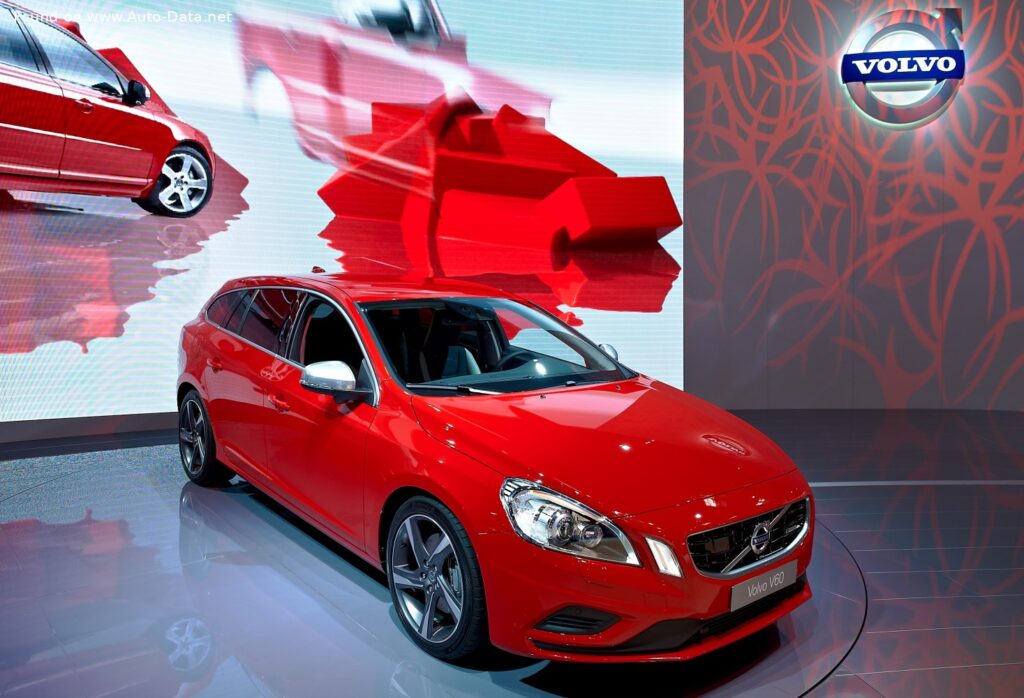
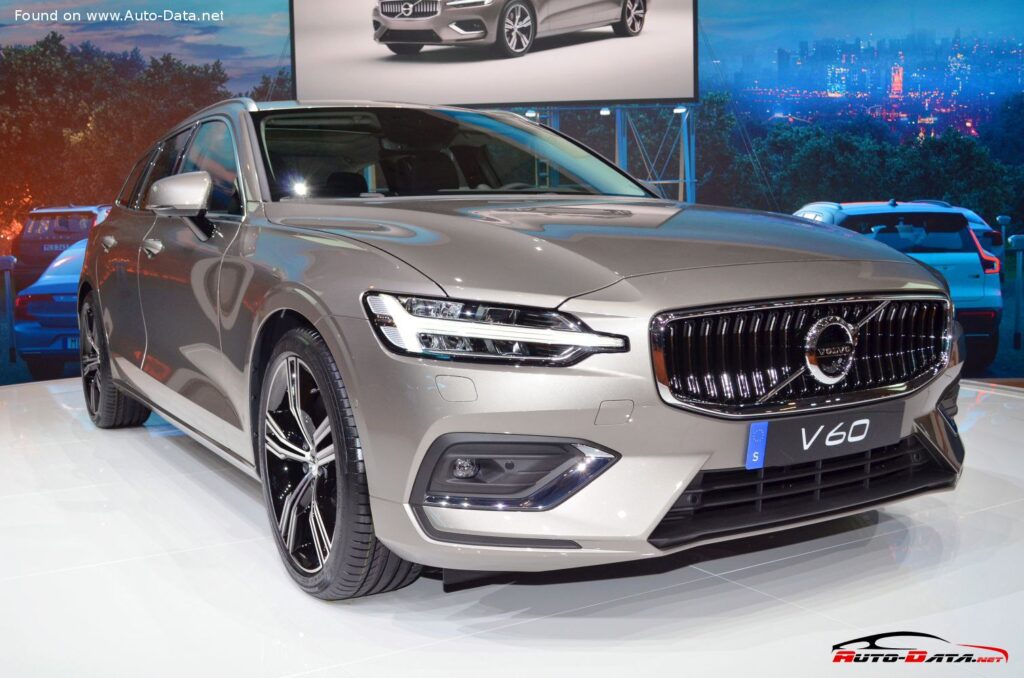
The Volvo V60 II maintains the brand’s contemporary design language, often described as elegant, understated, and functional. As a station wagon (or estate, as it’s known in other markets), the V60 prioritizes practicality and versatility without compromising on its premium aesthetic or driving dynamics. Its design cues, shared with other modern Volvos, include the distinctive “Thor’s Hammer” LED daytime running lights and a prominent grille bearing the iconic Volvo iron mark.
Exterior and Interior Aesthetics
Measuring 188.11 inches (4778 mm) in length, 72.83 inches (1850 mm) in width (80.31 inches or 2040 mm including mirrors), and 56.38 inches (1432 mm) in height, the V60 II strikes a balanced and athletic stance. Its wheelbase of 113.07 inches (2872 mm) contributes to a spacious cabin and stable ride. The clean lines and sculpted surfaces give the V60 a sophisticated presence, while its relatively low ride height of 5.59 inches (142 mm) and a drag coefficient (Cd) of 0.29 enhance its aerodynamic efficiency and dynamic appeal. The vehicle offers a range of tire and wheel options, from 215/60 R16 up to 245/35 R20, allowing for personalization and performance tuning.
Inside, the V60 II offers a quintessentially Scandinavian interior—minimalist, ergonomic, and crafted with high-quality materials. The cabin is designed for five occupants, with supportive seating and ample legroom. Volvo’s Sensus infotainment system, typically with a large vertical touchscreen, serves as the central hub for navigation, entertainment, and vehicle settings, providing intuitive control. Practicality is a strong suit, with a generous trunk capacity ranging from 18.33 cu. ft. (519 liters) with all seats in place, expanding to a cavernous 50.54 cu. ft. (1431 liters) when the rear seats are folded down. This makes the V60 an ideal companion for families, sports enthusiasts, or anyone needing substantial cargo space. The fuel tank capacity is 15.85 US gallons (60 liters), offering a good range between fill-ups.
Safety and Driver-Assistance Features
As a modern Volvo, the V60 II is equipped with a comprehensive suite of safety and driver-assistance systems. While specific details for this B3 variant are not fully listed in the provided data, standard Volvo features typically include City Safety (which detects pedestrians, cyclists, and large animals and can apply automatic braking), Lane Keeping Aid, Run-off-road Mitigation, and a full complement of airbags. The car’s robust chassis, featuring a double wishbone front suspension and a unique transverse leaf spring rear suspension (combined with a transverse stabilizer at both ends), provides a comfortable yet engaging ride, while disc brakes (296×28-371×32 mm front, 302×12-320×20 mm rear) with ABS (Anti-lock Braking System) ensure strong stopping power. Electric power steering with a rack and pinion system delivers precise and responsive handling, with a minimum turning circle of 37.4-39.7 feet (11.4-12.1 meters).
Technical Specifications
| Category | Specification |
|---|---|
| Brand | Volvo |
| Model | V60 |
| Generation | V60 II |
| Type (Engine) | 2.0 B3 (163 Hp) Mild Hybrid DCT |
| Start of Production | February, 2022 |
| Powertrain Architecture | MHEV (Mild Hybrid Electric Vehicle) |
| Body Type | Station Wagon (Estate) |
| Seats | 5 |
| Doors | 5 |
| Performance Specifications | |
| Combined Fuel Consumption (WLTP) | 6.2-6.8 l/100 km (37.9 – 34.6 US mpg) |
| CO2 Emissions (WLTP) | 140-154 g/km |
| Fuel Type | Petrol (Gasoline) |
| Acceleration 0-60 mph | 8.2 sec |
| Acceleration 0-100 km/h | 8.6 sec |
| Maximum Speed | 111.85 mph (180 km/h) |
| Braking Distance 100 km/h – 0 | 35 m |
| Emission Standard | Euro 6d |
| Electric Cars and Hybrids Specifications | |
| Electric Motor Power | 14 Hp |
| Electric Motor Torque | 29.5 lb.-ft. (40 Nm) |
| Electric Motor Location | Integrated into the transmission |
| Internal Combustion Engine Specifications | |
| Power | 163 Hp @ 4750-5250 rpm |
| Power per Liter | 82.8 Hp/l |
| Torque | 195.45 lb.-ft. (265 Nm) @ 1500-3900 rpm |
| Maximum Engine Speed | 6000 rpm |
| Engine Layout | Front, Transverse |
| Engine Model/Code | B420T4 |
| Engine Displacement | 1969 cm3 (120.16 cu. in.) |
| Number of Cylinders | 4 |
| Engine Configuration | Inline |
| Cylinder Bore | 3.23 in. (82 mm) |
| Piston Stroke | 3.67 in. (93.2 mm) |
| Compression Ratio | 12:1 |
| Number of Valves per Cylinder | 4 |
| Fuel Injection System | Direct injection |
| Engine Aspiration | Turbocharger, Intercooler |
| Valvetrain | DOHC |
| Engine Oil Capacity | 6.1 l (6.45 US qt) |
| Engine Systems | Start & Stop System, Particulate filter |
| Space, Volume and Weights | |
| Trunk (Boot) Space – Minimum | 18.33 cu. ft. (519 l) |
| Trunk (Boot) Space – Maximum | 50.54 cu. ft. (1431 l) |
| Fuel Tank Capacity | 15.85 US gal (60 l) |
| Max. Roof Load | 165.35 lbs. (75 kg) |
| Permitted Trailer Load with Brakes (12%) | 3968.32 lbs. (1800 kg) |
| Permitted Trailer Load without Brakes | 1653.47 lbs. (750 kg) |
| Dimensions | |
| Length | 188.11 in. (4778 mm) |
| Width | 72.83 in. (1850 mm) |
| Width with Mirrors Folded | 75.43 in. (1916 mm) |
| Width Including Mirrors | 80.31 in. (2040 mm) |
| Height | 56.38 in. (1432 mm) |
| Wheelbase | 113.07 in. (2872 mm) |
| Front Track | 62.72 – 63.39 in. (1593-1610 mm) |
| Rear (Back) Track | 62.72 – 63.39 in. (1593-1610 mm) |
| Ride Height (Ground Clearance) | 5.59 in. (142 mm) |
| Drag Coefficient (Cd) | 0.29 |
| Minimum Turning Circle (Turning Diameter) | 37.4 – 39.7 ft. (11.4-12.1 m) |
| Drivetrain, Brakes and Suspension Specifications | |
| Drivetrain Architecture | ICE and electric motor drive front wheels in mixed mode |
| Drive Wheel | Front wheel drive |
| Number of Gears and Type of Gearbox | 7 gears, automatic transmission DCT |
| Front Suspension | Double wishbone, Transverse stabilizer |
| Rear Suspension | Transverse stabilizer, Leaf spring |
| Front Brakes | Disc, 296×28-371×32 mm |
| Rear Brakes | Disc, 302×12-320×20 mm |
| Assisting Systems | ABS (Anti-lock braking system) |
| Steering Type | Steering rack and pinion |
| Power Steering | Electric Steering |
| Tires Size | 215/60 R16; 225/50 R17; 235/45 R18; 235/40 R19; 245/35 R20 |
| Wheel Rims Size | 7J x 16; 7J x 17; 8J x 18; 8J x 19; 8J x 20 |
Legacy and Market Impact
The Volvo V60 II, particularly in its mild-hybrid configurations like the 2.0 B3 (163 Hp) Mild Hybrid DCT, solidifies Volvo’s position as a leader in premium family vehicles that prioritize safety, design, and environmental consciousness. While the B3 powertrain itself is primarily targeted at European markets, where its blend of efficiency and performance aligns well with regional tax structures and consumer preferences, the V60 platform enjoys global recognition, including a presence in the United States, albeit often with different powertrain options (e.g., T5, T6, Recharge plug-in hybrids).
In its primary markets, the V60 competes fiercely with established premium station wagons such as the Audi A4 Avant, BMW 3 Series Touring, and Mercedes-Benz C-Class Estate. Against these rivals, the V60 distinguishes itself with its unique Scandinavian design, often perceived as more understated and elegant, and its unwavering commitment to safety, which has long been a Volvo hallmark. The inclusion of mild-hybrid technology, even in this entry-level gasoline engine, underscores Volvo’s broader electrification strategy and its proactive approach to meeting evolving emissions regulations.
The V60’s reputation is built on its exceptional blend of practicality, comfort, and sophisticated driving dynamics. Its generous cargo space, high-quality interior, and comprehensive suite of safety features make it an attractive option for families and individuals who require versatility without sacrificing luxury or performance. The smooth operation of the 7-speed DCT and the seamless integration of the mild-hybrid system contribute to a refined driving experience, characterized by responsive acceleration and impressive fuel economy for its class.
Historically, Volvo wagons have held a special place in the automotive landscape, renowned for their durability and utilitarian design. The V60 II, with its modern aesthetics and advanced technology, successfully carries this legacy forward, appealing to a new generation of buyers while retaining the core values that have defined the brand for decades. The 2.0 B3 Mild Hybrid DCT variant, specifically, represents a crucial step in Volvo’s journey towards a more sustainable future, offering a compelling bridge between conventional gasoline power and full electrification, and reinforcing the V60’s status as a thoughtful and capable choice in the premium wagon segment.