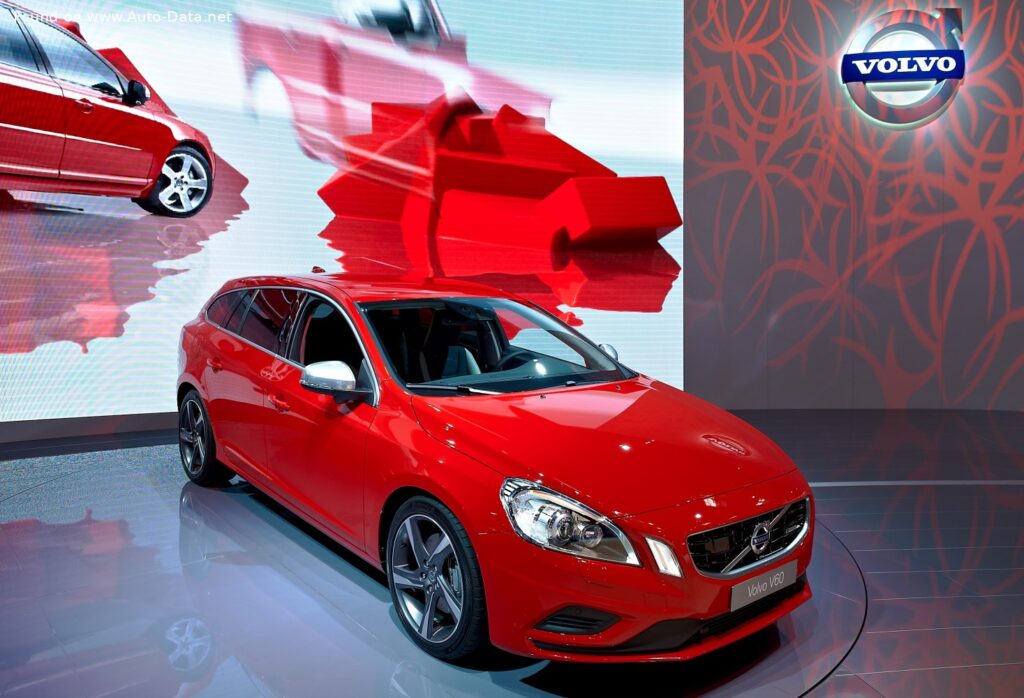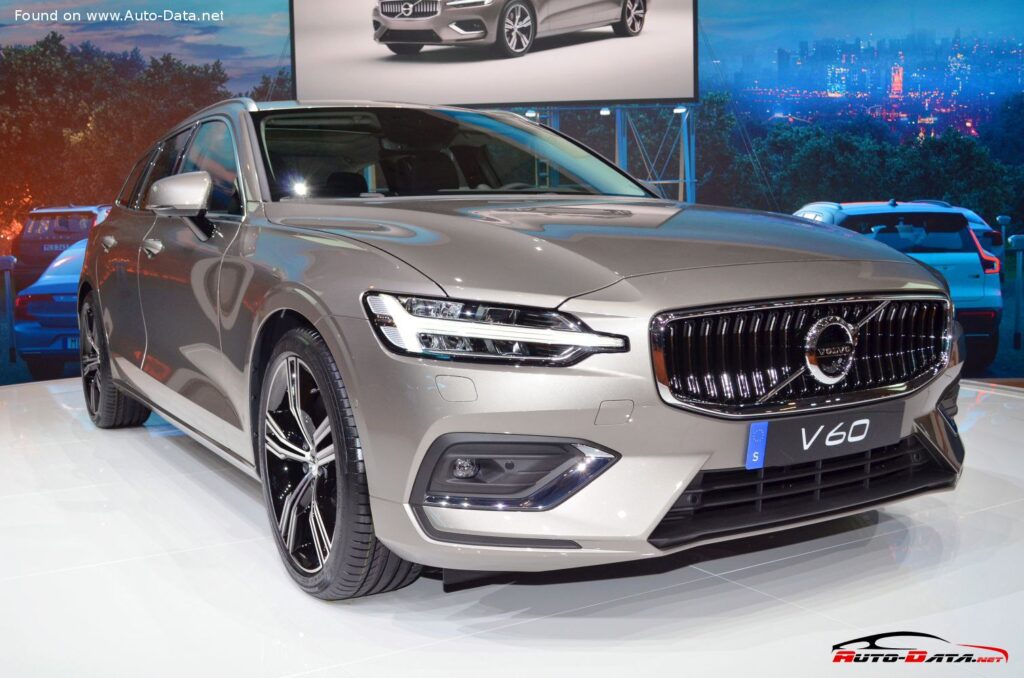
Introduction to the Volvo V60 II 2.0 B4 (197 Hp) Mild Hybrid Geartronic
The Volvo V60 II, representing the second generation of Volvo’s mid-size premium station wagon, debuted in 2018, building upon the brand’s contemporary design language and advanced Scalable Product Architecture (SPA) platform. This particular variant, the Volvo V60 II 2.0 B4 (197 Hp) Mild Hybrid Geartronic, launched in July 2020, exemplifies Volvo’s commitment to efficiency and reduced emissions through mild-hybrid technology, particularly for its primary European market. Positioned within the competitive premium compact executive segment, the V60 II B4 Mild Hybrid offers a compelling blend of practicality, Scandinavian luxury, and refined performance, catering to discerning buyers who prioritize fuel economy and environmental consciousness without compromising on safety or comfort.
While the Volvo V60 is available in various global markets, including the United States, this specific 2.0-liter B4 diesel mild-hybrid powertrain is predominantly tailored for European consumers. In Europe, diesel engines, especially those augmented with mild-hybrid systems, continue to play a significant role in achieving lower CO2 emissions and better fuel economy for long-distance driving. The V60 II B4 stands as a testament to Volvo’s strategic approach to powertrain development, offering a sophisticated diesel option that integrates a mild-hybrid electric vehicle (MHEV) system for enhanced efficiency and a smoother driving experience.
Engine and Performance: The Volvo V60 II 2.0 B4 (197 Hp) Mild Hybrid Geartronic Powertrain
At the heart of the Volvo V60 II 2.0 B4 (197 Hp) Mild Hybrid Geartronic lies a sophisticated MHEV powertrain designed for optimal balance between power and efficiency. The primary internal combustion engine (ICE) is a 2.0-liter (120.16 cu. in.) inline four-cylinder diesel unit, designated D420T8. This engine utilizes a Twin-Turbo setup with an intercooler, ensuring robust power delivery across the rev range. It features a Commonrail fuel injection system and a DOHC (Double Overhead Camshaft) valvetrain with 4 valves per cylinder, contributing to its refined operation and strong thermodynamic efficiency.
The diesel engine alone produces a respectable 197 horsepower at 4000 rpm and a substantial 309.78 lb.-ft. of torque. Complementing this is an integrated mild-hybrid electric motor, which provides an additional 14 horsepower and 29.5 lb.-ft. of torque. This electric motor, strategically located within the transmission, assists the engine during acceleration, recuperates energy during braking, and enables more seamless operation of the Start & Stop System. This power-assist hybrid architecture enhances overall efficiency and reduces the load on the diesel engine, particularly in urban driving conditions.
Power is channeled to the front wheels through a smooth-shifting 8-speed automatic Geartronic transmission. This combination allows the V60 II B4 to accelerate from 0 to 60 mph in a brisk 7.5 seconds, with a top speed electronically limited to 111.85 mph (180 km/h). The vehicle’s performance is not just about speed but also about its impressive fuel economy. Under the WLTP cycle, the combined fuel consumption ranges from 37.9 to 42.8 US mpg (5.5-6.2 l/100 km), with CO2 emissions between 144-162 g/km, adhering to the strict Euro 6d emission standard. This makes the V60 II B4 a highly economical choice for daily commuting and long-distance travel within Europe.
Design and Features
The Volvo V60 II, with its station wagon (estate) body type, embodies modern Scandinavian design principles: elegant, functional, and understated. Its exterior design is characterized by clean lines, a long hood, and a distinctly raked rear window, giving it a dynamic yet sophisticated profile. Signature Volvo design elements such as the “Thor’s Hammer” LED daytime running lights and the vertically stacked LED taillights ensure instant brand recognition. The V60 II’s dimensions – 188.11 inches in length, 72.83 inches in width (excluding mirrors), and 56.38 inches in height – provide a substantial road presence while maintaining agile maneuverability, aided by a minimum turning circle of 37.4 – 39.7 ft.
Inside, the V60 II offers a premium and minimalist cabin designed for comfort and practicality. It accommodates five occupants with ample head and legroom. Cargo capacity is a significant strong suit for any station wagon, and the V60 II delivers with a generous trunk space of 18.33 cu. ft. (519 liters) with all seats in place, expanding to an impressive 50.54 cu. ft. (1431 liters) when the rear seats are folded down. This versatility makes it ideal for families and individuals with active lifestyles.
The V60 II’s chassis is built on Volvo’s SPA platform, which underpins many of its larger models, contributing to its stable ride and refined handling. The front suspension features a double wishbone setup with a transverse stabilizer, while the rear utilizes a transverse stabilizer and a composite leaf spring – a unique and space-efficient solution that helps maximize cargo volume. Braking is handled by disc brakes all around, with varying sizes (296×28-371×32 mm front, 302×12-320×20 mm rear) depending on configuration, and is supported by an Anti-lock Braking System (ABS). The electric power steering system provides precise control and ease of parking. Standard tire sizes range from 215/60 R16 up to 245/35 R20, mounted on wheel rims from 7J x 16 to 8J x 20, allowing for customization of ride and handling characteristics.
Safety, a cornerstone of the Volvo brand, is inherently integrated into the V60 II. While specific active safety features beyond ABS are not detailed in the provided data, the SPA platform is engineered to incorporate a comprehensive suite of advanced driver-assistance systems (ADAS) that are standard or optional on modern Volvo vehicles, reinforcing its reputation as one of the safest cars in its class.
Technical Specifications
| Category | Specification | Value |
|---|---|---|
General Information |
||
| Brand | Volvo | |
| Model | V60 | |
| Generation | V60 II | |
| Type (Engine) | 2.0 B4 (197 Hp) Mild Hybrid Geartronic | |
| Start of Production | July, 2020 | |
| Powertrain Architecture | MHEV (Mild Hybrid Electric Vehicle) | |
| Body Type | Station wagon (estate) | |
| Seats | 5 | |
| Doors | 5 | |
Performance Specs |
||
| Fuel consumption at Low speed (WLTP) | US mpg | 34.1 – 31.8 |
| Fuel consumption at Medium speed (WLTP) | US mpg | 38.6 – 35.1 |
| Fuel consumption at High speed (WLTP) | US mpg | 49 – 42 |
| Fuel consumption at Very High speed (WLTP) | US mpg | 44.4 – 39.2 |
| Combined Fuel Consumption (WLTP) | US mpg | 42.8 – 37.9 |
| CO2 Emissions (WLTP) | g/km | 144-162 |
| Fuel Type | Diesel | |
| Acceleration 0 – 60 mph | seconds | 7.5 |
| Maximum Speed | mph | 111.85 |
| Braking Distance 62 mph – 0 | meters | 35 |
| Emission Standard | Euro 6d | |
Electric Cars and Hybrids Specs |
||
| Electric Motor Power | Hp | 14 |
| Electric Motor Torque | lb.-ft. | 29.5 |
| Electric Motor Location | Integrated into the transmission | |
Internal Combustion Engine Specs |
||
| Power | Hp @ rpm | 197 @ 4000 |
| Power per Liter | Hp/l | 100.1 |
| Torque | lb.-ft. | 309.78 |
| Maximum Engine Speed | rpm | 5000 |
| Engine Layout | Front, Transverse | |
| Engine Model/Code | D420T8 | |
| Engine Displacement | cu. in. (cm3) | 120.16 (1969) |
| Number of Cylinders | 4 | |
| Engine Configuration | Inline | |
| Cylinder Bore | in. (mm) | 3.23 (82) |
| Piston Stroke | in. (mm) | 3.67 (93.2) |
| Compression Ratio | 15.8:1 | |
| Number of Valves per Cylinder | 4 | |
| Fuel Injection System | Diesel Commonrail | |
| Engine Aspiration | Twin-Turbo, Intercooler | |
| Valvetrain | DOHC | |
| Engine Oil Capacity | US qt | 5.92 |
| Engine Systems | Start & Stop System, Particulate filter | |
Space, Volume and Weights |
||
| Trunk (boot) space – minimum | cu. ft. (liters) | 18.33 (519) |
| Trunk (boot) space – maximum | cu. ft. (liters) | 50.54 (1431) |
| Fuel Tank Capacity | US gal (liters) | 15.85 (60) |
| AdBlue Tank | US gal (liters) | 3.17 (12) |
| Max. Roof Load | lbs. (kg) | 165.35 (75) |
| Permitted Trailer Load with brakes (12%) | lbs. (kg) | 4409.25 (2000) |
| Permitted Trailer Load without brakes | lbs. (kg) | 1653.47 (750) |
Dimensions |
||
| Length | in. (mm) | 188.11 (4778) |
| Width | in. (mm) | 72.83 (1850) |
| Width with Mirrors Folded | in. (mm) | 75.43 (1916) |
| Width Including Mirrors | in. (mm) | 80.31 (2040) |
| Height | in. (mm) | 56.38 (1432) |
| Wheelbase | in. (mm) | 113.07 (2872) |
| Front Track | in. (mm) | 62.72 – 63.39 (1593-1610) |
| Rear (Back) Track | in. (mm) | 62.72 – 63.39 (1593-1610) |
| Ride Height (Ground Clearance) | in. (mm) | 5.59 (142) |
| Drag Coefficient (Cd) | 0.29 | |
| Minimum Turning Circle (Turning Diameter) | ft. (m) | 37.4 – 39.7 (11.4-12.1) |
Drivetrain, Brakes and Suspension Specs |
||
| Drivetrain Architecture | ICE and electric motor drive front wheels in mixed mode. | |
| Drive Wheel | Front-wheel drive | |
| Number of Gears and Type of Gearbox | 8 gears, automatic transmission Geartronic | |
| Front Suspension | Double wishbone, Transverse stabilizer | |
| Rear Suspension | Transverse stabilizer, Leaf spring | |
| Front Brakes | Disc size (mm) | 296×28-371×32 |
| Rear Brakes | Disc size (mm) | 302×12-320×20 |
| Assisting Systems | ABS (Anti-lock braking system) | |
| Steering Type | Steering rack and pinion | |
| Power Steering | Electric Steering | |
| Tires Size | 215/60 R16; 225/50 R17; 235/45 R18; 235/40 R19; 245/35 R20 | |
| Wheel Rims Size | 7J x 16; 7J x 17; 8J x 18; 8J x 19; 8J x 20 | |
Legacy and Market Impact of the Volvo V60 II
The Volvo V60 II, and particularly its efficient 2.0 B4 Mild Hybrid Geartronic variant, holds a significant position in the European premium mid-size station wagon segment. In a market where wagons (or estates, as they are known in Europe) remain popular due to their blend of practicality and driving dynamics, the V60 competes directly with established rivals such as the BMW 3 Series Touring, Audi A4 Avant, and Mercedes-Benz C-Class Estate. Volvo distinguishes itself through its unique blend of minimalist Scandinavian design, an unwavering commitment to safety, and a focus on sustainable powertrain solutions.
The introduction of the B4 mild-hybrid diesel engine in 2020 was a strategic move by Volvo to enhance the V60’s appeal in an evolving regulatory landscape. With increasingly stringent emissions standards across Europe, mild-hybrid technology allows diesel engines to operate more cleanly and efficiently, bridging the gap towards full electrification. The V60