The Volvo V60 II 2.0 B5 (250 Hp) Mild Hybrid AWD Automatic: A Refined Swedish Wagon for the Modern Era
The Volvo V60, in its second generation, represents a compelling blend of Scandinavian design, advanced technology, and practical versatility within the premium mid-size station wagon segment. Introduced in March 2020, the Volvo V60 II 2.0 B5 (250 Hp) Mild Hybrid AWD Automatic variant specifically highlights Volvo’s commitment to electrification and efficient performance. This particular model, a Mild Hybrid Electric Vehicle (MHEV), showcases the brand’s strategic transition towards a more sustainable powertrain lineup while maintaining the robust performance and luxurious comfort expected from a Volvo. Positioned globally, the V60 appeals to discerning buyers in markets from Europe to North America, offering a sophisticated alternative to SUVs without sacrificing utility or all-weather capability.
Built on Volvo’s adaptable Scalable Product Architecture (SPA) platform, shared with larger models like the S60, XC60, and 90-series cars, the V60 II benefits from a solid foundation that prioritizes safety, dynamic handling, and interior spaciousness. The B5 designation denotes a specific powertrain configuration within Volvo’s contemporary nomenclature, signifying a turbocharged gasoline engine integrated with a 48-volt mild-hybrid system. This integration is crucial for enhancing fuel efficiency, reducing emissions, and providing a smoother, more responsive driving experience. The V60 II B5 is a testament to Volvo’s vision of blending traditional automotive excellence with forward-thinking environmental responsibility, making it a significant player in its competitive landscape.
Engine and Performance of the Volvo V60 II 2.0 B5 (250 Hp) Mild Hybrid AWD Automatic
At the heart of the Volvo V60 II 2.0 B5 (250 Hp) Mild Hybrid AWD Automatic lies a sophisticated powertrain designed for both spirited driving and environmental consciousness. The primary internal combustion engine (ICE) is a 2.0-liter (120.16 cu. in.) inline four-cylinder gasoline unit, featuring direct injection, a turbocharger, and an intercooler. This advanced engine, designated B420T2, delivers a robust 250 horsepower at a versatile range of 5400-5700 rpm. Torque output is equally impressive, peaking at 258.15 lb.-ft. available broadly from 1800 to 4800 rpm, ensuring strong acceleration and flexible power delivery across the rev range.
The “Mild Hybrid” aspect signifies the integration of a 48-volt electrical system, which includes an electric motor contributing an additional 14 horsepower and 29.5 lb.-ft. of torque. While this electric motor cannot propel the vehicle solely on electric power for extended periods, it significantly assists the gasoline engine during acceleration, provides a smoother engine start-stop function, and recovers kinetic energy during braking. This energy is stored in a small battery and then redeployed to support the engine, reducing the workload on the ICE and consequently improving fuel economy and lowering emissions. The combination of the powerful gasoline engine and the mild-hybrid system allows the V60 B5 to achieve a respectable 0-60 mph acceleration time of just 6.3 seconds, with an electronically limited top speed of 111.85 mph, a common practice for Volvo vehicles prioritizing safety and efficiency.
Power is channeled through a smooth and efficient 8-speed Geartronic automatic transmission to an advanced all-wheel-drive (AWD) system. This drivetrain architecture is designed to prioritize the front wheels for efficiency but can seamlessly engage the rear wheels via an electrically or mechanically controlled clutch when additional traction is required, ensuring confident handling in various driving conditions. The overall powertrain architecture, classified as MHEV (Mild Hybrid Electric Vehicle), adheres to the stringent Euro 6d emission standard, reflecting Volvo’s dedication to reducing its environmental footprint. Combined fuel economy for this variant, based on the WLTP cycle, ranges from 30.5 to 35.1 US mpg, showcasing the effectiveness of the mild-hybrid technology in real-world driving scenarios.
Design and Features
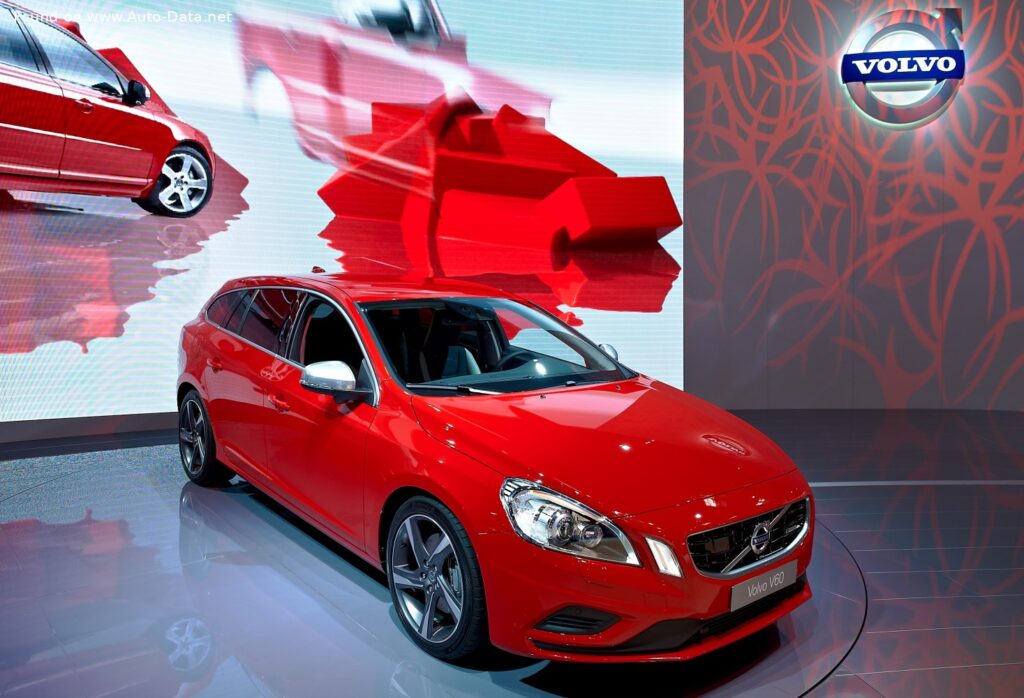
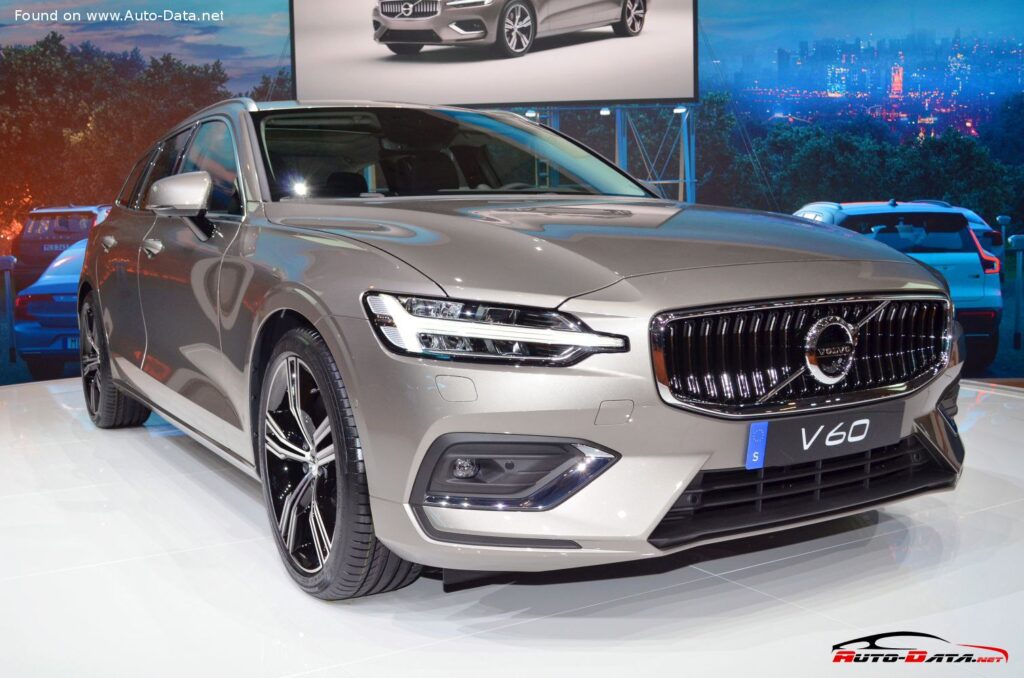
The Volvo V60 II embodies Volvo’s modern design language, characterized by clean lines, elegant proportions, and a strong emphasis on functionality. As a station wagon (or “estate” in European markets), its body type is inherently practical, offering a generous cargo capacity without compromising on style. The V60 II boasts a sleek profile, defined by its long hood, pronounced shoulder line, and the signature “Thor’s Hammer” LED daytime running lights that give it an unmistakable road presence. Measuring 187.44 inches in length, 72.83 inches in width (80.31 inches including mirrors), and 56.38 inches in height, the V60 strikes a balanced and athletic stance.
Inside, the V60 II offers a quintessentially Scandinavian interior—minimalist, ergonomic, and crafted with high-quality materials. The cabin is designed for five occupants, providing ample space and comfort, especially in the front seats. Key features include a vertically oriented Sensus infotainment system, which integrates navigation, entertainment, and vehicle functions, providing a user-friendly interface. Volvo’s commitment to safety is legendary, and the V60 II is equipped with a comprehensive suite of advanced driver-assistance systems (ADAS) as standard or optional, building upon foundational elements like ABS (Anti-lock Braking System). These systems, while not explicitly detailed in the raw data, are inherent to the Volvo brand and its modern vehicles, often including features like City Safety (automatic emergency braking), lane keeping assist, and adaptive cruise control.
The V60’s practicality is evident in its cargo capacity, offering a minimum of 18.68 cubic feet of trunk space with all seats in place, expanding to a cavernous 50.89 cubic feet when the rear seats are folded down. This flexibility makes it an ideal vehicle for families, adventurers, or anyone needing significant hauling capability. Other practical considerations include a fuel tank capacity of 15.85 US gallons, a maximum roof load of 165.35 lbs., and impressive towing capabilities with a permitted trailer load of 3968.32 lbs. with brakes, further underscoring its versatility. The vehicle’s suspension setup, featuring a double wishbone front and a transverse stabilizer with a leaf spring rear, is tuned to provide a comfortable ride while maintaining composed handling, complemented by electric power steering for precise control.
Technical Specifications
| Category | Specification |
|---|---|
| Brand | Volvo |
| Model | V60 |
| Generation | V60 II |
| Type (Engine) | 2.0 B5 (250 Hp) Mild Hybrid AWD Automatic |
| Start of Production | March, 2020 |
| Powertrain Architecture | MHEV (Mild Hybrid Electric Vehicle) |
| Body Type | Station wagon (estate) |
| Seats | 5 |
| Doors | 5 |
| Performance Specs | |
| Fuel Consumption Combined (WLTP) | 30.5 – 35.1 US mpg (6.7-7.7 l/100 km) |
| CO2 Emissions (WLTP) | 152-173 g/km |
| Fuel Consumption Combined (NEDC equivalent) | 35.1 – 35.6 US mpg (6.6-6.7 l/100 km) |
| CO2 Emissions (NEDC equivalent) | 149-152 g/km |
| Fuel Type | Petrol (Gasoline) |
| Acceleration 0-60 mph | 6.3 seconds |
| Maximum Speed | 111.85 mph (180 km/h) |
| Braking Distance (100 km/h – 0) | 35 m |
| Emission Standard | Euro 6d |
| Electric Cars and Hybrids Specs | |
| Electric Motor Power | 14 Hp |
| Electric Motor Torque | 29.5 lb.-ft. (40 Nm) |
| Internal Combustion Engine Specs | |
| Power | 250 Hp @ 5400-5700 rpm. |
| Power per liter | 127 Hp/l |
| Torque | 258.15 lb.-ft. @ 1800-4800 rpm. (350 Nm) |
| Maximum Engine Speed | 6200 rpm. |
| Engine Layout | Front, Transverse |
| Engine Model/Code | B420T2 |
| Engine Displacement | 120.16 cu. in. (1969 cm3) |
| Number of Cylinders | 4 |
| Engine Configuration | Inline |
| Cylinder Bore | 3.23 in. (81.99 mm) |
| Piston Stroke | 3.67 in. (93.19 mm) |
| Compression Ratio | 10.5:1 |
| Number of Valves per Cylinder | 4 |
| Fuel Injection System | Direct injection |
| Engine Aspiration | Turbocharger, Intercooler |
| Valvetrain | DOHC |
| Engine Oil Capacity | 6.45 US qt (6.1 l) |
| Engine Systems | Start & Stop System, Particulate filter |
| Space, Volume and Weights | |
| Trunk (boot) Space – Minimum | 18.68 cu. ft. (529 l) |
| Trunk (boot) Space – Maximum | 50.89 cu. ft. (1441 l) |
| Fuel Tank Capacity | 15.85 US gal (60 l) |
| Max. Roof Load | 165.35 lbs. (75 kg) |
| Permitted Trailer Load with Brakes (12%) | 3968.32 lbs. (1800 kg) |
| Permitted Trailer Load without Brakes | 1653.47 lbs. (750 kg) |
| Dimensions | |
| Length | 187.44 in. (4761 mm) |
| Width | 72.83 in. (1850 mm) |
| Width with Mirrors Folded | 75.43 in. (1916 mm) |
| Width Including Mirrors | 80.31 in. (2040 mm) |
| Height | 56.38 in. (1432 mm) |
| Wheelbase | 113.07 in. (2872 mm) |
| Front Track | 62.72 – 63.39 in. (1593-1610 mm) |
| Rear (Back) Track | 62.72 – 63.39 in. (1593-1610 mm) |
| Ride Height (Ground Clearance) | 5.59 in. (142 mm) |
| Drag Coefficient (Cd) | 0.29 |
| Minimum Turning Circle (Turning Diameter) | 37.4 – 39.7 ft. (11.4-12.1 m) |
| Drivetrain, Brakes and Suspension Specs | |
| Drivetrain Architecture | ICE and electric motor permanently drive front wheels, capable of running in mixed mode, rear wheels driven via clutch if necessary. |
| Drive Wheel | All-wheel drive (4×4) |
| Number of Gears and Type of Gearbox | 8 gears, automatic transmission Geartronic |
| Front Suspension | Double wishbone, Transverse stabilizer |
| Rear Suspension | Transverse stabilizer, Leaf spring |
| Front Brakes | Disc, 11.65-14.61 in. (296-371 mm) |
| Rear Brakes | Disc, 11.89-12.60 in. (302-320 mm) |
| Assisting Systems | ABS (Anti-lock braking system) |
| Steering Type | Steering rack and pinion |
| Power Steering | Electric Steering |
| Wheel Rims Size | 16; 17; 18; 19; 20 inches |
Legacy and Market Impact
The Volvo V60 II, particularly the B5 mild-hybrid variant, continues Volvo’s strong legacy in the station wagon segment, a body style that the Swedish brand has championed for decades. In a market increasingly dominated by SUVs, the V60 stands out as a sophisticated and practical alternative, offering a lower center of gravity, more car-like driving dynamics, and often better fuel efficiency than many crossovers. Its sleek design, combined with Volvo’s reputation for safety and reliability, has earned it a dedicated following globally.
In Europe, where station wagons remain highly popular, the V60 competes directly with premium rivals such as the Audi A4 Avant, BMW 3 Series Touring, and Mercedes-Benz C-Class Estate. The V60 distinguishes itself with its unique Scandinavian aesthetic, a focus on passenger comfort, and its pioneering commitment to electrification. The mild-hybrid B5 powertrain offers a compelling balance of performance and efficiency, appealing to buyers looking to reduce their environmental impact without transitioning to a full plug-in hybrid or electric vehicle.
For the North American market, where station wagons are a niche but cherished segment, the V60 B5 provides a distinctive option for consumers seeking luxury, practicality, and all-wheel-drive capability in a more understated package than many SUVs. While not a volume seller like its XC60 SUV counterpart, the V60 maintains a loyal customer base who appreciate its elegant design, comfortable ride, and Volvo’s comprehensive safety features. Its role in the market is to offer a refined, versatile, and environmentally conscious choice that embodies Volvo’s brand values.
The introduction of the B5 mild-hybrid powertrain in the V60 II marks a significant step in Volvo’s broader electrification strategy. It demonstrates how mild-hybrid technology can provide tangible benefits in terms of fuel economy and emissions reduction, serving as an accessible entry point into electrified motoring. This approach helps Volvo meet stringent global emission targets while continuing to offer powerful and desirable vehicles. The V60 II 2.0 B5 (250 Hp) Mild Hybrid AWD Automatic is not just a car; it’s a statement of purpose for Volvo, reinforcing its position as a leader in premium, safe, and increasingly sustainable personal transportation.