The Volvo V60 II 2.0 D3 (150 Hp) Automatic: A European Premium Wagon
The Volvo V60 II, introduced in July 2018, represents the second generation of Volvo’s mid-size premium station wagon. Building on the success and design language established by its larger S90/V90 siblings and the XC60 SUV, the V60 II brought a fresh, elegant, and practical interpretation of the modern family estate. The specific variant under examination, the Volvo V60 II 2.0 D3 (150 Hp) Automatic, was a key offering in the European market from its launch until July 2020. While primarily designed for and popular in Europe, where station wagons retain strong market appeal, this model embodies Volvo’s global commitment to safety, sophisticated design, and efficient powertrain technology, all presented with a distinctly Scandinavian flair. It served as a robust competitor in the highly competitive premium D-segment, offering a compelling blend of utility, comfort, and advanced engineering.
Engine and Performance: The D3 Diesel Powertrain in the Volvo V60 II
At the heart of the Volvo V60 II 2.0 D3 (150 Hp) Automatic lies Volvo’s Drive-E family of engines, specifically the D4204T16 diesel unit. This 2.0-liter (1969 cm³ or 120.16 cu. in.) inline four-cylinder engine is mounted transversely at the front, driving the front wheels. Despite being a diesel, it delivers a refined and efficient driving experience, characteristic of modern European diesel powertrains. The engine is equipped with a turbocharger and intercooler, ensuring responsive power delivery across a broad RPM range.
The D3 engine produces a respectable 150 horsepower at 3750 rpm, providing a power-per-liter output of 76.2 horsepower per liter. More significantly for real-world driving, it generates a robust 320 Nm (236.02 lb.-ft.) of torque, available from a low 1750 rpm and sustained up to 3000 rpm. This broad torque band ensures strong acceleration from a standstill and effortless overtaking on highways, making it well-suited for both urban commutes and long-distance travel. Power is seamlessly managed by an 8-speed automatic transmission, which optimizes gear changes for both efficiency and performance, contributing to a smooth and comfortable ride.
In terms of outright speed, the V60 II 2.0 D3 Automatic can accelerate from 0 to 60 mph in a calculated 9.4 seconds (0-100 km/h in 9.9 seconds), reaching a maximum speed of 127.38 mph (205 km/h). Fuel efficiency was a key selling point for this diesel variant, especially under the WLTP testing cycle. Combined WLTP fuel consumption figures ranged from 5.5-6.2 liters per 100 km, translating to an impressive 42.8 to 37.9 US mpg. Under the older combined economy cycle, it achieved even better figures of 4.6-4.8 liters per 100 km, or 51.1-49 US mpg. CO2 emissions were rated at 143-162 g/km, reflecting its relatively low environmental impact for its class at the time. This combination of performance and efficiency made the D3 a highly attractive option for European buyers prioritizing running costs without sacrificing capability.
Design and Features: Scandinavian Elegance Meets Practicality
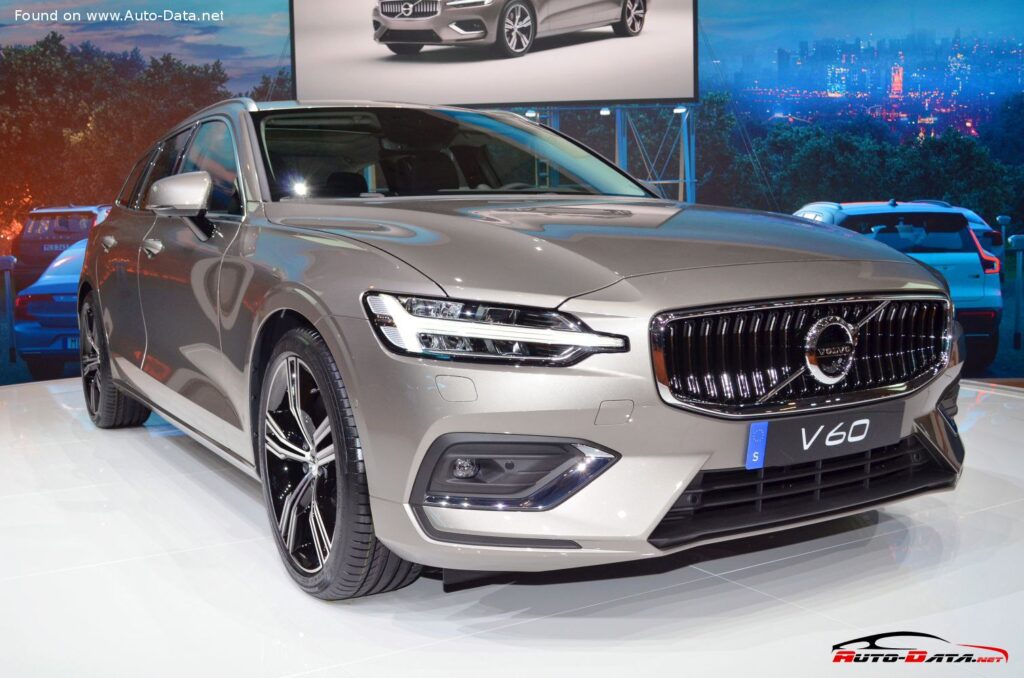
The second-generation Volvo V60 is a masterclass in contemporary Scandinavian design, characterized by clean lines, elegant proportions, and a strong visual presence. Its station wagon (estate) body type is inherently practical, offering five doors and comfortable seating for five occupants. The V60 II adopted Volvo’s latest design language, featuring the signature “Thor’s Hammer” LED daytime running lights, a prominent grille with the iconic Volvo iron mark, and a sleek, elongated profile that belies its substantial cargo capacity.
Inside, the V60 II continued the theme of minimalist luxury and ergonomic design. High-quality materials, meticulous craftsmanship, and intuitive technology defined the cabin experience. While specific interior features vary by trim, standard elements would have included a vertically oriented Sensus Connect infotainment system, providing access to navigation, media, and connectivity features. Volvo’s commitment to safety is legendary, and the V60 II was no exception, equipped with a comprehensive suite of active and passive safety systems. These likely included City Safety with steering support, Run-off Road Mitigation, Oncoming Lane Mitigation, and various driver-assist technologies, making it one of the safest vehicles in its segment.
The V60’s practicality is evident in its cargo capacity, offering a minimum trunk space of 841 liters (29.7 cu. ft.) with the rear seats up, expanding to a generous 1364 liters (48.17 cu. ft.) when the rear seats are folded. This ample space, coupled with a maximum roof load of 165.35 lbs (75 kg) and a permitted trailer load with brakes of 3527.4 to 4409.25 lbs (1600-2000 kg), underscored its versatility as a family and lifestyle vehicle. Its dimensions—187.44 inches (4761 mm) in length, 72.83 inches (1850 mm) in width (80.31 inches or 2040 mm including mirrors), and 56.18 inches (1427 mm) in height—contributed to its dynamic yet stable stance. The 113.07-inch (2872 mm) wheelbase provided a spacious interior and a composed ride, while a respectable ground clearance of 5.04 inches (128 mm) offered adequate clearance for varied road conditions. The car’s aerodynamic efficiency was also commendable, with a drag coefficient (Cd) of 0.29.
Technical Specifications: Volvo V60 II 2.0 D3 (150 Hp) Automatic
| Category | Specification | US Equivalent |
|---|---|---|
| General Information | ||
| Brand | Volvo | |
| Model | V60 | |
| Generation | V60 II | |
| Engine Type | 2.0 D3 (150 Hp) Automatic | |
| Production Start | July 2018 | |
| Production End | July 2020 | |
| Powertrain Architecture | Internal Combustion Engine | |
| Body Type | Station Wagon (Estate) | |
| Seats | 5 | |
| Doors | 5 | |
| Performance Specifications | ||
| Fuel Type | Diesel | |
| Combined Fuel Consumption (WLTP) | 5.5-6.2 l/100 km | 42.8 – 37.9 US mpg |
| Combined Fuel Consumption (Economy) | 4.6-4.8 l/100 km | 51.1 – 49 US mpg |
| CO2 Emissions (WLTP) | 143-162 g/km | |
| Acceleration 0-60 mph | 9.4 seconds | |
| Acceleration 0-100 km/h | 9.9 seconds | |
| Maximum Speed | 205 km/h | 127.38 mph |
| Engine Specifications | ||
| Power | 150 Hp @ 3750 rpm | |
| Power per Liter | 76.2 Hp/l | |
| Torque | 320 Nm @ 1750-3000 rpm | 236.02 lb.-ft. @ 1750-3000 rpm |
| Engine Layout | Front, Transverse | |
| Engine Model/Code | D4204T16 | |
| Engine Displacement | 1969 cm³ | 2.0 Liters (120.16 cu. in.) |
| Number of Cylinders | 4 | |
| Engine Configuration | Inline | |
| Cylinder Bore | 82 mm | 3.23 in. |
| Piston Stroke | 93.2 mm | 3.67 in. |
| Compression Ratio | 16:1 | |
| Valves per Cylinder | 4 | |
| Fuel Injection System | Diesel Commonrail | |
| Engine Aspiration | Turbocharger, Intercooler | |
| Engine Oil Capacity | 5.2 l | 5.49 US qt |
| Space, Volume, and Weights | ||
| Trunk (Boot) Space – Minimum | 841 l | 29.7 cu. ft. |
| Trunk (Boot) Space – Maximum | 1364 l | 48.17 cu. ft. |
| Fuel Tank Capacity | 55 l | 14.53 US gal |
| Max. Roof Load | 75 kg | 165.35 lbs. |
| Permitted Trailer Load with Brakes (12%) | 1600-2000 kg | 3527.4 – 4409.25 lbs. |
| Dimensions | ||
| Length | 4761 mm | 187.44 in. |
| Width | 1850 mm | 72.83 in. |
| Width with Mirrors Folded | 1916 mm | 75.43 in. |
| Width Including Mirrors | 2040 mm | 80.31 in. |
| Height | 1427 mm | 56.18 in. |
| Wheelbase | 2872 mm | 113.07 in. |
| Front Track | 1593-1610 mm | 62.72 – 63.39 in. |
| Rear Track | 1593-1610 mm | 62.72 – 63.39 in. |
| Ride Height (Ground Clearance) | 128 mm | 5.04 in. |
| Drag Coefficient (Cd) | 0.29 | |
| Minimum Turning Circle (Turning Diameter) | 11.0-11.7 m | 36.09 – 38.39 ft. |
| Drivetrain, Brakes, and Suspension Specifications | ||
| Drivetrain Architecture | Internal combustion engine (ICE) drives the front wheels. | |
| Drive Wheel | Front Wheel Drive | |
| Number of Gears and Type of Gearbox | 8 gears, Automatic Transmission | |
| Front Suspension | Double Wishbone | |
| Rear Suspension | Leaf Spring | |
| Front Brakes | Ventilated Discs | |
| Rear Brakes | Disc | |
| Assisting Systems | ABS (Anti-lock Braking System) | |
| Steering Type | Steering Rack and Pinion | |
| Power Steering | Electric Steering | |
Legacy and Market Impact of the Volvo V60 II
The Volvo V60 II, and specifically the 2.0 D3 (150 Hp) Automatic variant, played a crucial role in Volvo’s strategy to solidify its position as a premium alternative in the European market. It competed directly with established German rivals such as the BMW 3 Series Touring, Mercedes-Benz C-Class Estate, and Audi A4 Avant. The V60 distinguished itself through its unique blend of Scandinavian design, unparalleled safety credentials, and practical versatility, often offering a more understated yet equally luxurious experience than its German counterparts.
In a market increasingly dominated by SUVs, the V60 II championed the enduring appeal of the station wagon. Its elegant proportions and dynamic driving characteristics, combined with the efficient and torque-rich D3 diesel engine, made it an ideal choice for European families and business users who valued space, fuel economy, and a sophisticated driving experience. The model’s reputation for robust build quality, long-term reliability, and advanced safety features further enhanced its market standing. While diesel engines faced increasing scrutiny towards the end of its production run, the D3 engine remained a strong performer in its segment, offering a compelling balance of power and efficiency.
The V60 II’s impact extended beyond sales figures; it helped reinforce Volvo’s brand identity as a leader in design and safety innovation. It demonstrated that practicality could be stylish, and that a premium vehicle could offer genuine utility without compromising on luxury or performance. The success of this generation paved the way for future Volvo models, including electrified variants, by establishing a strong foundation of engineering excellence and consumer trust. Even after its specific D3 variant ceased production in 2020, the V60 II continued to be a significant model in Volvo’s lineup, evolving with new powertrains and technologies, and maintaining its legacy as a highly respected and desirable premium wagon.