The Volvo V60 II 2.0 D3 (150 Hp) AWD Automatic: A Premium European Wagon
The Volvo V60 II 2.0 D3 (150 Hp) AWD Automatic represents the second generation of Volvo’s mid-size premium station wagon, a vehicle deeply rooted in the brand’s heritage of practicality, safety, and sophisticated design. Launched in July 2018 and produced through April 2019 in this specific configuration, the V60 II quickly established itself as a strong contender in the highly competitive European premium D-segment. While this particular diesel, all-wheel-drive variant with its 150 horsepower D3 engine was primarily tailored for European markets, it embodies Volvo’s global commitment to advanced engineering, elegant aesthetics, and robust performance. This model, a five-door, five-seat station wagon, offered a compelling blend of efficiency, utility, and a refined driving experience, particularly appealing to consumers seeking a versatile family vehicle with a touch of luxury and all-weather capability.
Engine and Performance: The D3 Powertrain in the Volvo V60 II
At the heart of the Volvo V60 II 2.0 D3 AWD Automatic lies Volvo’s sophisticated 2.0-liter (1969 cm³) inline four-cylinder diesel engine, designated D4204T4. This powertrain, a hallmark of Volvo’s Drive-E family, is engineered for a balance of power, efficiency, and environmental responsibility. Utilizing a modern common rail fuel injection system and a twin-turbocharger setup with an intercooler, the engine produces a respectable 150 horsepower at 4250 rpm. Its strength, however, lies in its torque output: a robust 258.15 lb.-ft. (350 Nm) delivered across a broad rev range, ensuring strong, accessible pulling power ideal for both city driving and highway cruising, especially when fully loaded or towing.
Power is seamlessly managed by an 8-speed automatic transmission, providing smooth shifts and contributing significantly to the car’s refined character and fuel efficiency. The All-Wheel Drive (AWD) system enhances traction and stability, making the V60 II a confident performer in diverse weather conditions, from snowy European winters to challenging wet roads.
In terms of acceleration, the V60 II 2.0 D3 AWD Automatic can sprint from 0 to 60 mph in a calculated 9.1 seconds (0-100 km/h in 9.6 seconds), with a maximum speed of 127.38 mph (205 km/h). While not a performance-focused variant, these figures are more than adequate for everyday driving and demonstrate its capability to merge onto highways or overtake with ease. Fuel economy, measured under the WLTP standard, showcases the diesel engine’s inherent efficiency. Combined fuel consumption ranges from 42.8 to 36.2 US mpg (5.5-6.5 l/100 km), with CO2 emissions between 145-169 g/km. These figures underscore its appeal in markets where fuel costs and emissions regulations are significant considerations. The engine also features DOHC valvetrain, a compression ratio of 15.8:1, and an engine oil capacity of 5.49 US quarts, indicating a technically advanced and well-engineered unit.
Design and Features of the Volvo V60 II
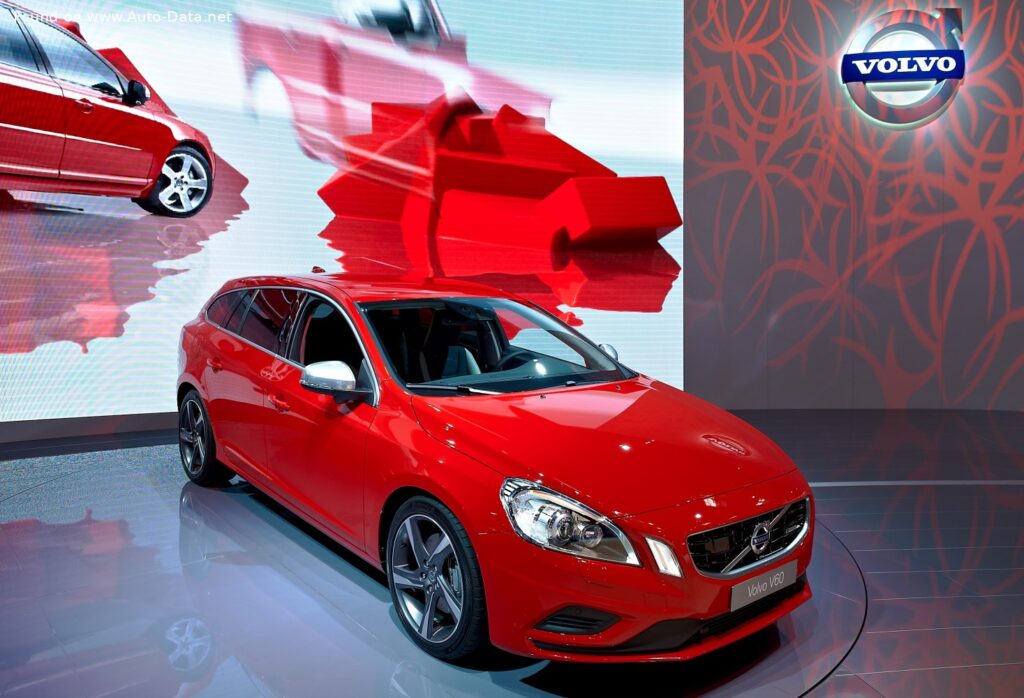
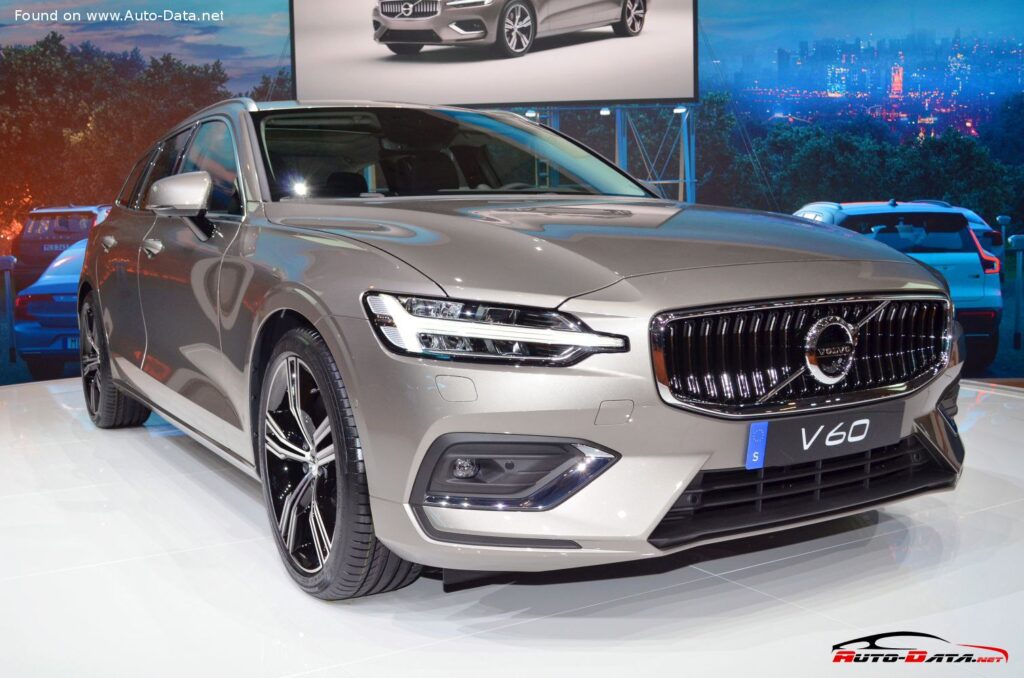
The second-generation Volvo V60 II adopted Volvo’s contemporary design language, first seen on the larger 90-series cars. Its station wagon (or estate) body type is a testament to Volvo’s long-standing expertise in this segment, blending elegant proportions with practical utility. The exterior is characterized by clean lines, a strong shoulder line, and Volvo’s signature “Thor’s Hammer” LED daytime running lights, giving it a distinctive and sophisticated presence. With a length of 187.44 inches (4761 mm) and a width of 72.83 inches (1850 mm), the V60 II strikes a balance between being substantial yet maneuverable. Its 113.07-inch (2872 mm) wheelbase contributes to both interior space and ride comfort.
Inside, the V60 II offers a quintessentially Scandinavian experience: minimalist design, high-quality materials, and exceptional ergonomics. The five-seat configuration provides ample room for passengers, while the station wagon body ensures remarkable cargo flexibility. The trunk space ranges from a generous 18.68 cubic feet (529 liters) with all seats in place, expanding to a cavernous 50.89 cubic feet (1441 liters) when the rear seats are folded down. This makes it an incredibly versatile vehicle for families, outdoor enthusiasts, or anyone needing significant hauling capacity.
Beyond aesthetics and utility, Volvo’s unwavering commitment to safety is evident. While the provided data specifically mentions ABS (Anti-lock Braking System), the V60 II, as a modern Volvo, would have been equipped with a comprehensive suite of advanced safety and driver-assistance systems. These typically include features like City Safety (autonomous emergency braking), Lane Keeping Aid, Run-off Road Mitigation, and various airbags, all designed to protect occupants and prevent accidents. The vehicle also features electric power steering, a rack and pinion steering type, and robust disc brakes (345 mm front, 320 mm rear) for confident stopping power. Its front suspension utilizes a double wishbone setup, while the rear features a leaf spring design, contributing to a comfortable yet composed ride.
Technical Specifications: Volvo V60 II 2.0 D3 (150 Hp) AWD Automatic
| Category | Specification | Metric / US Equivalent |
|---|---|---|
| General Information | ||
| Brand | Volvo | |
| Model | V60 | |
| Generation | V60 II | |
| Type (Engine) | 2.0 D3 (150 Hp) AWD Automatic | |
| Production Start | July, 2018 | |
| Production End | April, 2019 | |
| Powertrain Architecture | Internal Combustion Engine | |
| Body Type | Station wagon (estate) | |
| Seats | 5 | |
| Doors | 5 | |
| Performance Specs | ||
| Fuel Consumption (WLTP Combined) | 5.5-6.5 l/100 km | 42.8 – 36.2 US mpg |
| Fuel Consumption (Combined – NEDC equivalent) | 4.9-5.1 l/100 km | 48 – 46.1 US mpg |
| CO2 Emissions (WLTP) | 145-169 g/km | |
| CO2 Emissions (NEDC equivalent) | 128-135 g/km | |
| Fuel Type | Diesel | |
| Acceleration 0 – 60 mph | 9.1 sec | |
| Acceleration 0 – 100 km/h | 9.6 sec | |
| Maximum Speed | 205 km/h | 127.38 mph |
| Braking Distance 100 km/h – 0 | 35 m | 114.83 ft |
| Engine Specs | ||
| Power | 150 Hp @ 4250 rpm | |
| Power per liter | 76.2 Hp/l | |
| Torque | 350 Nm | 258.15 lb.-ft. |
| Maximum Engine Speed | 5000 rpm | |
| Engine Layout | Front, Transverse | |
| Engine Model/Code | D4204T4 | |
| Engine Displacement | 1969 cm³ | 120.16 cu. in. |
| Number of Cylinders | 4 | |
| Engine Configuration | Inline | |
| Cylinder Bore | 82 mm | 3.23 in. |
| Piston Stroke | 93.2 mm | 3.67 in. |
| Compression Ratio | 15.8:1 | |
| Valves per Cylinder | 4 | |
| Fuel Injection System | Diesel Commonrail | |
| Engine Aspiration | Twin-Turbo, Intercooler | |
| Valvetrain | DOHC | |
| Engine Oil Capacity | 5.2 l | 5.49 US qt |
| Space, Volume and Weights | ||
| Trunk (boot) Space – Minimum | 529 l | 18.68 cu. ft. |
| Trunk (boot) Space – Maximum | 1441 l | 50.89 cu. ft. |
| Fuel Tank Capacity | 60 l | 15.85 US gal |
| AdBlue Tank | 11.5 l | 3.04 US gal |
| Max. Roof Load | 75 kg | 165.35 lbs. |
| Permitted Trailer Load (with brakes, 12%) | 2000 kg | 4409.25 lbs. |
| Permitted Trailer Load (without brakes) | 750 kg | 1653.47 lbs. |
| Dimensions | ||
| Length | 4761 mm | 187.44 in. |
| Width | 1850 mm | 72.83 in. |
| Width with mirrors folded | 1916 mm | 75.43 in. |
| Width including mirrors | 2040 mm | 80.31 in. |
| Height | 1432 mm | 56.38 in. |
| Wheelbase | 2872 mm | 113.07 in. |
| Front Track | 1593-1610 mm | 62.72 – 63.39 in. |
| Rear Track | 1593-1610 mm | 62.72 – 63.39 in. |
| Ride Height (Ground Clearance) | 142 mm | 5.59 in. |
| Drag Coefficient (Cd) | 0.29 | |
| Minimum Turning Circle | 11.0-11.7 m | 36.09 – 38.39 ft. |
| Drivetrain, Brakes and Suspension Specs | ||
| Drive Wheel | All Wheel Drive (4×4) | |
| Number of Gears & Type | 8 gears, automatic transmission | |
| Front Suspension | Double wishbone | |
| Rear Suspension | Leaf spring | |
| Front Brakes | Disc, 345 mm | |
| Rear Brakes | Disc, 320 mm | |
| Assisting Systems | ABS (Anti-lock braking system) | |
| Steering Type | Steering rack and pinion | |
| Power Steering | Electric Steering | |
| Wheel Rims Size | 16; 17; 18 | |
Legacy and Market Impact of the Volvo V60 II
The Volvo V60 II, particularly in its 2.0 D3 (150 Hp) AWD Automatic configuration, solidified Volvo’s position as a leader in the premium mid-size wagon segment, especially within its primary European market. In regions where diesel engines are still highly valued for their fuel economy and torque characteristics, and where all-wheel drive is often preferred for inclement weather or light towing, this V60 variant was a highly attractive proposition. It directly competed with established German rivals such as the BMW 3 Series Touring, Mercedes-Benz C-Class Estate, and Audi A4 Avant, offering a distinctive Scandinavian alternative that emphasized design, comfort, and safety.
Volvo’s reputation for building exceptionally safe vehicles is a cornerstone of its brand identity, and the V60 II continued this legacy. Its robust construction and comprehensive suite of safety technologies (even beyond the basic ABS listed) provided a strong selling point for families and safety-conscious buyers. Furthermore, the V60 II’s elegant and understated design, both inside and out, resonated with consumers looking for a premium experience without overt ostentation. The interior, with its clean lines, high-quality materials, and intuitive Sensus infotainment system (a common feature across the V60 II range), created a serene and luxurious cabin environment.
The D3 engine, while not the most powerful in the V60 lineup, was perfectly suited for the daily demands of European drivers, offering a compelling balance of efficiency for long journeys and sufficient power for varied driving conditions. The 8-speed automatic transmission further enhanced its appeal, providing a smooth and effortless driving experience. The AWD system added an extra layer of confidence and capability, particularly in countries with harsher winters or those who regularly encounter unpaved roads.
While this specific diesel AWD variant was not typically offered in the United States, where gasoline engines and SUVs dominate the market, its impact in Europe was significant. It represented Volvo’s continued commitment to the station wagon form factor, a segment that, despite the global SUV craze, remains vitally important to European consumers. The V60 II helped reinforce Volvo’s image as a premium automaker offering stylish, practical, and technologically advanced vehicles. Its success contributed to Volvo’s broader resurgence in the late 2010s, setting the stage for future electrified offerings and maintaining the brand’s unique identity in the global automotive landscape. The V60 II 2.0 D3 (150 Hp) AWD Automatic, therefore, stands as an important chapter in Volvo’s modern history, a testament to its engineering prowess and its understanding of specific market needs.