The Volvo V60 II 2.0 T5 (250 Hp) Automatic: A Premium Mid-Size Wagon Defined by Scandinavian Luxury and Performance
The
Volvo V60 II 2.0 T5 (250 Hp) Automatic
represents the second generation of Volvo’s acclaimed premium mid-size station wagon, a vehicle that masterfully blends elegant Scandinavian design with robust engineering and cutting-edge safety features. Launched in July 2018, the V60 II quickly established itself as a compelling alternative in a market increasingly dominated by SUVs, offering a sophisticated driving experience and unparalleled practicality. This specific variant, powered by the potent 2.0-liter T5 engine, was produced until March 2020, embodying Volvo’s commitment to refined performance within its versatile wagon platform. Built on the brand’s Scalable Product Architecture (SPA) platform, shared with larger models like the S90, V90, and XC60, the V60 II benefited from advanced technology, a refined chassis, and a spacious, luxurious interior, reinforcing Volvo’s reputation for understated elegance and functional design.
Engine and Performance: The Heart of the Volvo V60 II
At the core of the
Volvo V60 II 2.0 T5 (250 Hp) Automatic
lies Volvo’s sophisticated Drive-E powertrain, a 2.0-liter turbocharged inline-four engine designated B4204T26. This powerplant is a testament to Volvo’s engineering prowess, delivering a robust 250 horsepower at 5500 rpm and a substantial 258.15 lb.-ft. of torque. The engine’s advanced direct injection system, combined with a turbocharger and intercooler, ensures both responsive acceleration and impressive efficiency for its class.
Power is seamlessly delivered to the front wheels via a smooth and precise 8-speed automatic transmission, a configuration that optimizes both performance and fuel economy. This powertrain allows the V60 T5 to accelerate from 0 to 60 mph in a brisk 6.4 seconds, making it a surprisingly agile performer for a family-oriented wagon. The top speed is electronically limited to 146.02 mph, underscoring its capabilities on the open road. Despite its spirited performance, Volvo has also focused on efficiency, with a combined WLTP fuel consumption ranging from 28.3 to 32.2 US mpg, making it a responsible choice for daily driving and longer journeys. The engine’s maximum speed of 6000 rpm and a high compression ratio of 10.8:1 further highlight its modern design and efficiency focus, while the DOHC valvetrain ensures optimal valve timing for power and fuel management.
Design and Features of the Volvo V60 II
Scandinavian Elegance and Practicality
The design of the
Volvo V60 II
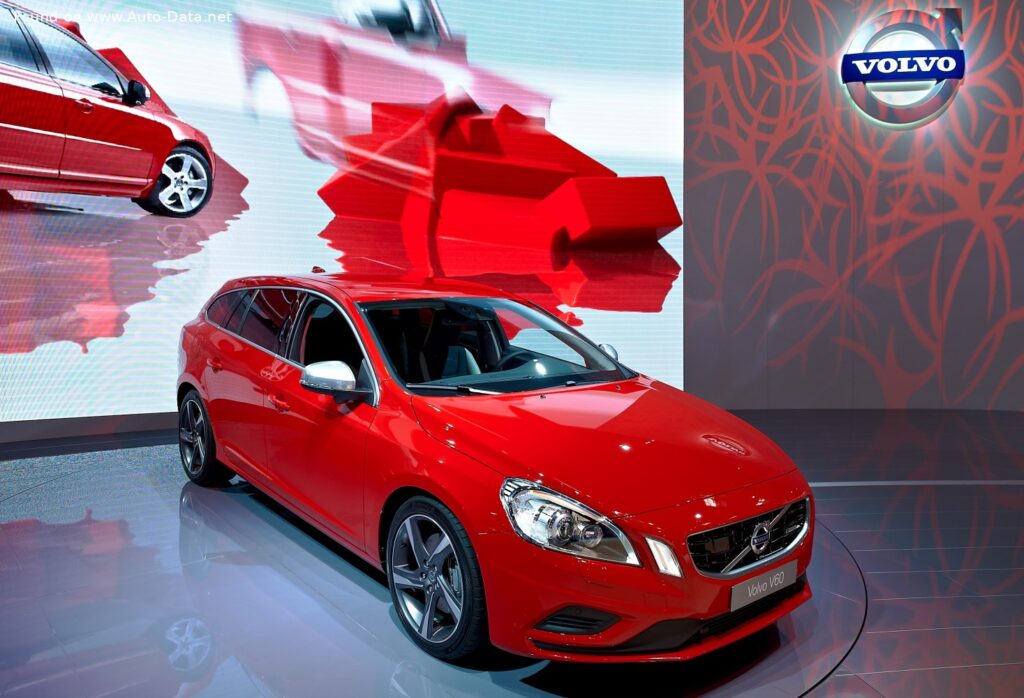
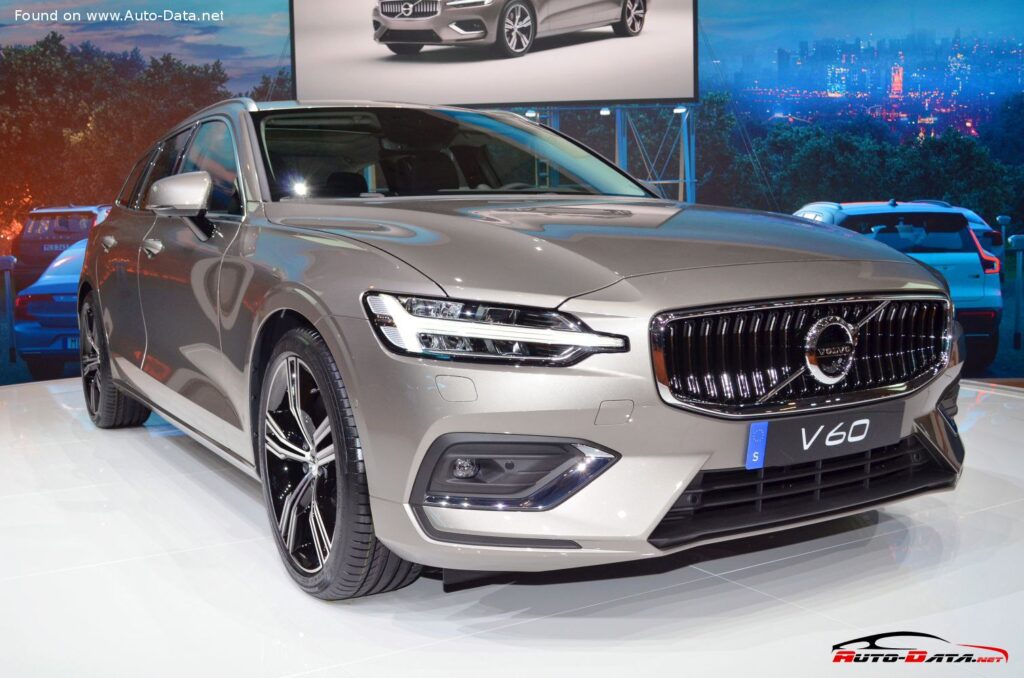
is a masterclass in modern Scandinavian aesthetics. As a five-door station wagon (often referred to as an estate in other markets), it maintains Volvo’s iconic long-roof profile while integrating contemporary design cues. The exterior is characterized by clean lines, a muscular stance, and distinctive elements such as the “Thor’s Hammer” LED daytime running lights, which give the V60 an unmistakable presence. The sleek roofline, despite its wagon body, contributes to an excellent drag coefficient of 0.29, enhancing both aerodynamics and fuel efficiency.
Inside, the V60 II offers a sanctuary of refined comfort and intuitive technology. The cabin, designed for five occupants, showcases premium materials, meticulous craftsmanship, and an ergonomic layout. The centerpiece of the interior is the Sensus Connect infotainment system, displayed on a vertically oriented touchscreen, which provides access to navigation, media, and various vehicle settings. A digital instrument cluster further enhances the modern feel.
Practicality is paramount in the V60. The trunk space is generous, offering 18.68 cubic feet with all seats in place, expanding to a cavernous 50.89 cubic feet with the rear seats folded down. This adaptability makes it ideal for families, adventurers, or anyone requiring substantial cargo capacity without compromising on style or driving dynamics. Safety, a hallmark of the Volvo brand, is comprehensively addressed with a suite of advanced driver-assistance systems. While specific features can vary by trim, the V60 II typically includes systems like City Safety (autonomous emergency braking with pedestrian, cyclist, and large animal detection), Lane Keeping Aid, and available Pilot Assist, which provides semi-autonomous driving capabilities on well-marked roads, enhancing both convenience and occupant protection. The vehicle’s robust chassis, constructed with high-strength steel, further contributes to its exceptional passive safety credentials.
Technical Specifications: Volvo V60 II 2.0 T5 (250 Hp) Automatic
| Category | Specification | Value |
|---|---|---|
General Information |
||
| Brand | Volvo | |
| Model | V60 | |
| Generation | V60 II | |
| Type (Engine) | 2.0 T5 (250 Hp) Automatic | |
| Start of Production | July, 2018 | |
| End of Production | March, 2020 | |
| Powertrain Architecture | Internal Combustion engine | |
| Body type | Station wagon (estate) | |
| Seats | 5 | |
| Doors | 5 | |
Performance Specifications |
||
| Fuel Type | Petrol (Gasoline) | |
| Fuel Consumption (WLTP Combined) | 7.3-8.3 l/100 km | 32.2 – 28.3 US mpg |
| CO2 Emissions (WLTP Combined) | 166-187 g/km | |
| Acceleration 0-60 mph | 6.4 sec | |
| Acceleration 0-100 km/h | 6.7 sec | |
| Maximum Speed | 235 km/h | 146.02 mph |
| Braking Distance (100 km/h – 0) | 35 m | |
Engine Specifications |
||
| Power | 250 Hp @ 5500 rpm | |
| Power per liter | 127 Hp/l | |
| Torque | 350 Nm | 258.15 lb.-ft. |
| Maximum Engine Speed | 6000 rpm | |
| Engine Layout | Front, Transverse | |
| Engine Model/Code | B4204T26 | |
| Engine Displacement | 1969 cm3 | 120.16 cu. in. |
| Number of Cylinders | 4 | |
| Engine Configuration | Inline | |
| Cylinder Bore | 82 mm | 3.23 in. |
| Piston Stroke | 93.2 mm | 3.67 in. |
| Compression Ratio | 10.8:1 | |
| Number of Valves per Cylinder | 4 | |
| Fuel Injection System | Direct injection | |
| Engine Aspiration | Turbocharger, Intercooler | |
| Valvetrain | DOHC | |
| Engine Oil Capacity | 5.6 l | 5.92 US qt |
Space, Volume and Weights |
||
| Trunk (boot) Space – Minimum | 529 l | 18.68 cu. ft. |
| Trunk (boot) Space – Maximum | 1441 l | 50.89 cu. ft. |
| Fuel Tank Capacity | 55 l | 14.53 US gal |
| Max. Roof Load | 75 kg | 165.35 lbs. |
| Permitted Trailer Load with Brakes (12%) | 1800 kg | 3968.32 lbs. |
| Permitted Trailer Load without Brakes | 750 kg | 1653.47 lbs. |
Dimensions |
||
| Length | 4761 mm | 187.44 in. |
| Width | 1850 mm | 72.83 in. |
| Width with Mirrors Folded | 1916 mm | 75.43 in. |
| Width Including Mirrors | 2040 mm | 80.31 in. |
| Height | 1432 mm | 56.38 in. |
| Wheelbase | 2872 mm | 113.07 in. |
| Front Track | 1593-1610 mm | 62.72 – 63.39 in. |
| Rear (Back) Track | 1593-1610 mm | 62.72 – 63.39 in. |
| Ride Height (Ground Clearance) | 142 mm | 5.59 in. |
| Drag Coefficient (Cd) | 0.29 | |
| Minimum Turning Circle (Turning Diameter) | 11.0-11.7 m | 36.09 – 38.39 ft. |
Drivetrain, Brakes and Suspension Specifications |
||
| Drivetrain Architecture | The Internal combustion engine (ICE) drives the front wheels of the vehicle. | |
| Drive Wheel | Front wheel drive | |
| Number of Gears and Type of Gearbox | 8 gears, automatic transmission | |
| Front Suspension | Double wishbone | |
| Rear Suspension | Leaf spring | |
| Front Brakes | Disc, 345 mm | |
| Rear Brakes | Disc, 320 mm | |
| Assisting Systems | ABS (Anti-lock braking system) | |
| Steering Type | Steering rack and pinion | |
| Power Steering | Electric Steering | |
| Wheel Rims Size | 16; 17; 18 | |
Legacy and Market Impact
The
Volvo V60 II 2.0 T5 (250 Hp) Automatic
holds a significant place in Volvo’s modern portfolio and within the broader premium automotive market. It continues Volvo’s long-standing tradition of producing highly capable and elegantly designed station wagons, a segment where the brand has historically excelled. In an era where SUVs dominate sales, the V60 II serves as a compelling argument for the enduring appeal of the wagon body style, offering a lower center of gravity for superior driving dynamics, often better fuel efficiency, and comparable cargo utility to many crossovers.
In the North American market, where wagons are a niche offering, the V60 II specifically targeted discerning buyers looking for a sophisticated, practical, and distinctive vehicle that stands apart from the SUV crowd. Its competitors primarily included other premium European wagons such as the Audi A4 Allroad (though the V60 Cross Country was a more direct competitor to the Allroad, the standard V60 still vied for similar customers), the BMW 3 Series Touring (though less commonly sold in the US), and the Mercedes-Benz C-Class Wagon. The V60 differentiated itself with its uniquely Scandinavian design language, an unwavering focus on safety, and a luxurious yet understated interior.
The V60 II’s adoption of the SPA platform was crucial to its success, allowing it to inherit the advanced technology, safety systems, and refined driving characteristics of its larger siblings. This platform provided a solid foundation for its excellent ride comfort, precise handling, and impressive crashworthiness. The 2.0 T5 engine, part of Volvo’s modular Drive-E family, demonstrated the brand’s commitment to efficiency without sacrificing performance, contributing to a reduced environmental footprint while delivering a spirited driving experience.
Ultimately, the
Volvo V60 II 2.0 T5 (250 Hp) Automatic
reinforced Volvo’s reputation as a leader in premium wagons, offering a harmonious blend of luxury, practicality, safety, and engaging performance. It solidified its position as a thoughtful choice for consumers seeking a vehicle that embodies modern elegance, advanced technology, and a commitment to family-friendly versatility, all wrapped in a distinctly Swedish package. Its impact lies in proving that the station wagon remains a relevant and desirable form factor, especially when executed with such a high degree of craftsmanship and innovation.