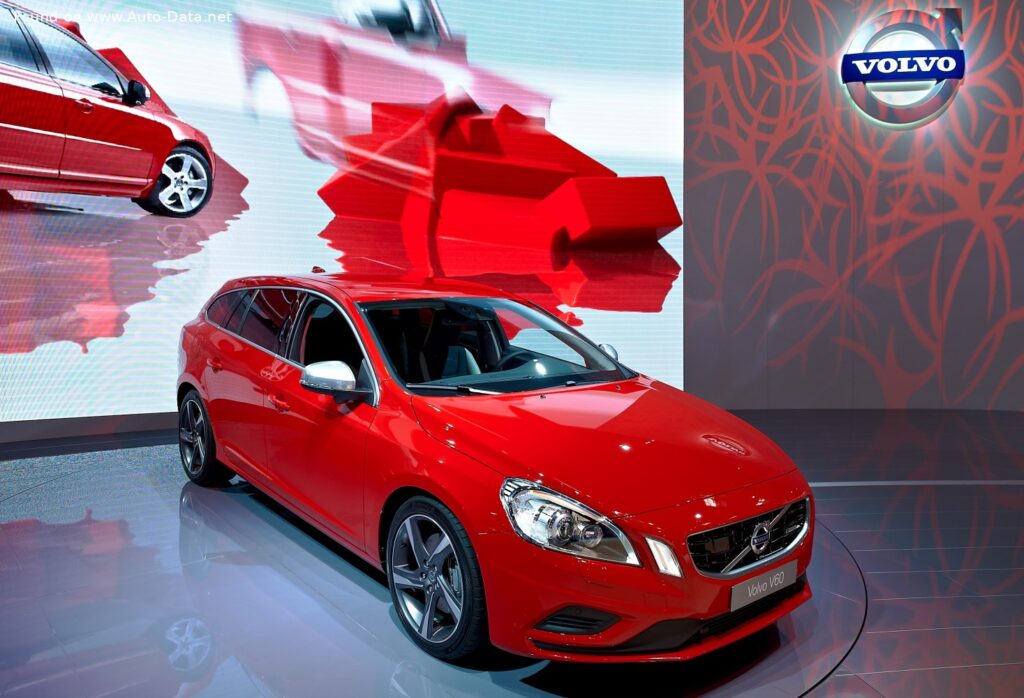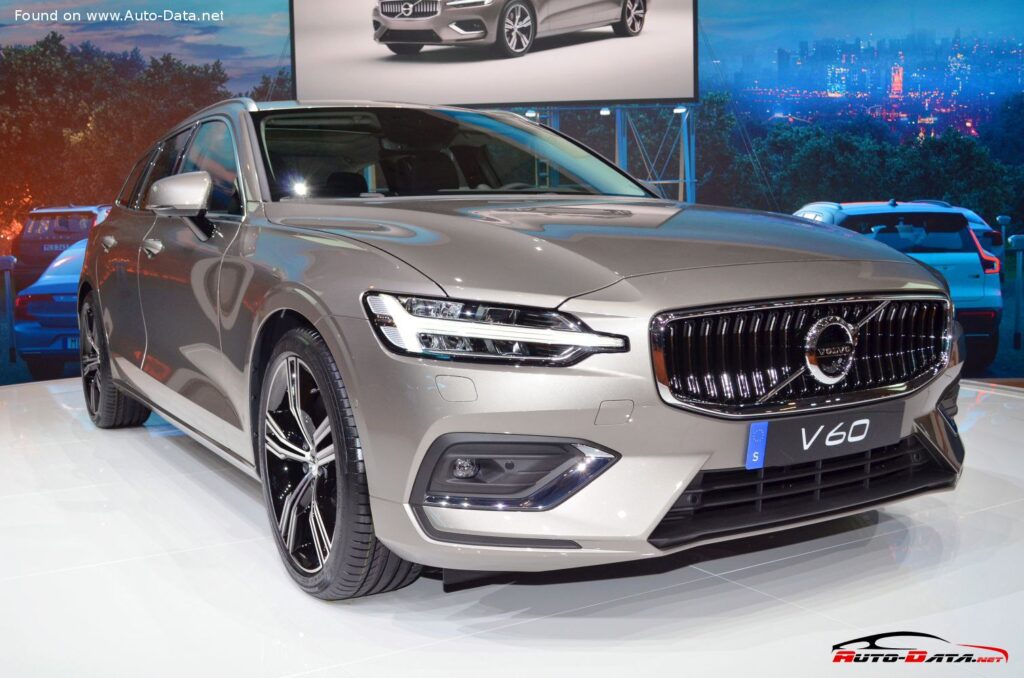
The Volvo V60 II 2.0 T8 TwEn (303 Hp) Plug-in Hybrid AWD Geartronic: A Synergy of Power and Efficiency
The Volvo V60 II 2.0 T8 Twin Engine (TwEn) Plug-in Hybrid AWD Geartronic represents a significant offering in the premium mid-size station wagon segment, showcasing Volvo’s commitment to electrification, performance, and its renowned safety and design philosophy. Introduced in April 2019 as part of the second generation V60 lineup, this specific powertrain variant quickly established itself as a compelling option for discerning consumers seeking a blend of dynamic driving, exceptional fuel economy, and environmental responsibility. Produced until September 2021, the V60 T8 Twin Engine effectively positioned itself as a sophisticated, family-friendly vehicle that did not compromise on either luxury or sustainability, particularly in markets like Europe and North America where premium wagons retain a strong appeal.
This iteration of the V60, built on Volvo’s modular Scalable Product Architecture (SPA) platform, leveraged advanced hybrid technology to deliver robust power output while maintaining impressive efficiency metrics. The “T8 Twin Engine” designation highlights its innovative powertrain architecture, combining a potent gasoline engine driving the front wheels with an electric motor powering the rear wheels, creating an intelligent all-wheel-drive system. This setup allowed for versatile driving modes, from pure electric commuting to high-performance combined operation, making the Volvo V60 II 2.0 T8 TwEn (303 Hp) Plug-in Hybrid AWD Geartronic a versatile and forward-thinking choice in its class.
Engineering and Performance of the Volvo V60 II 2.0 T8 TwEn (303 Hp) Plug-in Hybrid AWD Geartronic
Powertrain and Dynamics
At the heart of the Volvo V60 II 2.0 T8 TwEn is its sophisticated Plug-in Hybrid Electric Vehicle (PHEV) powertrain architecture. This system ingeniously combines a 2.0-liter (1969 cm3, 120.16 cu. in.) inline four-cylinder internal combustion engine (ICE) with an electric motor. The gasoline engine, identified by the model code B4204T34, is a marvel of engineering, featuring both turbocharging and supercharging, along with an intercooler. This dual-charging setup allows the engine to produce a formidable 303 horsepower at 6000 rpm and 295.02 lb.-ft. (400 Nm) of torque between 2200-4800 rpm, delivering a broad powerband and immediate responsiveness. The engine is transversely mounted at the front and drives the front wheels.
Complementing the ICE is an 87 horsepower electric motor, located on the rear axle, providing 177.01 lb.-ft. (240 Nm) of instantaneous torque from 0-3000 rpm. This configuration creates an efficient and capable all-wheel-drive (AWD) system, where the ICE powers the front wheels and the electric motor drives the rear. The vehicle is equipped with an 8-speed Geartronic automatic transmission, ensuring smooth and rapid gear changes that enhance both performance and fuel efficiency.
The combined output of this powertrain allows the V60 T8 to achieve impressive performance figures for a wagon of its size. Acceleration from 0 to 60 mph is dispatched in a swift 4.7 seconds (0-100 km/h in 4.9 seconds), making it surprisingly quick off the line. The top speed is electronically limited to 155.34 mph (250 km/h). Despite its performance credentials, the T8 Twin Engine maintains an exceptional focus on efficiency, with a combined fuel consumption (WLTP) ranging from 1.7-2.4 liters per 100 km, equivalent to an outstanding 138.4 – 98 US mpg. CO2 emissions are remarkably low at 38-55 g/km (WLTP), meeting stringent Euro 6d-TEMP emission standards.
Electric Driving Capability
The PHEV system is powered by an 11.6 kWh gross capacity Lithium-ion (Li-Ion) battery, strategically located in the central tunnel to optimize weight distribution and cabin space. This battery allows the V60 T8 to achieve an all-electric range (WLTP) of 31.07 – 36.66 miles (50-59 km), making daily commutes and urban driving possible on electric power alone. The maximum speed in electric-only mode is 77.67 mph (125 km/h). Average energy consumption (WLTP) is rated at 15.7-16.6 kWh/100 km, translating to an impressive 133 – 126 MPGe, underscoring its efficiency as an electric vehicle. The ability to run in full electric, internal combustion engine only, or mixed mode provides drivers with significant flexibility and control over their energy consumption.
Design and Features
Scandinavian Aesthetics and Practicality
The Volvo V60 II, launched in 2018, embodies Volvo’s modern design language, characterized by clean lines, elegant proportions, and a strong emphasis on functionality. As a five-door, five-seat station wagon (estate), it offers a compelling blend of sporty aesthetics and practical utility. Its overall length of 187.44 inches (4761 mm), width of 72.83 inches (1850 mm), and height of 56.18 inches (1427 mm) provide a substantial road presence while maintaining a sleek profile. The distinctive “Thor’s Hammer” LED daytime running lights and the prominent Volvo iron mark grille are signature elements that define its contemporary Scandinavian identity.
Inside, the V60 T8 offers a spacious and meticulously crafted cabin. Volvo’s commitment to minimalist design and high-quality materials is evident throughout, with comfortable seating, intuitive controls, and advanced infotainment systems. The trunk space is highly practical, offering a minimum of 18.68 cu. ft. (529 liters) with the rear seats up, expanding to a generous 50.89 cu. ft. (1441 liters) when folded, making it ideal for families and active lifestyles.
Safety and Technology
As expected from Volvo, safety is paramount in the V60 T8. While specific assisting systems beyond ABS are not fully detailed in the provided data, the V60 II generation is known for incorporating a comprehensive suite of advanced driver-assistance systems (ADAS), including City Safety (automatic emergency braking with pedestrian, cyclist, and large animal detection), Pilot Assist (semi-autonomous driving aid), Run-off Road Mitigation, and Lane Keeping Aid. These systems contribute to Volvo’s reputation as a leader in automotive safety.
Technological features extend to the driving experience with electric power steering and a refined chassis setup. The front suspension utilizes a double wishbone design with a transverse stabilizer, while the rear features a transverse stabilizer and a leaf spring, providing a comfortable yet engaging ride. Braking performance is handled by ventilated discs at both the front (345×30 mm) and rear (320×20 mm), ensuring strong stopping power. The vehicle rides on standard 235/45 R18 or optional 235/40 R19 tires, mounted on 8J x 18 or 8J x 19 wheel rims, respectively, contributing to both aesthetics and handling.
Technical Specifications: Volvo V60 II 2.0 T8 TwEn (303 Hp) Plug-in Hybrid AWD Geartronic
| Category | Specification |
|---|---|
| General Information | |
| Brand | Volvo |
| Model | V60 |
| Generation | V60 II |
| Type (Engine) | 2.0 T8 TwEn (303 Hp) Plug-in Hybrid AWD Geartronic |
| Start of Production | April, 2019 |
| End of Production | September, 2021 |
| Powertrain Architecture | PHEV (Plug-in Hybrid Electric Vehicle) |
| Body type | Station wagon (estate) |
| Seats | 5 |
| Doors | 5 |
| Performance Specs | |
| Combined Fuel Consumption (WLTP) | 1.7-2.4 l/100 km (138.4 – 98 US mpg) |
| CO2 emissions (WLTP) | 38-55 g/km |
| Fuel Consumption (NEDC) | 1.7-1.8 l/100 km (138.4 – 130.7 US mpg) |
| CO2 emissions (NEDC) | 39-42 g/km |
| Fuel Type | Petrol / electricity |
| Acceleration 0 – 60 mph | 4.7 sec |
| Acceleration 0 – 100 km/h | 4.9 sec |
| Maximum Speed | 155.34 mph (250 km/h) |
| Emission Standard | Euro 6d-TEMP |
| Weight-to-Power Ratio | 6.6 kg/Hp (152.6 Hp/tonne) |
| Weight-to-Torque Ratio | 5 kg/Nm (201.4 Nm/tonne) |
| Electric Car and Hybrid Specs | |
| Gross Battery Capacity | 11.6 kWh |
| Battery Voltage | 400 V |
| Battery Technology | Lithium-ion (Li-Ion) |
| Battery Location | In the central tunnel |
| All-Electric Range (WLTP) | 31.07 – 36.66 mi (50-59 km) |
| All-Electric Range (NEDC) | 33.55 – 34.8 mi (54-56 km) |
| Average Energy Consumption (WLTP) | 15.7-16.6 kWh/100 km (133 – 126 MPGe) |
| Average Energy Consumption (NEDC) | 15.8-16.5 kWh/100 km (133 – 127 MPGe) |
| Max Speed (Electric) | 77.67 mph (125 km/h) |
| Electric Motor Power | 87 Hp @ 7000 rpm |
| Electric Motor Torque | 177.01 lb.-ft. (240 Nm) @ 0-3000 rpm |
| Electric Motor Location | Rear axle, Transverse |
| Internal Combustion Engine Specs | |
| Power | 303 Hp @ 6000 rpm |
| Power per liter | 153.9 Hp/l |
| Torque | 295.02 lb.-ft. (400 Nm) @ 2200-4800 rpm |
| Engine Layout | Front, Transverse |
| Engine Model/Code | B4204T34 |
| Engine Displacement | 120.16 cu. in. (1969 cm3) |
| Number of Cylinders | 4 |
| Engine Configuration | Inline |
| Cylinder Bore | 3.23 in. (82 mm) |
| Piston Stroke | 3.67 in. (93.2 mm) |
| Compression Ratio | 10.3:1 |
| Number of Valves per Cylinder | 4 |
| Fuel Injection System | Direct injection |
| Engine Aspiration | Turbocharging and Supercharger, Intercooler |
| Valvetrain | DOHC |
| Engine Oil Capacity | 5.6 l (5.92 US qt) |
| Engine Systems | Start & Stop System, Particulate filter |
| Space, Volume and Weights | |
| Kerb Weight | 4378.38 lbs. (1986 kg) |
| Max. Weight | 5621.79 lbs. (2550 kg) |
| Max Load | 1243.41 lbs. (564 kg) |
| Trunk (boot) space – minimum | 18.68 cu. ft. (529 l) |
| Trunk (boot) space – maximum | 50.89 cu. ft. (1441 l) |
| Fuel Tank Capacity | 15.85 US gal (60 l) |
| Max. Roof Load | 165.35 lbs. (75 kg) |
| Permitted Trailer Load with Brakes (12%) | 4409.25 lbs. (2000 kg) |
| Permitted Trailer Load without Brakes | 1653.47 lbs. (750 kg) |
| Permitted Towbar Download | 220.46 lbs. (100 kg) |
| Dimensions | |
| Length | 187.44 in. (4761 mm) |
| Width | 72.83 in. (1850 mm) |
| Width with mirrors folded | 75.43 in. (1916 mm) |
| Width including mirrors | 80.31 in. (2040 mm) |
| Height | 56.18 in. (1427 mm) |
| Wheelbase | 113.07 in. (2872 mm) |
| Front Track | 63.39 in. (1610 mm) |
| Rear (Back) Track | 63.39 in. (1610 mm) |
| Front Overhang | 33.39 in. (848 mm) |
| Rear Overhang | 40.98 in. (1041 mm) |
| Ride Height (Ground Clearance) | 5.04 in. (128 mm) |
| Drag Coefficient (Cd) | 0.29 |
| Minimum Turning Circle (Turning Diameter) | 37.07 ft. (11.3 m) |
| Drivetrain, Brakes and Suspension Specs | |
| Drivetrain Architecture | ICE permanently drives front wheels; electric motor drives rear wheels; capable of full electric, ICE-only, or mixed mode. |
| Drive Wheel | All wheel drive (4×4) |
| Number of Gears and Type of Gearbox | 8 gears, automatic transmission Geartronic |
| Front Suspension | Double wishbone, Transverse stabilizer |
| Rear Suspension | Transverse stabilizer, Leaf spring |
| Front Brakes | Ventilated discs, 345×30 mm |
| Rear Brakes | Ventilated discs, 320×20 mm |
| Assisting Systems | ABS (Anti-lock braking system) |
| Steering Type | Steering rack and pinion |
| Power Steering | Electric Steering |
| Tire Sizes | 235/45 R18; 235/40 R19 |
| Wheel Rims Size | 8J x 18; 8J x 19 |
Legacy and Market Impact
The Volvo V60 II 2.0 T8 TwEn (303 Hp) Plug-in Hybrid AWD Geartronic carved out a significant niche in the competitive premium mid-size segment. It represented Volvo’s progressive vision for electrification, demonstrating that a plug-in hybrid could offer compelling performance without sacrificing the practicality and luxury expected of a modern Volvo. In its primary markets, particularly Europe and North America, the V60 T8 stood as a strong contender against established German rivals such as the BMW 3 Series Touring (with its 330e variant), the Audi A4 Avant (with its 55 TFSI e quattro), and the Mercedes-Benz C-Class Estate (with its C 300 e).
What set the V60 T8 apart was its unique blend of a powerful twin-charged gasoline engine and an effective electric motor, creating an all-wheel-drive system that was both dynamic and highly efficient. Its impressive all-electric range made it a practical choice for urban commuters looking to reduce their carbon footprint and fuel costs, while the combined power output ensured thrilling performance when needed. This duality resonated with consumers who appreciated Volvo’s commitment to environmental stewardship without compromising on the driving experience or premium feel.
The V60 T8 also played a crucial role in solidifying Volvo’s reputation as a leader in automotive safety and innovative design. Its Scandinavian aesthetic, characterized by understated elegance and functional design, appealed to those seeking an alternative to the often more aggressive styling of its German competitors. The spacious and exquisitely appointed interior, combined with Volvo’s legendary safety features, made it a highly attractive option for families.
While its production run for this specific powertrain variant concluded in September 2021, the V60 T8’s influence is enduring. It laid important groundwork for Volvo’s broader electrification strategy, proving the viability and desirability of high-performance plug-in hybrids. Its success contributed to the wider acceptance of PHEVs in the premium segment and reinforced Volvo’s brand identity as a forward-thinking, safe, and environmentally conscious automaker. The V60 T