As an international automotive expert, I present a detailed analysis of a significant vehicle from Volvo’s modern lineup, emphasizing its technological prowess and market positioning.
The Volvo V60 II 2.0 T8 TwEn (390 Hp) Plug-in Hybrid AWD Geartronic: A Synergy of Performance and Efficiency
The Volvo V60 II, specifically in its 2.0 T8 Twin Engine (TwEn) Plug-in Hybrid AWD Geartronic configuration, represents a pinnacle of Volvo’s engineering philosophy during its production run from October 2018 to April 2019. This second-generation V60, a premium compact executive station wagon, firmly established itself in a competitive segment by offering a compelling blend of sophisticated design, robust performance, and groundbreaking plug-in hybrid efficiency. Designed to cater to discerning buyers in markets like Europe and North America, who demand both practicality and a reduced environmental footprint without sacrificing luxury or driving dynamics, the V60 T8 Twin Engine showcases Volvo’s commitment to electrification and sustainable mobility.
Positioned as a versatile family vehicle with an underlying sporty character, the Volvo V60 II 2.0 T8 TwEn (390 Hp) Plug-in Hybrid AWD Geartronic brought a unique proposition to the market. It combined a potent gasoline engine with an advanced electric powertrain, delivering exhilarating acceleration, impressive fuel economy, and the all-weather capability of an all-wheel-drive system. This particular variant, with its substantial 390 horsepower output, stood out as a high-performance option within the V60 lineup, embodying Volvo’s contemporary vision for electrified premium vehicles.
Engine & Performance: The Twin Engine Philosophy
At the heart of the Volvo V60 II 2.0 T8 TwEn (390 Hp) Plug-in Hybrid AWD Geartronic lies an innovative powertrain architecture that Volvo aptly named “Twin Engine.” This Plug-in Hybrid Electric Vehicle (PHEV) system seamlessly integrates a powerful internal combustion engine (ICE) with an electric motor to deliver a combined output that defies the V60’s practical station wagon body style. The front wheels are driven by a highly sophisticated 2.0-liter inline four-cylinder gasoline engine, model code B4204T34. This engine is a marvel of forced induction, featuring both a turbocharger and a supercharger, along with an intercooler, to produce an impressive 303 horsepower at 6000 rpm and 295.02 lb-ft of torque between 2200 and 4800 rpm. Its direct injection fuel system and DOHC valvetrain ensure optimal combustion and efficiency.
Complementing the gasoline engine is an 87 horsepower electric motor, strategically positioned to drive the rear wheels. This electric motor delivers a substantial 177.01 lb-ft of torque from a standstill up to 3000 rpm, providing instant thrust and enabling the V60 T8 to operate in full electric mode. The unique drivetrain architecture means the ICE permanently drives the front wheels, while the electric motor exclusively powers the rear wheels, creating an on-demand all-wheel-drive (4×4) system. Power is managed through an 8-speed Geartronic automatic transmission, ensuring smooth and rapid gear changes.
The combined system output of the V60 T8 is a robust 390 horsepower, allowing this family wagon to achieve remarkable performance figures. It accelerates from 0 to 60 mph in a mere 4.7 seconds, with a top speed electronically limited to 155.34 mph (250 km/h). Despite its potent performance, the plug-in hybrid system delivers exceptional fuel economy. According to WLTP standards, combined fuel consumption ranges from 112 to 94.1 US mpg, with CO2 emissions between 48 and 57 g/km. The vehicle is compliant with the Euro 6d-TEMP emission standard.
The electrical component of the Twin Engine system is powered by a 10.4 kWh gross capacity Lithium-ion battery, operating at 400 volts and cleverly integrated into the central tunnel to optimize weight distribution and interior space. This battery provides an all-electric range of 25.48 to 28.58 miles (WLTP), allowing for emissions-free commuting for many drivers. In electric-only mode, the V60 T8 can reach speeds up to 77.67 mph (125 km/h). Average energy consumption (WLTP) is reported between 23.01 and 23.66 kWh/100 miles (146 – 142 MPGe), further underscoring its efficiency credentials.
Design & Features: Scandinavian Practicality Meets Premium Elegance
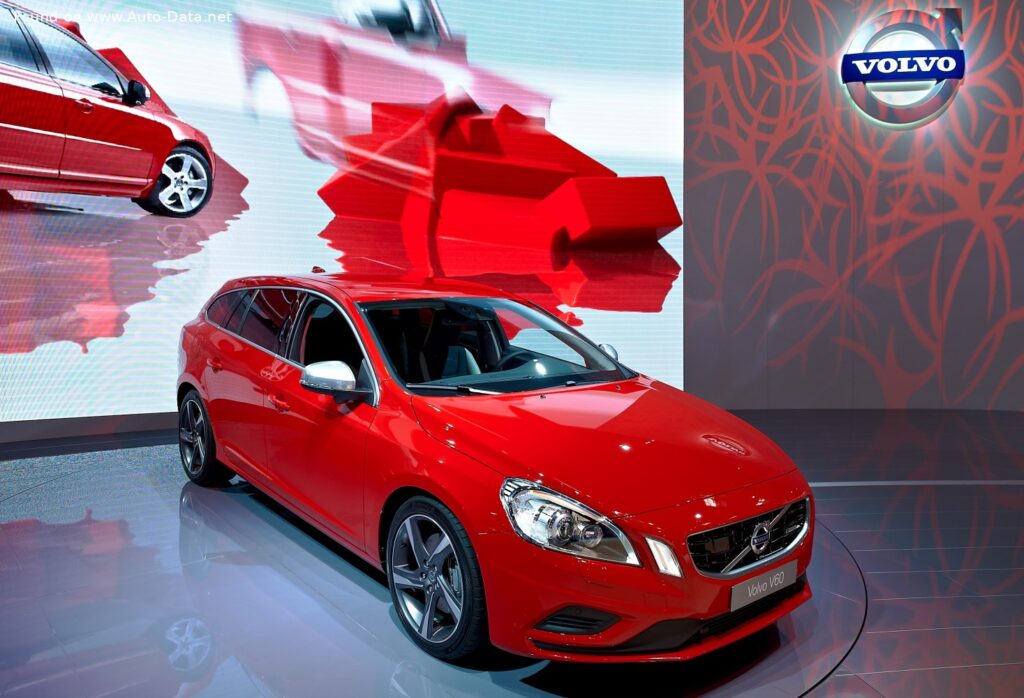
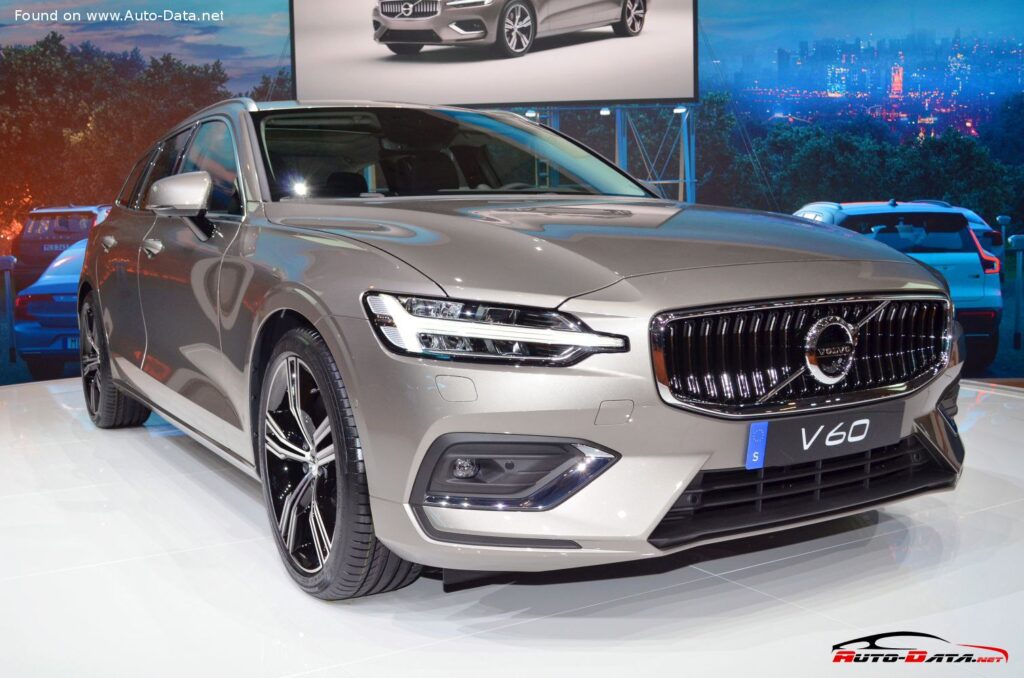
The Volvo V60 II embodies Volvo’s modern design language, characterized by clean lines, elegant proportions, and a strong sense of Scandinavian sophistication. As a five-door station wagon (often referred to as an “estate” in European markets), it masterfully balances aesthetic appeal with exceptional practicality. The exterior features distinctive “Thor’s Hammer” LED daytime running lights, a signature element across Volvo’s contemporary lineup, framing a prominent grille. Its sleek profile and well-integrated roof rails hint at its versatile nature, while the overall stance is confident and athletic.
Inside, the V60 T8 offers a spacious and luxuriously appointed cabin designed for five occupants. Volvo’s commitment to ergonomic design and high-quality materials is evident throughout, with premium upholstery and refined trim elements creating a serene environment. While specific infotainment details are not provided in the technical data, models from this era typically featured Volvo’s Sensus Connect system, known for its intuitive interface and comprehensive connectivity options. Safety, a cornerstone of the Volvo brand, is paramount, with the V60 T8 likely equipped with a full suite of advanced driver-assistance systems (ADAS) in addition to foundational features like ABS (Anti-lock braking system).
Practicality is a key strength of the V60 station wagon. It offers a generous trunk space of 18.68 cubic feet (529 liters) with the rear seats up, expanding to a cavernous 50.89 cubic feet (1441 liters) when the rear seats are folded down. This makes it ideal for families, outdoor enthusiasts, or anyone needing substantial cargo capacity. The vehicle’s dimensions are thoughtfully proportioned: 187.44 inches long, 72.83 inches wide (80.31 inches including mirrors), and 56.18 inches tall, with a wheelbase of 113.07 inches. A ground clearance of 5.04 inches provides adequate clearance for varied road conditions, while a minimum turning circle of 37.07 feet ensures maneuverability in urban settings.
Underneath, the V60 T8 features a robust chassis designed for comfort and dynamic handling. The front suspension utilizes a double wishbone setup with a transverse stabilizer, while the rear employs a unique transverse stabilizer and a composite leaf spring system, which helps save space and weight. Braking is handled by ventilated discs both front (13.58 x 1.18 inches) and rear (12.60 x 0.79 inches), ensuring powerful and consistent stopping performance. Electric power steering provides precise and responsive control, contributing to an engaging driving experience.
Technical Specifications
| Category | Specification |
|---|---|
| Brand | Volvo |
| Model | V60 |
| Generation | V60 II |
| Type (Engine) | 2.0 T8 TwEn (390 Hp) Plug-in Hybrid AWD Geartronic |
| Start of Production | October, 2018 |
| End of Production | April, 2019 |
| Powertrain Architecture | PHEV (Plug-in Hybrid Electric Vehicle) |
| Body Type | Station wagon (estate) |
| Seats | 5 |
| Doors | 5 |
| Performance Specifications | |
| Combined Fuel Consumption (WLTP) | 112 – 94.1 US mpg (2.1-2.5 l/100 km) |
| CO2 Emissions (WLTP) | 48-57 g/km |
| Combined Fuel Consumption (NEDC) | 123.8 – 112 US mpg (1.9-2.1 l/100 km) |
| CO2 Emissions (NEDC) | 44-48 g/km |
| Fuel Type | Petrol / Electricity |
| Acceleration 0 – 60 mph | 4.7 sec |
| Maximum Speed | 155.34 mph (250 km/h) |
| Emission Standard | Euro 6d-TEMP |
| Weight-to-Power Ratio | 193.3 Hp/tonne (5.2 kg/Hp) |
| Electric Cars and Hybrids Specifications | |
| Gross Battery Capacity | 10.4 kWh |
| Battery Voltage | 400 V |
| Battery Technology | Lithium-ion (Li-Ion) |
| Battery Location | In the central tunnel |
| All-Electric Range (WLTP) | 25.48 – 28.58 miles (41-46 km) |
| All-Electric Range (NEDC) | 29.83 – 30.45 miles (48-49 km) |
| Average Energy Consumption (WLTP) | 23.01 – 23.66 kWh/100 mi (14.3-14.7 kWh/100 km) | 146 – 142 MPGe |
| Average Energy Consumption (NEDC) | 23.01 – 23.82 kWh/100 mi (14.3-14.8 kWh/100 km) | 146 – 141 MPGe |
| Max Speed (Electric) | 77.67 mph (125 km/h) |
| Electric Motor 1 Power | 87 Hp @ 7000 rpm |
| Electric Motor Torque | 177.01 lb-ft @ 0-3000 rpm (240 Nm) |
| Electric Motor Location | Rear axle, Transverse |
| System Power | 390 Hp |
| Internal Combustion Engine Specifications | |
| Power | 303 Hp @ 6000 rpm |
| Power per Liter | 153.9 Hp/l |
| Torque | 295.02 lb-ft @ 2200-4800 rpm (400 Nm) |
| Engine Layout | Front, Transverse |
| Engine Model/Code | B4204T34 |
| Engine Displacement | 120.16 cu. in. (1969 cm3) |
| Number of Cylinders | 4 |
| Engine Configuration | Inline |
| Cylinder Bore | 3.23 in. (82 mm) |
| Piston Stroke | 3.67 in. (93.2 mm) |
| Compression Ratio | 10.3:1 |
| Number of Valves per Cylinder | 4 |
| Fuel Injection System | Direct injection |
| Engine Aspiration | Turbocharging and Supercharger, Intercooler |
| Valvetrain | DOHC |
| Engine Oil Capacity | 5.92 US qt (5.6 l) |
| Engine Oil Specification | Information not available |
| Engine Systems | Start & Stop System, Particulate filter |
| Space, Volume and Weights | |
| Kerb Weight | 4448.93 lbs (2018 kg) |
| Max. Weight (GVWR) | 5665.88 lbs (2570 kg) |
| Max Load Capacity | 1216.95 lbs (552 kg) |
| Trunk (boot) Space – Minimum | 18.68 cu. ft. (529 l) |
| Trunk (boot) Space – Maximum | 50.89 cu. ft. (1441 l) |
| Fuel Tank Capacity | 15.85 US gal (60 l) |
| Max. Roof Load | 165.35 lbs (75 kg) |
| Permitted Trailer Load with Brakes (12%) | 4409.25 lbs (2000 kg) |
| Permitted Trailer Load without Brakes | 1653.47 lbs (750 kg) |
| Permitted Towbar Download | 220.46 lbs (100 kg) |
| Dimensions | |
| Length | 187.44 in. (4761 mm) |
| Width | 72.83 in. (1850 mm) |
| Width with Mirrors Folded | 75.43 in. (1916 mm) |
| Width Including Mirrors | 80.31 in. (2040 mm) |
| Height | 56.18 in. (1427 mm) |
| Wheelbase | 113.07 in. (2872 mm) |
| Front Track | 63.39 in. (1610 mm) |
| Rear (Back) Track | 63.39 in. (1610 mm) |
| Front Overhang | 33.39 in. (848 mm) |
| Rear Overhang | 40.98 in. (1041 mm) |
| Ride Height (Ground Clearance) | 5.04 in. (128 mm) |
| Drag Coefficient (Cd) | 0.29 |