The Volvo V60 II Polestar 2.0 T8 TwEn (318 Hp) Plug-in Hybrid AWD Geartronic: A Performance Wagon Redefined
The Volvo V60 II Polestar 2.0 T8 TwEn (318 Hp) Plug-in Hybrid AWD Geartronic represents a pinnacle of modern automotive engineering, blending high performance with exceptional fuel efficiency and Volvo’s renowned commitment to safety and Scandinavian design. Launched in March 2019 and produced until September 2021, this second-generation V60 variant, specifically tuned by Polestar, carved out a distinct niche in the premium mid-size wagon segment. It was conceived as a sophisticated plug-in hybrid electric vehicle (PHEV), offering a compelling package for discerning drivers seeking both dynamic driving characteristics and environmental responsibility. While the V60 itself is a global model, this particular Polestar Engineered T8 variant emphasized Volvo’s dedication to electrification and performance, particularly resonating in European markets where premium wagons and PHEVs hold significant appeal. It positioned itself as a smart, powerful, and practical alternative in a competitive landscape, showcasing Volvo’s ability to innovate beyond traditional luxury offerings.
Powertrain and Dynamic Performance
At the heart of the Volvo V60 II Polestar 2.0 T8 TwEn (318 Hp) Plug-in Hybrid AWD Geartronic lies an advanced and intricate powertrain architecture. This plug-in hybrid system combines a potent 2.0-liter (1969 cm3 or 120.16 cu. in.) inline-four gasoline engine with an electric motor, creating an all-wheel-drive (AWD) setup that delivers exhilarating performance. The internal combustion engine, designated B4204T48, is a marvel of forced induction, featuring both turbocharging and supercharging alongside an intercooler. This twin-charged setup ensures a broad powerband, virtually eliminating turbo lag and providing immediate throttle response. It generates a substantial 318 horsepower at 6000 rpm and 317.15 lb.-ft. (430 Nm) of torque at 4500 rpm, boasting an impressive power output of 161.5 horsepower per liter.
Complementing the gasoline engine is a robust electric motor mounted on the rear axle, contributing an additional 87 horsepower at 7000 rpm and 177.01 lb.-ft. (240 Nm) of torque from 0 to 3000 rpm. This innovative drivetrain architecture means the gasoline engine primarily drives the front wheels, while the electric motor powers the rear wheels, effectively creating an on-demand all-wheel-drive system. The vehicle is capable of operating in full electric mode, solely on the internal combustion engine, or in a mixed hybrid mode, offering exceptional versatility. Power is seamlessly managed through an 8-speed Geartronic automatic transmission, ensuring smooth shifts and efficient power delivery.
The combined efforts of this sophisticated powertrain result in truly impressive performance figures for a family wagon. The V60 II Polestar T8 Twin Engine can rocket from 0 to 60 mph in a mere 4.4 seconds (0-100 km/h in 4.6 seconds), highlighting its sports car-rivaling acceleration. Its top speed is electronically limited to 155.34 mph (250 km/h). Despite its formidable power, the hybrid system prioritizes efficiency. According to the WLTP cycle, the combined fuel consumption is an outstanding 2.7 liters per 100 km, which translates to approximately 87.1 US mpg. Even more impressive, under the NEDC cycle, it achieved 2.1 liters per 100 km, or 112 US mpg. This exceptional efficiency is further underscored by low CO2 emissions of 61 g/km (WLTP) and 48 g/km (NEDC).
The plug-in hybrid system is powered by an 11.6 kWh gross capacity Lithium-ion battery pack, cleverly located in the central tunnel to optimize weight distribution and minimize intrusion into cabin space. This battery provides an all-electric range of 26.72 miles (43 km) under WLTP testing and 29.83 miles (48 km) under NEDC, allowing for emission-free commuting for many drivers. The average energy consumption is rated at 16.8 kWh/100 km (27.04 kWh/100 mi or 125 MPGe) (WLTP), with the ability to reach an electric-only top speed of 77.67 mph (125 km/h). This blend of raw power, instant torque, and remarkable efficiency firmly established the V60 T8 Polestar Engineered as a leader in its class, demonstrating that performance and environmental consciousness can coexist harmoniously.
Contemporary Design and Advanced Features
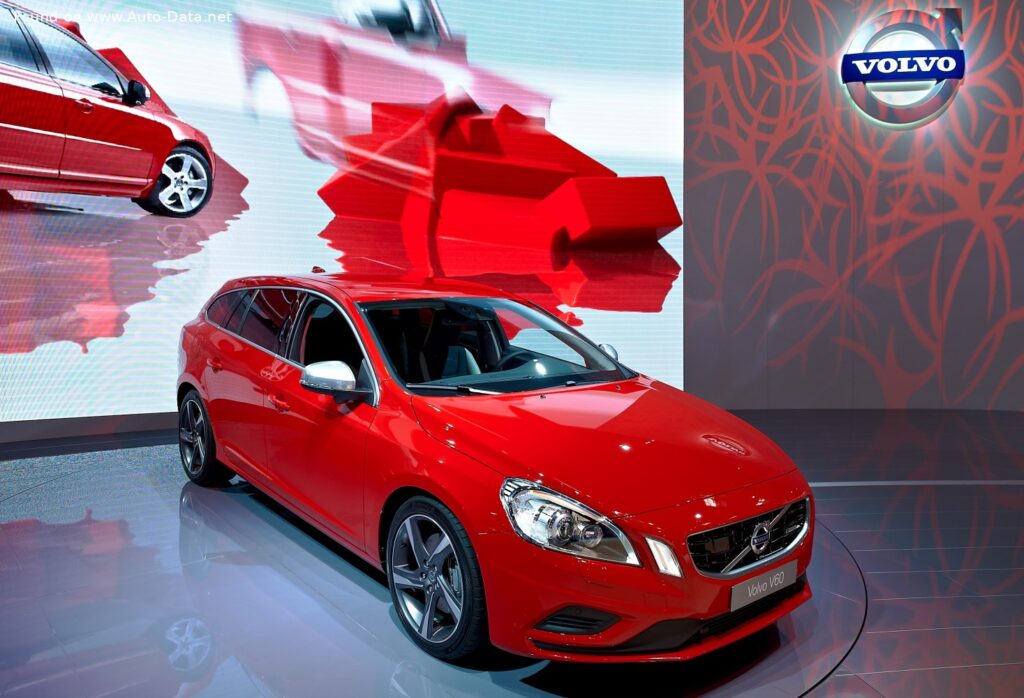
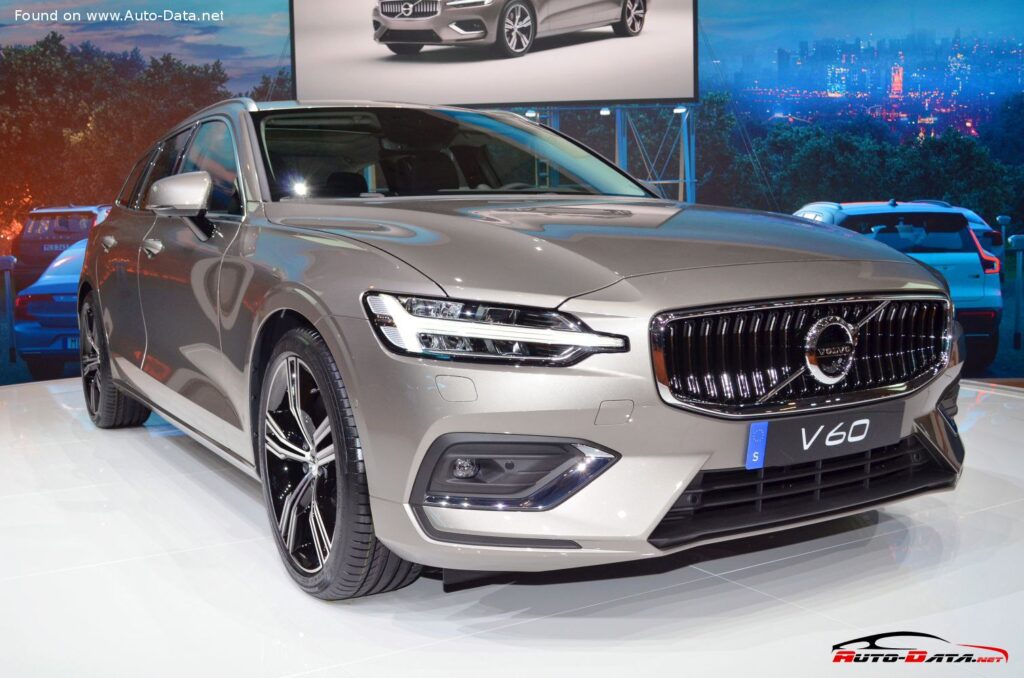
The Volvo V60 II Polestar 2.0 T8 TwEn (318 Hp) Plug-in Hybrid AWD Geartronic embodies Volvo’s modern design philosophy, characterized by elegant lines, a strong stance, and practical functionality. As a five-door station wagon (often referred to as an “estate” in European markets), it offers a compelling blend of sporty aesthetics and family-friendly utility. The exterior design features Volvo’s signature “Thor’s Hammer” LED daytime running lights, a prominent grille, and sleek, sculpted bodywork that creates a sense of sophisticated dynamism. Polestar’s influence is subtle yet impactful, with unique badging, larger 8J x 19-inch alloy wheels wrapped in 235/40 R19 tires, and often, distinctive brake calipers that hint at the vehicle’s enhanced performance capabilities.
Measuring 187.44 inches (4761 mm) in length, 72.83 inches (1850 mm) in width (80.31 inches or 2040 mm including mirrors), and 56.38 inches (1432 mm) in height, the V60 II maintains a balanced and athletic profile. Its 113.07-inch (2872 mm) wheelbase contributes to a stable ride and generous interior space. With a ground clearance of 5.59 inches (142 mm) and a drag coefficient (Cd) of 0.29, the V60 is aerodynamically efficient.
Inside, the V60 Polestar T8 offers a cabin that epitomizes Scandinavian luxury and ergonomics. High-quality materials, meticulous craftsmanship, and a minimalist design aesthetic create a serene and inviting environment for all five occupants. The seats are known for their exceptional comfort and support, a hallmark of Volvo design. While specific infotainment details are not provided, vehicles of this era and segment from Volvo typically feature the intuitive Sensus Connect infotainment system, with a vertically oriented touchscreen providing access to navigation, media, and vehicle functions. Advanced climate control, premium audio options, and connectivity features would also be standard.
Safety, as always, is paramount for Volvo. The V60 II is equipped with a comprehensive suite of active and passive safety systems. The robust chassis, combined with features like ABS (Anti-lock Braking System) and advanced airbags, forms the foundation of its protective capabilities. The vehicle’s braking system includes large ventilated discs, 345×30 mm at the front and 320×20 mm at the rear, ensuring powerful and consistent stopping performance from its 155 mph top speed, with a 100 km/h to 0 stopping distance of 35 meters. The electric power steering system provides precise control and a refined driving experience.
Practicality is another strong suit of the V60 wagon. It offers a generous minimum trunk (boot) space of 18.68 cubic feet (529 liters), which expands to an impressive 50.89 cubic feet (1441 liters) with the rear seats folded down, making it highly versatile for cargo. A fuel tank capacity of 15.85 US gallons (60 liters) further enhances its long-distance touring capabilities. With a maximum permitted trailer load of 4409.25 lbs. (2000 kg) with brakes, it also serves as a capable towing vehicle, underscoring its multifaceted utility.
Technical Specifications of the Volvo V60 II Polestar T8 Twin Engine
| Category | Specification |
|---|---|
| General Information | |
| Brand | Volvo |
| Model | V60 |
| Generation | V60 II |
| Type (Engine) | Polestar 2.0 T8 TwEn (318 Hp) Plug-in Hybrid AWD Geartronic |
| Start of Production | March, 2019 |
| End of Production | September, 2021 |
| Powertrain Architecture | PHEV (Plug-in Hybrid Electric Vehicle) |
| Body Type | Station wagon (estate) |
| Seats | 5 |
| Doors | 5 |
| Performance Specs | |
| Combined Fuel Consumption (WLTP) | 2.7 l/100 km (87.1 US mpg) |
| CO2 Emissions (WLTP) | 61 g/km |
| Combined Fuel Consumption (NEDC) | 2.1 l/100 km (112 US mpg) |
| CO2 Emissions (NEDC) | 48 g/km |
| Fuel Type | Petrol / electricity |
| Acceleration 0 – 60 mph | 4.4 sec |
| Acceleration 0 – 100 km/h | 4.6 sec |
| Maximum Speed | 250 km/h (155.34 mph) |
| 100 km/h – 0 Braking Distance | 35 m |
| Emission Standard | Euro 6d-TEMP |
| Weight-to-Power Ratio | 6.3 kg/Hp (158.7 Hp/tonne) |
| Weight-to-Torque Ratio | 4.7 kg/Nm (214.6 Nm/tonne) |
| Electric Cars and Hybrids Specs | |
| Gross Battery Capacity | 11.6 kWh |
| Battery Voltage | 400 V |
| Battery Technology | Lithium-ion (Li-Ion) |
| Battery Location | In the central tunnel |
| All-electric Range (WLTP) | 43 km (26.72 mi) |
| All-electric Range (NEDC) | 48 km (29.83 mi) |
| Average Energy Consumption (WLTP) | 16.8 kWh/100 km (27.04 kWh/100 mi, 125 MPGe) |
| Average Energy Consumption (NEDC) | 17.2 kWh/100 km (27.68 kWh/100 mi, 122 MPGe) |
| Max Speed (Electric) | 125 km/h (77.67 mph) |
| Electric Motor 1 Power | 87 Hp @ 7000 rpm |
| Electric Motor Torque | 240 Nm (177.01 lb.-ft.) @ 0-3000 rpm |
| Electric Motor Location | Rear axle, Transverse |
| Internal Combustion Engine Specs | |
| Power | 318 Hp @ 6000 rpm |
| Power per Liter | 161.5 Hp/l |
| Torque | 430 Nm (317.15 lb.-ft.) @ 4500 rpm |
| Maximum Engine Speed | 6000 rpm |
| Engine Layout | Front, Transverse |
| Engine Model/Code | B4204T48 |
| Engine Displacement | 1969 cm3 (2.0 l / 120.16 cu. in.) |
| Number of Cylinders | 4 |
| Engine Configuration | Inline |
| Cylinder Bore | 82 mm (3.23 in.) |
| Piston Stroke | 93.2 mm (3.67 in.) |
| Compression Ratio | 10.3:1 |
| Number of Valves per Cylinder | 4 |
| Fuel Injection System | Direct injection |
| Engine Aspiration | Turbocharging and Supercharger, Intercooler |
| Valvetrain | DOHC |
| Engine Oil Capacity | 5.6 l (5.92 US qt) |
| Engine Systems | Start & Stop System, Particulate filter |
| Space, Volume and Weights | |
| Kerb Weight | 2004 kg (4418.06 lbs.) |
| Max. Weight | 2520 kg (5555.65 lbs.) |
| Max Load | 516 kg (1137.59 lbs.) |
| Trunk (boot) Space – Minimum | 529 l (18.68 cu. ft.) |
| Trunk (boot) Space – Maximum | 1441 l (50.89 cu. ft.) |
| Fuel Tank Capacity | 60 l (15.85 US gal) |
| Max. Roof Load | 75 kg (165.35 lbs.) |
| Permitted Trailer Load with Brakes (12%) | 2000 kg (4409.25 lbs.) |
| Permitted Trailer Load without Brakes | 750 kg (1653.47 lbs.) |
| Permitted Towbar Download | 100 kg (220.46 lbs.) |
| Dimensions | |
| Length | 4761 mm (187.44 in.) |
| Width | 1850 mm (72.83 in.) |
| Width with Mirrors Folded | 1916 mm (75.43 in.) |
| Width Including Mirrors | 2040 mm (80.31 in.) |
| Height | 1432 mm (56.38 in.) |
| Wheelbase | 2872 mm (113.07 in.) |
| Front Track | 1610 mm (63.39 in.) |
| Rear (Back) Track | 1610 mm (63.39 in.) |
| Front Overhang | 848 mm (33.39 in.) |
| Rear Overhang | 1041 mm (40.98 in.) |
| Ride Height (Ground Clearance) | 142 mm (5.59 in.) |
| Drag Coefficient (Cd) | 0.29 |
| Minimum Turning Circle (Turning Diameter) | 11.7 m (38.39 ft.) |
| Drivetrain, Brakes and Suspension Specs | |
| Drivetrain Architecture | ICE drives front wheels, electric motor drives rear wheels; capable of full electric, ICE-only, or mixed mode. |
| Drive Wheel | All wheel drive (4×4) |
| Number of Gears and Type of Gearbox | 8 gears, automatic transmission Geartronic |
| Front Suspension | Double wishbone, Transverse stabilizer |
| Rear Suspension | Transverse stabilizer, Leaf spring |
| Front Brakes | Ventilated discs, 345×30 mm |
| Rear Brakes | Ventilated discs, 320×20 mm |
| Assisting Systems | ABS (Anti-lock braking system) |
| Steering Type | Steering rack and pinion |
| Power Steering | Electric Steering |
| Tires Size | 235/40 R19 |
| Wheel Rims Size | 8J x 19 |
Legacy and Market Influence
The Volvo V60 II Polestar 2.0 T8 TwEn (318 Hp) Plug-in Hybrid AWD Geartronic, though produced for a relatively short period, left a notable mark on the premium performance wagon segment. Its introduction signaled Volvo’s ambitious strategy to marry its core values of safety and practicality with exhilarating performance and environmental stewardship through electrification. This specific Polestar Engineered variant served as a halo model for the V60 lineup, showcasing the brand’s engineering prowess and the potential of its scalable product architecture (SPA).
In its primary markets, particularly Europe, the V60 T8 Polestar Engineered competed against a formidable array of rivals, including performance-oriented plug-in hybrid wagons from German luxury automakers. Key competitors would have included models like the BMW 330e Touring, Mercedes-Benz C300e Estate, and potentially even the Audi A4 Avant 55 TFSI e Quattro, depending on their market availability and specification. What set the Volvo apart was its unique blend of twin-charged gasoline power and electric rear-axle drive, offering a distinct driving character and a particularly Scandinavian approach to luxury and performance. While some competitors might have offered slightly more outright power in their top-tier performance models, the V60 T8’s balance of efficiency, practical range, and robust acceleration was a compelling differentiator.
The V60 Polestar Engineered’s reputation was built on its ability to deliver surprising speed and agility without sacrificing the comfort, safety, and utility expected of a Volvo wagon. It demonstrated that a family-friendly vehicle could also be a driver’s car, capable of spirited performance while offering the flexibility of electric-only commuting. Its impressive fuel economy figures and low CO2 emissions were particularly attractive in markets with stringent environmental regulations and incentives for PHEVs.
Historically, this model represents a crucial step in Volvo’s journey towards full electrification. It proved that high-performance vehicles could embrace hybrid technology, setting a precedent for future models and strengthening Volvo’s image as a progressive and innovative luxury brand. The collaboration with Polestar, Volvo’s performance sub-brand, further cemented its credibility in the performance arena, adding an exclusive edge to the V60’s already strong appeal. The V60 II Polestar T8 Twin Engine is remembered as a sophisticated,