
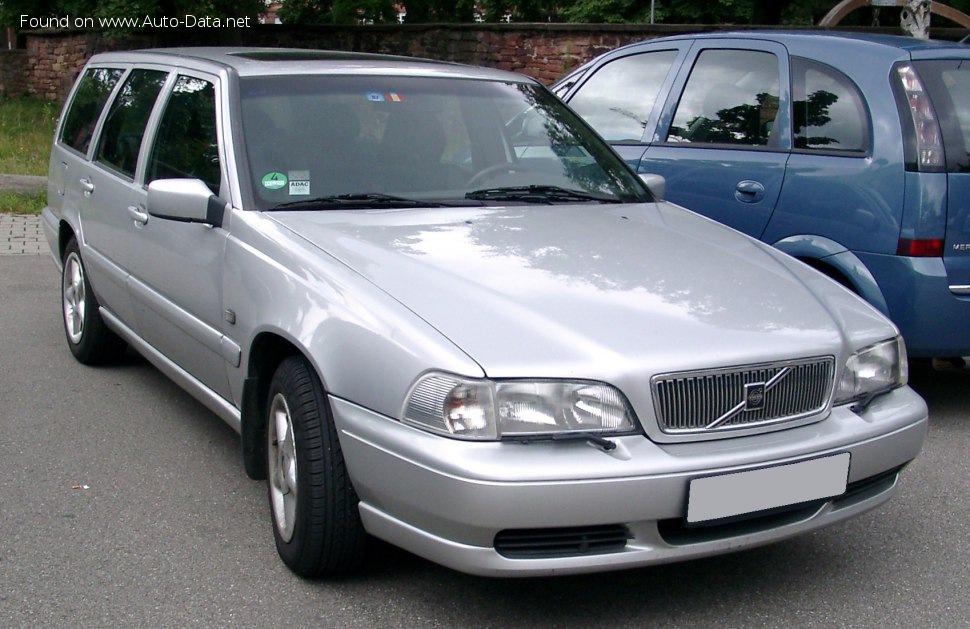
The Volvo V70 I 2.0 (143 Hp) represents a significant chapter in the history of the Swedish automaker, embodying Volvo’s steadfast commitment to safety, practicality, and understated design. Launched in 1996 as a direct successor to the highly popular Volvo 850 estate, the first-generation V70, often referred to as the V70 P80 or V70 Classic, cemented Volvo’s reputation in the premium mid-size station wagon segment. Produced until 2000, this generation built upon the robust mechanical platform of its predecessor while introducing refined styling cues and enhanced interior appointments.
While the V70 I was offered with a range of engines globally, including more potent turbocharged five-cylinder units, the 2.0-liter, 143 horsepower variant, specifically designated by the B5204F engine code, was particularly relevant in markets where engine displacement and power output influenced taxation and insurance costs, such as many European countries. This particular powertrain configuration underscored Volvo’s strategy to offer economical yet capable options within its popular wagon lineup, catering to a broad spectrum of consumer needs without sacrificing the core Volvo values of durability and family-friendliness.
The Volvo V70 I: A Legacy of Practicality and Safety
Emerging from the highly successful 850 series, the Volvo V70 I was more than just a facelift; it represented a strategic evolution for the brand. While sharing the fundamental P80 platform, the V70 introduced over 1,800 new parts, focusing on improved aesthetics, enhanced interior comfort, and even greater safety. Its design, though clearly an evolution of the 850’s distinctive angular lines, featured softer curves and more cohesive styling elements, aligning it with the emerging design language of the late 1990s.
Globally, the V70 quickly became synonymous with the practical, safe family vehicle. In the United States, it continued the legacy of Volvo wagons, appealing to buyers who prioritized utility, a spacious interior, and unwavering reliability. Its five-door station wagon body style was a hallmark of versatility, offering ample cargo capacity that few sedans could match. The V70 I also debuted or refined several safety innovations, including an improved Side Impact Protection System (SIPS) and the Whiplash Protection System (WHIPS), further solidifying Volvo’s leadership in automotive safety.
Engine and Performance of the Volvo V70 I 2.0 (143 Hp)
At the heart of the Volvo V70 I 2.0 (143 Hp) lies the B5204F engine, a naturally aspirated inline five-cylinder gasoline unit. This 2.0-liter powerplant delivered a respectable 143 horsepower, an output that, while not overtly sporty, was perfectly adequate for the vehicle’s intended purpose as a reliable family hauler. The five-cylinder configuration, a signature Volvo trait of the era, contributed to a distinct engine note and a characteristically smooth power delivery, making for a comfortable driving experience during both city commutes and longer highway journeys.
The engine’s design emphasized durability and efficiency, characteristics highly valued by Volvo owners. With a naturally aspirated setup, the B5204F offered predictable power without the complexities of turbocharging, contributing to its reputation for long-term reliability. Power was transmitted to the front wheels, a common and efficient drivetrain architecture that provided competent handling and good traction in varied conditions. The vehicle’s fuel tank capacity of 18.49 US gallons (70 liters) ensured a decent cruising range, making it suitable for extended travel. Engine oil capacity was specified at 6.13 US quarts (5.8 liters), and the cooling system held 7.61 US quarts (7.2 liters) of coolant, indicating robust thermal management for consistent performance.
Design, Features, and Engineering of the Volvo V70 I
The design of the Volvo V70 I maintained the brand’s iconic silhouette while introducing subtle refinements. Its five-door station wagon body type offered exceptional utility, a primary selling point for the model. With a length of 186.22 inches (4730 mm), a width of 69.29 inches (1760 mm), and a height of 56.3 inches (1430 mm), the V70 I presented a substantial yet well-proportioned stance on the road. The wheelbase, measuring 104.72 inches (2660 mm), contributed to a stable ride and a spacious cabin for five occupants.
Practicality was paramount in the V70’s design. The cargo area was particularly generous, offering a minimum trunk space of 14.83 cubic feet (420 liters) with all seats in place. When the rear seats were folded down, this expanded to an impressive 55.8 cubic feet (1580 liters), making the V70 I an ideal vehicle for hauling groceries, luggage, sports equipment, or even furniture. The relatively low drag coefficient (Cd) of 0.32 was quite good for a wagon of its size and era, contributing to better fuel efficiency and reduced wind noise at highway speeds.
Inside, the V70 I continued Volvo’s tradition of ergonomic and safety-focused interiors. High-quality materials, comfortable seating, and a logical dashboard layout characterized the cabin. Beyond the structural safety features like SIPS and WHIPS, the V70 also offered multiple airbags, anti-lock brakes (ABS), and often traction control as standard or optional equipment, reflecting the advanced safety standards of the late 1990s. The emphasis was always on creating a secure and comfortable environment for all passengers, a hallmark of the Volvo brand.
