
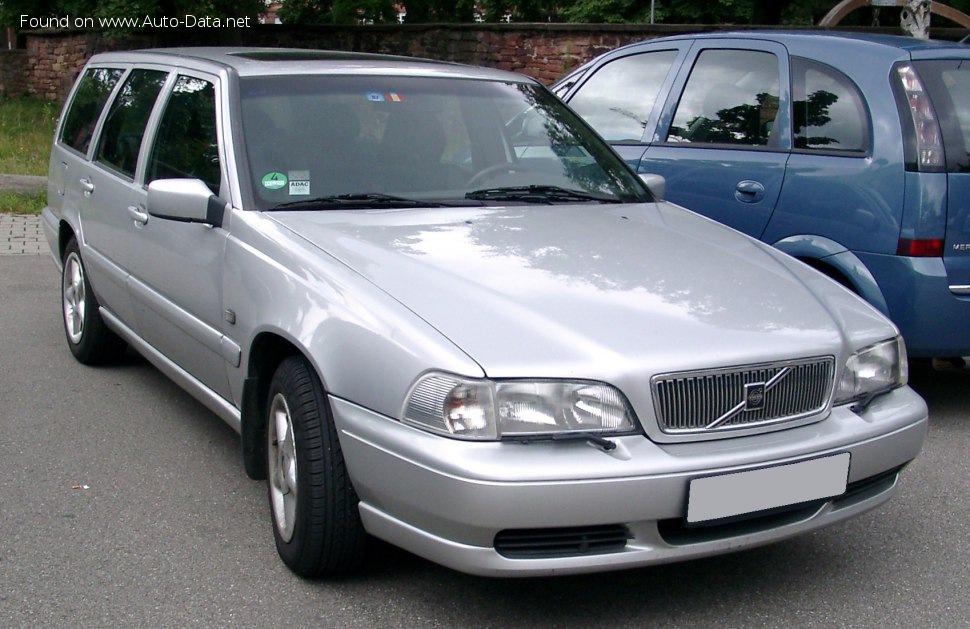
The Volvo V70 I 2.3 T (250 Hp) AWD represents a significant chapter in the history of premium station wagons, showcasing Volvo’s commitment to combining practicality, safety, and performance. Introduced in 1998 as part of the first-generation V70 lineup, this particular variant, with its potent 2.3-liter turbocharged engine and all-wheel-drive system, stood out as a high-performance family hauler. The V70, which succeeded the highly successful 850 Estate, continued Volvo’s tradition of offering versatile and robust vehicles, but the 2.3 T AWD model added a considerable dose of driving excitement to the equation. Produced until 2000, this specific iteration was a testament to Volvo’s engineering prowess, blending Scandinavian design with serious power and advanced drivetrain technology, making it a compelling choice in its segment for consumers seeking both utility and exhilarating performance.
Engine and Performance of the Volvo V70 I 2.3 T (250 Hp) AWD
At the heart of the Volvo V70 I 2.3 T (250 Hp) AWD lies a formidable 2.3-liter (2319 cm3 or 141.51 cu. in.) inline five-cylinder engine, designated B5234T4. This transversely mounted powerplant is a hallmark of Volvo’s engineering, renowned for its robust construction and distinctive exhaust note. Equipped with a turbocharger and multi-port manifold injection, the engine produces an impressive 250 horsepower at 6000 rpm, delivering a power-per-liter figure of 107.8 Hp/l. Torque is equally impressive, peaking at 350 Nm (258.15 lb.-ft.) at a relatively low 2400 rpm, ensuring strong acceleration from virtually any speed. This combination of power and torque provides a weight-to-power ratio of 6.6 kg/Hp and a weight-to-torque ratio of 4.7 kg/Nm, translating into excellent real-world performance.
Mated to a precise 5-speed manual transmission, the power is channeled to all four wheels through Volvo’s advanced all-wheel-drive system. This drivetrain architecture, where the internal combustion engine drives the front wheels primarily but can engage the rear wheels for additional traction, was crucial for enhancing the V70’s handling dynamics and capability in adverse weather conditions. The performance figures are quite remarkable for a full-sized station wagon of its era: the Volvo V70 I 2.3 T (250 Hp) AWD accelerates from 0 to 60 mph in a brisk 6.5 seconds (0-100 km/h in 6.8 seconds) and boasts a top speed of 155 mph (250 km/h). Fuel economy, while not the primary focus for such a performance-oriented model, was rated at 14.5 US mpg in urban driving and a more respectable 27 US mpg on the extra-urban cycle, reflecting the engine’s balance of power and efficiency for its time.
Design and Features
The Volvo V70 I carries the distinctive design language that evolved from the 850, characterized by its practical yet elegant lines. As a five-door station wagon (often referred to as an “estate” in European markets), it offered unparalleled versatility and cargo capacity. The exterior dimensions of 186.22 inches in length, 69.29 inches in width, and 56.3 inches in height, coupled with a 104.72-inch wheelbase, provided a substantial road presence and a spacious interior for five occupants. The design was also aerodynamically efficient for its class, evidenced by a drag coefficient (Cd) of 0.32.
Inside, Volvo’s reputation for ergonomic design and safety was paramount. While specific interior features are not detailed in the provided data, the V70 generation was known for its comfortable seating, intuitive controls, and robust build quality. Safety was a cornerstone, with features like ABS (Anti-lock Braking System) standard, and Volvo pioneered many passive safety innovations during this period. The practical nature of the V70 I 2.3 T (250 Hp) AWD is further underscored by its generous cargo capacity: a minimum trunk space of 14.83 cu. ft. (420 liters), which expands to an impressive 55.8 cu. ft. (1580 liters) with the rear seats folded down, making it ideal for families, outdoor enthusiasts, or anyone needing substantial hauling capability.
Underneath, the V70 featured a sophisticated chassis designed for both comfort and dynamic handling. The front suspension utilized a wishbone setup, while the rear employed coil springs, providing a balanced ride. Braking performance was ensured by ventilated discs at the front and solid discs at the rear, complemented by ABS. Steering was managed by a hydraulic rack and pinion system, offering precise feedback to the driver. The vehicle rode on 205/45 R17 tires mounted on 17-inch wheel rims, which contributed to both its athletic stance and handling prowess.
Technical Specifications
| Category | Specification | Value |
|---|---|---|
| General Information | ||
| Brand | Volvo | |
| Model | V70 | |
| Generation | V70 I | |
| Type (Engine) | 2.3 T (250 Hp) AWD | |
| Start of Production | 1998 year | |
| End of Production | 2000 year | |
| Powertrain Architecture | Internal Combustion engine | |
| Body Type | Station wagon (estate) | 5 Doors, 5 Seats |
| Performance Specs | ||
| Fuel Consumption (Economy) – Urban | 16.2 l/100 km (14.5 US mpg) | |
| Fuel Consumption (Economy) – Extra Urban | 8.7 l/100 km (27 US mpg) | |
| Fuel Type | Petrol (Gasoline) | |
| Acceleration 0 – 60 mph | 6.5 sec | |
| Acceleration 0 – 100 km/h | 6.8 sec | |
| Maximum Speed | 250 km/h (155.34 mph) | |
| Weight-to-Power Ratio | 6.6 kg/Hp (150.6 Hp/tonne) | |
| Weight-to-Torque Ratio | 4.7 kg/Nm (210.8 Nm/tonne) | |
| Engine Specs | ||
| Power | 250 Hp @ 6000 rpm | |
| Power per Liter | 107.8 Hp/l | |
| Torque | 350 Nm @ 2400 rpm (258.15 lb.-ft. @ 2400 rpm) | |
| Engine Layout | Front, Transverse | |
| Engine Model/Code | B5234T4 | |
| Engine Displacement | 2319 cm3 (141.51 cu. in.) | |
| Number of Cylinders | 5 | |
| Engine Configuration | Inline | |
| Cylinder Bore | 81 mm (3.19 in.) | |
| Piston Stroke | 90 mm (3.54 in.) | |
| Compression Ratio | 8.5:1 | |
| Number of Valves per Cylinder | 4 | |
| Fuel Injection System | Multi-port manifold injection | |
| Engine Aspiration | Turbocharger | |
| Valvetrain | DOHC | |
| Engine Oil Capacity | 5.8 l (6.13 US qt) | |
| Coolant Capacity | 7 l (7.4 US qt) | |
| Space, Volume and Weights | ||
| Kerb Weight | 1660 kg (3659.67 lbs) | |
| Max. Weight | 2160 kg (4761.98 lbs) | |
| Max Load | 500 kg (1102.31 lbs) | |
| Trunk (boot) Space – Minimum | 420 l (14.83 cu. ft.) | |
| Trunk (boot) Space – Maximum | 1580 l (55.8 cu. ft.) | |
| Fuel Tank Capacity | 70 l (18.49 US gal) | |
| Dimensions | ||
| Length | 4730 mm (186.22 in.) | |
| Width | 1760 mm (69.29 in.) | |
| Height | 1430 mm (56.3 in.) | |
| Wheelbase | 2660 mm (104.72 in.) | |
| Front Track | 1520 mm (59.84 in.) | |
| Rear (Back) Track | 1490 mm (58.66 in.) | |
| Drag Coefficient (Cd) | 0.32 | |
| Drivetrain, Brakes and Suspension Specs | ||
| Drivetrain Architecture | Internal combustion engine (ICE) drives front wheels | |
| Drive Wheel | All-Wheel Drive (AWD) | |
| Number of Gears and Type of Gearbox | 5 gears, manual transmission | |
| Front Suspension | Wishbone | |
| Rear Suspension | Coil spring | |
| Front Brakes | Ventilated discs | |
| Rear Brakes | Disc | |
| Assisting Systems | ABS (Anti-lock braking system) | |
| Steering Type | Steering rack and pinion | |
| Power Steering | Hydraulic Steering | |
| Tires Size | 205/45 R17 | |
| Wheel Rims Size | 17 inches | |
Legacy and Market Impact
The Volvo V70 I 2.3 T (250 Hp) AWD carved out a unique niche in the American automotive landscape. While Volvo was already synonymous with safety and family-friendly wagons, this particular variant elevated the V70 beyond mere utility, positioning it as a genuine performance contender. It appealed to a demographic that desired the practicality of a station wagon but refused to compromise on driving dynamics or power. In the late 1990s, its direct competitors in the premium wagon segment included models like the Audi A6 Avant quattro, BMW 5 Series Touring (E39), and the Mercedes-Benz E-Class Wagon (W210), all of which offered varying degrees of luxury, performance, and all-wheel-drive capability. The Volvo distinguished itself with its characterful five-cylinder engine, robust turbocharging, and a slightly more understated, yet undeniably purposeful, aesthetic.
The V70 I 2.3 T AWD contributed significantly to Volvo’s brand image, demonstrating that the Swedish automaker could produce vehicles that were not only safe and dependable but also exhilarating to drive. Its legacy endures among enthusiasts who appreciate its blend of sleeper performance, all-weather capability, and the distinctive sound of its inline-five engine. Today, these first-generation V70 T5 and AWD models are sought after by collectors and everyday drivers alike for their solid build quality, spacious interiors, and the relative ease of modifying their potent powertrains. The car’s robust engineering and timeless design have ensured its continued relevance, cementing its place as a classic modern performance wagon and a testament to Volvo’s innovative spirit in balancing diverse automotive attributes.
