
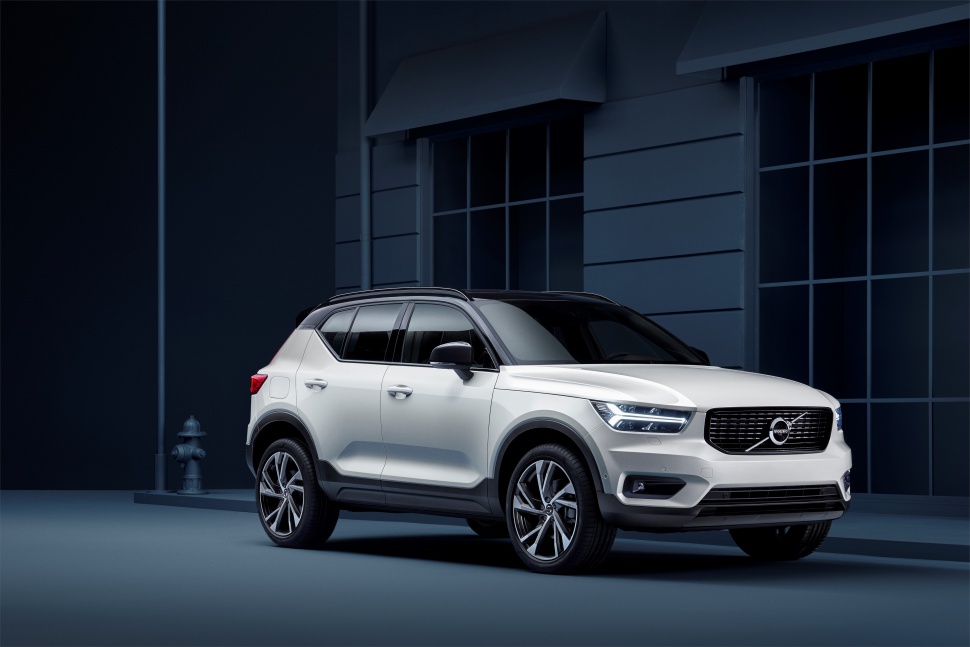
The Volvo XC40 2.0 B4 (197 Hp) Mild Hybrid AWD Automatic represents a significant offering in the competitive compact luxury SUV segment, showcasing Volvo’s commitment to electrification and innovative powertrain solutions. Introduced in February 2020 and produced through November 2021, this specific variant of the XC40 generation quickly established itself as a sophisticated and efficient choice for discerning drivers worldwide. As a Mild Hybrid Electric Vehicle (MHEV), it integrates a traditional internal combustion engine with a modest electrical assist system, aiming to enhance fuel economy, reduce emissions, and provide a smoother driving experience without the need for external charging. The XC40’s design philosophy, rooted in Scandinavian minimalism and functional elegance, combined with its advanced MHEV powertrain and robust all-wheel-drive capabilities, positions it as a versatile vehicle adept at navigating both urban environments and more challenging terrains, reflecting Volvo’s broader strategy towards a more sustainable and electrified future across its model lineup.
Powertrain and Performance of the Volvo XC40 2.0 B4 Mild Hybrid
At the heart of the Volvo XC40 2.0 B4 (197 Hp) Mild Hybrid AWD Automatic lies a meticulously engineered powertrain designed for both efficiency and responsive performance. This variant features a 2.0-liter (1969 cm³, or 120.16 cu. in.) inline four-cylinder engine, designated by the B420T6 code. This internal combustion engine (ICE) is a direct-injected unit, enhanced by a turbocharger and intercooler, ensuring robust power delivery across a wide RPM range. It generates a formidable 197 horsepower at 4800-5400 rpm, translating to an impressive 100.1 horsepower per liter, underscoring its advanced design. Torque output is equally impressive, peaking at 221.27 lb.-ft. (300 Nm) available from a low 1500 rpm all the way up to 4200 rpm, providing excellent responsiveness in daily driving scenarios and ample pulling power.
The “Mild Hybrid” aspect is central to this XC40’s identity. It employs a MHEV (Mild Hybrid Electric Vehicle) powertrain architecture, which incorporates a 14 horsepower electric motor generating 29.5 lb.-ft. (40 Nm) of torque. This electric motor works in concert with the gasoline engine, primarily providing assistance during acceleration, recuperating energy during deceleration, and enabling a smoother operation of the start-stop system. While it cannot power the vehicle solely on electricity for extended periods, the mild hybrid system significantly contributes to reducing fuel consumption and emissions, particularly in stop-and-go traffic. The combined effect allows the XC40 to accelerate from 0 to 60 mph in a respectable 8.1 seconds (0-100 km/h in 8.5 seconds) and reach a top speed electronically limited to 111.85 mph (180 km/h), aligning with Volvo’s contemporary safety philosophy.
Power is managed by a sophisticated 8-speed Geartronic automatic transmission, renowned for its smooth shifts and efficiency. The drivetrain architecture is a permanent all-wheel-drive (AWD) system, which typically drives the front wheels via both the ICE and electric motor. When conditions demand, an electrically or mechanically controlled clutch seamlessly engages the rear wheels, ensuring optimal traction and stability across various driving conditions, from slippery roads to light off-road excursions. This intelligent AWD system, combined with the mild hybrid powertrain, offers a compelling blend of performance, safety, and environmental consciousness, meeting the stringent Euro 6d emission standard. Fuel efficiency figures are competitive for the segment, with a combined WLTP fuel consumption ranging from 30.5 to 28.7 US mpg (7.7-8.2 l/100 km), and CO2 emissions between 174-186 g/km, reflecting the benefits of its mild-hybrid technology.
Design and Features
The Volvo XC40, specifically the 2.0 B4 Mild Hybrid AWD Automatic variant, embodies Volvo’s modern design language, characterized by its distinctive Scandinavian aesthetic, robust proportions, and intelligent functionality. As a compact SUV, it offers a practical 5-door, 5-seat configuration, making it a versatile choice for families and individuals alike. Its exterior dimensions are well-proportioned for urban maneuverability yet substantial enough to convey a sense of security and presence. The vehicle measures 174.21 inches (4425 mm) in length, 73.35 inches (1863 mm) in width (75.2 inches with mirrors folded, 80.08 inches including mirrors), and 65.04 inches (1652 mm) in height. A generous wheelbase of 106.38 inches (2702 mm) contributes to both interior space and ride comfort.
Beyond its striking visual appeal, the XC40 is engineered for practicality and capability. It boasts a substantial ground clearance of 8.31 inches (211 mm), coupled with an approach angle of 21.7°, a departure angle of 30.4°, and a ramp-over angle of 21.9°. These specifications, along with a wading depth of 17.72 inches (450 mm), highlight its genuine SUV credentials, allowing it to confidently tackle varied terrain and adverse weather conditions. The minimum turning circle of 38.71 feet (11.8 m) ensures good maneuverability in tight urban spaces.
Inside, the XC40 offers a thoughtfully designed cabin focused on user-friendliness and comfort. Cargo versatility is a strong suit, with a minimum trunk space of 16.24 cu. ft. (460 liters) that expands to a generous 47.18 cu. ft. (1336 liters) with the rear seats folded, accommodating a wide range of luggage and gear. The vehicle’s structure is underpinned by an independent McPherson front suspension and an independent coil spring rear suspension with a transverse stabilizer, providing a balanced ride quality that absorbs road imperfections while maintaining composure during dynamic driving. Steering is handled by an electric power-assisted rack and pinion system, offering precise control and ease of effort. Stopping power is robust, featuring disc brakes at both the front (296-345 mm) and rear (302-340 mm), complemented by an Anti-lock Braking System (ABS) for enhanced safety.
Further enhancing its utility, the XC40 has a permitted trailer load with brakes of up to 4629.71 lbs. (2100 kg) and 1653.47 lbs. (750 kg) without brakes, along with a max roof load of 165.35 lbs. (75 kg). The vehicle’s drag coefficient ranges from 0.34 to 0.37, contributing to its overall aerodynamic efficiency. Standard features typically include a comprehensive suite of safety technologies, a hallmark of the Volvo brand, as well as a modern infotainment system and premium interior materials, all contributing to a refined and secure driving experience that defines the modern luxury compact SUV.
Technical Specifications
| Brand | Volvo |
| Model | XC40 |
| Generation | XC40 |
| Type (Engine) | 2.0 B4 (197 Hp) Mild Hybrid AWD Automatic |
| Start of production | February, 2020 year |
| End of production | November, 2021 year |
| Powertrain Architecture | MHEV (Mild Hybrid Electric Vehicle, power-assist hybrid, battery-assisted hybrid vehicles, BAHV) |
| Body type | SUV |
| Seats | 5 |
| Doors | 5 |
| Combined fuel consumption (WLTP) | 7.7-8.2 l/100 km (30.5 – 28.7 US mpg) |
| CO2 emissions (WLTP) | 174-186 g/km |
| Fuel consumption (economy) – combined (NEDC) | 7-7.2 l/100 km (33.6 – 32.7 US mpg) |
| CO2 emissions (NEDC) | 159-163 g/km |
| Fuel Type | Petrol (Gasoline) |
| Acceleration 0 – 100 km/h | 8.5 sec |
| Acceleration 0 – 62 mph | 8.5 sec |
| Acceleration 0 – 60 mph (Calculated) | 8.1 sec |
| Maximum speed | 180 km/h (111.85 mph) |
| 100 km/h – 0 | 36 m |
| Emission standard | Euro 6d |
| Electric motor power | 14 Hp |
| Electric motor Torque | 40 Nm (29.5 lb.-ft.) |
| Power | 197 Hp @ 4800-5400 rpm |
| Power per liter | 100.1 Hp/l |
| Torque | 300 Nm @ 1500-4200 rpm (221.27 lb.-ft. @ 1500-4200 rpm) |
| Maximum engine speed | 6200 rpm |
| Engine layout | Front, Transverse |
| Engine Model/Code | B420T6 |
| Engine displacement | 1969 cm³ (120.16 cu. in.) |
| Number of cylinders | 4 |
| Engine configuration | Inline |
| Cylinder Bore | 81.99 mm (3.23 in.) |
| Piston Stroke | 93.19 mm (3.67 in.) |
| Compression ratio | 11.5:1 |
| Number of valves per cylinder | 4 |
| Fuel injection system | Direct injection |
| Engine aspiration | Turbocharger, Intercooler |
| Valvetrain | DOHC |
| Engine oil capacity | 6.1 l (6.45 US qt) |
| Engine systems | Start & Stop System, Particulate filter |
| Trunk (boot) space – minimum | 460 l (16.24 cu. ft.) |
| Trunk (boot) space – maximum | 1336 l (47.18 cu. ft.) |
| Fuel tank capacity | 54 l (14.27 US gal) |
| Max. roof load | 75 kg (165.35 lbs.) |
| Permitted trailer load with brakes (12%) | 2100 kg (4629.71 lbs.) |
| Permitted trailer load without brakes | 750 kg (1653.47 lbs.) |
| Length | 4425 mm (174.21 in.) |
| Width | 1863 mm (73.35 in.) |
| Width with mirrors folded | 1910 mm (75.2 in.) |
| Width including mirrors | 2034 mm (80.08 in.) |
| Height | 1652 mm (65.04 in.) |
| Wheelbase | 2702 mm (106.38 in.) |
| Front track | 1601 mm (63.03 in.) |
| Rear (Back) track | 1626 mm (64.02 in.) |
| Ride height (ground clearance) | 211 mm (8.31 in.) |
| Drag coefficient (Cd) | 0.34-0.37 |
| Minimum turning circle (turning diameter) | 11.8 m (38.71 ft.) |
| Approach angle | 21.7° |
| Departure angle | 30.4° |
| Ramp-over (brakeover) angle | 21.9° |
| Wading depth | 450 mm (17.72 in.) |
| Drivetrain Architecture | The Internal combustion engine (ICE) and the electric motor permanently drive the front wheels of the vehicle, capable of running only in mixed mode, and if necessary through the electrically or mechanically controlled clutch, the rear wheels are driven. |
| Drive wheel | All wheel drive (4×4) |
| Number of gears and type of gearbox | 8 gears, automatic transmission Geartronic |
| Front suspension | Independent, type McPherson with coil spring and anti-roll bar |
| Rear suspension | Independent coil spring, Transverse stabilizer |
| Front brakes | Disc, 296-345 mm |
| Rear brakes | Disc, 302-340 mm |
| Assisting systems | ABS (Anti-lock braking system) |
| Steering type | Steering rack and pinion |
| Power steering | Electric Steering |
| Wheel rims size | 16; 17; 18 |
