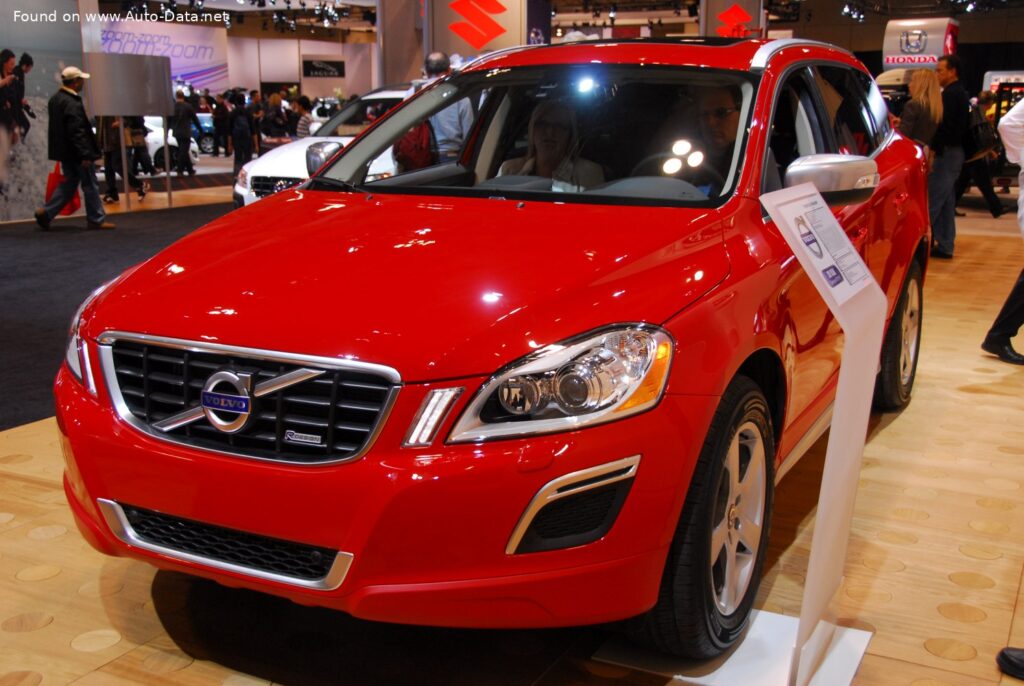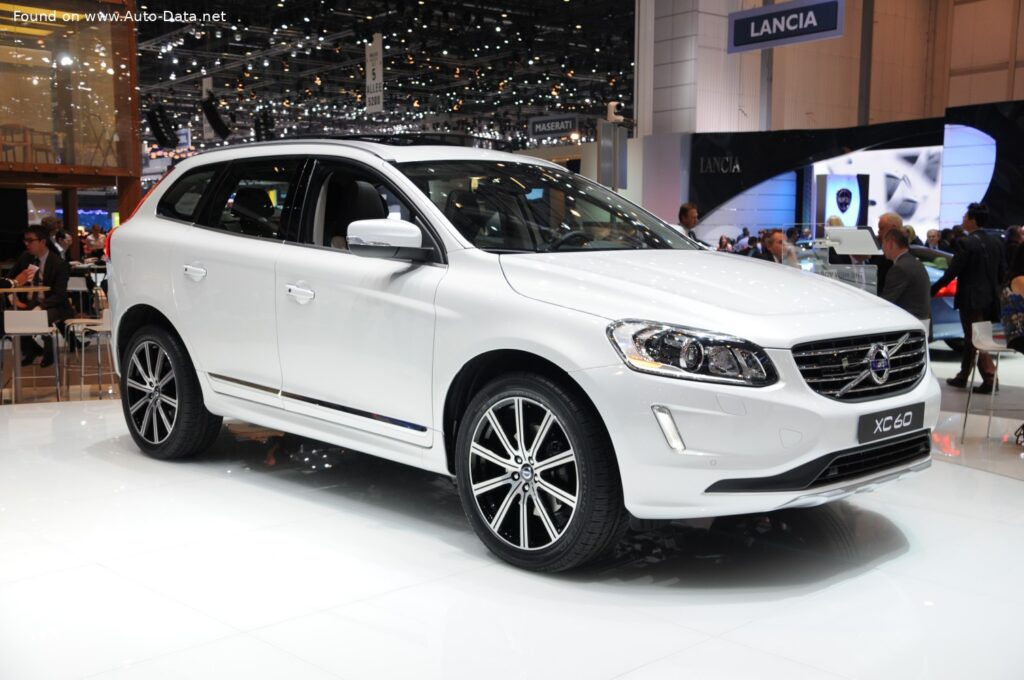
The Volvo XC60 I (2013 facelift) 2.0 D4 Bi-Turbo represents a significant iteration of Volvo’s popular compact luxury crossover SUV. Introduced as part of the first-generation XC60 lineup (2008-2017), the 2013 facelift brought styling updates, improved efficiency, and enhanced technology to an already successful model. Primarily sold in the European market, the XC60 competed with vehicles like the Audi Q5, BMW X3, and Mercedes-Benz GLK, offering a blend of Scandinavian design, safety features, and a focus on practicality. This particular variant, powered by the 2.0 D4 Bi-Turbo engine, was designed to appeal to buyers seeking a balance between performance and fuel economy.
Volvo XC60 I (2013 Facelift) 2.0 D4 Bi-Turbo: An Overview
The XC60, even in its initial form, was a pivotal model for Volvo, helping to redefine the brand’s image and broaden its appeal. The 2013 facelift refined this success, addressing some early criticisms and incorporating advancements in engine technology. The 2.0 D4 Bi-Turbo engine, while not initially offered in the North American market, became a popular choice in Europe due to its efficiency and respectable power output. The vehicle’s focus remained on providing a safe, comfortable, and stylish driving experience, embodying Volvo’s core values.
Engine & Performance
The heart of the 2013 Volvo XC60 I 2.0 D4 Bi-Turbo is its 2.0-liter inline-four cylinder diesel engine, designated the D4204T5. This engine utilizes a sophisticated bi-turbocharger system – two turbochargers working in sequence – to deliver a broad torque curve and responsive performance. The engine produces 181 horsepower (Hp) at 4250 rpm and a substantial 400 Newton-meters (295.02 lb.-ft.) of torque between 1750 and 2500 rpm. This torque output provides strong acceleration and effortless cruising. Power per liter is rated at 91.9 Hp/l. The engine features a diesel commonrail fuel injection system and a double overhead camshaft (DOHC) valvetrain with four valves per cylinder. The engine’s 15.8:1 compression ratio contributes to its efficiency. Performance figures include a 0-100 km/h (0-62 mph) acceleration time of 8.5 seconds and a 0-60 mph time of 8.1 seconds. The vehicle achieves a maximum speed of 210 km/h (130.49 mph). The engine is transversely mounted in the front of the vehicle, driving the front wheels through a six-speed manual transmission.
Design & Features
The 2013 facelift of the XC60 brought subtle but noticeable changes to the exterior design. These included a revised grille, redesigned headlights with integrated LED daytime running lights, and a new front bumper. The overall body style remains that of a five-door SUV/crossover, offering a practical and versatile layout. The interior of the XC60 is characterized by its Scandinavian design aesthetic – clean lines, high-quality materials, and a focus on functionality. The vehicle comfortably seats five passengers and offers a generous 490 liters (17.3 cu. ft.) of trunk space, expandable to 1450 liters (51.21 cu. ft.) with the rear seats folded down. Safety was, and remains, a paramount concern for Volvo. The XC60 I (2013 facelift) is equipped with a comprehensive suite of safety features, including ABS (Anti-lock Braking System), and a robust chassis designed to protect occupants in the event of a collision. Other features include a 70-liter (18.49 US gal) fuel tank, a maximum roof load capacity of 100 kg (220.46 lbs), and the ability to tow trailers up to 1800 kg (3968.32 lbs) with brakes.
Technical Specifications
| Brand | Volvo |
| Model | XC60 |
| Generation | XC60 I (2013 facelift) |
| Type (Engine) | 2.0 D4 Bi-Turbo (181 Hp) |
| Start of production | 2013 |
| End of production | 2015 |
| Powertrain Architecture | Internal Combustion engine |
| Body type | SUV, Crossover |
| Seats | 5 |
| Doors | 5 |
| Fuel consumption (combined) | 4.5 l/100 km (52.3 US mpg, 62.8 UK mpg, 22.2 km/l) |
| CO2 emissions | 117 g/km |
| Fuel Type | Diesel |
| Acceleration 0 – 100 km/h | 8.5 sec |
| Acceleration 0 – 62 mph | 8.5 sec |
| Acceleration 0 – 60 mph | 8.1 sec |
| Maximum speed | 210 km/h (130.49 mph) |
| Power | 181 Hp @ 4250 rpm |
| Torque | 400 Nm @ 1750-2500 rpm (295.02 lb.-ft. @ 1750-2500 rpm) |
| Maximum engine speed | 5000 rpm |
| Engine layout | Front, Transverse |
| Engine Model/Code | D4204T5 |
| Engine displacement | 1969 cm3 (120.16 cu. in.) |
| Number of cylinders | 4 |
| Engine configuration | Inline |
| Cylinder Bore | 82 mm (3.23 in.) |
| Piston Stroke | 93.2 mm (3.67 in.) |
| Compression ratio | 15.8:1 |
| Number of valves per cylinder | 4 |
| Fuel injection system | Diesel Commonrail |
| Engine aspiration | BiTurbo, Intercooler |
| Valvetrain | DOHC |
| Engine oil capacity | 5.6 l (5.92 US qt | 4.93 UK qt) |
| Kerb Weight | 1816-1935 kg (4003.59 – 4265.94 lbs.) |
| Max. weight | 2270-2505 kg (5004.49 – 5522.58 lbs.) |
| Max load | 454-570 kg (1000.9 – 1256.63 lbs.) |
| Trunk (boot) space – minimum | 490 l (17.3 cu. ft.) |
| Trunk (boot) space – maximum | 1450 l (51.21 cu. ft.) |
| Fuel tank capacity | 70 l (18.49 US gal | 15.4 UK gal) |
| Max. roof load | 100 kg (220.46 lbs.) |
| Permitted trailer load with brakes (8%) | 1800 kg (3968.32 lbs.) |
| Permitted trailer load without brakes | 750 kg (1653.47 lbs.) |
| Length | 4644 mm (182.83 in.) |
| Width | 1891 mm (74.45 in.) |
| Width including mirrors | 2120 mm (83.46 in.) |
| Height | 1713 mm (67.44 in.) |
| Wheelbase | 2774 mm (109.21 in.) |
| Front track | 1632 mm (64.25 in.) |
| Rear (Back) track | 1586 mm (62.44 in.) |
| Ride height (ground clearance) | 230 mm (9.06 in.) |
| Drag coefficient (Cd) | 0.35 |
| Minimum turning circle (turning diameter) | 12.1 – 12.6 m (39.7 – 41.34 ft.) |
| Approach angle | 20.0° |
| Departure angle | 26.9° |
| Ramp-over (brakeover) angle | 22.1° |
| Wading depth | 350 mm (13.78 in.) |
| Drivetrain Architecture | Front wheel drive |
| Number of gears and type of gearbox | 6 gears, manual transmission |
| Front suspension | Independent, type McPherson with coil spring and anti-roll bar |
| Rear suspension | Independent coil spring |
| Front brakes | Ventilated discs |
| Rear brakes | Disc |
| Assisting systems | ABS (Anti-lock braking system) |
| Steering type | Steering rack and pinion |