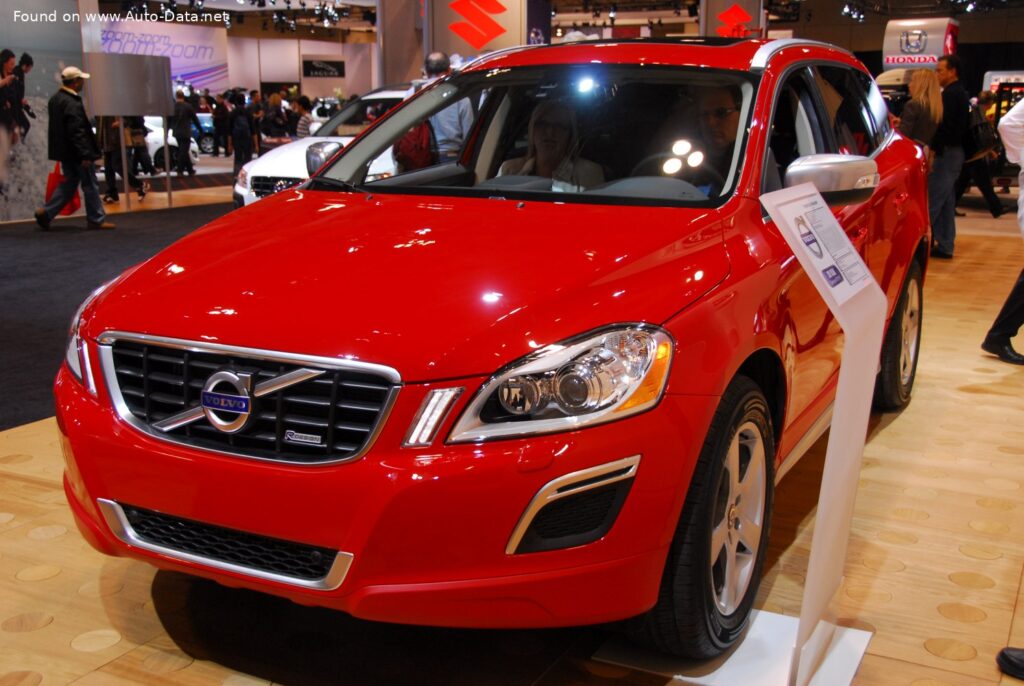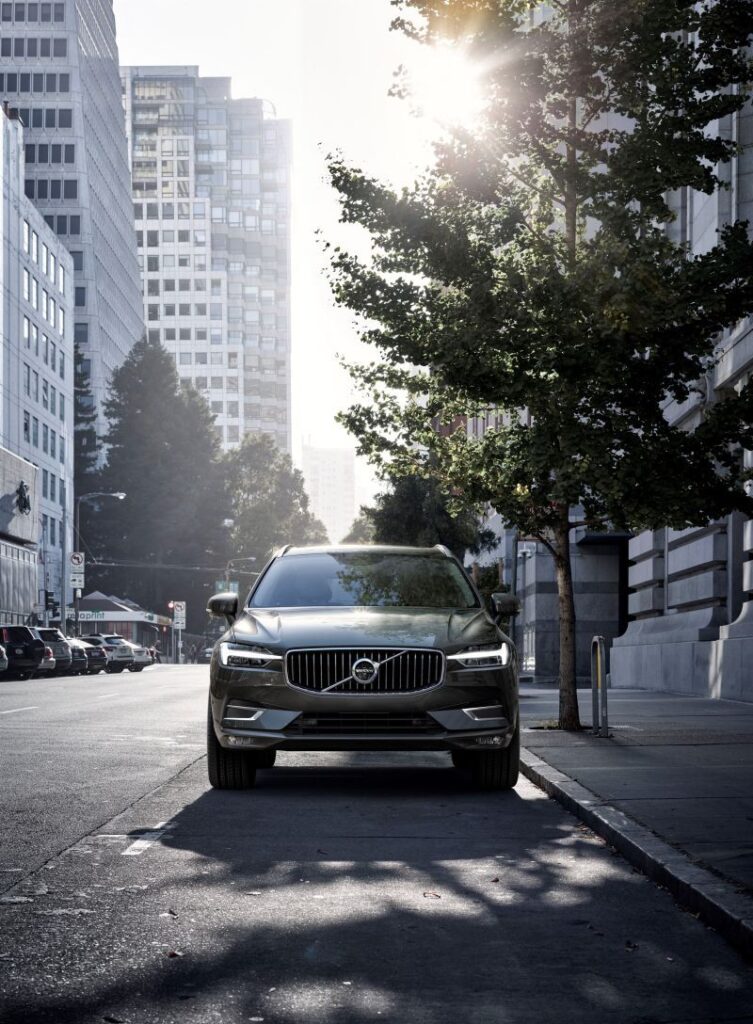
The Volvo XC60 II 2.0 D5 AWD Automatic, produced from 2018 to 2019, represents the second generation of Volvo’s popular compact luxury crossover SUV. Positioned within the highly competitive segment alongside vehicles like the Audi Q5, BMW X3, and Mercedes-Benz GLC, the XC60 II aimed to elevate Volvo’s presence in the global market with a blend of Scandinavian design, advanced safety features, and efficient powertrain options. This particular variant, powered by a 2.0-liter turbocharged diesel engine producing 235 horsepower, was primarily sold in European and Asian markets, where diesel engines remained prevalent due to fuel efficiency and tax incentives. While not officially sold in the United States during these model years, the XC60 II was later introduced to the North American market with gasoline engine options.
Volvo XC60 II: An Overview
The XC60 II marked a significant departure from its predecessor, built upon Volvo’s Scalable Product Architecture (SPA) platform. This new platform allowed for greater flexibility in design and engineering, resulting in a more refined and technologically advanced vehicle. The second-generation XC60 prioritized passenger comfort, safety, and a premium interior experience, solidifying Volvo’s reputation for understated luxury. The 2.0 D5 model specifically catered to buyers seeking a balance between performance and fuel economy, offering a capable all-wheel-drive system for enhanced traction and stability.
Engine & Performance
The heart of the XC60 II 2.0 D5 is a 2.0-liter inline-four cylinder diesel engine, designated the D4204T23. This engine utilizes twin-turbocharging and a commonrail direct fuel injection system to deliver a robust 235 horsepower at 4000 rpm and a substantial 480 Nm (354 lb-ft) of torque between 1740 and 2220 rpm. The twin-turbo setup allows for quick response and minimal turbo lag, providing strong acceleration across a wide range of engine speeds. Paired with an eight-speed automatic transmission and Volvo’s all-wheel-drive system, the XC60 II 2.0 D5 achieves a 0-100 km/h (0-62 mph) time of 7.2 seconds and a 0-60 mph time of 6.8 seconds. Maximum speed is electronically limited to 220 km/h (136.7 mph). The engine’s relatively high compression ratio of 15.8:1 contributes to its efficiency, while a particulate filter helps to minimize emissions, meeting Euro 6d-Temp standards. The engine displaces 1969 cm³ (120.16 cu. in.) and boasts a power output of 119.3 horsepower per liter.
Design & Features
The XC60 II showcases Volvo’s contemporary Scandinavian design language, characterized by clean lines, a minimalist aesthetic, and a focus on natural materials. The exterior features the signature “Thor’s Hammer” LED headlights and a prominent grille with the Volvo iron mark. As a crossover SUV, the XC60 II offers a practical and spacious interior with seating for five passengers. The cabin is meticulously crafted with high-quality materials, including wood trim, leather upholstery, and metal accents. Key features include a large touchscreen infotainment system controlling most vehicle functions, a digital instrument cluster, and a suite of advanced driver-assistance systems (ADAS). These systems typically include automatic emergency braking, lane keeping assist, adaptive cruise control, and blind-spot monitoring. The XC60 II prioritizes safety, aligning with Volvo’s long-standing commitment to occupant protection. Cargo space is generous, offering 505 liters (17.83 cu. ft.) with the rear seats up and expanding to 1432 liters (50.57 cu. ft.) when folded down. The vehicle also offers a respectable towing capacity of up to 2400 kg (5291.09 lbs) with brakes.
Technical Specifications
| Brand | Volvo |
| Model | XC60 |
| Generation | XC60 II |
| Type (Engine) | 2.0 D5 (235 Hp) AWD Automatic |
| Start of production | 2018 |
| End of production | 2019 |
| Powertrain Architecture | Internal Combustion engine |
| Body type | SUV, Crossover |
| Seats | 5 |
| Doors | 5 |
| Fuel consumption (urban) | 6.2-6.8 l/100 km (37.9 – 34.6 US mpg) |
| Fuel consumption (extra urban) | 5.2-5.5 l/100 km (45.2 – 42.8 US mpg) |
| Fuel consumption (combined) | 5.6-6.0 l/100 km (42 – 39.2 US mpg) |
| CO2 emissions | 147-158 g/km |
| Fuel Type | Diesel |
| Acceleration 0 – 100 km/h | 7.2 sec |
| Acceleration 0 – 62 mph | 7.2 sec |
| Acceleration 0 – 60 mph | 6.8 sec |
| Maximum speed | 220 km/h (136.7 mph) |
| Power | 235 Hp @ 4000 rpm |
| Torque | 480 Nm @ 1740-2220 rpm (354.03 lb.-ft. @ 1740-2220 rpm) |
| Maximum engine speed | 5000 rpm |
| Engine layout | Front, Transverse |
| Engine Model/Code | D4204T23 |
| Engine displacement | 1969 cm3 (120.16 cu. in.) |
| Number of cylinders | 4 |
| Engine configuration | Inline |
| Cylinder Bore | 82 mm (3.23 in.) |
| Piston Stroke | 93.2 mm (3.67 in.) |
| Compression ratio | 15.8:1 |
| Number of valves per cylinder | 4 |
| Fuel injection system | Diesel Commonrail |
| Engine aspiration | Twin-Turbo, Intercooler |
| Valvetrain | DOHC |
| Engine oil capacity | 5.2 l (5.49 US qt | 4.58 UK qt) |
| Kerb Weight | 2051 kg (4521.68 lbs.) |
| Trunk (boot) space – minimum | 505 l (17.83 cu. ft.) |
| Trunk (boot) space – maximum | 1432 l (50.57 cu. ft.) |
| Fuel tank capacity | 71 l (18.76 US gal | 15.62 UK gal) |
| AdBlue tank | 11.5 l (3.04 US gal | 2.53 UK gal) |
| Max. roof load | 100 kg (220.46 lbs.) |
| Permitted trailer load with brakes (12%) | 2400 kg (5291.09 lbs.) |
| Permitted trailer load without brakes | 750 kg (1653.47 lbs.) |
| Length | 4688 mm (184.57 in.) |
| Width | 1902 mm (74.88 in.) |
| Width with mirrors folded | 1999 mm (78.7 in.) |
| Width including mirrors | 2117 mm (83.35 in.) |
| Height | 1658 mm (65.28 in.) |
| Wheelbase | 2865 mm (112.8 in.) |
| Front track | 1649-1668 mm (64.92 – 65.67 in.) |
| Rear (Back) track | 1653-1673 mm (65.08 – 65.87 in.) |
| Ride height (ground clearance) | 216 mm (8.5 in.) |
| Drag coefficient (Cd) | 0.32 |
| Minimum turning circle (turning diameter) | 11.8 m (38.71 ft.) |
| Drive wheel | All wheel drive (4×4) |
| Number of gears and type of gearbox | 8 gears, automatic transmission |
The Volvo XC60 II 2.0 D5 AWD Automatic offered a compelling package for buyers seeking a sophisticated, safe, and efficient luxury crossover. Its blend of Scandinavian design, advanced technology, and capable performance cemented its position as a strong contender in a highly competitive market segment.