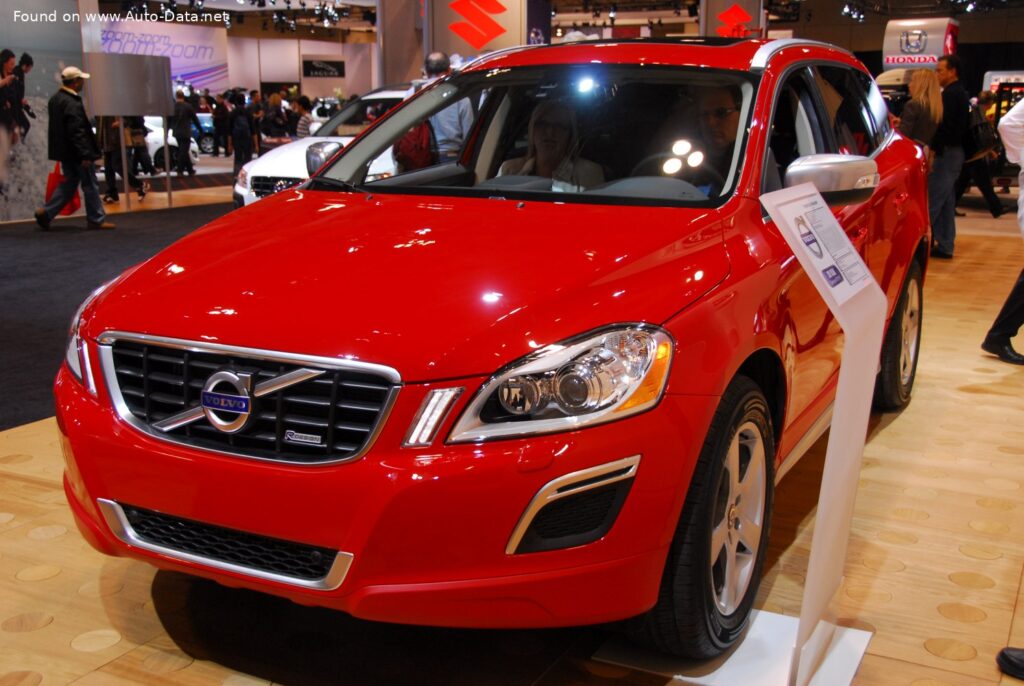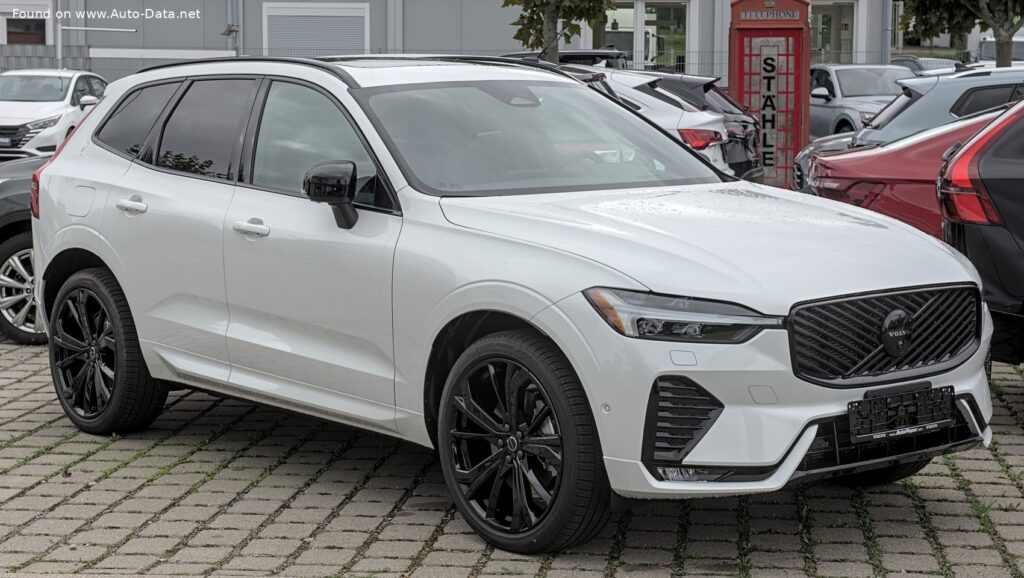
The Volvo XC60 II (facelift 2025) 2.0 T8 represents the latest iteration of Volvo’s popular compact luxury SUV. Introduced in July 2025, this model builds upon the success of the second-generation XC60, offering a refined blend of Scandinavian design, advanced technology, and efficient performance. Positioned within the premium crossover segment, the XC60 competes with vehicles like the Audi Q5, BMW X3, and Mercedes-Benz GLC. The 2.0 T8 variant specifically denotes a plug-in hybrid powertrain, emphasizing Volvo’s commitment to electrification and sustainable mobility.
Volvo XC60 II (facelift 2025) 2.0 T8: An Overview
The XC60 has been a cornerstone of Volvo’s lineup, known for its safety, comfort, and understated elegance. The second generation, launched in 2017, brought a significant leap forward in design and technology. The 2025 facelift further enhances these qualities, with subtle exterior updates and a more sophisticated interior. The 2.0 T8 model is particularly noteworthy for its ability to operate in full electric mode for shorter distances, reducing emissions and fuel consumption. This plug-in hybrid system combines a turbocharged and supercharged four-cylinder gasoline engine with an electric motor, delivering a compelling balance of power and efficiency.
Engine & Performance
The heart of the XC60 II 2.0 T8 is a 2.0-liter inline four-cylinder engine, designated B4204T56, which produces 310 horsepower at 6000 rpm and 400 Nm (295.02 lb.-ft.) of torque between 3000 and 4800 rpm. This engine utilizes both turbocharging and supercharging technologies, along with direct fuel injection, to optimize performance across the rev range. Supplementing this is a rear-mounted electric motor generating 145 horsepower at 15900 rpm and 309 Nm (227.91 lb.-ft.) of torque available from 0 to 3280 rpm. The combined system output reaches a substantial 455 horsepower. Power is delivered to all four wheels via an eight-speed automatic transmission (Geartronic) and an all-wheel-drive system. This configuration allows for a 0-100 km/h (0-62 mph) acceleration time of just 4.9 seconds, and a 0-60 mph time of 4.7 seconds. The vehicle has a maximum speed of 180 km/h (111.85 mph). The powertrain architecture is a plug-in hybrid electric vehicle (PHEV), allowing for both electric-only driving and combined operation.
Design & Features
The Volvo XC60 II maintains the sleek and modern design language established by its predecessor. The 2025 facelift introduces minor cosmetic changes, primarily focused on the front fascia and lighting elements. The body style is a five-door SUV/crossover, offering a practical and spacious interior for five passengers. Key features include a luxurious interior with high-quality materials, a large touchscreen infotainment system, and a suite of advanced driver-assistance systems (ADAS). Safety remains a paramount concern for Volvo, and the XC60 II is equipped with features like ABS, lane-keeping assist, and automatic emergency braking. The vehicle’s dimensions are 4708 mm (185.35 in.) in length, 1902 mm (74.88 in.) in width, and 1651 mm (65 in.) in height, with a wheelbase of 2865 mm (112.8 in.). Trunk space ranges from 468 liters (16.53 cu. ft.) with the rear seats up to 1528 liters (53.96 cu. ft.) with the seats folded down.
Battery and Electric Range
The XC60 II 2.0 T8 features a 18.8 kWh gross battery capacity, with a usable capacity of 14.7 kWh. The battery utilizes lithium-ion technology and is located in the central tunnel, optimizing weight distribution. This allows for an all-electric range of 74-82 km (45.98 – 50.95 mi) according to WLTP testing. The vehicle can achieve a maximum electric speed of 140 km/h (86.99 mph) in electric mode. Charging ports are standard for plug-in hybrid vehicles, allowing for convenient recharging from external power sources. Average energy consumption is rated at 12.2-13.9 kWh/100 km (19.63 – 22.37 kWh/100 mi), translating to 172-151 MPGe and 8.2 – 7.2 km/kWh (5.1 – 4.5 mi/kWh).
Technical Specifications
| Brand | Volvo |
| Model | XC60 |
| Generation | XC60 II (facelift 2025) |
| Type (Engine) | 2.0 T8 (455 Hp) Plug-in Hybrid AWD Geartronic |
| Start of production | July, 2025 |
| Powertrain Architecture | PHEV (Plug-in Hybrid Electric Vehicle) |
| Body type | SUV, Crossover |
| Seats | 5 |
| Doors | 5 |
| Combined fuel consumption (WLTP) | 2.9-3.8 l/100 km (81.1 – 61.9 US mpg, 97.4 – 74.3 UK mpg, 34.5 – 26.3 km/l) |
| CO2 emissions (WLTP) | 64-86 g/km |
| Fuel Type | Petrol / electricity |
| Acceleration 0 – 100 km/h | 4.9 sec |
| Acceleration 0 – 62 mph | 4.9 sec |
| Acceleration 0 – 60 mph | 4.7 sec |
| Maximum speed | 180 km/h (111.85 mph) |
| Emission standard | Euro 6e-bis |
| Weight-to-power ratio | 4.6 kg/Hp, 219.3 Hp/tonne |
| Weight-to-torque ratio | 5.2 kg/Nm, 192.8 Nm/tonne |
| Gross battery capacity | 18.8 kWh |
| Net (usable) battery capacity | 14.7 kWh |
| Battery voltage | 400 V |
| Battery technology | Lithium-ion (Li-Ion) |
| Battery location | In the central tunnel |
| All-electric range (WLTP) | 74-82 km (45.98 – 50.95 mi) |
| Average Energy consumption (WLTP) | 12.2-13.9 kWh/100 km (19.63 – 22.37 kWh/100 mi, 172 – 151 MPGe, 8.2 – 7.2 km/kWh, 5.1 – 4.5 mi/kWh) |
| Max speed (electric) | 140 km/h (86.99 mph) |
| Electric motor power | 145 Hp @ 15900 rpm (227.91 lb.-ft. @ 0-3280 rpm) |
| Electric motor Torque | 309 Nm @ 0-3280 rpm |
| Electric motor location | Rear axle, Transverse |
| Electric motor type | Synchronous |
| System power | 455 Hp |
| Power | 310 Hp @ 6000 rpm |
| Torque | 400 Nm @ 3000-4800 rpm (295.02 lb.-ft. @ 3000-4800 rpm) |
| Engine layout | Front, Transverse |
| Engine Model/Code | B4204T56 |
| Engine displacement | 1969 cm3 (120.16 cu. in.) |
| Number of cylinders | 4 |
| Engine configuration | Inline |
| Number of valves per cylinder | 4 |
| Fuel injection system | Direct injection |
| Engine aspiration | Turbocharging and Supercharger, Intercooler |
| Valvetrain | DOHC |
| Engine oil capacity | 5.6 l (5.92 US qt | 4.93 UK qt) |
| Kerb Weight | 2075 kg (4574.59 lbs.) |
| Max. weight | 2660 kg (5864.3 lbs.) |
| Max load | 585 kg (1289.7 lbs.) |
| Trunk (boot) space – minimum | 468 l (16.53 cu. ft.) |
| Trunk (boot) space – maximum | 1528 l (53.96 cu. ft.) |
| Fuel tank capacity | 71 l (18.76 US gal | 15.62 UK gal) |
| Max. roof load | 100 kg (220.46 lbs.) |
| Permitted trailer load with brakes (12%) | 2250 kg (4960.4 lbs.) |
| Permitted trailer load without brakes | 750 kg (1653.47 lbs.) |
| Permitted towbar download | 100 kg (220.46 lbs.) |
| Length | 4708 mm (185.35 in.) |
| Width | 1902 mm (74.88 in.) |
| Width including mirrors | 2117 mm (83.35 in.) |
| Height | 1651 mm (65 in.) |
| Wheelbase | 2865 mm (112.8 in.) |
| Front overhang | 878 mm (34.57 in.) |
| Rear overhang | 965 mm (37.99 in.) |
| Ride height (ground clearance) | 209 mm (8.23 in.) |
| Drivetrain Architecture | The Internal combustion engine (ICE) permanently drives the front wheels of the vehicle, the electric motor drives the rear wheels of the vehicle, capable of running in full electric mode, only by the Internal combustion engine (ICE) or in mixed mode. |
| Drive wheel | All wheel drive (4×4) |
| Number of gears and type of gearbox | 8 gears, automatic transmission Geartronic |
| Front suspension | Double wishbone, Transverse stabilizer |
| Rear suspension | Transverse stabilizer, Leaf spring |
| Front brakes | Ventilated discs |
| Rear brakes | Ventilated discs |
| Assisting systems | ABS (Anti-lock braking system) |
| Steering type | Steering rack and pinion |
| Power steering | Electric Steering |
| Tires size | 235/55 R19 |
| Wheel rims size | 19 |