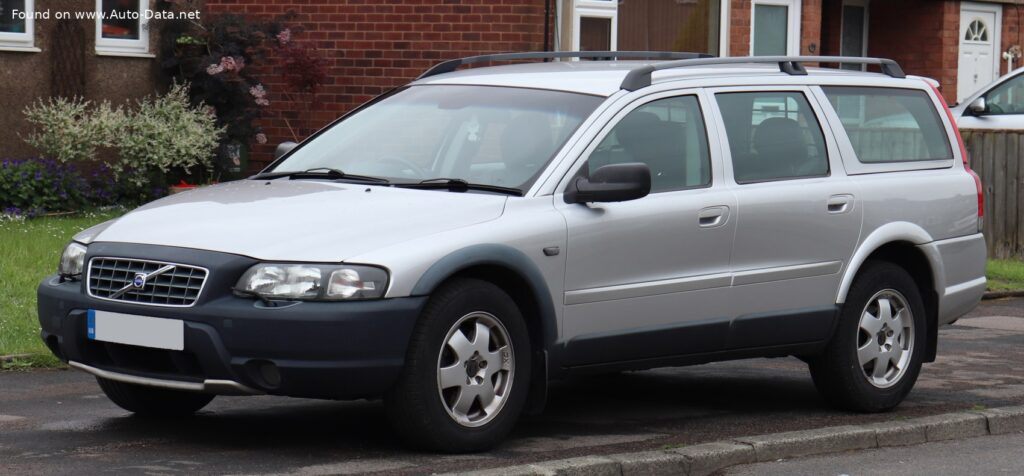
The Volvo XC70 I 2.4 T, produced from 2000 to 2003, represents Volvo’s initial foray into the burgeoning luxury crossover market. Based on the V70 estate car, the XC70 offered increased ground clearance and standard all-wheel drive, blending the practicality of a wagon with the capability of a mild off-roader. This first generation XC70 was primarily sold in Europe and other international markets, establishing a niche for Volvo as a manufacturer of rugged, yet refined, vehicles. It aimed to appeal to buyers seeking a versatile vehicle suitable for both urban driving and outdoor pursuits, a segment that would become increasingly popular in the early 21st century.
Volvo XC70 I 2.4 T: A Detailed Overview
The XC70 I wasn’t simply a V70 with a lift kit. It featured unique styling cues, including robust body cladding, protective skid plates, and a more aggressive front fascia. These elements not only enhanced its visual appeal but also provided a degree of protection against the elements. The vehicle’s focus was on providing a comfortable and capable driving experience, emphasizing safety – a hallmark of the Volvo brand – and practicality. The 2.4 T model, equipped with a turbocharged 2.4-liter inline-five engine, was a popular choice, offering a balance of performance and fuel efficiency.
Engine & Performance
The heart of the XC70 I 2.4 T is a 2.4-liter inline-five cylinder engine, designated the B5234T7. This engine utilizes a turbocharger to boost power output to 200 horsepower at 6000 rpm, and 285 Nm (210.21 lb.-ft.) of torque at 1800 rpm. The engine’s transverse mounting and multi-port fuel injection system contribute to its responsive nature. Power is delivered to all four wheels via a five-speed manual transmission, providing confident traction in various conditions. The XC70 I 2.4 T achieves a 0-100 km/h (0-62 mph) acceleration time of 8.6 seconds, and a 0-60 mph time of approximately 8.2 seconds. Its top speed is electronically limited to 210 km/h (130.49 mph). The engine’s specific output is 82.1 horsepower per liter, demonstrating a good level of efficiency for a turbocharged engine of that era. The weight-to-power ratio of 8.2 kg/Hp and weight-to-torque ratio of 5.7 kg/Nm further illustrate the vehicle’s balanced performance characteristics.
Design & Features
The Volvo XC70 I is a five-door station wagon (estate) or crossover, offering seating for five passengers. Its design emphasizes practicality and durability. The raised ride height, compared to the standard V70, provides improved ground clearance for navigating rougher terrain. The exterior features robust plastic cladding around the lower body, protecting the paintwork from scratches and impacts. Inside, the XC70 I offers a comfortable and well-appointed cabin, typical of Volvo’s Scandinavian design philosophy. Safety features, a core Volvo value, include ABS (Anti-lock Braking System) as standard. The interior offers a spacious cargo area, with a minimum capacity of 485 liters (17.13 cu. ft.) expanding to a maximum of 1641 liters (57.95 cu. ft.) with the rear seats folded down. The vehicle’s dimensions are 4733 mm (186.34 in.) in length, 1860 mm (73.23 in.) in width, and 1562 mm (61.5 in.) in height, with a wheelbase of 2763 mm (108.78 in.).
Technical Specifications
| Brand | Volvo |
| Model | XC70 |
| Generation | XC70 I |
| Type (Engine) | 2.4 T (200 Hp) AWD |
| Start of production | March, 2000 |
| End of production | 2003 |
| Powertrain Architecture | Internal Combustion engine |
| Body type | Station wagon (estate), Crossover |
| Seats | 5 |
| Doors | 5 |
| Fuel consumption (urban) | 13.7 l/100 km (17.2 US mpg, 20.6 UK mpg, 7.3 km/l) |
| Fuel consumption (extra urban) | 8.6 l/100 km (27.4 US mpg, 32.8 UK mpg, 11.6 km/l) |
| Fuel Type | Petrol (Gasoline) |
| Acceleration 0 – 100 km/h | 8.6 sec |
| Acceleration 0 – 62 mph | 8.6 sec |
| Acceleration 0 – 60 mph | 8.2 sec |
| Maximum speed | 210 km/h (130.49 mph) |
| Weight-to-power ratio | 8.2 kg/Hp |
| Weight-to-torque ratio | 5.7 kg/Nm |
| Power | 200 Hp @ 6000 rpm |
| Torque | 285 Nm @ 1800 rpm (210.21 lb.-ft. @ 1800 rpm) |
| Engine layout | Front, Transverse |
| Engine Model/Code | B5234T7 |
| Engine displacement | 2435 cm3 (148.59 cu. in.) |
| Number of cylinders | 5 |
| Engine configuration | Inline |
| Cylinder Bore | 83 mm (3.27 in.) |
| Piston Stroke | 90 mm (3.54 in.) |
| Compression ratio | 9:1 |
| Number of valves per cylinder | 4 |
| Fuel injection system | Multi-port manifold injection |
| Engine aspiration | Turbocharger |
| Valvetrain | DOHC |
| Engine oil capacity | 5.5 l (5.81 US qt | 4.84 UK qt) |
| Coolant | 9 l (9.51 US qt | 7.92 UK qt) |
| Kerb Weight | 1630 kg (3593.53 lbs.) |
| Max. weight | 2220 kg (4894.26 lbs.) |
| Max load | 590 kg (1300.73 lbs.) |
| Trunk (boot) space – minimum | 485 l (17.13 cu. ft.) |
| Trunk (boot) space – maximum | 1641 l (57.95 cu. ft.) |
| Fuel tank capacity | 68 l (17.96 US gal | 14.96 UK gal) |
| Length | 4733 mm (186.34 in.) |
| Width | 1860 mm (73.23 in.) |
| Height | 1562 mm (61.5 in.) |
| Wheelbase | 2763 mm (108.78 in.) |
| Front track | 1611 mm (63.43 in.) |
| Rear (Back) track | 1548 mm (60.94 in.) |
| Drive wheel | All wheel drive (4×4) |
| Number of gears and type of gearbox | 5 gears, manual transmission |
| Front suspension | Spring Strut |
| Rear suspension | Coil spring |
| Front brakes | Ventilated discs |
| Rear brakes | Disc |
| Assisting systems | ABS (Anti-lock braking system) |
| Steering type | Steering rack and pinion |
| Tires size | 215/65 R16 |
| Wheel rims size | 16 |
The Volvo XC70 I 2.4 T, while not a groundbreaking vehicle in terms of innovation, successfully carved out a niche for itself as a practical, safe, and capable crossover. It laid the foundation for the subsequent generations of the XC70, which would become a popular model for Volvo, particularly in Europe and North America. Its blend of wagon practicality and all-wheel-drive capability resonated with buyers seeking a versatile vehicle for both everyday use and weekend adventures.