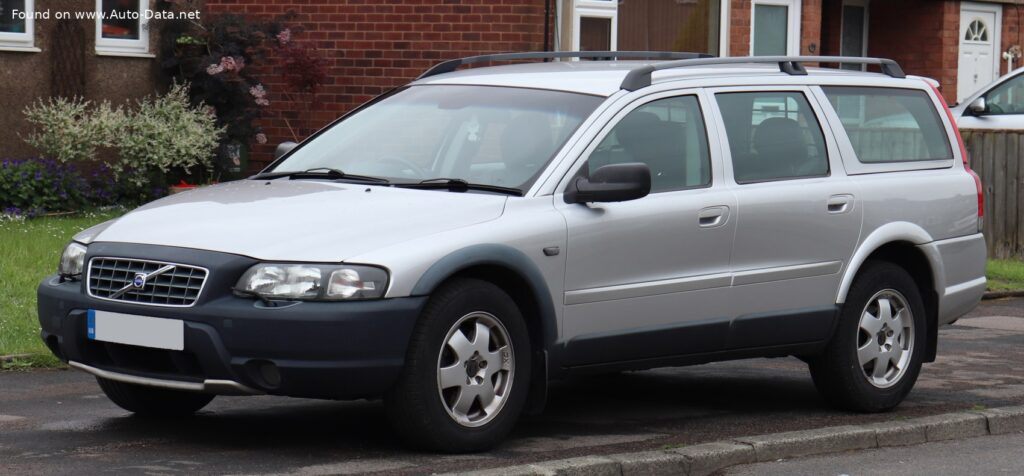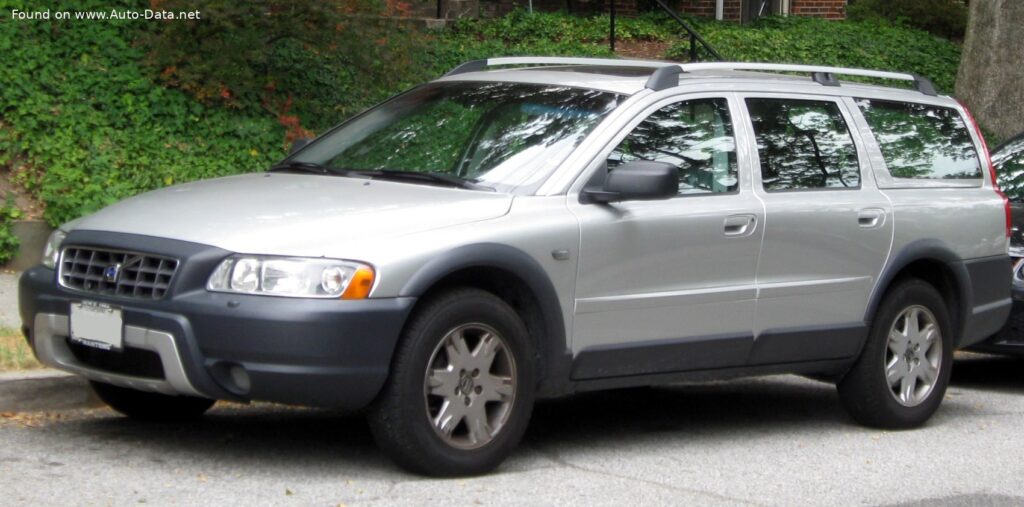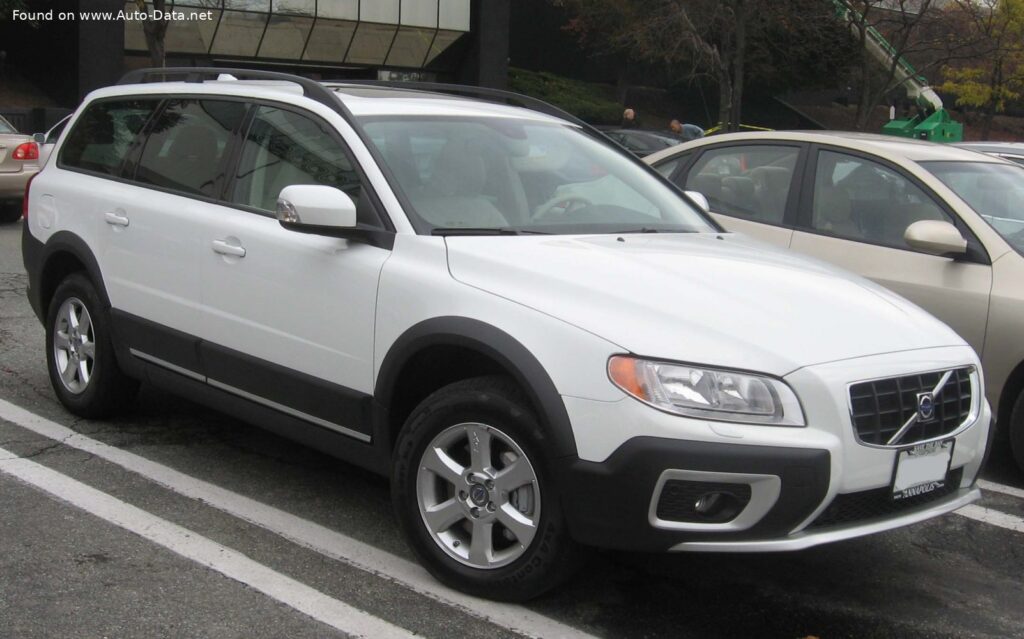
The Volvo XC70 II 2.0 D3 (163 Hp) is a compact executive station wagon, representing the second generation of the XC70 model line. Produced between 2010 and 2013, it served as Volvo’s offering in the premium all-weather, all-road wagon segment, primarily aimed at the European market. While not officially sold in the United States during this generation, the XC70, in general, held a niche appeal for American buyers seeking a practical, safe, and capable vehicle with a distinct Scandinavian design aesthetic. The XC70 II bridged the gap between traditional station wagons and the emerging crossover SUV market, offering increased ground clearance and available all-wheel drive for enhanced versatility.
Volvo XC70 II: An Overview
The XC70 II built upon the foundation of the Volvo V70, adding rugged styling cues, protective body cladding, and a slightly raised ride height. This created a vehicle that could comfortably handle both on-road driving and light off-road adventures. The 2.0 D3 variant, powered by a five-cylinder diesel engine, was a popular choice in Europe due to its fuel efficiency and respectable performance. It catered to drivers prioritizing economy without sacrificing the comfort and practicality expected from a Volvo.
Engine & Performance
The heart of the XC70 II 2.0 D3 is a 2.0-liter inline-five cylinder diesel engine, designated the D5204T3. This engine produces 163 horsepower at 3500 rpm and a substantial 400 Nm (295.02 lb.-ft.) of torque between 1500 and 2750 rpm. The engine utilizes a turbocharger and intercooler to enhance performance and efficiency. Power is delivered to the front wheels via a six-speed automatic transmission. Acceleration from 0 to 100 km/h (0-62 mph) takes 10.2 seconds, while 0 to 60 mph is achieved in approximately 9.7 seconds. The engine’s relatively high torque output provides good responsiveness for everyday driving and overtaking maneuvers. Fuel economy is a strong point, with combined cycle consumption rated at 6.4 l/100 km (36.8 US mpg, 44.1 UK mpg, 15.6 km/l). The engine meets Euro 5 emission standards, reflecting Volvo’s commitment to environmental responsibility.
Design & Features
The XC70 II retains the classic Volvo station wagon profile, characterized by clean lines and a focus on practicality. The exterior distinguishes itself from the standard V70 with robust lower body cladding, integrated roof rails, and distinctive alloy wheel options. Inside, the XC70 II offers a comfortable and spacious cabin for five passengers. The interior design emphasizes Scandinavian minimalism, with a focus on functionality and user-friendliness. Standard features typically included climate control, a premium audio system, and power-adjustable front seats. Safety was, and remains, a core Volvo value. The XC70 II is equipped with a comprehensive suite of safety features, including Anti-lock Braking System (ABS), and a robust chassis designed to protect occupants in the event of a collision. The cargo area is generously sized, offering 575 liters (20.31 cu. ft.) of space with the rear seats up, expanding significantly when folded down. The vehicle’s dimensions are 4838 mm (190.47 in.) in length, 1870 mm (73.62 in.) in width, and 1604 mm (63.15 in.) in height.
Technical Specifications
| Brand | Volvo |
| Model | XC70 |
| Generation | XC70 II |
| Type (Engine) | 2.0 D3 (163 Hp) |
| Start of production | 2010 |
| End of production | 2013 |
| Powertrain Architecture | Internal Combustion engine |
| Body type | Station wagon (estate), Crossover |
| Seats | 5 |
| Doors | 5 |
| Fuel consumption (urban) | 8.4 l/100 km (28 US mpg, 33.6 UK mpg, 11.9 km/l) |
| Fuel consumption (extra urban) | 5.3 l/100 km (44.4 US mpg, 53.3 UK mpg, 18.9 km/l) |
| Fuel consumption (combined) | 6.4 l/100 km (36.8 US mpg, 44.1 UK mpg, 15.6 km/l) |
| Fuel Type | Diesel |
| Acceleration 0 – 100 km/h | 10.2 sec |
| Acceleration 0 – 62 mph | 10.2 sec |
| Acceleration 0 – 60 mph | 9.7 sec |
| Emission standard | Euro 5 |
| Weight-to-power ratio | 10.6 kg/Hp |
| Weight-to-torque ratio | 4.3 kg/Nm |
| Power | 163 Hp @ 3500 rpm |
| Torque | 400 Nm @ 1500-2750 rpm (295.02 lb.-ft. @ 1500-2750 rpm) |
| Engine layout | Front, Transverse |
| Engine Model/Code | D5204T3 |
| Engine displacement | 1984 cm3 (121.07 cu. in.) |
| Number of cylinders | 5 |
| Engine configuration | Inline |
| Cylinder Bore | 81 mm (3.19 in.) |
| Piston Stroke | 77 mm (3.03 in.) |
| Fuel injection system | Diesel Commonrail |
| Engine aspiration | Turbocharger, Intercooler |
| Engine oil capacity | 5.9 l (6.23 US qt | 5.19 UK qt) |
| Coolant | 8.9 l (9.4 US qt | 7.83 UK qt) |
| Kerb Weight | 1727 kg (3807.38 lbs.) |
| Max. weight | 2330 kg (5136.77 lbs.) |
| Max load | 603 kg (1329.39 lbs.) |
| Trunk (boot) space – minimum | 575 l (20.31 cu. ft.) |
| Fuel tank capacity | 70 l (18.49 US gal | 15.4 UK gal) |
| Length | 4838 mm (190.47 in.) |
| Width | 1870 mm (73.62 in.) |
| Height | 1604 mm (63.15 in.) |
| Wheelbase | 2815 mm (110.83 in.) |
| Drivetrain Architecture | Internal Combustion engine (ICE) – Front Wheel Drive |
| Number of gears and type of gearbox | 6 gears, automatic transmission |
| Assisting systems | ABS (Anti-lock braking system) |
The Volvo XC70 II 2.0 D3 represents a compelling blend of practicality, safety, and efficiency. While not a high-performance vehicle, it offered a comfortable and capable driving experience, particularly well-suited to the demands of European roads and climates. Its enduring appeal lies in its ability to combine the versatility of a crossover with the refined driving characteristics of a traditional Volvo wagon.