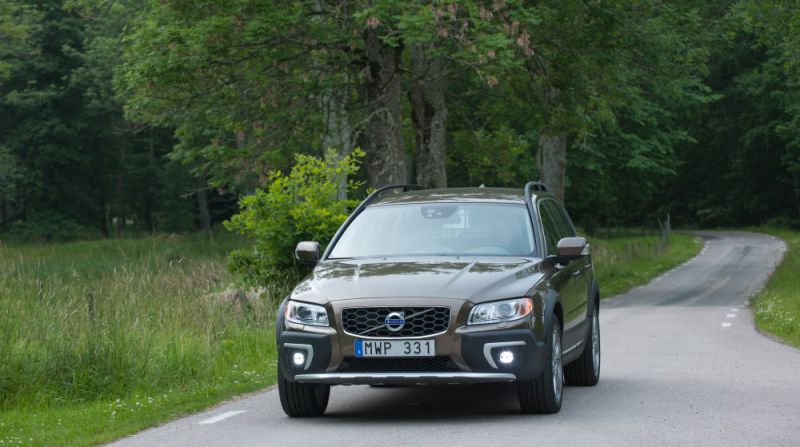
The Volvo XC70 II, particularly the facelifted version introduced in 2013, represents a significant iteration of Volvo’s rugged, all-wheel-drive wagon. Positioned as a crossover estate, the XC70 aimed to blend the practicality of a station wagon with the capability and aesthetic appeal of a sport utility vehicle. This model, powered by a 2.4-liter turbocharged diesel engine (D4), was primarily marketed in Europe and other international markets, offering a compelling alternative to traditional SUVs. The XC70 II facelift brought updated styling, improved efficiency, and enhanced safety features, solidifying its position as a premium offering in its segment.
Volvo XC70 II (2013-2016): A Detailed Overview
The XC70 II, produced from 2007 to 2016, was a key model in Volvo’s lineup, bridging the gap between traditional wagons and the burgeoning crossover market. The 2013 facelift brought a refreshed front fascia, revised interior trim, and updated technology. While not officially sold in the United States, the XC70 enjoyed considerable popularity in Europe, where the demand for practical, all-weather vehicles remains strong. It competed with vehicles like the Audi A6 allroad, BMW X1, and Volkswagen Passat Alltrack, offering a unique blend of Scandinavian design, safety, and off-road capability.
Engine & Performance
The 2013 Volvo XC70 II 2.4 D4 is equipped with a 2.4-liter inline-five cylinder diesel engine, designated the D5244T17. This engine produces 163 horsepower at 4,000 rpm and a substantial 420 Nm (309.78 lb.-ft.) of torque between 1,500 and 2,500 rpm. The engine features a turbocharger with an intercooler and a diesel commonrail fuel injection system, contributing to both performance and efficiency. Power is delivered to all four wheels via a six-speed automatic transmission, providing confident traction in various conditions. Acceleration from 0 to 100 km/h (0-62 mph) takes 10.8 seconds, while 0 to 60 mph is achieved in approximately 10.3 seconds. The vehicle has a maximum speed of 195 km/h (121.17 mph). Fuel economy is rated at 6.4 liters per 100 kilometers (36.8 US mpg) combined, with urban consumption at 8.6 l/100km (27.4 US mpg) and extra-urban at 5.2 l/100km (45.2 US mpg). CO2 emissions are rated at 169 g/km, meeting Euro 5 emission standards.
Design & Features
The XC70 II maintains Volvo’s signature Scandinavian design language, characterized by clean lines and a focus on functionality. The body style is a five-door station wagon (estate) with crossover-inspired styling cues, including increased ground clearance and robust exterior cladding. The 2013 facelift brought subtle changes to the front grille, headlights, and bumper, giving the vehicle a more modern appearance. Inside, the XC70 offers a comfortable and spacious cabin with seating for five passengers. The interior is well-appointed with quality materials and features a user-friendly layout. Key features include all-wheel drive for enhanced traction, a spacious cargo area with a minimum capacity of 575 liters (20.31 cu. ft.) expanding to 1600 liters (56.5 cu. ft.) with the rear seats folded, and a range of safety technologies. Safety features are a hallmark of Volvo, and the XC70 II includes ABS, ventilated disc brakes on all wheels, and a robust chassis designed to protect occupants in the event of a collision. The vehicle’s suspension utilizes an independent McPherson strut setup at the front and an independent coil spring arrangement at the rear, providing a comfortable ride and stable handling.
Technical Specifications
| Brand | Volvo |
| Model | XC70 |
| Generation | XC70 II (facelift 2013) |
| Type (Engine) | 2.4 D4 (163 Hp) AWD Automatic |
| Start of production | 2013 |
| End of production | 2016 |
| Powertrain Architecture | Internal Combustion engine |
| Body type | Station wagon (estate), Crossover |
| Seats | 5 |
| Doors | 5 |
| Fuel consumption (urban) | 8.6 l/100 km (27.4 US mpg) |
| Fuel consumption (extra urban) | 5.2 l/100 km (45.2 US mpg) |
| Fuel consumption (combined) | 6.4 l/100 km (36.8 US mpg) |
| CO2 emissions | 169 g/km |
| Fuel Type | Diesel |
| Acceleration 0 – 100 km/h | 10.8 sec |
| Acceleration 0 – 62 mph | 10.8 sec |
| Acceleration 0 – 60 mph | 10.3 sec |
| Maximum speed | 195 km/h (121.17 mph) |
| Emission standard | Euro 5 |
| Power | 163 Hp @ 4000 rpm |
| Torque | 420 Nm @ 1500-2500 rpm (309.78 lb.-ft.) |
| Engine layout | Front, Transverse |
| Engine Model/Code | D5244T17 |
| Engine displacement | 2400 cm3 (146.46 cu. in.) |
| Number of cylinders | 5 |
| Engine configuration | Inline |
| Cylinder Bore | 81 mm (3.19 in.) |
| Piston Stroke | 93.15 mm (3.67 in.) |
| Compression ratio | 16.5:1 |
| Number of valves per cylinder | 4 |
| Fuel injection system | Diesel Commonrail |
| Engine aspiration | Turbocharger, Intercooler |
| Valvetrain | DOHC |
| Engine oil capacity | 5.9 l (6.23 US qt | 5.19 UK qt) |
| Coolant | 8.9 l (9.4 US qt | 7.83 UK qt) |
| Trunk (boot) space – minimum | 575 l (20.31 cu. ft.) |
| Trunk (boot) space – maximum | 1600 l (56.5 cu. ft.) |
| Fuel tank capacity | 70 l (18.49 US gal | 15.4 UK gal) |
| Length | 4838 mm (190.47 in.) |
| Width | 1870 mm (73.62 in.) |
| Height | 1604 mm (63.15 in.) |
| Wheelbase | 2815 mm (110.83 in.) |
| Front track | 1614 mm (63.54 in.) |
| Rear track | 1580 mm (62.2 in.) |
| Minimum turning circle | 11.5 m (37.73 ft.) |
| Drive wheel | All wheel drive (4×4) |
| Number of gears | 6 |
| Gearbox type | Automatic transmission |
| Front suspension | Independent type McPherson |
| Rear suspension | Independent coil spring |
| Front brakes | Ventilated discs |
| Rear brakes | Ventilated discs |
| Tires size | 215/65 R16 |
| Wheel rims size | 16 |