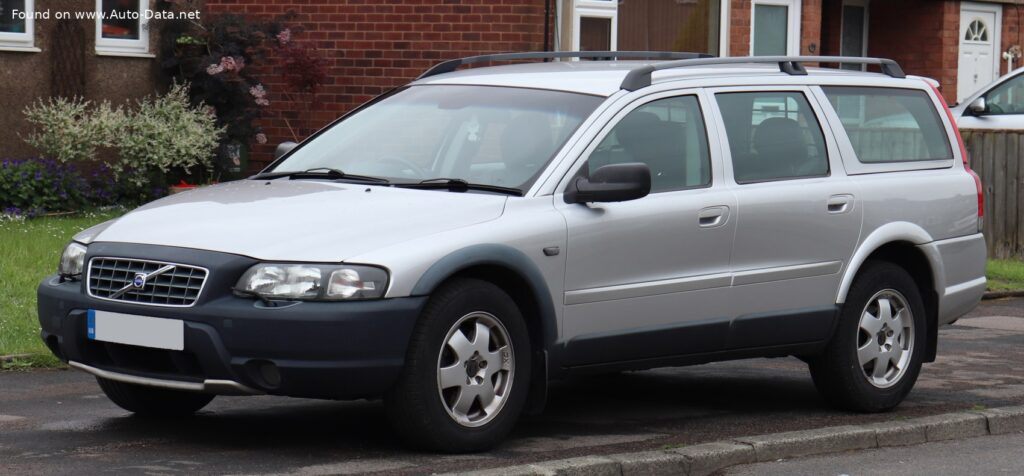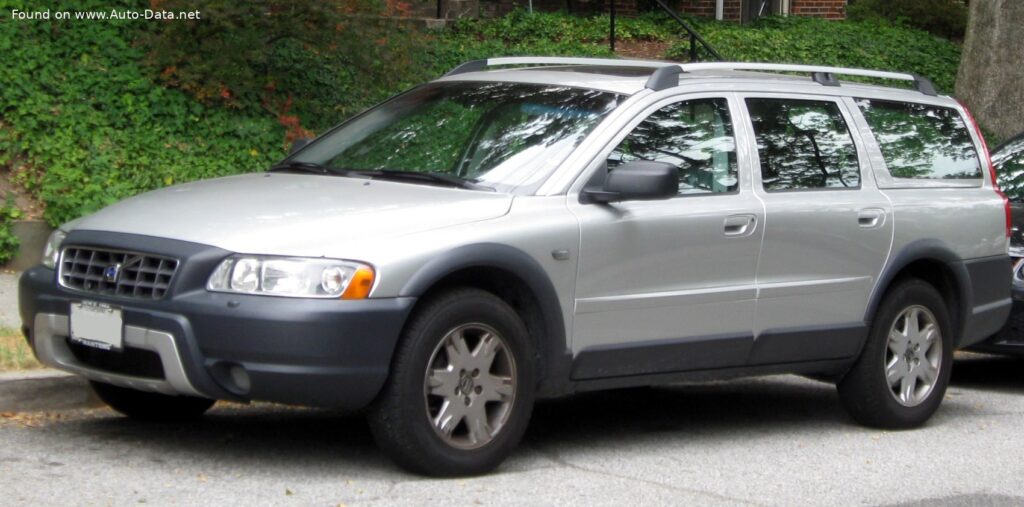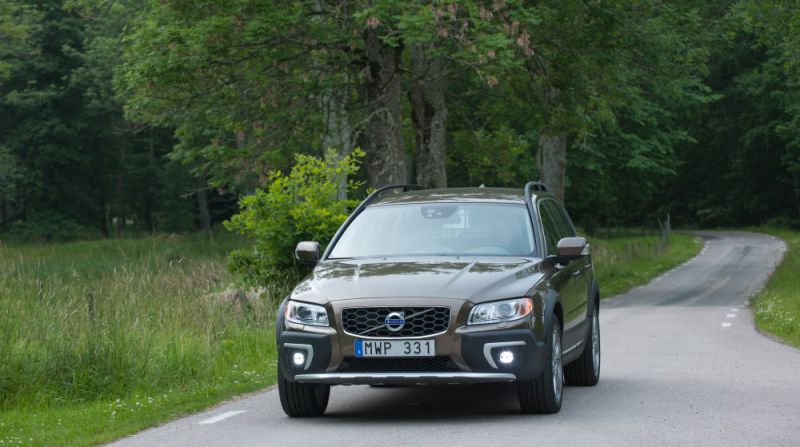
The Volvo XC70 II, particularly the facelifted version introduced in 2013, represents Volvo’s entry into the premium compact crossover market. Building upon the success of the original XC70, this second generation offered a blend of station wagon practicality, mild off-road capability thanks to its standard all-wheel drive, and Volvo’s renowned safety features. Positioned above the XC60 and below the XC90 in Volvo’s lineup, the XC70 II catered to buyers seeking a versatile vehicle capable of handling both daily commutes and weekend adventures. The 2.4 D5 variant, powered by a turbocharged diesel engine, was a popular choice in European markets, offering a balance of performance and fuel efficiency.
Volvo XC70 II (2013-2016) 2.4 D5 AWD: An Overview
The facelifted 2013 XC70 II brought subtle but significant updates to the exterior and interior, enhancing its appeal. These changes included revised front and rear styling, updated interior materials, and the integration of new technology features. While not officially sold in the United States, the XC70 held a strong position in Europe as a sophisticated alternative to more conventional SUVs. It appealed to customers who valued practicality, safety, and a more understated aesthetic compared to some of its competitors.
Engine & Performance
The heart of the XC70 II 2.4 D5 is a 2.4-liter inline-five cylinder diesel engine, designated D5244T11. This engine produces 215 horsepower at 4,000 rpm and a substantial 420 Nm (309.78 lb.-ft.) of torque between 1,500 and 3,250 rpm. The turbocharger and intercooler work in concert to deliver responsive performance across a wide range of engine speeds. Power is delivered to all four wheels via a six-speed manual transmission, providing confident traction in various conditions. Acceleration from 0 to 100 km/h (0-62 mph) takes 8 seconds, while the 0-60 mph sprint is achieved in a calculated 7.6 seconds. The XC70 II 2.4 D5 boasts a maximum speed of 210 km/h (130.49 mph). The engine’s design prioritizes fuel efficiency, achieving combined fuel economy figures of 5.3 l/100 km (44.4 US mpg, 53.3 UK mpg), and CO2 emissions of 139 g/km, meeting Euro 5 emission standards.
Design & Features
The XC70 II maintains the classic Volvo station wagon profile, albeit with a raised ride height and rugged styling cues that hint at its crossover capabilities. The body features protective cladding around the lower edges, adding to its adventurous appearance. The 2013 facelift brought a revised front grille, headlights, and bumper, giving the XC70 a more contemporary look. Inside, the cabin is characterized by its comfortable and functional design. The five-seat layout offers ample space for passengers and cargo. The trunk provides a minimum of 575 liters (20.31 cu. ft.) of storage space, expanding to a generous 1600 liters (56.5 cu. ft.) with the rear seats folded down. Safety is a hallmark of Volvo vehicles, and the XC70 II is no exception. It includes standard features such as ABS (Anti-lock Braking System), ventilated disc brakes on all wheels, and a robust chassis designed to protect occupants in the event of a collision. The vehicle’s dimensions are 4838 mm (190.47 in.) in length, 1870 mm (73.62 in.) in width, and 1604 mm (63.15 in.) in height, with a wheelbase of 2815 mm (110.83 in.).
Technical Specifications
| Brand | Volvo |
| Model | XC70 |
| Generation | XC70 II (facelift 2013) |
| Type (Engine) | 2.4 D5 (215 Hp) AWD |
| Start of production | 2013 |
| End of production | 2016 |
| Powertrain Architecture | Internal Combustion engine |
| Body type | Station wagon (estate), Crossover |
| Seats | 5 |
| Doors | 5 |
| Fuel consumption (urban) | 6.1 l/100 km (38.6 US mpg, 46.3 UK mpg, 16.4 km/l) |
| Fuel consumption (extra urban) | 4.8 l/100 km (49 US mpg, 58.9 UK mpg, 20.8 km/l) |
| Fuel consumption (combined) | 5.3 l/100 km (44.4 US mpg, 53.3 UK mpg, 18.9 km/l) |
| CO2 emissions | 139 g/km |
| Fuel Type | Diesel |
| Acceleration 0 – 100 km/h | 8 sec |
| Acceleration 0 – 62 mph | 8 sec |
| Acceleration 0 – 60 mph | 7.6 sec |
| Maximum speed | 210 km/h (130.49 mph) |
| Emission standard | Euro 5 |
| Weight-to-power ratio | 8.9 kg/Hp, 112 Hp/tonne |
| Weight-to-torque ratio | 4.6 kg/Nm, 218.9 Nm/tonne |
| Power | 215 Hp @ 4000 rpm |
| Torque | 420 Nm @ 1500-3250 rpm (309.78 lb.-ft. @ 1500-3250 rpm) |
| Engine layout | Front, Transverse |
| Engine Model/Code | D5244T11 |
| Engine displacement | 2400 cm3 (146.46 cu. in.) |
| Number of cylinders | 5 |
| Engine configuration | Inline |
| Cylinder Bore | 81 mm (3.19 in.) |
| Piston Stroke | 93.15 mm (3.67 in.) |
| Compression ratio | 16.5:1 |
| Number of valves per cylinder | 4 |
| Fuel injection system | Diesel Commonrail |
| Engine aspiration | Turbocharger, Intercooler |
| Valvetrain | DOHC |
| Engine oil capacity | 5.9 l (6.23 US qt | 5.19 UK qt) |
| Coolant | 8.9 l (9.4 US qt | 7.83 UK qt) |
| Kerb Weight | 1919 kg (4230.67 lbs.) |
| Max. weight | 2390 kg (5269.05 lbs.) |
| Max load | 471 kg (1038.38 lbs.) |
| Trunk (boot) space – minimum | 575 l (20.31 cu. ft.) |
| Trunk (boot) space – maximum | 1600 l (56.5 cu. ft.) |
| Fuel tank capacity | 70 l (18.49 US gal | 15.4 UK gal) |
| Length | 4838 mm (190.47 in.) |
| Width | 1870 mm (73.62 in.) |
| Height | 1604 mm (63.15 in.) |
| Wheelbase | 2815 mm (110.83 in.) |
| Front track | 1614 mm (63.54 in.) |
| Rear (Back) track | 1580 mm (62.2 in.) |
| Minimum turning circle | 12 m (39.37 ft.) |
| Drive wheel | All wheel drive (4×4) |
| Number of gears | 6 gears, manual transmission |
| Front suspension | Independent type McPherson |
| Rear suspension | Independent coil spring |
| Front brakes | Ventilated discs |
| Rear brakes | Ventilated discs |
| Tires size | 215/65 R16 |
| Wheel rims size | 16 |