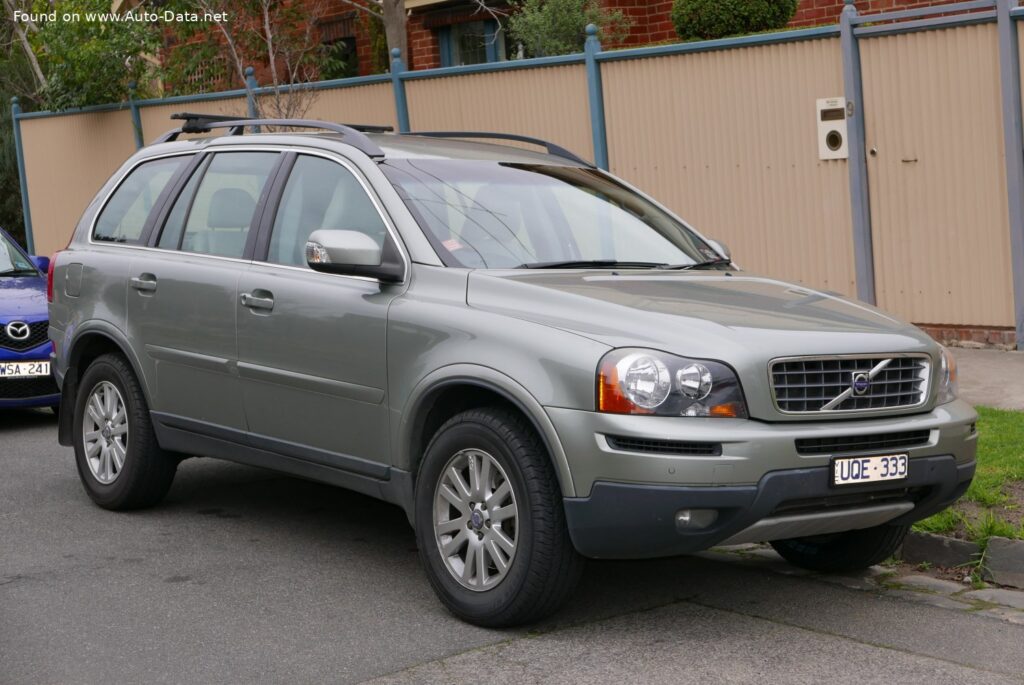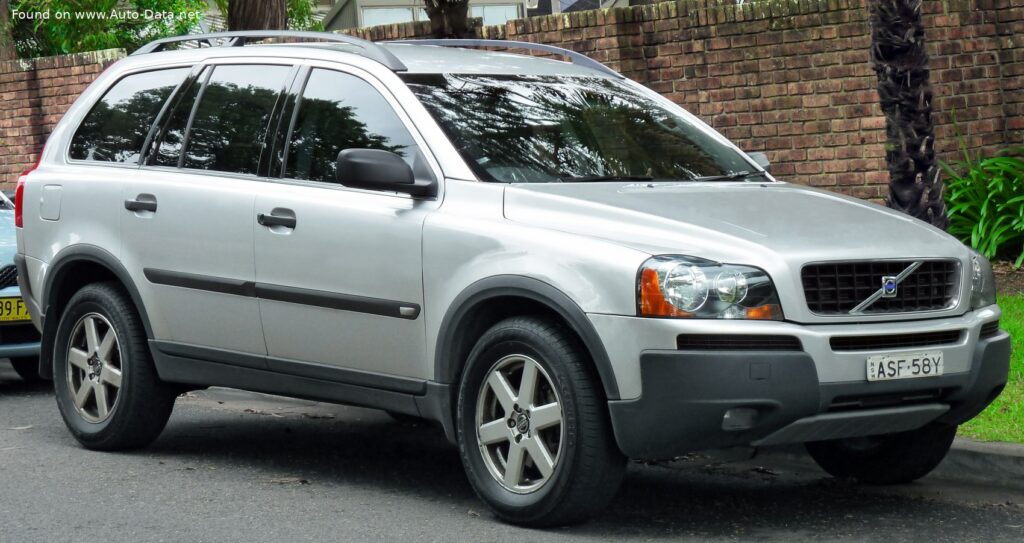
The Volvo XC90 2.5 T 20V, produced between 2002 and 2006, represents Volvo’s initial foray into the burgeoning luxury SUV market. As the first SUV from the Swedish manufacturer, the XC90 was a pivotal model, establishing Volvo as a competitor in a segment previously dominated by American and German automakers. Built on the YC platform, shared with the first-generation Land Rover Discovery, the XC90 aimed to combine Volvo’s renowned safety with the practicality and space demanded by families. This first generation XC90 quickly became a sales success for Volvo, particularly in North America and Europe, and laid the foundation for the brand’s continued expansion in the SUV category.
Volvo XC90 2.5 T 20V: An Overview
The XC90 2.5 T 20V occupied the mid-size luxury SUV segment, offering seating for up to seven passengers depending on configuration. It distinguished itself through a blend of Scandinavian design, robust build quality, and a focus on passenger safety – hallmarks of the Volvo brand. The “2.5 T” designation refers to the engine: a 2.5-liter turbocharged inline-five cylinder engine. The “20V” indicates the engine’s 20 valves (four valves per cylinder). This model year offered a compelling alternative to established SUVs, appealing to buyers seeking a sophisticated and secure vehicle.
Engine & Performance
The heart of the XC90 2.5 T 20V is its 2.5-liter inline-five cylinder engine, designated the B5254T2. This engine produces 210 horsepower at 5000 rpm and 320 Nm (236.02 lb.-ft.) of torque at 1500 rpm. The engine utilizes a turbocharger and intercooler to enhance performance, providing a good balance of power and responsiveness. Power is delivered to all four wheels via a five-speed manual transmission, making it a driver-focused option within the XC90 range. Acceleration from 0 to 100 km/h (0-62 mph) takes 9.9 seconds, while 0 to 60 mph is achieved in approximately 9.4 seconds. The vehicle boasts a top speed of 210 km/h (130.49 mph). The engine’s transverse mounting and front-wheel-drive based all-wheel-drive system contribute to its efficient packaging and balanced handling. The power-to-weight ratio of 9.5 kg/Hp and torque-to-weight ratio of 6.2 kg/Nm contribute to a reasonably spirited driving experience for a vehicle of its size.
Design & Features
The Volvo XC90’s exterior design is characterized by its clean lines and understated elegance, embodying the Scandinavian aesthetic. The SUV features a relatively boxy silhouette, maximizing interior space and practicality. The five-door body style provides easy access to the cabin, while the available third-row seating expands passenger capacity. Inside, the XC90 prioritizes comfort and functionality. The interior is well-appointed with quality materials, and the dashboard layout is logically organized. Safety was a paramount concern in the XC90’s design. It included standard features such as anti-lock brakes (ABS), side impact protection systems (SIPS), and a reinforced safety cage. The XC90 also offered optional features like stability control and a rollover protection system (ROPS). Trunk space is generous, ranging from 613 liters (21.65 cu. ft.) with all seats in place to 2404 liters (84.9 cu. ft.) with the rear seats folded down. The vehicle’s dimensions – 4800 mm (188.98 in.) in length, 1890 mm (74.41 in.) in width, and 1740 mm (68.5 in.) in height – provide ample room for passengers and cargo.
Technical Specifications
| Brand | Volvo |
| Model | XC90 |
| Generation | XC90 |
| Type (Engine) | 2.5 T 20V (210 Hp) |
| Start of production | 2002 |
| End of production | 2006 |
| Powertrain Architecture | Internal Combustion engine |
| Body type | SUV |
| Seats | 5 |
| Doors | 5 |
| Fuel consumption (urban) | 16.1 l/100 km (14.6 US mpg, 17.5 UK mpg, 6.2 km/l) |
| Fuel consumption (extra urban) | 9.4 l/100 km (25 US mpg, 30.1 UK mpg, 10.6 km/l) |
| Fuel consumption (combined) | 11.1-11.4 l/100 km (21.2 – 20.6 US mpg, 25.4 – 24.8 UK mpg, 9 – 8.8 km/l) |
| CO2 emissions | 266-273 g/km |
| Fuel Type | Petrol (Gasoline) |
| Acceleration 0 – 100 km/h | 9.9 sec |
| Acceleration 0 – 62 mph | 9.9 sec |
| Acceleration 0 – 60 mph | 9.4 sec |
| Maximum speed | 210 km/h (130.49 mph) |
| Weight-to-power ratio | 9.5 kg/Hp |
| Weight-to-torque ratio | 6.2 kg/Nm |
| Power | 210 Hp @ 5000 rpm |
| Torque | 320 Nm @ 1500 rpm (236.02 lb.-ft. @ 1500 rpm) |
| Engine layout | Front, Transverse |
| Engine Model/Code | B5254T2 |
| Engine displacement | 2521 cm3 (153.84 cu. in.) |
| Number of cylinders | 5 |
| Engine configuration | Inline |
| Cylinder Bore | 83 mm (3.27 in.) |
| Piston Stroke | 93.2 mm (3.67 in.) |
| Compression ratio | 9:1 |
| Number of valves per cylinder | 4 |
| Fuel injection system | Multi-port manifold injection |
| Engine aspiration | Turbocharger, Intercooler |
| Valvetrain | DOHC |
| Engine oil capacity | 5.5 l (5.81 US qt | 4.84 UK qt) |
| Coolant | 8.8 l (9.3 US qt | 7.74 UK qt) |
| Kerb Weight | 1985 kg (4376.18 lbs.) |
| Max. weight | 2620 kg (5776.11 lbs.) |
| Max load | 635 kg (1399.94 lbs.) |
| Trunk (boot) space – minimum | 613 l (21.65 cu. ft.) |
| Trunk (boot) space – maximum | 2404 l (84.9 cu. ft.) |
| Fuel tank capacity | 72 l (19.02 US gal | 15.84 UK gal) |
| Length | 4800 mm (188.98 in.) |
| Width | 1890 mm (74.41 in.) |
| Height | 1740 mm (68.5 in.) |
| Wheelbase | 2860 mm (112.6 in.) |
| Front track | 1635 mm (64.37 in.) |
| Rear (Back) track | 1625 mm (63.98 in.) |
| Drive wheel | All wheel drive (4×4) |
| Number of gears and type of gearbox | 5 gears, manual transmission |
| Front suspension | Coil spring |
| Rear suspension | Coil spring |
| Front brakes | Disc |
| Rear brakes | Disc |
| Assisting systems | ABS (Anti-lock braking system) |
| Steering type | Steering rack and pinion |
| Power steering | Hydraulic Steering |
| Tires size | 225/70 R16 |
| Wheel rims size | 16 |
The Volvo XC90 2.5 T 20V proved to be a significant vehicle for Volvo, successfully launching the brand into the competitive luxury SUV market. Its combination of safety, practicality, and Scandinavian design resonated with buyers, establishing a strong foundation for the XC90’s continued success in subsequent generations.