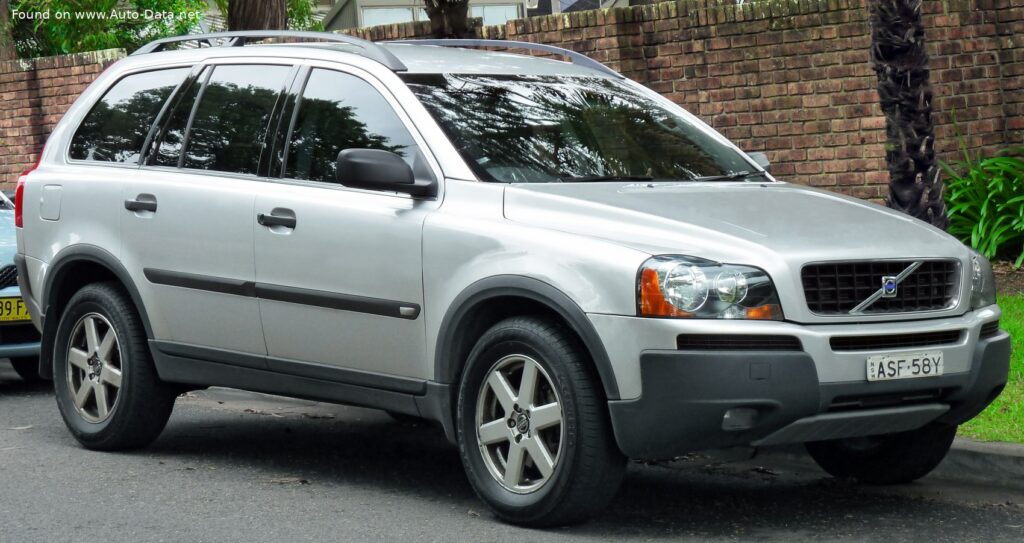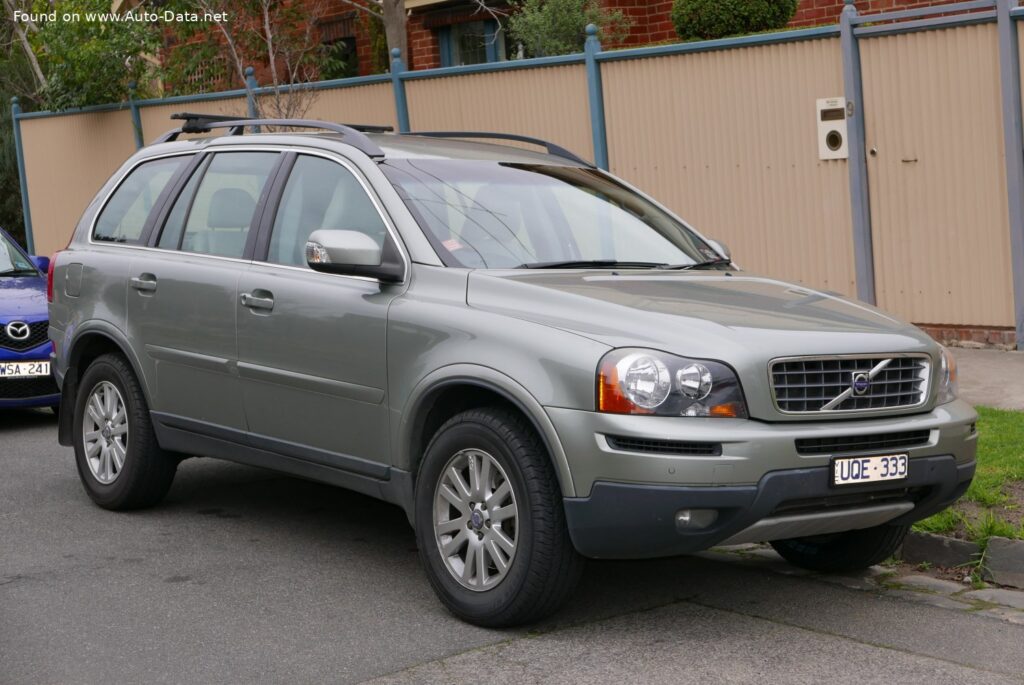
The Volvo XC90, particularly the facelifted version introduced in 2007, represents a significant entry for the Swedish automaker into the burgeoning luxury SUV market. This generation, produced through 2014, aimed to blend Scandinavian design principles with practicality and safety – hallmarks of the Volvo brand. The 2.5 T variant, equipped with a 210 horsepower turbocharged engine and automatic transmission, was a popular choice, offering a balance of performance and fuel efficiency for families seeking a versatile seven-passenger vehicle. While not initially a major seller in the United States compared to American or Japanese competitors, the XC90 established a foothold for Volvo and became known for its robust build quality and distinctive styling.
Volvo XC90 (Facelift 2007) 2.5 T: An Overview
The XC90 facelift of 2007 brought subtle but important changes to Volvo’s flagship SUV. These updates included revised front and rear styling, an upgraded interior, and enhancements to the engine lineup. The 2.5 T model, powered by a 2.5-liter inline-five cylinder engine, was positioned as the entry-level offering, providing a comfortable and capable driving experience. The vehicle’s core appeal lay in its spacious interior, accommodating up to seven passengers, and its commitment to safety features, a long-standing Volvo tradition. The XC90 competed with vehicles like the Acura MDX, BMW X5, and Lexus RX, offering a unique Scandinavian alternative in a crowded segment.
Engine & Performance
The heart of the XC90 2.5 T is a 2.5-liter inline-five cylinder engine, designated the B5254T2. This engine utilizes a turbocharger and intercooler to produce 210 horsepower at 5000 rpm and 320 Nm (236.02 lb.-ft.) of torque at 1500 rpm. The turbocharging system provides a noticeable boost in power, enhancing acceleration and providing ample torque for everyday driving and towing. Power delivery is managed through a five-speed automatic transmission, which offers smooth shifts and contributes to a relatively relaxed driving experience. Acceleration from 0 to 100 km/h (0-62 mph) takes 9.9 seconds, while 0 to 60 mph is achieved in approximately 9.4 seconds. The top speed is electronically limited to 200 km/h (124.27 mph). Fuel economy is rated at 11.8 l/100 km (19.9 US mpg) combined, with 16 l/100 km (14.7 US mpg) in urban conditions and 9.2 l/100 km (25.6 US mpg) on the highway. The engine’s power-to-weight ratio is 9.9 kg/Hp, and the torque-to-weight ratio is 6.5 kg/Nm.
Design & Features
The Volvo XC90 boasts a classic SUV body style, characterized by its boxy shape and elevated ride height. The 2007 facelift brought a more refined appearance, with a redesigned grille, headlights, and taillights. The interior is spacious and well-appointed, with seating for up to seven passengers across three rows. The second-row seats can be folded flat or removed entirely to maximize cargo space. With all rear seats folded, the XC90 offers a substantial 1837 liters (64.87 cu. ft.) of cargo volume, reducing to 249 liters (8.79 cu. ft.) with all seats in use. Safety is a paramount concern for Volvo, and the XC90 is equipped with a comprehensive suite of safety features, including ABS (Anti-lock Braking System), side impact protection, and a robust chassis designed to absorb impact energy. Other notable features include all-wheel drive (4×4) for enhanced traction in various conditions, and a fuel tank capacity of 80 liters (21.13 US gal).
Technical Specifications
| Brand | Volvo |
| Model | XC90 |
| Generation | XC90 (facelift 2007) |
| Type (Engine) | 2.5 T(210 Hp) Automatic |
| Start of production | 2007 |
| End of production | 2014 |
| Powertrain Architecture | Internal Combustion engine |
| Body type | SUV |
| Seats | 7 |
| Doors | 5 |
| Fuel consumption (economy) – urban | 16 l/100 km (14.7 US mpg) |
| Fuel consumption (economy) – extra urban | 9.2 l/100 km (25.6 US mpg) |
| Fuel consumption (economy) – combined | 11.8 l/100 km (19.9 US mpg) |
| CO2 emissions | 282 g/km |
| Fuel Type | Petrol (Gasoline) |
| Acceleration 0 – 100 km/h | 9.9 sec |
| Acceleration 0 – 62 mph | 9.9 sec |
| Acceleration 0 – 60 mph | 9.4 sec |
| Maximum speed | 200 km/h (124.27 mph) |
| Emission standard | Euro 4 |
| Weight-to-power ratio | 9.9 kg/Hp |
| Weight-to-torque ratio | 6.5 kg/Nm |
| Power | 210 Hp @ 5000 rpm |
| Torque | 320 Nm @ 1500 rpm (236.02 lb.-ft. @ 1500 rpm) |
| Engine layout | Front, Transverse |
| Engine Model/Code | B5254T2 |
| Engine displacement | 2521 cm3 (153.84 cu. in.) |
| Number of cylinders | 5 |
| Engine configuration | Inline |
| Cylinder Bore | 83 mm (3.27 in.) |
| Piston Stroke | 93.2 mm (3.67 in.) |
| Compression ratio | 9:1 |
| Number of valves per cylinder | 4 |
| Fuel injection system | Multi-port manifold injection |
| Engine aspiration | Turbocharger, Intercooler |
| Engine oil capacity | 5.5 l (5.81 US qt | 4.84 UK qt) |
| Kerb Weight | 2080 kg (4585.62 lbs.) |
| Max. weight | 2590 kg (5709.97 lbs.) |
| Max load | 510 kg (1124.36 lbs.) |
| Trunk (boot) space – minimum | 249 l (8.79 cu. ft.) |
| Trunk (boot) space – maximum | 1837 l (64.87 cu. ft.) |
| Fuel tank capacity | 80 l (21.13 US gal | 17.6 UK gal) |
| Length | 4798 mm (188.9 in.) |
| Width | 1898 mm (74.72 in.) |
| Height | 1743 mm (68.62 in.) |
| Wheelbase | 2857 mm (112.48 in.) |
| Minimum turning circle | 11.9 m (39.04 ft.) |
| Drive wheel | All wheel drive (4×4) |
| Number of gears and type of gearbox | 5 gears, automatic transmission |
| Front brakes | Ventilated discs |
| Rear brakes | Ventilated discs |
| Assisting systems | ABS (Anti-lock braking system) |