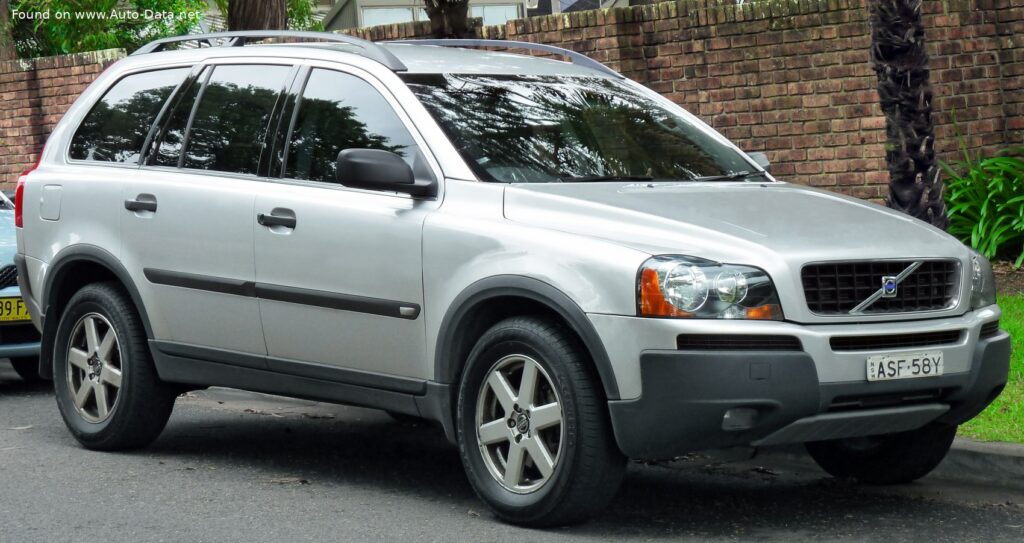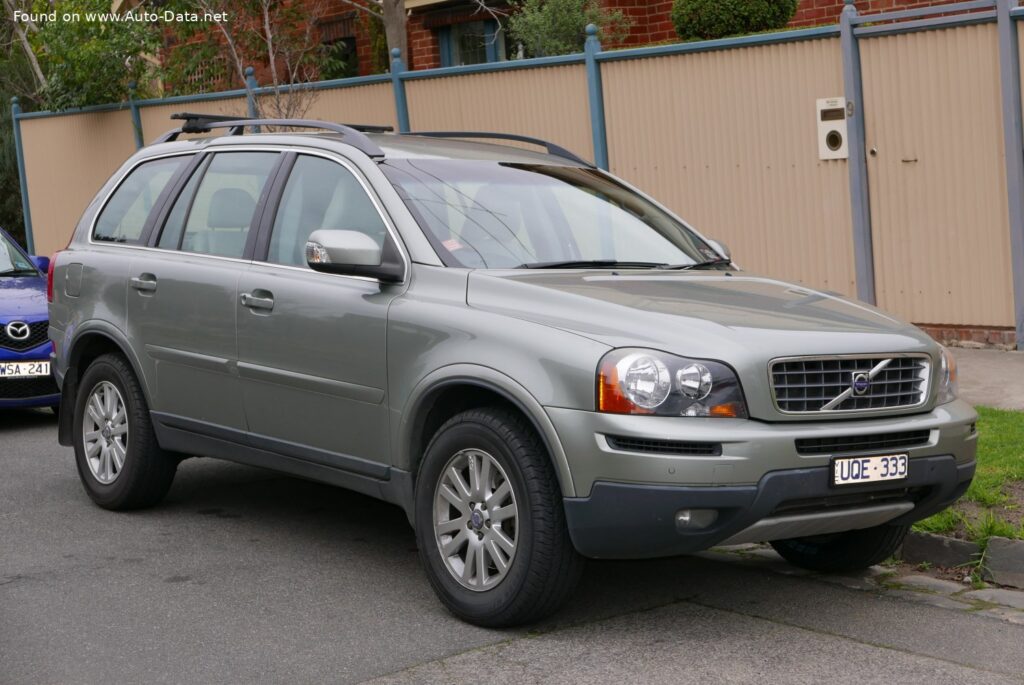
The Volvo XC90, particularly the facelifted version introduced in 2007 and produced through 2012, represents a significant entry for the Swedish automaker into the burgeoning luxury SUV market. This generation, powered by a 3.2-liter inline-six engine, aimed to blend Scandinavian design principles with practicality and a focus on safety – hallmarks of the Volvo brand. While not initially a top seller in the highly competitive US market, the XC90 established a foothold and paved the way for Volvo’s later success in the premium SUV segment. The 2010-2012 model years represent the culmination of the first-generation XC90’s development, offering a refined driving experience and a spacious interior.
Volvo XC90 (Facelift 2007) 3.2: An Overview
The XC90 was Volvo’s first attempt at a full-size SUV, and it quickly became one of their best-selling models globally. The 2007 facelift brought subtle but important changes to the exterior styling, interior materials, and available technology. The 3.2 variant, equipped with a naturally aspirated 3.2-liter inline-six engine, was a key offering in many markets. This model combined respectable performance with relatively good fuel economy for its class, and it was typically paired with an automatic transmission and all-wheel drive (AWD) for enhanced traction and stability. The XC90’s appeal lay in its blend of luxury, safety, and practicality, making it a compelling alternative to established German and American SUVs.
Engine & Performance
The heart of the 2010-2012 Volvo XC90 3.2 is a 3.2-liter (194.79 cubic inches) inline-six cylinder engine, designated the B6324S5. This engine produces 243 horsepower at 6400 rpm and 320 Nm (236.02 lb.-ft.) of torque at 3200 rpm. The engine features multi-port fuel injection and a double overhead camshaft (DOHC) valvetrain with four valves per cylinder. While not a powerhouse in terms of outright acceleration, the engine provides smooth and linear power delivery, well-suited for everyday driving and highway cruising. Acceleration from 0 to 100 km/h (0-62 mph) takes 9.5 seconds, and 0 to 60 mph is achieved in approximately 9 seconds. The engine’s naturally aspirated design contributes to a responsive feel, though it lacks the low-end grunt of turbocharged alternatives. The XC90’s top speed is electronically limited to 210 km/h (130.49 mph). Fuel consumption is rated at 11.4 liters per 100 kilometers (20.6 US mpg), and CO2 emissions are 265 g/km, meeting Euro 5 emission standards.
Design & Features
The Volvo XC90 is a five-door SUV with seating for five passengers. Its design emphasizes Scandinavian minimalism, characterized by clean lines and a focus on functionality. The 2007 facelift brought revised front and rear fascias, updated interior trim, and improved safety features. The interior is spacious and well-appointed, with comfortable seating and a user-friendly layout. Key features include a standard automatic transmission, all-wheel drive, and a comprehensive suite of safety equipment. The XC90’s cargo capacity is generous, offering 613 liters (21.65 cubic feet) with the rear seats up and expanding to 1837 liters (64.87 cubic feet) with the seats folded down. The vehicle’s ride height of 218 mm (8.58 inches) provides good ground clearance for navigating varied terrain. The XC90 prioritizes passenger safety, incorporating features like ABS (Anti-lock Braking System) and a robust chassis designed to protect occupants in the event of a collision.
Technical Specifications
| Brand | Volvo |
| Model | XC90 |
| Generation | XC90 (facelift 2007) |
| Type (Engine) | 3.2 (243 Hp) AWD Automatic |
| Start of production | 2010 |
| End of production | 2012 |
| Powertrain Architecture | Internal Combustion engine |
| Body type | SUV |
| Seats | 5 |
| Doors | 5 |
| Fuel consumption (combined) | 11.4 l/100 km |
| Fuel consumption (US mpg) | 20.6 US mpg |
| Fuel consumption (UK mpg) | 24.8 UK mpg |
| CO2 emissions | 265 g/km |
| Fuel Type | Petrol (Gasoline) |
| Acceleration 0 – 100 km/h | 9.5 sec |
| Acceleration 0 – 62 mph | 9.5 sec |
| Acceleration 0 – 60 mph | 9 sec |
| Maximum speed | 210 km/h (130.49 mph) |
| Emission standard | Euro 5 |
| Power | 243 Hp @ 6400 rpm |
| Power per litre | 76.1 Hp/l |
| Torque | 320 Nm @ 3200 rpm (236.02 lb.-ft. @ 3200 rpm) |
| Engine layout | Front, Transverse |
| Engine Model/Code | B6324S5 |
| Engine displacement | 3192 cm3 (194.79 cu. in.) |
| Number of cylinders | 6 |
| Engine configuration | Inline |
| Cylinder Bore | 84 mm (3.31 in.) |
| Piston Stroke | 96 mm (3.78 in.) |
| Compression ratio | 10.8:1 |
| Number of valves per cylinder | 4 |
| Fuel injection system | Multi-port manifold injection |
| Engine aspiration | Naturally aspirated engine |
| Valvetrain | DOHC |
| Engine oil capacity | 7.3 l (7.71 US qt | 6.42 UK qt) |
| Coolant | 9.7 l (10.25 US qt | 8.53 UK qt) |
| Trunk (boot) space – minimum | 613 l (21.65 cu. ft.) |
| Trunk (boot) space – maximum | 1837 l (64.87 cu. ft.) |
| Fuel tank capacity | 80 l (21.13 US gal | 17.6 UK gal) |
| Length | 4807 mm (189.25 in.) |
| Width | 1936 mm (76.22 in.) |
| Height | 1743 mm (68.62 in.) |
| Wheelbase | 2857 mm (112.48 in.) |
| Front track | 1634 mm (64.33 in.) |
| Rear (Back) track | 1624 mm (63.94 in.) |
| Ride height (ground clearance) | 218 mm (8.58 in.) |
| Minimum turning circle (turning diameter) | 12.7 – 13.3 m (41.67 – 43.64 ft.) |
| Drive wheel | All wheel drive (4×4) |
| Number of gears and type of gearbox | 6 gears, automatic transmission |
| Front suspension | Independent, type McPherson with coil spring and anti-roll bar |
| Rear suspension | Independent coil spring |
| Front brakes | Ventilated discs |
| Rear brakes | Disc |
| Assisting systems | ABS (Anti-lock braking system) |
| Steering type | Steering rack and pinion |