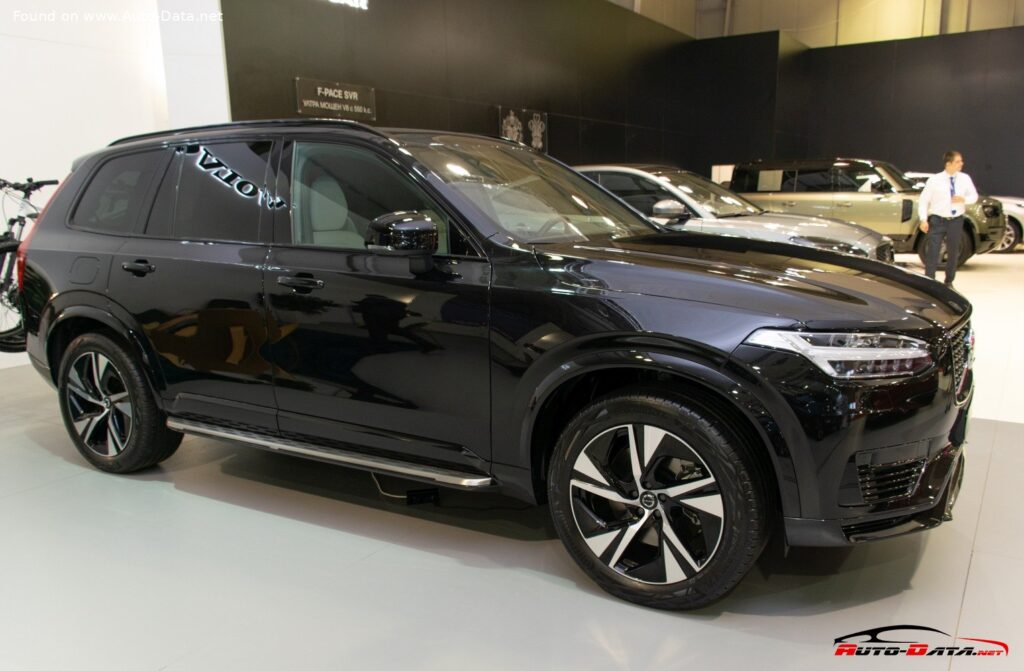
The Volvo XC90 II, specifically the 2.0 B5 (235 Hp) Mild Hybrid AWD Automatic variant, represents a significant iteration of Volvo’s flagship SUV. Introduced in August 2019 as part of a comprehensive facelift, this model continued in production through March 2024. It occupies a key position within the XC90 II range, offering a balance between performance, fuel efficiency, and luxury features. This variant is built on the Scalable Product Architecture (SPA) platform, also known internally as the P24 chassis, which underpins several Volvo models. The “B5” designation signifies Volvo’s mild hybrid powertrain strategy, integrating a 48-volt system to enhance efficiency and responsiveness.
The 2.0 B5 Mild Hybrid Powertrain
At the heart of the XC90 II B5 lies the D420T2 engine, a 2.0-liter inline-four cylinder diesel engine. This engine produces 235 horsepower at 4000 rpm and 480 Nm (354.03 lb-ft) of torque between 1740 and 2220 rpm. The engine utilizes a diesel commonrail fuel injection system and is equipped with twin-turbocharging and an intercooler to optimize power delivery. The compression ratio is a high 15.8:1, contributing to the engine’s efficiency. The valvetrain employs a Double Overhead Camshaft (DOHC) configuration with four valves per cylinder. A key component of the B5 system is the integrated starter generator (ISG), a 48-volt electric motor that provides power assist during acceleration and enables regenerative braking, capturing energy normally lost during deceleration. This energy is stored in a small 48-volt battery, contributing to improved fuel economy. The engine’s oil capacity is 5.6 liters (5.92 US quarts / 4.93 UK quarts) and requires a specific oil specification, detailed in Volvo’s service documentation.
Transmission and Drivetrain
The 2.0 B5 is exclusively paired with an 8-speed automatic transmission, marketed by Volvo as “Geartronic.” This transmission is known for its smooth shifting characteristics and contributes to the vehicle’s refined driving experience. The drivetrain is an all-wheel drive (AWD) system. The AWD system operates with the internal combustion engine and electric motor permanently driving the front wheels. When needed, an electronically or mechanically controlled clutch engages the rear wheels, providing additional traction and stability. This system allows the XC90 B5 to operate primarily in front-wheel drive for efficiency, seamlessly transitioning to all-wheel drive when conditions demand it.
Driving Characteristics
The XC90 II B5 offers a comfortable and composed driving experience. While not as overtly sporty as some competitors, the 235 hp output and 480 Nm of torque provide ample power for everyday driving and highway cruising. Acceleration from 0 to 100 km/h (0-62 mph) takes approximately 7.6 seconds, and 0-60 mph is achieved in around 7.2 seconds. The mild hybrid system provides a noticeable boost in responsiveness during acceleration, minimizing turbo lag and delivering a more linear power delivery. The 8-speed automatic transmission contributes to relaxed highway driving, with well-chosen gear ratios that keep the engine operating within its optimal efficiency range. Compared to higher-output XC90 variants, such as those with the petrol engines, the B5 prioritizes fuel economy and refinement over outright performance. The B5 also differs from earlier diesel models, offering improved emissions and a smoother, quieter operation thanks to the mild hybrid technology.
Equipment & Trim Levels
The XC90 II B5 typically came well-equipped as standard, reflecting Volvo’s commitment to safety and luxury. Standard features generally included leather upholstery, a panoramic sunroof, a premium sound system, and a comprehensive suite of driver-assistance technologies, such as automatic emergency braking, lane keeping assist, and adaptive cruise control. The infotainment system, centered around a large touchscreen display, provides access to navigation, climate control, and vehicle settings. Optional extras included upgraded audio systems, ventilated and massaging front seats, and a head-up display. Trim levels varied by market, but generally offered increasing levels of luxury and technology. The B5 trim often served as a mid-range offering, positioned above the base models and below the more premium trims with higher-powered engines and more extensive feature lists.
Chassis & Braking
The XC90 II B5 utilizes a double wishbone front suspension and a transverse stabilizer bar, providing a comfortable ride and predictable handling. The rear suspension features a transverse stabilizer and leaf springs. The braking system consists of ventilated discs on all four wheels, with front discs measuring 345 mm and rear discs measuring 320 mm. The vehicle is equipped with ABS (Anti-lock Braking System) and other electronic stability control systems. The XC90 B5’s ride height (ground clearance) is 223 mm (8.78 inches), providing adequate clearance for various road conditions. Steering is provided by a rack and pinion system with electric power steering.
Market Reception & Comparison
The Volvo XC90 II B5 was generally well-received by automotive critics. It was praised for its comfortable ride, spacious interior, and advanced safety features. The mild hybrid powertrain was lauded for its contribution to improved fuel economy and reduced emissions. Fuel consumption figures, according to WLTP testing, range from 6.4 to 7.5 l/100 km (36.8 to 31.4 US mpg, 44.1 to 37.7 UK mpg, 15.6 to 13.3 km/l). CO2 emissions range from 167 to 195 g/km. Compared to other XC90 trims, the B5 offered a compelling balance of performance and efficiency. While the higher-powered petrol engines provided more exhilarating acceleration, the B5’s fuel economy and torque made it a practical choice for everyday driving. Reliability reports suggest that the D420T2 engine and the 8-speed automatic transmission are generally reliable, although regular maintenance is crucial for optimal performance and longevity.
Technical Specifications
| Brand | Volvo |
| Model | XC90 |
| Generation | XC90 II (facelift 2019) |
| Type | 2.0 B5 (235 Hp) Mild Hybrid AWD Automatic |
| Start of production | August, 2019 |
| End of production | March, 2024 |
| Powertrain Architecture | MHEV (Mild Hybrid Electric Vehicle) |
| Body type | SUV |
| Seats | 5 |
| Doors | 5 |
| Fuel consumption (combined WLTP) | 6.4-7.5 l/100 km |
| CO2 emissions (WLTP) | 167-195 g/km |
| Fuel Type | Diesel |
| Acceleration 0 – 100 km/h | 7.6 sec |
| Maximum speed | 220 km/h (136.7 mph) |
| Engine Model/Code | D420T2 |
| Engine displacement | 1969 cm3 (120.16 cu. in.) |
| Number of cylinders | 4 |
| Power | 235 Hp @ 4000 rpm |
| Torque | 480 Nm @ 1740-2220 rpm (354.03 lb.-ft.) |
| Fuel tank capacity | 71 l (18.76 US gal) |
| Trunk (boot) space (minimum) | 721 l (25.46 cu. ft.) |
| Trunk (boot) space (maximum) | 1886 l (66.6 cu. ft.) |
| Transmission | 8-speed automatic (Geartronic) |
Legacy
The Volvo XC90 II B5 represents a significant step in Volvo’s transition towards electrification. The mild hybrid powertrain demonstrated Volvo’s commitment to reducing emissions and improving fuel efficiency. In the used car market, the XC90 II B5 is generally considered a reliable and well-equipped SUV. The D420T2 engine, when properly maintained, has proven to be durable. The combination of luxury, safety, and practicality makes the XC90 II B5 a popular choice among buyers seeking a premium SUV. Its continued presence on the used market reflects its enduring appeal and Volvo’s reputation for building long-lasting vehicles.